

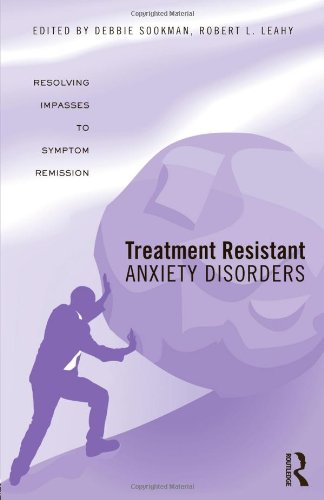
Treatment Resistant Anxiety Disorders Resolving Impasses to Symptom Remission 1st Edition by Deborah Sookman, Robert L Leahy ISBN 0415988918 9780415988919


Original price was: $50.00.$35.00Current price is: $35.00.
Treatment Resistant Anxiety Disorders Resolving Impasses to Symptom Remission 1st Edition by Deborah Sookman, Robert L Leahy – Ebook PDF Instant Download/Delivery: 0415988918, 9780415988919
Full download Treatment Resistant Anxiety Disorders Resolving Impasses to Symptom Remission 1st Edition after payment
Product details:
ISBN 10: 0415988918
ISBN 13: 9780415988919
Author: Deborah Sookman, Robert L Leahy
Treatment Resistant Anxiety Disorders Resolving Impasses to Symptom Remission 1st Table of contents:
1 Metacognitive therapy Application to generalized anxiety disorder
Contents
Understanding GAD
The model in action
Metacognitive therapy
A case illustration
Empirical status of MCT theory
Empirical status of treatment
MCT in wider context
Conclusion
References
2 Specialized cognitive behavior therapy for treatment resistant obsessive compulsive disorder
Contents
Introduction
Outcome literature relevant to treatment resistance
Compliance with specialized ERP for OCD
Meanings of and reasons for resistance to cognitive therapy and ERP
Applying CT without formal ERP
Description of CT methods
Evidence for success of CT methods
A schema-based model
The model in theory
The model in practice: CBT for resistant OCD
Clinical example of CBT without schema-based interventions
The model in practice: schema-based assessment and treatment interventions for resistant OCD
Treatment efficacy for resistant OCD
Implications for future research of CBT resistance in OCD
Intervention criteria for CBT resistance in OCD
Criteria for remission or recovery following CBT for OCD
Criteria for CBT resistance in OCD
References
3 Treatment for complex PTSD
Contents
Overview of PTSD
Defining complex PTSD and its treatment
Structure and content of treatment
Emotional awareness
Emotion regulation
Emotionally engaged living
Changing relationship patterns
Emphasis on agency and flexibility
Modified prolonged exposure
Complex PTSD as treatment-resistant PTSD
Challenges in the treatment of complex PTSD
Resistance toward experiencing feelings at all
Resistance toward implementing alternative emotion regulation skills
Resistance toward experiencing positive feelings
Resistance toward working with anger
Resistance toward more skillful interpersonal functioning
Resistance toward exposure work
Resistance toward adhering to the structure of the therapy: ongoing crises/chaos
Resistance toward change
Additional considerations
The therapeutic alliance
Therapist self-care
Conclusion
References
4 Understanding and managing treatment-resistant panic disorder Perspectives from the clinical experience of several expert therapists
Contents
Introduction
Causes and recommended strategies for treatment-resistant panic disorder
Lack of engagement in behavioral experiments or exposures
Educate
Graduated exposure
Directly observe and assess possible avoidance
Consider using motivational enhancement techniques
Encourage acceptance of negative feelings
Avoid labeling and concluding that the client is “resistant”
Noncompliance
Establish realistic expectations of the therapy
Educate
Explain the rationale for interventions
Record sessions
Increase accountability
Be clear and specific when assigning a task
Anticipate obstacles with each assignment
Reduce “hassle factors”
Reward positive behavior
Reward positive behavior
Problem-solve existing noncompliance
Comorbidity
Treat severe, interfering comorbidity
Target panic disorder in cases of lesser comorbidity
Inadequate case formulation or misdiagnosis
Rule out possible medical and substance-related causes
Reconsider the principal psychiatric diagnosis or case formulation
External support of PD behavior (secondary gain, fear of disruption)
Conduct a functional analysis
Problem-solve obstacles to improvement
Directly address secondary gain with the client
Problems with cognitive restructuring
Acceptance of rational responses
Elucidating fear-provoking cognitions
Presence of negative life events/circumstances
Assess the relationship between the circumstances and the PD and intervene accordingly
Medication complications
Coordinate with the prescribing physician
Discuss medication complication issues with the client
Employ empirically supported discontinuation protocols
Poor delivery of treatment
Do high-fidelity treatment
Expose the exposer
Consult with colleagues
Continuing education
Therapeutic trust
Convey previous success of others
Build trust through success experiences
Validate
Integration and summary
References
5 Emotional schemas in treatment-resistant anxiety
Contents
Emotional schemas and resistance to change in anxiety disorders
Emotional schemas
The solution is the problem
Emotion control strategies and resistance
Anticipating noncompliance
Identifying the patient’s theory of anxiety
Strategies for intervention
Validation and self-reward
When will relief come?
Emotional processing and personal effectiveness are the goals
Constructive discomfort: investing in anxiety
Comprehensibility and consensus
Acceptance
Expression
Duration and variability
Control
Globalization beliefs
Shame
Guilt
Rumination
Case example
Conclusions
References
6 Augmenting exposure-based treatment for anxiety disorders with principles and skills from dialectical behavior therapy
Contents
Brief overview of DBT
A levels-of-care approach to integrating DBT for treatment-resistant anxiety
Level 1: supplement standard treatment with select DBT skills
Specific DBT skills
Mindfulness
Distress tolerance
Emotion regulation
Interpersonal effectiveness
Case example1
Level 2: supplement standard treatment with DBT principles and skills
Targeting
Validation
Case example
Contingency management/strategic use of the therapeutic relationship
Dialectical strategies
Case example from the literature
Level 3: treating anxiety within the full DBT treatment approach
Case example
Emerging treatments for anxiety disorders that integrate DBT
Posttraumatic stress disorder
Obsessive–compulsive disorder
Generalized anxiety disorder
Summary and future directions
References
7 Combining motivational interviewing and cognitive– behavioral therapy to increase treatment efficacy for generalized anxiety disorder
Contents
Description of generalized anxiety disorder
What is motivational interviewing?
How MI complements CBT
Role of the therapist
Management of resistance
The timing of introducing change strategies
The manner of introducing change strategies
Rationale for using MI with GAD
The need to improve response rates
Noncompliance in CBT
Ambivalence about worry
Benefits of worry and fears of change
Empirical support for MI
Extended clinical example
Carol’s subjective report of treatment and change
Efficacy of adding MI to CBT for GAD and other anxiety disorders
MI for a heterogeneous anxiety disorders group
MI for GAD: preliminary results of a randomized controlled trial
Summary
References
8 Using a compassionate mind to enhance the effectiveness of cognitive therapy for individuals who suffer from shame and self-criticism
Contents
Introduction
What is shame?
Social mentality theory
Self-soothing
Is cognitive therapy effective for individuals with shame-based difficulties?
What is compassion-focused therapy?
Integrating theory with practice
Developing a compassionate mind
Phase 1. Therapeutic relationship
Formulating cases with a compassionate mind
Jennifer’s compassion-focused formulation
Phase 2. Ending maintenance cycles by working with critical dialogues
Developing self-soothing relationships
Helping Jennifer develop a compassionate reframe to the rape
Phase 3. Using compassionate imagery to develop self-soothing
Developing perfect nurturer images
Using perfect nurturer images to work with shame flashbacks
Conclusions
Acknowledgments
References
9 Suggestions from acceptance and commitment therapy for dealing with treatment-resistant obsessive–compulsive disorder
Contents
Introduction and definition
ACT’s philosophy of science: functional contextualism
Relational frame theory
Current state of evidence of ACT for OCD
ACT conceptualization of OCD
Cognitive fusion versus defusion
Experiential avoidance and acceptance
Lack of contact with the present moment versus contact with the present moment
Self as content versus self as context
Unclear chosen values versus clear values
Behavioral inaction or impulsivity versus committed action
Behavioral inflexibility versus behavioral flexibility
Issues of treatment resistance in OCD
Treatment refusal, dropout, and compliance
Difficult-to-treat subtypes of OCD
Co-occurring issues and what is a good outcome?
Procedural issues
An ACT case example
Summary
References
10 Treating anxiety disorders in the context of concurrent substance misuse
Contents
Posttraumatic stress disorder
Panic disorder with and without agoraphobia
Social phobia
Obsessive–compulsive disorder
Specific phobia
Generalized anxiety disorder
Case example
Conclusion
References
11 The pharmacotherapy of treatment-resistant anxiety disorders in adults in the setting of cognitive–behavioral therapy
Contents
First-line treatment in anxiety disorders
Treatment resistance in anxiety disorders
Evidence-based management of treatment-resistant anxiety disorders
Combined CBT and pharmacotherapy in treatment-resistant anxiety disorders
References
12 Conclusions
Contents
Developing a conceptualization of resistance
Appraisals of thoughts
Building motivation
Does content matter?
Are developmental origins important?
People also search for Treatment Resistant Anxiety Disorders Resolving Impasses to Symptom Remission 1st:
severe treatment-resistant anxiety
severe treatment resistant depression and anxiety
treatment-resistant anxiety and depression
treatment-resistant generalized anxiety disorder
treatment resistant anxiety disorders
Tags:
Deborah Sookman,Robert L Leahy,Treatment Resistant,Anxiety Disorders,Symptom Remission