

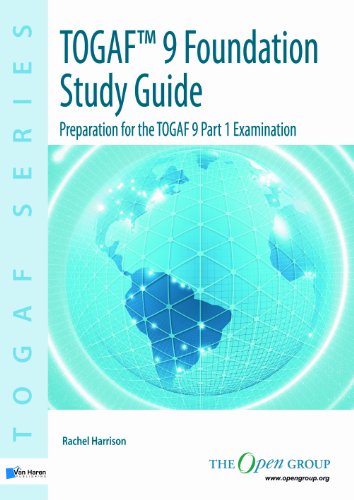
TOGAF Version 9 Foundation Study Guide 3rd Edition by Rachel Harrison ISBN 9087532318 9789087532314

Original price was: $50.00.$35.00Current price is: $35.00.
TOGAF Version 9 Foundation Study Guide 3rd Edition by Rachel Harrison – Ebook PDF Instant Download/Delivery: 9087532318, 9789087532314
Full download TOGAF Version 9 Foundation Study Guide 3rd Edition after payment
Product details:
ISBN 10: 9087532318
ISBN 13: 9789087532314
Author: Rachel Harrison
TOGAF Version 9 Foundation Study Guide 3rd Table of contents:
Chapter 1 Introduction
1.1 Key Learning Points
1.2 The TOGAF Certification for People Program
1.3 Summary
1.4 Recommended Reading
PART 1 TOGAF 9 Architecture Development Method (ADM)
Chapter 2 Preliminary Phase
2.1 Key Learning Points
2.2 Objectives
2.3 Inputs
2.4 Steps
2.5 Outputs
2.6 Summary
2.7 Exercises
2.8 Recommended Reading
Chapter 3 Phase A: Architecture Vision
3.1 Key Learning Points
3.2 Objectives
3.3 Inputs
3.4 Steps
3.5 Outputs
3.6 Summary
3.7 Exercises
3.8 Recommended Reading
Chapter 4 Phase B: Business Architecture
4.1 Key Learning Points
4.2 Objectives
4.3 Inputs
4.4 Steps
4.5 Outputs
4.6 Summary
4.7 Exercises
4.8 Recommended Reading
Chapter 5 Phase C: Information Systems Architectures
5.1 Key Learning Points
5.2 Objectives
5.3 Considerations for the Implementation Order
5.4 Inputs
5.5 Steps
5.6 Outputs
5.7 Summary
5.8 Exercises
5.9 Recommended Reading
Chapter 6 Phase C: Data Architecture
6.1 Key Learning Points
6.2 Objectives
6.3 Inputs
6.4 Steps
6.5 Outputs
6.6 Summary
6.7 Exercises
6.8 Recommended Reading
Chapter 7 Phase C: Application Architecture
7.1 Key Learning Points
7.2 Objectives
7.3 Inputs
7.4 Steps
7.5 Outputs
7.6 Summary
7.7 Exercises
7.8 Recommended Reading
Chapter 8 Phase D: Technology Architecture
8.1 Key Learning Points
8.2 Objectives
8.3 Inputs
8.4 Steps
8.5 Outputs
8.6 Summary
8.7 Exercises
8.8 Recommended Reading
Chapter 9 Phase E: Opportunities & Solutions
9.1 Key Learning Points
9.2 Objectives
9.3 Inputs
9.4 Steps
9.5 Outputs
9.6 Summary
9.7 Exercises
9.8 Recommended Reading
Chapter 10 Phase F: Migration Planning
10.1 Key Learning Points
10.2 Objectives
10.3 Inputs
10.4 Steps
10.5 Outputs
10.6 Summary
10.7 Exercises
10.8 Recommended Reading
Chapter 11 Phase G: Implementation Governance
11.1 Key Learning Points
11.2 Objectives
11.3 Inputs
11.4 Steps
11.5 Outputs
11.6 Summary
11.7 Exercises
11.8 Recommended Reading
Chapter 12 Phase H: Architecture Change Management
12.1 Key Learning Points
12.2 Objectives
12.3 Inputs
12.4 Steps
12.5 Outputs
12.6 Summary
12.7 Exercises
12.8 Recommended Reading
Chapter 13 ADM Architecture Requirements Management
13.1 Key Learning Points
13.2 Objectives
13.3 Inputs
13.4 Steps
13.5 Outputs
13.6 Summary
13.7 Exercises
13.8 Recommended Reading
PART 2 Guidelines for Adapting the ADM
Chapter 14 Iteration and Levels
14.1 Key Learning Points
14.2 The Concept of Iteration
14.3 Factors Influencing the Use of Iteration
14.4 Iteration Cycles
14.5 Classes of Architecture Engagement
14.6 Mapping TOGAF Phases to Iteration Cycles
14.7 Applying the ADM across the Architecture Landscape
14.8 Summary
14.9 Exercises
14.10 Recommended Reading
Chapter 15 Security
15.1 Key Learning Points
15.2 Introduction
15.3 Adapting the ADM for Security
15.4 Security Input/Output Summary
15.5 Summary
15.6 Exercises
15.7 Recommended Reading
Chapter 16 SOA
16.1 Key Learning Points
16.2 SOA as an Architectural Style
16.3 Enterprise Architecture and SOA
16.4 Adapting the ADM for SOA
16.5 Summary
16.6 Recommended Reading
PART 3 The Architecture Content Framework
Chapter 17 Architecture Content Framework
17.1 Key Learning Points
17.2 Introduction
17.3 The Content Framework and the TOGAF ADM
17.4 Why do we Need a Metamodel?
17.5 Components of the Content Metamodel
17.6 Core Metamodel Concepts
17.7 Summary
17.8 Exercises
17.9 Recommended Reading
PART 4 The Enterprise Continuum
Chapter 18 Architecture Partitioning
18.1 Key Learning Points
18.2 Introduction
18.3 Applying Classification to Partitioned Architectures
18.4 Applying Partitioning to the ADM
18.5 Summary
18.6 Recommended Reading
Chapter 19 Architecture Repository
19.1 Key Learning Points
19.2 Introduction
19.3 The Repository in Detail
19.4 Relationship to Other Parts of the TOGAF Standard
19.5 Summary
19.6 Recommended Reading
PART 5 TOGAF Reference Models
Chapter 20 The Technical Reference Model (TRM)
20.1 Key Learning Points
20.2 Structure of the TRM
20.3 The TRM in Detail
20.4 Taxonomy of Application Platform Services
20.5 Taxonomy of Application Platform Service Qualities
20.6 Using the TRM
20.7 Summary
20.8 Exercises
20.9 Recommended Reading
Chapter 21 Integrated Information Infrastructure Reference Model (III-RM)
21.1 Key Learning Points
21.2 Drivers for Boundaryless Information Flow
21.3 How the III-RM Fulfills the Solution Space
21.4 The High-Level Structure of the III-RM
21.5 Components of the III-RM
21.6 Summary
21.7 Recommended Reading
PART 6 Architecture Capability
Chapter 22 Architecture Governance
22.1 Key Learning Points
22.2 Architecture Governance and the ADM
22.3 Key Success Factors
22.4 Setting up the Architecture Board
22.5 Operating an Architecture Board
22.6 Summary
22.7 Exercises
22.8 Recommended Reading
Chapter 23 Architecture Maturity Models
23.1 Key Learning Points
23.2 Capability Maturity Models
23.3 Capability Maturity Model Integration (CMMI)
23.4 ACMM
23.5 Maturity Assessments and the ADM
23.6 Summary
23.7 Exercises
23.8 Recommended Reading
Chapter 24 Architecture Skills Framework
24.1 Key Learning Points
24.2 Purpose
24.3 Benefits
24.4 EA Roles, Skills Categories, and Proficiency Levels
24.5 Summary
24.6 Exercises
People also search for TOGAF Version 9 Foundation Study Guide 3rd:
togaf 9 foundation study guide 4th edition
togaf 9 foundation study guide
togaf foundation study guide pdf
togaf 9 study guide
togaf 9.2 study guide