

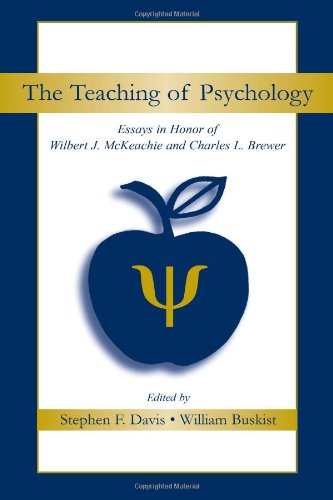
The Teaching of Psychology Essays in Honor of Wilbert J McKeachie and Charles L Brewer 1st Edition by Stephen F Davis, William Buskist ISBN 0585395268 9780805839531

Original price was: $50.00.$35.00Current price is: $35.00.
The Teaching of Psychology Essays in Honor of Wilbert J McKeachie and Charles L Brewer 1st Edition by Stephen F Davis, William Buskist – Ebook PDF Instant Download/Delivery: 0585395268, 9780805839531
Full download The Teaching of Psychology Essays in Honor of Wilbert J McKeachie and Charles L Brewer 1st Edition after payment
Product details:
ISBN 10: 0585395268
ISBN 13: 9780805839531
Author: Stephen F Davis, William Buskist
The Teaching of Psychology Essays in Honor of Wilbert J McKeachie and Charles L Brewer 1st Table of contents:
I: Portraits of Excellence
1 More Than Just Luck: A Brief Biography of Wilbert J. McKeachie
Acknowledgments
References
2 “I Can’t Ever Remember not Wanting to be a Teacher”: A Brief Biography of Charles L. Brewer
-
Biographical Sketch
-
A Teacher of Undergraduates
-
A Teacher of Teachers
-
Developing the Curriculum at Furman
-
Curriculum
-
Professional Activity
-
Professional Style
-
Conclusion
-
Note
-
References
II: Essential Qualities and Skills of Effective Teachers
3 Elements of Master Teaching
-
Master Teachers on Master Teaching
-
Knowledge
-
Personality
-
Classroom Management Skills
-
Qualities of Award-Winning Teachers
-
Student Perceptions of Master Teachers
-
What is a Master Teacher?
-
What about Teacher Behavior?
-
The Behavior of Master Teachers
-
Becoming a Master Teacher
-
References
4 Classroom Presence -
The Essence of Presence
-
A Framework for Exploring Presence
-
Expressive Personality Factors
-
Behaviors That Show Receptivity to Students
-
Pedagogical Practices
-
Physical Characteristics
-
A Child’s Eye View
-
Conclusion
-
Acknowledgments
-
References
5 Lecturing -
Lecture Style
-
Passion
-
Identify Clear Goals for the Lecture
-
Remember that Less is More
-
The Need for Spontaneity
-
Do Not Lecture all the Time
-
The Need for a Summary
-
Why Lecture?
-
References
6 Humor and College Teaching -
How Many Times Per Lecture Does Your Class Laugh?
-
What are Favorite Topics for Classroom Humor?
-
Does Classroom Humor have a Target?
-
What Percent of Humor Relates to Lecture Content and What Percent Contributes to its Educational Point?
-
Does Humor Help Students Learn and Recall Course Content?
-
Are Funny Students Creative or Annoying?
-
Conclusion
-
References
7 Process/Pedagogy -
Definitions
-
Developing Pedagogy
-
Principle 1
-
Principle 2
-
Assessment
-
Beyond Pedagogy to Process
-
Conclusion
-
References
8 Teaching for Critical Thinking: A Four-Part Model to Enhance Thinking Skills -
The Information Glut Meets the Knowledge Economy
-
What is Critical Thinking?
-
Types of Evidence
-
A Four-Part Model for Critical Thinking Instruction
-
A Skills Approach to Critical Thinking
-
Dispositions for Effortful Thinking and Learning
-
Transfer of Training
-
Metacognitive Monitoring
-
Examples
-
An Example of Teaching for Noncritical Thinking (or Perhaps Not Thinking At All)
-
A Simple, but Powerful Demonstration of a General Skill
-
References
9 Writing: Models, Examples, Teaching Advice, and a Heartfelt Plea -
Teaching Writing
-
Teaching Writing to Psychology Students
-
Journal Writing
-
Summaries/Syntheses
-
Application Papers
-
Review Articles
-
Research Proposals and Reports
-
Teaching the Processes of Writing in Psychology
-
Final Thoughts
-
References
10 The Teaching–Advising Connection -
How do Faculty Perceive their Roles as Academic Advisors?
-
What is the Linguistic Relationship between the Words “Teaching” and “Advising”?
-
Do Effective Teachers and Effective Advisors do the Same Things?
-
Is There More Than One Type of Academic Advising?
-
Can Academic Advising Increase Human Capital?
-
Concluding Remarks
-
Acknowledgments
-
References
11 Training Graduate Teaching Assistants -
Components of an Ideal GTA Training Program
-
Orientation
-
Teaching of Psychology Course
-
Regularly Scheduled GTA Meetings
-
Interfacing with the Teaching Community
-
Development of a Teaching Portfolio
-
Evaluation
-
Implementing Components of the Ideal Training Program
-
Time to Prepare and Hone Skills
-
Limited Opportunity to Prepare and Hone Skills
-
Conclusion
-
References
III: Teaching Within the Context of Modern Academic Life
12 Teaching, Research, and Scholarship
-
The Problem
-
The Response
-
The Future?
-
In the Academy
-
In the Public Forum
-
Conclusions
-
References
13 Integrating Teaching and Service to Enhance Learning -
The Role of Teaching, Research, and Service in the Professoriate
-
Historical Perspective
-
Strategies to Resolve the Teaching–Research Dilemma: Redefining Scholarship
-
Redefining and Reevaluating Academic Service
-
Defining Service
-
Benefits of Professional Service and Citizenship
-
Scholarship of Service
-
Summary
-
Acknowledgments
-
References
14 A Portrait of Teaching Painted by Early Career Faculty -
Important Teaching Issues
-
Teaching Is Time-Consuming
-
Important Teacher Qualities: Intellectual, Interpersonal, and Affective
-
Faculty Share Similarities in Why They Became College Teachers
-
Surprises About Teaching
-
Intellectual Content May Not Be Most Important
-
Mastering the Art and Craft of Teaching
-
Influences on Faculty Teaching
-
Context
-
Students
-
Personal Characteristics of Faculty
-
Teachers’ Roles and Behavior
-
The Evolving Portrait of Faculty who Teach
-
Conclusion
-
References
15 Peer Review for Meaningful Teaching Enhancement -
Benefits of Peer Review
-
Types of Peer Review
-
Summative Peer Review
-
Formative Peer Review
-
Guiding Principles for Quality Peer Review of Teaching
-
Critical Elements of Peer Review
-
Peer Review Is an Interpersonal Enterprise
-
Reflection and Reasoned Opinion
-
Feedback
-
Components of Classroom Visitation Peer Review
-
Previsitation Meeting
-
The Class Visitation
-
Postvisitation Meeting
-
Conclusion
-
References
16 Beyond Tenure: The Teaching Portfolio for Reflection and Change -
Portfolios for Survival
-
The Portfolio for Reflection and Change
-
The Teaching Philosophy
-
Course Narratives
-
Autobiography: Stages in the Teaching Life
-
The Portfolio as Scholarship
-
Conclusion
-
References
17 Representing the Intellectual Work in Teaching Through Peer-Reviewed Course Portfolios -
Teaching as Intellectual Work
-
An Expanded and Collaborative Process of Peer Review of Teaching
-
Components of the Peer Consultation
-
Reflection on the Course as a Whole
-
Expanding the Audience for Course Portfolios
-
Including This Work in Professional Life
-
Making the Portfolios Accessible
-
The General Utility of Course Portfolios
-
Conclusion
-
Acknowledgments
-
References
18 Teaching at a Liberal Arts College: With a Little Help From My Friends -
Why Did You Decide to Teach at a Liberal Arts Institution?
-
Why Have You Stayed at a Liberal Arts Institution? What are the Advantages to Teaching at a Liberal Arts School?
-
Students
-
Goals
-
Community
-
What are the Disadvantages of Teaching at a Liberal Arts Institution?
-
How Would You Say Your Institution Values Teaching, Scholarship, and Service?
-
How is Scholarship Defined at Your Institution?
-
If You Were Starting Over, Would You Choose to Teach at a Liberal Arts Institution?
-
Conclusion
-
Acknowledgments
-
References
19 Differences in Teaching in a Liberal Arts College Versus Research University -
Research
-
The Faculty
-
Teaching
-
Diversity
-
Advising
-
Graduate Students
-
Community
-
Public Versus Private
-
Commencement
-
Some Final Thoughts
-
References
20 Lessons From Life: A Journey in Lifelong Learning -
Journey 1 (MW)
-
Starting in the Present
-
Laying the Foundation
-
Expanding Horizons
-
Pursuing Graduate Study
-
Commencing College Teaching
-
Experiencing Life Inside and Outside the University
-
Returning to the Beginning
-
Learning Lessons
-
Journey 2 (DP)
-
Reflecting on the First Year as Chair
-
Deciding to Teach
-
Pursuing a Path to Teaching and Learning
-
Becoming a Residential Doctoral Student
-
Arriving at a Destination
-
Learning Lessons
-
Summary
21 Promoting the Teaching of Psychology: A History of NITOP -
Beginnings
-
Changes in Latitude, no Change in Attitude
-
NITOP’S Growth—And Growing Pains
-
NITOP in Crisis
-
NITOP Today
-
New Alliances, New Directions
-
Reference
IV: Teaching With Technology
22 Wiring the Introductory Psychology Course: How Should We Harness the Internet?
-
Using the Internet as a Vehicle for Class Administration
-
Using the Internet as a Conduit for Student Discussion
-
Using the Internet as an Informational Resource
-
Using the Internet as a Medium for Instruction
-
Conclusions
-
References
23 Web-Based Resources -
Psychological Information
-
Evaluating Resources
-
Textbook publishers’ sites
-
University Information
-
Research on the Web
-
Ethics, Plagiarism, and Paper Mills
-
Strengths and Challenges of Using Web-Based Resources
-
References
24 Technology in the Classroom: Traditions in Psychology -
Emerging Traditions
-
Emerging Technologies
-
How Have We Introduced Computers into the Classroom?
-
What are the Advantages of Computers in Education?
-
What are the Disadvantages of Computers in Education?
-
Will Computers Facilitate New Ways of Teaching?
-
What Does the Future Hold?
-
Conclusion
-
References
25 The Challenges of Distance Education -
The Current State of Affairs
-
Teaching and Learning Challenges
-
The Dance of Mastering Technology
-
Reading and Writing Reign
-
The Straw and the Camel’s Back
-
Fostering Community, Overcoming Barriers
-
Teachers’ and Students’ Hardware Compatibility: Sharing the Right Stuff
-
Discerning Information Quality: The Good, Bad, and Ugly
-
Financial Challenges
-
Funding Technology
-
Funding Support Services
-
Paying for Convenience
-
Program Accreditation Challenges
-
Copyright Challenges
-
Institutional Challenges
-
A Look at the Research
-
The Credit Hour Bust
-
The Faculty Technology Divide
-
Easing Access to Higher Education: The Death Knell of On-Campus Instruction?
-
An Institutional Research Agenda
-
Epilogue
-
References
26 Come, Putative Ends of Psychology’s Digital Future -
Why Do Psychologists have an Affinity for Technology?
-
How will Technology Change the Psychology we Teach?
-
The New Social Psychology of Interpersonal Electrons
-
The Human Factors Call of Technology Design
-
Will the Technological Meteor Extinguish the Teaching of Psychology?
-
Coda: We Could not Predict our Mentors’ Influence Either
-
References
V: Teaching About Psychology’s Domains
27 Teaching the History of Psychology
-
History of Psychology as a Scholarly Discipline and the Impact on Teaching
-
Exchanging “Old” for “New” History
-
Old History
-
New History
-
Resources for those Teaching the History Course
-
We’re all Historians now: Integrating History into the Psychology Curriculum
-
References
28 Teaching Biological Psychology to Introductory Psychology Students -
Selecting Content
-
Highlights of Biological Psychology: A Personal List
-
The Genetics of Behavior
-
Mind–Brain Monism
-
Brain Plasticity … Within Limits
-
United Consciousness Without a Central Processor
-
Simple Synapses and Complex Behaviors
-
Conclusion
-
References
29 Teaching Statistics and Research Methods -
Themes and Variations
-
Textbooks
-
Research Proposal
-
Ideas and Resources for Faculty
-
Classroom/Laboratory Exercises
-
In-Class Experiments
-
American Psychological Association Format Writing
-
Resources
-
Opportunities and Resources for Students
-
Involving Upper Division Students and Graduate Teaching Assistants
-
Hardcopy Psychology Journals for Students
-
Student Conferences
-
Closing Comment
-
References
30 Teaching the Learning Course: Philosophy and Methods -
Lesson 1: Know Your Students’ Capabilities and Work to Extend Them
-
Lesson 2: Know and Share with Students the Place of the Learning Class in the Curriculum
-
Lesson 3: Specify Course Objectives and Strategies within the Context of a Detailed Syllabus
-
Lesson 4: Promote Active Learning: The Recitation Method
-
Lesson 5: Apply Principles of Reinforcement and Punishment in the Classroom
-
Lesson 6: The Ways in Which Students are Evaluated should Reflect the Application of Principles of Learning
-
Lesson 7: Use Key Terms to Organize the Breadth of Content of Your Course
-
Lesson 8: Having Students Memorize Key Terms is Pedagogically Sound
-
Lesson 9: Use Discussion Questions in Recitation
-
Lesson 10: Apply Learning Principles in a Nonhuman Animal Lab and in a Classroom Setting
-
Conclusion
-
References
31 Using Social Psychology to Teach Social Psychology: How the Field Informs the Course -
The Ambivalent Course
-
The Variable Course
-
The Critical Course
-
The Persistent Course
-
References
32 Teach More Than Personality in the Personality Course -
A General Philosophy for Teaching Personality
-
Specific key elements for teaching personality
-
Connect With History and Correct Misconceptions
-
Emphasize Writing Skills
-
Teach Research Methods
-
Expose Students to Primary Sources
-
Underscore “Big Potatoes”
-
Conclusion
-
References
33 Opening Students’ Eyes and Minds: Teaching the Psychology of Women -
Goal 1: Acquiring the Basic Knowledge about the Discipline
-
Goal 2: Acquiring Skill in Understanding Research and in Critical Thinking
-
Goal 3: Developing Self-Understanding
-
Goal 4: Developing Concerns about Diversity and Other Forms of Inequality
-
Final Words
-
References
34 Incorporating Cross-Cultural Perspectives into the Psychology Curriculum: Challenges and Strategies -
The Importance of a Cross-Cultural Perspective
-
Current Status of Efforts to Incorporate a Cross-Cultural Perspective
-
Challenges and Some Solutions
-
Summary
-
References
35 Designing a Course in Industrial/Organizational Psychology to Achieve Eight Desirable Student Outcomes -
Personal Experiences Teaching I/O Psychology
-
Goal 1: Knowledge Base
-
Selecting Course Content
-
Applying I/O Psychology to Teaching
-
Goal 2: Thinking Skills
-
Sample Assignment: Functional Job Analysis
-
Goal 3: Language Skills
-
Sample Assignment: Reading Journal Articles
-
Goal 4: Information Gathering and Synthesis Skills
-
Sample Assignment: Library Scavenger Hunt
-
Sample Assignment: Exploring the Internet
-
Goal 5: Research Methods and Statistical Skills
-
Sample Assignment: Critique of a Scholarly Debate
-
Sample Assignment: Validation of Selection Tests
-
Goal 6: Interpersonal Skills
-
Sample Classroom Activity: Psychological Assessment
-
Goal 7: History of Psychology
-
Sample Assignment: The Hawthorne Studies
-
Goal 8: Ethics and Values
-
Sample Classroom Activity: Discussing Court Cases
-
Conclusion
-
Acknowledgments
-
References
36 Psychology of Religion: Then and Now -
Origins of the Psychology of Religion in the United States
People also search for The Teaching of Psychology Essays in Honor of Wilbert J McKeachie and Charles L Brewer 1st:
introduction to psychology essay examples
apa teachers of psychology in secondary schools
psychology essay hooks
why is educational psychology important for teachers
the culture of honor psychology
Tags: Stephen F Davis, William Buskist, Psychology Essays, Honor