

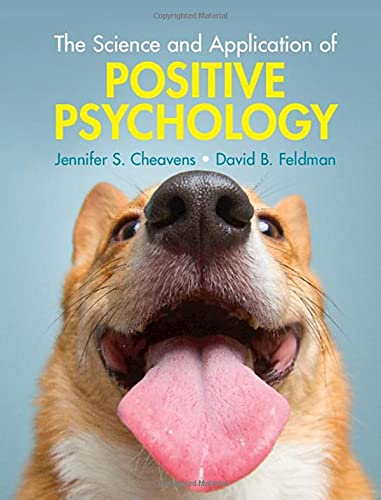
The Science and Application of Positive Psychology 1st Edition by Jennifer S Cheavens, David B Feldman ISBN 1108460836 9781108460835


Original price was: $50.00.$35.00Current price is: $35.00.
The Science and Application of Positive Psychology 1st Edition by Jennifer S. Cheavens, David B. Feldman – Ebook PDF Instant Download/Delivery: 1108460836, 9781108460835
Full download The Science and Application of Positive Psychology 1st Edition after payment
Product details:
ISBN 10: 1108460836
ISBN 13: 9781108460835
Author: Jennifer S. Cheavens, David B. Feldman
Positive psychology tackles the big questions: What does it mean to live a ‘good life’? What helps people to flourish and access their optimal potential? And how can we increase our capacities for joy, meaning, and hope? This engaging textbook emphasizes the science of positive psychology – students don’t simply learn about positive psychology in the abstract, but instead are exposed to the fascinating research that supports its conclusions.Bridging theory and practice, this textbook connects up-to-date research with real-world examples and guides students to apply evidence-based practices in their own lives. Its comprehensive coverage includes major new topics, such as spirituality, therapeutic interventions, mindfulness, and positive relationships. Featured pedagogy includes ‘Are You Sure about That?’ boxes presenting methodological and statistical principles in context, and ‘Practice Positive Psychology’ activities to extend student learning, while online resources include lecture slides, a test bank, and an instructor manual.
Table of contents:
Part I. Introduction to the Field
Chapter 1. What Is Positive Psychology and Why Do We Need It?
-
A New Science with a Long History
-
Understanding the Scope of Positive Psychology
-
Why We Need Positive Psychology
-
The Science of Well-Being(s)
-
Culture and Positive Psychology
-
Self-Transcendence or Self-Enhancement
-
Harmony or Mastery
-
Contentment or Satisfaction
-
Valuing or Avoiding Suffering
-
Next Steps in Positive Psychology
-
Practice Positive Psychology
-
Apply PERMA to Your Own Life
-
Explore Your Positive Legacy
-
Integrate Positive Psychology into Your Life
-
Further Resources
Chapter 2. Myths and Misunderstandings about the Science of Positive Psychology
-
Why Does a Scientific Approach to Positive Psychology Matter?
-
How to Distinguish Positive Psychology from Nonscientific Pop Psychology
-
Are the Conclusions Based on the Scientific Method?
-
Does the Research Make It Clear That Causation Isn’t the Same as Correlation?
-
Does the Research Specify Mechanisms and Are Those Mechanisms Backed by Evidence?
-
Do the Researchers Generalize Appropriately?
-
Did the Researchers Use Valid and Reliable Measures?
-
Does More than One Study Show the Result?
-
Myths and Misunderstandings about Positive Psychology
-
Only Stupid People Are Happy
-
You Can’t Do Anything about Your Happiness
-
Positive Psychology Is Only about Being Happy
-
Positive Psychology Is Only for the Privileged
-
Culture and the Science of Positive Psychology
-
Next Steps in the Science of Positive Psychology
-
Practice Applying Scientific Reasoning
-
Examine How You Came to Believe a Myth
-
Check Your Beliefs
-
Consider Your Piece of the Pie
-
Further Resources
Part II. Positive Feelings and States
Chapter 3. Positive Emotional Experiences
-
Why Do Positive Emotions Matter?
-
Defining Positive Affective Experiences
-
The Broaden-and-Build Theory of Positive Emotions
-
Benefits of Positive Affective Experiences
-
Positive Affective Experiences and Mortality
-
Physical Health
-
Acute Illness
-
Inflammation
-
Cardiovascular Disease
-
-
Social Relationships
-
Cognitive Functioning
-
Money and Happiness
-
Does Having More Money Make You Happier?
-
Does How You Spend Your Money Matter?
-
-
Culture and Positive Affective Experiences
-
Next Steps
-
Practice Engaging in Positive Affective Experiences
-
Keep a Positive Affective Experiences Diary
-
Build a Pleasurable Sensations Toolbox
-
Spend Your Money Happily
-
Evaluate Your Positivity Ratio
-
Further Resources
Chapter 4. Transcendence: Meaning, Purpose, Spirituality, and Religion
-
Why Does Transcendence Matter?
-
Meaning and Purpose in Life
-
Definitions and Theories
-
Frankl and Logotherapy
-
Terror Management Theory
-
Sense of Coherence
-
The Four Needs for Meaning
-
-
Meaning across the Life Span
-
Meaning and Well-Being
-
The Paradoxical Search for Meaning
-
Religious and Spiritual Transcendence
-
Religion versus Spirituality
-
Well-Being and Healthier Behavior
-
Coping and Social Support
-
Psychological States
-
-
Research Issues in the Psychology of Religion
-
Culture and Transcendence
-
Next Steps
-
Practice Transcendence
-
The Logoanchor Technique
-
Create a Movie of Your Life
Chapter 5. Present-Moment Focus: Mindfulness, Savoring, and Flow
-
Why Does Present-Moment Focus Matter?
-
Mindfulness
-
Benefits and Research
-
Trait Mindfulness
-
Interpersonal Relationships
-
Interventions and the Brain
-
-
Savoring
-
Flow
-
Culture and Present-Moment Focus
-
Next Steps
-
Practice Present-Moment Focus
-
Meditate on the Present Moment
-
Savor the Past, Present, and Future
-
Find Flow
-
Further Resources
Part III. Achievement and Personal Goals
Chapter 6. Talent and Giftedness
-
Why Do Talent and Giftedness Matter?
-
Definitions
-
Identifying and Developing Talent
-
Biological Factors
-
Behavioral Factors
-
Longitudinal Studies
-
-
Culture and Talent and Giftedness
-
Next Steps
-
Practice Talent and Achievement
-
Practice Deliberately
-
Appreciate the Achievements of Others
-
Find Mentors
-
Further Resources
Chapter 7. Looking to the Future: Goals, Optimism, and Hope
-
Why Do Goals, Optimism, and Hope Matter?
-
Goals and Emotions
-
Goal Types and Quality
-
Expectancies and Anticipating the Future
-
Optimism
-
Dispositional Optimism
-
Learned Optimism
-
-
Hope
-
Comparison of Expectancy Constructs
-
Hope, Optimism, and Well-Being
-
Unrealistic Expectations
-
Culture, Optimism, and Hope
-
Next Steps
-
Practice Optimism and Hope
-
Change Your Explanatory Style
-
Map Out Your Pathway
-
Hopeful Daydreaming
-
Further Resources
Part IV. Personal Strengths and Psychological Assets
Chapter 8. Virtues, Values, and Character Strengths
-
Why Does Character Matter?
-
Historical Perspectives
-
Research Challenges
-
Talents, Strengths, and Virtues
-
Values
-
Advantages of Good Character
-
Culture and Character
-
Next Steps
-
Practice Identifying Strengths
-
Strength Spotting
-
Positive Introduction
-
Use a Strength
-
Further Resources
Chapter 9. Successful Aging
-
Why Does Aging Matter?
-
Defining Successful Aging
-
Foundational Studies
-
MacArthur Study
-
Harvard Study of Adult Development
-
Alameda County Study
-
-
Predictors and Processes
-
Models of Successful Aging
-
SOC Model
-
Socioemotional Selectivity Theory
-
Proactivity Model
-
-
Age and Well-Being
-
Wisdom
-
Culture and Successful Aging
-
Blue Zones
-
The Hispanic Paradox
-
-
Next Steps
-
Practice Expanding Your Perspective on Aging
-
Interview an Older Adult
-
Proactively Cope Using Blue Zones Lessons
-
Get Inspired by Older Adults
-
Further Resources
Part V. Successful and Satisfying Relationships
Chapter 10. Love and Relationships
-
Why Do Love and Relationships Matter?
-
Types and Styles of Love
-
The Love Triangle and Love 2.0
-
Relationships and Well-Being
-
Social Networks
-
Friendships, Online Relationships, and Marital Status
-
Theoretical Models
-
Attachment Theory
-
Social Exchange Theories
-
Balance Theory
-
-
Culture, Love, and Marriage
-
Next Steps
-
Practice Positive Relationships
-
Rebalance Relationships
-
Use Social Networks Healthily
-
Make a Connection
-
Further Resources
Chapter 11. Perspective-Taking: Gratitude and Forgiveness
-
Why Does Perspective-Taking Matter?
-
Gratitude
-
Facilitators and Barriers
-
Interventions
-
-
Forgiveness
-
Definitions
-
Interventions
-
-
Culture and Perspective-Taking
-
Next Steps
-
Practice Gratitude and Forgiveness
-
Write and Deliver a Gratitude Letter
-
Create a Gratitude Jar
-
Remember a Time You Were Forgiven
-
Further Resources
Chapter 12. Prosocial Behavior
-
Why Does Prosocial Behavior Matter?
-
Altruism and Kindness
-
Prosocial Behavior and Well-Being
-
The Who, When, and Why
-
Kindness Interventions
-
Compassionate Goals
-
Moral Elevation
-
Culture and Prosocial Behavior
-
Next Steps
-
Practice Prosocial Behavior
-
Put Kindness into the World
-
Volunteer in Your Community
-
Catch People Being Their Best Selves
-
Further Resources
Chapter 13. Happiness and Success at Work
-
Why Does Happiness at Work Matter?
-
Employment Success and Well-Being
-
Work, Job, and Calling
-
Prosocial Behavior in the Workplace
-
Employer Strategies
-
Employee Strategies
-
Culture and Work
-
Next Steps
-
Practice Positive Work
-
Craft Your Job
-
Make a Friend at Work
-
Bring Your Values to Work
-
Further Resources
Chapter 14. Positive Mental Health Interventions and Initiatives
-
Why Does a Positive Approach Matter?
-
Mental Health and Strengths-Based Assessment
-
Positive Psychology Interventions
-
The LIFE Model
-
Increasing Positive Affect
-
Hope Therapy
-
Decreasing Negative Affect
-
Well-Being Therapy
-
Positive Psychotherapy
-
Why PPIs Work
-
Culture and Interventions
-
Next Steps
-
Practice Positive Intervention Techniques
-
Discover Your Best Possible Self
-
Engage in Hopeful Daydreaming
-
Further Resources
People also search for:
borrow the science and application of positive psychology
the science and application of positive psychology pdf
the science and application of positive psychology pdf free download
the science and application of positive psychology free pdf
the science and application of positive psychology cambridge university press
Tags: Jennifer S Cheavens & David B Feldman, Science, Application, Positive, Wellbeing