

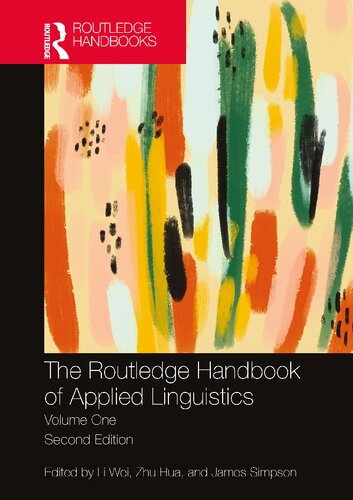
The Routledge Handbook of Applied Linguistics Volume One 2nd Edition by Li Wei, Zhu Hua, James Simpson ISBN 0367536277 9780367536275

Original price was: $50.00.$35.00Current price is: $35.00.
The Routledge Handbook of Applied Linguistics Volume One 2nd Edition by Li Wei, Zhu Hua, James Simpson – Ebook PDF Instant Download/Delivery: 0367536277, 9780367536275
Full download The Routledge Handbook of Applied Linguistics Volume One 2nd Edition after payment
Product details:
ISBN 10: 0367536277
ISBN 13: 9780367536275
Author: Li Wei, Zhu Hua, James Simpson
The Routledge Handbook of Applied Linguistics Volume One 2nd Table of contents:
Part I: Language Learning and Language Education
1. Conceptualizing Language Education: Theories and Practices
-
1.1 Defining Language Education
-
1.2 Historical and Contemporary Theories of Language Learning
-
1.3 Pedagogical Practices in Language Teaching
-
1.4 Language Education Models and Frameworks
-
1.5 Bridging Theory and Practice in Language Education
2. Second and Additional Language Acquisition Across the Lifespan
-
2.1 Theoretical Perspectives on SLA
-
2.2 Cognitive Development and Language Learning
-
2.3 Age and Language Acquisition: Critical and Sensitive Periods
-
2.4 Adult SLA: Challenges and Strategies
-
2.5 Lifelong Language Learning
3. Language Teaching and Methodology
-
3.1 Historical Approaches to Language Teaching
-
3.2 Communicative Language Teaching (CLT)
-
3.3 Task-Based Language Teaching (TBLT)
-
3.4 Content-Based Instruction and CLIL
-
3.5 Current Trends in Language Teaching Methodology
4. Technology and Language Learning
-
4.1 Technology’s Role in Language Education
-
4.2 Computer-Assisted Language Learning (CALL)
-
4.3 Mobile Learning and Apps for Language Learners
-
4.4 Blended Learning and Online Platforms
-
4.5 Virtual Classrooms and Learning Management Systems (LMS)
5. Teacher Communities of Practice
-
5.1 Defining Communities of Practice in Language Education
-
5.2 Collaborative Learning and Professional Development
-
5.3 The Role of Teachers in Language Education Innovation
-
5.4 Peer Feedback and Mentoring in Language Teaching
-
5.5 Building Effective Teacher Networks
6. Curriculum and Materials: Decolonization and Inclusivity
-
6.1 The Role of Curriculum in Language Education
-
6.2 Decolonizing Language Teaching Materials
-
6.3 Inclusive Language Education Practices
-
6.4 Addressing Cultural Bias in Educational Materials
-
6.5 Designing Culturally Responsive Curriculum
7. Content and Language Integrated Learning (CLIL) and English Medium Instruction (EMI)
-
7.1 CLIL: Concept, Implementation, and Challenges
-
7.2 Benefits and Drawbacks of EMI in Higher Education
-
7.3 The Intersection of Content and Language Learning
-
7.4 Teaching through English in Non-English Contexts
-
7.5 Policy Implications of CLIL and EMI
8. Bilingual and Multilingual Education
-
8.1 Theories of Bilingualism and Multilingualism
-
8.2 Types of Bilingual Education Models
-
8.3 Cognitive and Social Benefits of Bilingualism
-
8.4 Multilingual Education Policy and Practice
-
8.5 Teaching Strategies for Bilingual and Multilingual Learners
9. English for Academic Purposes (EAP)
-
9.1 Defining EAP and Its Role in Higher Education
-
9.2 Designing EAP Curriculum and Materials
-
9.3 Academic Writing, Reading, and Speaking in EAP
-
9.4 Assessment and Evaluation in EAP Programs
-
9.5 Integrating Academic Skills with Discipline-Specific Content
10. Language Testing
-
10.1 Principles of Language Testing
-
10.2 Validity, Reliability, and Fairness in Language Assessment
-
10.3 The Role of Formative and Summative Assessment
-
10.4 Standardized Language Testing: TOEFL, IELTS, and Beyond
-
10.5 Alternatives to Traditional Language Testing
11. Language Awareness
-
11.1 Understanding Language Awareness in Language Education
-
11.2 Metalinguistic Awareness and its Role in SLA
-
11.3 Raising Language Awareness in the Classroom
-
11.4 Promoting Linguistic Diversity and Tolerance
-
11.5 Developing Teacher and Learner Awareness of Language Use
12. Classroom Discourse
-
12.1 Interactional Patterns in the Language Classroom
-
12.2 Teacher Talk vs. Student Talk: Balancing Participation
-
12.3 Turn-Taking and Repair Mechanisms in Classroom Discourse
-
12.4 Discourse Analysis in Language Education
-
12.5 The Role of Classroom Discourse in Language Learning
13. Language and Culture
-
13.1 Understanding the Interconnection between Language and Culture
-
13.2 Teaching Culture in the Language Classroom
-
13.3 Cross-Cultural Communication in Language Learning
-
13.4 Language as a Reflection of Social Identity
-
13.5 The Role of Language in Globalization and Multiculturalism
14. Language Socialization
-
14.1 Defining Language Socialization
-
14.2 Socialization in Early Language Development
-
14.3 Language Socialization in Different Contexts: Family, School, and Society
-
14.4 The Impact of Language Socialization on Identity Construction
-
14.5 Language Socialization and Multilingualism
Part II: Key Areas and Approaches in Applied Linguistics
15. Grammar
-
15.1 Grammar Theories and Approaches
-
15.2 Syntax, Morphology, and Sentence Structure
-
15.3 Grammar Teaching Methods and Approaches
-
15.4 Descriptive vs. Prescriptive Grammar
-
15.5 Grammar in Second Language Teaching
16. Lexis
-
16.1 The Study of Words and Vocabulary
-
16.2 Lexical Semantics and Word Meaning
-
16.3 Word Formation Processes and Lexical Structure
-
16.4 Vocabulary Acquisition and Teaching
-
16.5 Corpus Approaches to Lexical Analysis
17. Applied Phonetics and Phonology
-
17.1 The Role of Phonetics in Language Learning
-
17.2 Phonological Theories and Models
-
17.3 Acoustic Phonetics and Speech Perception
-
17.4 Teaching Pronunciation: Strategies and Techniques
-
17.5 Phonological Variation in Second Language Learners
18. Literacy
-
18.1 Theories of Literacy Development
-
18.2 Multiliteracies: Beyond Print Literacy
-
18.3 Literacy in Second Language Learning
-
18.4 Literacy and Academic Success
-
18.5 Teaching Literacy Skills in Multilingual Contexts
19. Genre Analysis
-
19.1 Understanding Genres and Discourse Types
-
19.2 Genre Analysis in Applied Linguistics
-
19.3 Teaching Genre Awareness in Language Education
-
19.4 Genre-Based Approaches to Writing and Speaking
-
19.5 Genre and Academic Communication
20. Stylistics
-
20.1 Defining Stylistics and its Relationship with Linguistics
-
20.2 Literary and Non-Literary Discourse in Stylistics
-
20.3 Stylistics and Language Teaching
-
20.4 Style and Register in Language Use
-
20.5 Analyzing Texts: Stylistics in Practice
21. Discourse Analysis
-
21.1 Theories and Methods of Discourse Analysis
-
21.2 Discourse in Social Contexts
-
21.3 Conversation Analysis and Interactional Sociolinguistics
-
21.4 Critical Discourse Analysis (CDA)
-
21.5 Discourse and Power Relations
22. Corpus Linguistics
-
22.1 Introduction to Corpus Linguistics
-
22.2 Corpus Methods and Tools
-
22.3 Applications of Corpus Linguistics in Language Teaching
-
22.4 Lexical and Syntactic Patterns in Corpora
-
22.5 Corpus-Based Language Research and its Impact
People also search for The Routledge Handbook of Applied Linguistics Volume One 2nd:
the routledge handbook of applied climate change ethics
the routledge handbook of applied epistemology
the routledge handbook of applied linguistics volume one
the routledge handbook of applied linguistics 2nd edition
the routledge handbook of applied linguistics 2023
Tags: Li Wei, Zhu Hua, James Simpson, Applied Linguistics