

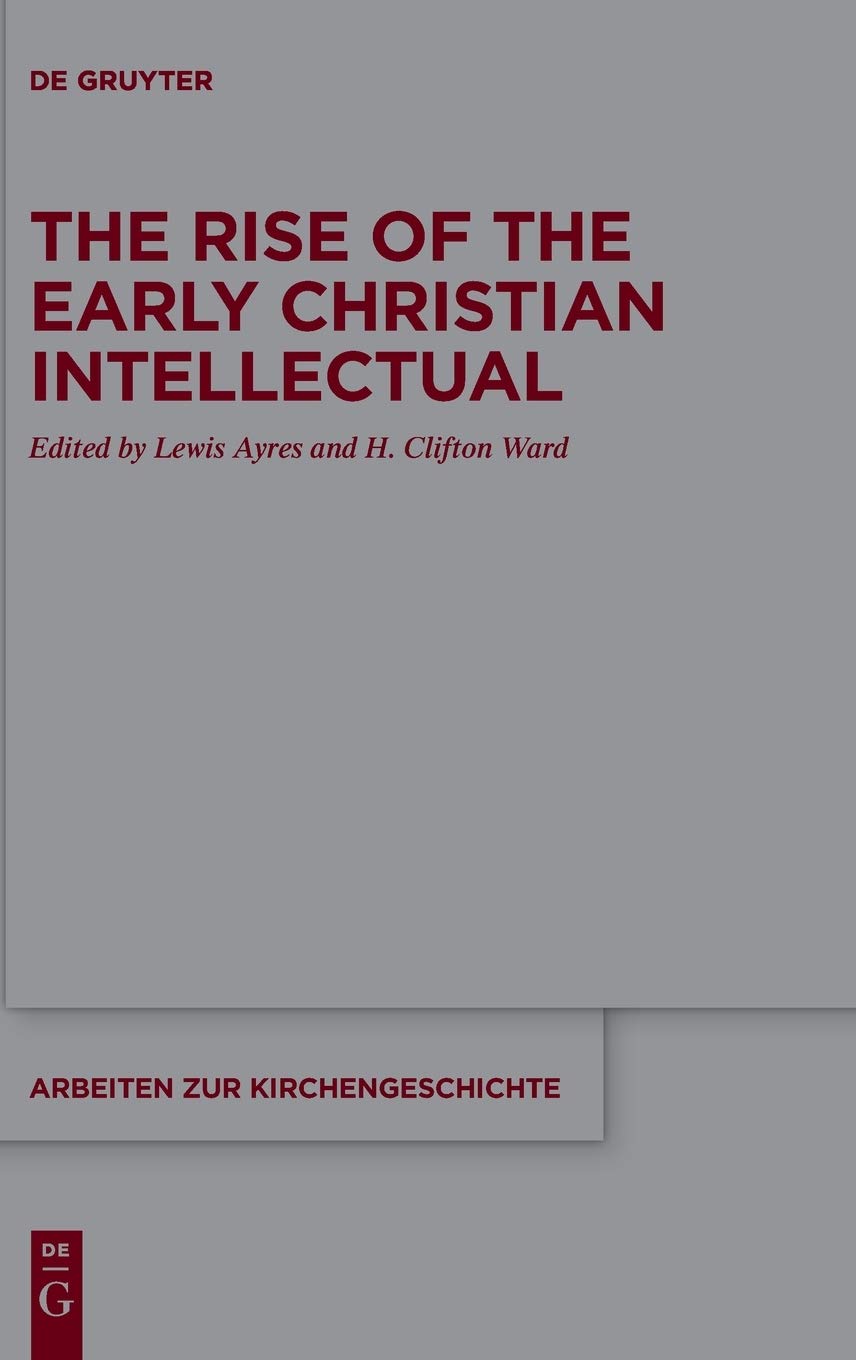
The Rise of the Early Christian Intellectual 1st Edition by H Clifton Ayres ISBN 3110607557 9783110607550

Original price was: $50.00.$35.00Current price is: $35.00.
The Rise of the Early Christian Intellectual 1st Edition by H Clifton Ayres – Ebook PDF Instant Download/Delivery: 3110607557, 9783110607550
Full download The Rise of the Early Christian Intellectual 1st Edition after payment
Product details:
ISBN 10: 3110607557
ISBN 13: 9783110607550
Author: H Clifton Ayres
The study of the growth of early Christian intellectual life is of perennial interest to scholars. This volume advances discussion by exploring ways in which Christian writers in the second century did not so much draw on Hellenistic intellectual traditions and models, as they were inevitably embedded in those traditions.
The volume contains papers from a seminar in Rome in 2016 that explored the nature and activity of the emergent Christian intellectual between the late first century and the early third century. The papers show that Hellenistic scholarly cultures were the milieu within which Christian modes of thinking developed. At the same time the essays show how Christian thinkers made use of the cultures of which they were part in distinctive ways, adapting existing traditions because of Christian beliefs and needs.
The figures studied include Papias from the early part of the second-century, Tatian, Irenaeus, and Clement of Alexandria from the later second century. One paper on Eusebius of Caesarea explores the Christian adaptation of Hellenistic scholarly methods of commentary. Christian figures are studied in the light of debates within Classics and Jewish studies.
The Rise of the Early Christian Intellectual 1st Table of contents:
1 The Seer of Revelation – an Intellectual?
2 The Seer – and his Relation to the Communities
2.1 Self-description as a Prophet detached from the World:
2.2 Functioning as Christ’s voice and as a Witness of Jesus
3 Conclusion
Stephen C. Carlson Papias’s Appeal to the “Living and Lasting Voice” over Books
1 Introduction
2 Greco-Roman Pagans on Writing
3 Jews and Christians on Writing
4 Post-Papian Christians
5 General Synthesis
6 Papias on the Living and Lasting Voice
Matthew R. Crawford Tatian, Celsus, and Christianity as “Barbarian Philosophy” in the Late Second Century
1 The Development of a Philosophical Interest in Ancient, Barbarian Wisdom
2 Celsus’ Conception of Philosophical History and Christian Deviance
2.1 Celsus’ Understanding of Ancient Wisdom and Philosophy
2.2 Celsus’ Deployment of the Ancient Wisdom against Christianity
3 Tatian’s Conception of Cultural History and Hellenistic Deviance
3.1 The Centrality of the Dependence Theme in Tatian’s Oration
3.2 Tatian, the Daemons, and Greek Paideia
3.3 Tatian, the “Barbarian” Philosopher
4 Celsus’ Hellenistic Universalism versus Tatian’s Exclusive Barbarianism
5 Conclusion
Matyáš Havrda Intellectual independence in Christian and medical discourse of the 2nd – 3rd centuries
1 ‘Incidental Knowledge’ and the Bonds of Loyalty
2 Galen on the Best School
3 Intellectual Independence in Early Christianity
Benjamin A. Edsall Clement and the Catechumenate in the Late Second Century
1 The Catechumenate and Its Analogues
1.1 Clement’s Inherited Catechumenate
1.2 Ancient Analogues
1.3 Summary Comparison
2 Clement and the Catechumenate
3 Conclusion
G. Reydams-Schils Platonism and Stoicism in Clement of Alexandria: “Becoming like God”
1.
2.
3.
4.
Lewis Ayres Irenaeus and the ‘Rule of Truth’: A Reconsideration
1 Introduction
2 The Rule of Truth: Habentes itaque regulam ipsam veritatem
3 The Rule for Truth: inventionis disciplina
4 The ‘Rule’ and the Shaping of Theology
Azzan Yadin-Israel Christian, Jewish, and Pagan Authority and the Rise of the Christian Intellectual
1 Non-Intellectual Authority in the Early Church
1.1 Prophetic or Revelatory Authority
1.2 Oral-Traditional Authority
2 The Decline of Non-Intellectual Authority in Christian Sources
2.1 Prophecy
2.2 Oral-Traditional Authority
3 The Decline of Non-Intellectual Authority in Rabbinic Sources
3.1 Prophetic and Inspired Authority
3.2 Oral-Traditional Authority
4 The Decline of Non-Intellectual Sources in Pagan Sources
4.1 Divination and Oracles
4.2 Oral Tradition
5 Conclusion: Against Institutionalization
Francesca Schironi Eusebius’ Gospel Questions and Aristarchus on Homer – Similar Strategies to Save Different ‘Sacred’ Texts
1 In Aristarchus’ Path
1.1 Clarifying an Author from the Author Himself: Linguistic Analysis Backed up by Textual References to Other Passages
1.2 Clarifying an Author from the Author Himself: Content-related Parallels in the Same Author
1.3 Solution Justified with the Intention of the Author (or of the Character)
1.4 Plausibility (εἰκός), Opportunity (καιρός), and Inappropriateness (ἀπρέπεια)
1.5 Invoking ‘Ancient Usages’ Within a Self-consistent (Fictional or Historical) World
1.6 Different Timing
1.7 Etymology and Allegory
2 Beyond Aristarchus?
2.1 Athetesis, Manuscript Evidence, Punctuation
2.2 The Author as Exegete of Himself, Homonymy, and Scribal Mistakes
2.3 Double Names
People also search for The Rise of the Early Christian Intellectual 1st:
what led to the rise of the renaissance
the rise of evangelicalism
the rise of the christian church
the early rise of christianity
the rise of christianity in europe
Tags: H Clifton Ayres, Early Christian Intellectual