

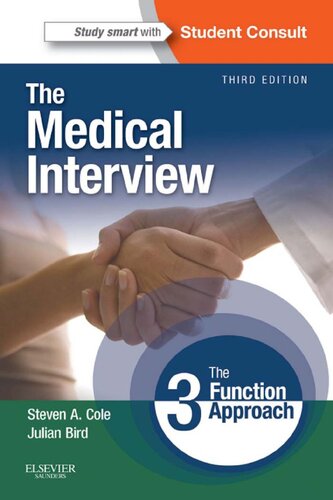
The Medical Interview The Three Function Approach 3rd Edition by Steven A Cole, Julian Bird ISBN 0323279716 9780323279710


Original price was: $50.00.$35.00Current price is: $35.00.
The Medical Interview The Three Function Approach 3rd Edition by Steven A Cole, Julian Bird – Ebook PDF Instant Download/Delivery: 0323279716, 9780323279710
Full download The Medical Interview The Three Function Approach 3rd Edition after payment
Product details:
ISBN 10: 0323279716
ISBN 13: 9780323279710
Author: Steven A Cole, Julian Bird
The Medical Interview The Three Function Approach 3rd Table of contents:
Unit 1 Three Functions Of The Medical Interview
Chapter 1 Learning to Interview Using the Three Function Approach
Summary
References
Chapter 2 Three Functions
Function One: Build the Relationship
Function Two: Assess and Understand the Patient’s Problems
Function Three: Collaborate for Management
Summary
References
Chapter 3 Function One
Nonverbal Skills
Empathy
Empathic Communication to Deepen Understanding (ECDU)
Personal Support
Partnership
Respect (Affirmation)
Summary
References
Chapter 4 Function Two
Nonverbal Listening Behavior
Questioning Style: Open-Ended Questions and the Open-to-Closed Cone
Rule #2: Let the Patient Complete the Opening Statement
Facilitation
Clarification and Direction
Checking/Summarizing
Rule #3: When in Doubt, Check
Survey Problems: “What Else?”
Avoid Leading (Biased) Questions
Elicit the Patient’s Perspective: Ideas, Concerns, and Expectations (“ICE”)
Explore the Impact of the Illness on the Patient’s Quality of Life
Conclusion
Summary
References
Endnotes
Chapter 5 Function Three
Education About Illness: Use (e)TACCT
Brief Action Planning
Behavioral Menus and Problem Solving
The Eight Core Skills of Brief Action Planning
Four Essential Attributes of a Brief Action Plan
Spirit of Motivational Interviewing
Conclusion
Summary
References
Endnotes
Unit 2 Meeting the Patient
Chapter 6 Ten Common Concerns
Summary
Unit 3 Structure of the Interview
Chapter 7 Opening the Interview
Establishing Goals of the Interview
Obtaining Patient Consent to Your Interview Plan
Establishing Initial Rapport
Establishing Patient Comfort
Summary
References
Chapter 8 Chief Complaint, Problem Survey, Patient’s Perspective, and Agenda Setting
1. Eliciting the Chief Complaint
2. The Problem Survey
3. Elicit Patient’s Perspective: Ideas, Concerns, and Expectations (“ICE”)
4. Agenda Setting
Summary
References
Chapter 9 History of Present Illness
Narrative Thread and Open-to-Closed Questioning
Problem Exploration: WW, QQ, AA, LC, I
Respond to Emotions Throughout
Complete the Narrative Thread
Complete This Process for Every Problem
Summary
References
Endnotes
Chapter 10 Past Medical History
Hospitalizations
Surgeries
Illnesses
Injuries
Medications
Allergies
Pregnancies
Exposures
Health Maintenance Practices
Summary
Reference
Chapter 11 Family History
Summary
Reference
Chapter 12 Patient Profile and Social History
Patient Profile
High-Risk Health Behaviors
High-Risk Life Situations (High Stress and Low Support)
Summary
References
Chapter 13 Review of Systems
Summary
References
Chapter 14 Mental Status
Why Every Medical Workup Should Include a Mental Status Evaluation
Brief Mental Status Examination
Conclusion
Summary
References
Unit 4 Presentation and Documentation
Chapter 15 Presentation and Documentation
Chief Complaint
History
Medications
Past Medical History
Family History
Social History
Review of Systems
Examination
Data
Assessment
Plan
Some Pearls for the Presentation
Guideline for the New Patient Presentation
Guideline for the Follow-Up Presentation
Summary and Conclusion
Reference
Unit 5 Understanding Patients’ Emotional Responses to Chronic Illness
Chapter 16 Understanding Chronic Illness
Common Stresses of Illness
Adaptive Tasks of Illness
“Normal” Emotional Reactions to Illness and Mechanisms of Defense
Summary
References
Chapter 17 Understanding Chronic Illness
Persistent Anger
Adjustment Disorder with Depressed Mood and Major Depression
Adjustment Disorder with Anxious Mood/Anxiety Disorders
Interviewing Strategies for Patients with Maladaptive Emotional Responses
Summary
References
Unit 6 Advanced Applications
Chapter 18 Stepped-Care Advanced Skills for Action Planning
A: Why Are Advanced Skill Necessary?
B Overview: The SAAP Model
C What Is Change Talk? Why Is It Important?
D SAAP and Change Talk: How Elicitation, Recognition, and Response to Change Talk Drive the Model
E Skills and Case Study of SAAP Step One: Responding to Discord or Distress
F Skills and Case Studies of SAAP Step Two: Understanding Benefits or Obstacles to Change
G Skills and Case Study of SAAP Step Three: Using Higher-Order Motivational Interviewing Skills
Elicit and Resolve Ambivalence
Develop the Discrepancy
Conclusion
Summary
References
Endnotes
Chapter 19 Communicating with Patients with Chronic Illness
Application of the Three Function Model to Chronic Illness
Summary
References
Endnotes
Chapter 20 Health Literacy and Communicating Complex Information for Decision Making
Why Health Literacy Matters
Health Literacy and the Three Function Model
Communicating Complex Information for Decision Making
Special Considerations Using Written Materials
References
Chapter 21 Sexual Issues in the Interview
Why Are Sexual Issues Important?
Function One: Build the Relationship
Function Two: Assess and Understand the Problem
Function Three: Collaborate for Management
Managing Your Own Anxiety or Attitudinal Barriers
Managing Specific Problems
Conclusion
Chapter 22 Interviewing Elderly Patients
Function One: Build the Relationship with the Elderly Patient
Function Two: Assess and Understand the Elderly Patient
Function Three: Collaborate for Management
Conclusion
Addendum
10 Tips from the Literature for Improving Communication with Older Patients
References
Chapter 23 Culturally Competent Medical Interviewing
The Culture Concept
Importance of Understanding the Patient’s Explanatory Model and Social Context
Strategies for Eliciting Explanatory Models
Continuum of Illness Beliefs
Working with Interpreters in the Medical Encounter
Enhancing the Patient-Interpreter-Physician Interaction
Guidelines for Language Use When Working with Interpreters
Collaborative Management and the Negotiation of Culturally Appropriate Treatment Plans
Conclusion
References
Chapter 24 Family Interviewing
Situations in Which Family Members Are Often Present
The Three Functions of Family Interviewing
Function One: Build the Relationship
When There Is Conflict in the Family
Function Two: Assess and Understand the Patient and Family
Function Three: Collaborate to Manage
Delivering Information
Using the Family as a Resource in Motivating Patients to Change
Special Circumstances When Interviewing Families
Family-Oriented Interview with the Individual Patient
Conclusion
References
Chapter 25 Troubling Personality Styles and Somatization
Compulsive Patients
Dependent Patients
Histrionic Patients
Self-Defeating Patients
Borderline Patients
Narcissistic Patients
Somatization
Conclusion
References
Chapter 26 Communicating with the Psychotic Patient
Psychotic Patients
Strategies
Conclusion
References
Chapter 27 Breaking Bad News
Preparing to Break Bad News
Breaking the News
Importance of Physician Self-Awareness
Special Challenges in Breaking Bad News
Honest Disclosure and Realistic Hope
Teaching How to Give Bad News
Conclusion
References
Chapter 27A Sharing Difficult or Bad News
The Recipient’s Experience of Receiving Difficult or Bad News
The Biggest Trap into Which Clinicians Fall
Thoughts for Medical Students
Nine Steps to Sharing Difficult or Bad News
References
Chapter 28 Disclosure of Medical Errors and Apology
Learning Context
Preparing for the Initial Conversation
The Conversation
The Aftermath
The Follow-up
Conclusion
References
Chapter 29 Risky Drinking and Interviewing About Alcohol Use
Function One: Build the Relationship
Function Two: Assess and Understand the Patient’s Problems
Function Three: Collaborative Management
Summary
References
Endnote
Unit 7 Higher Order Skills
Chapter 30 Nonverbal Communication
Basic Behavior
Nonverbal Skills
Application to the Three Function Approach
Conclusion
References
Chapter 31 Use of the Self in Medical Care
Physician Personal Awareness
Personal Growth
Self-Care
Summary
References
Chapter 32 Using Psychological Principles in the Medical Interview
The Psychodynamic Model: Basic Concepts
Cognitive-Behavioral Model: Basic Concepts
George: A Case Study Integrating Psychodynamic and Cognitive-Behavioral Interventions
Conclusion
Summary
References
Chapter 33 Integrating Structure and Function
Higher-Order Processes and Skills
Six Rules of Integrative, Higher-Order Functioning
Conclusion
Summary
References
Appendix 1 The Medical Interview: The Three Function Approach Table of Skills
Appendix 2
Appendix 3 Learning How to Interview
Readings
Lectures
Demonstration
Practice
Observation and Feedback
Re-Practice
Videotape
Standardized Patients
Role-Play
Modified Live Patient Interviews
Small Groups
Learner-Centered Methods
References
People also search for The Medical Interview The Three Function Approach 3rd:
the three-function model of the medical interview. an educational device
the medical interview the three-function approach
the medical interview the three-function approach pdf
three-function model of the medical interview
three function model of the medical interview
Tags: Steven A Cole, Julian Bird, Medical Interview