

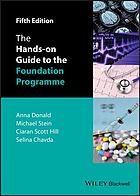
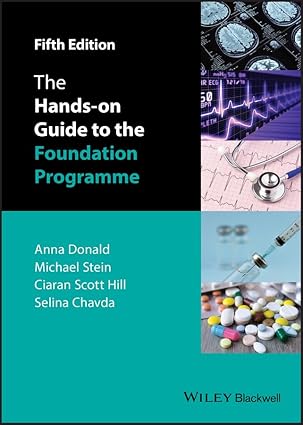
The Hands On Guide to the Foundation Programme 5th Edition by Anna Donald ,Michael Stein ,Ciaran Scott Hill ,Selina J Chavda ISBN 1118767462 978-1118767467
Original price was: $50.00.$35.00Current price is: $35.00.
The Hands On Guide to the Foundation Programme 5th Edition by Anna Donald ,Michael Stein ,Ciaran Scott Hill ,Selina J. Chavda – Ebook PDF Instant Download/Delivery:1118767462 ,978-1118767467
Full download The Hands On Guide to the Foundation Programme 5th Edition after payment
Product details:
ISBN 10:1118767462
ISBN 13:978-1118767467
Author:Anna Donald ,Michael Stein ,Ciaran Scott Hill ,Selina J.Chavda
About to start the Foundation Programme?
Making the transition from medical school to professional life?
The Hands-on Guide to the Foundation Programme, Fifth Edition is a practical guide for medical students and foundation doctors, dealing with the many challenges of the programme. With hints, tips and realistic advice on various aspects of the course, from self-care to prescribing, this guide provides invaluable support, with up-to-date information on postgraduate training and recruitment, practical management skills and career pathways to help build confidence, enabling you to hit the ground running.
This edition features newly expanded sections on emergencies, psychiatric evaluation, the Situational Judgement Test, and the common calls and conditions you will encounter on a daily basis. The Hands-on Guide to the Foundation Programme is a perfect companion to assist the junior doctor in preparing for the intellectual and emotional challenges of the foundation years.
Take the stress out of the Foundation Programme with The Hands-on Guide!
Table of contents:
Starting up
Panic?
People to help you
Three basic tips
Other useful start-up information
Dress
Equipment
Geography
Ward rounds
Social rounds
Night rounds
Discharging patients
Work environment
Bibliography
Getting Organized or ‘The Folder’
Personal folder and the lists
How to make a personal folder
Keeping track of patients (List 1)
List of things to do (List 2)
Results sheet (List 3)
Data protection and confidentiality
Paperwork and electronic medical records
Patient notes
Incident forms
Blood forms and requesting bloods tests
Discharge summaries (TTO/TTA)
Handovers
Referral letters
Self-discharge
Sick notes
Accident and emergency
General advice
Admitting and allocating patients
Keeping track of patients
Medicine
Medical and surgical assessment units
Fast-track patients
Becoming a better doctor
Foundation Programmes (United Kingdom)
Academic Foundation Programmes
Assessments
Situational judgement tests
Moving on from the Foundation Programme
Information technology
The internet
Online medical databases
Keeping up with the literature
Evidence-based medicine
Clinical audit
Quality improvement projects
Case reports
Courses
Professionalism
Communication
Consultants and senior registrars
GPs
Nurses
Patients
Patients’ families
Confidentiality
Exceptions to keeping confidentiality
References
Emergencies
Acute coronary syndrome
Stroke
DVT and PE
Haematemesis
Acute asthma
Life-threatening asthma
Acute severe asthma
Brittle asthma
Acute pneumothorax
Anaphylaxis
Meningitis
Collapse or reduced mobility
Overdose
In general
Treating the patient
Surgery
Cardiac arrests and crash calls
Cardiac arrest calls
‘Do not resuscitate’ orders
Common calls
How to use this section
Considerations for all ward calls
Abdominal pain
Differential diagnoses
Anaemia
Arrhythmia
Calcium
Hypercalcaemia
Hypocalcaemia
Chest pain
Confusion
Differential diagnoses
Constipation
Differential diagnoses
Diarrhoea
Differential diagnoses
Electrocardiograms
Important ECG abnormalities to recognize
Eye complaints
The acute red eye
Sudden loss of vision in one or both eyes
Floaters
Falls
Differential diagnoses
Fever
Differential diagnosis
The immunocompromised patient with fever
Fits
Differential diagnoses
Intravenous fluids
Upper gastrointestinal bleeds
Lower gastrointestinal bleeds
Glucose
Haematuria
Headaches
Differential diagnoses and key symptoms
Hypertension
Peri operative hypertension
Hypotension
Differential diagnoses
Insomnia
Differential diagnoses and suggested management
Management with benzodiazepines
Itching
Differential diagnoses (if no visible skin lesions or rash)
Major trauma
Minor trauma
The moribund patient
Nausea and vomiting
Differential diagnoses
Oxygen therapy
Methods of oxygen delivery
Pulse oximetry
Phlebitis
Management
Potassium
Hyperkalaemia
Hypokalaemia
Rashes and skin lesions
Disease categories
Shortness of breath
Differential diagnoses
The sick patient
Sodium
Hyponatraemia
Differential diagnoses
Transfusions
Blood transfusions
Platelet transfusions
Urine: Low output (oliguria/anuria)
Basic emergency routine
Obstetrics and gynaecology calls
Talking to the patient
Gynaecological examination
Obstetric examination
Being a male
Common gynaecological calls
Termination of pregnancy
Death and dying
Terminal care
Communication
Breaking bad news
Ongoing communication with dying patients
Pain control
Symptom control
Prescribing for the dying
Support for the dying and for you
Death
What to do when a patient dies
Telling relatives about the patient’s death
Religious practices on death
PMs
Death certificates
Writing the death certificate
Referring to the coroner (Scotland: Procurator fiscal)
Cremation forms and fees
To check for pacemakers
Further reading
Drugs
General
Prescribing drugs
Drug charts
Writing prescriptions
Controlled drugs
Verbals
Giving drugs
Drug infusions
Prescribing drug infusions
Intravenous drugs
Specific drug topics
Antibiotics
Anticoagulation
Digoxin
Therapeutic drug levels
Miscellaneous tips
Handle with care
Alcoholism
Alcohol withdrawal
Capacity
Children
Depression
Elderly patients
Haemophilia patients
Taking blood
For theatre
HIV/AIDS
Taking blood
HIV testing
Jehovah’s Witnesses/Christian Scientists
Pregnant women
Sickle cell anaemia
The patient on steroids
Side effects of steroids
Managing ill patients on steroids
Treating common side effects
Withdrawing steroid therapy
Haematological and oncological emergencies
Spinal cord compression
Superior vena cava obstruction and airway compromise
Raised intracranial pressure
Tumour lysis syndrome
Hyperviscosity
Approach to the medical patient
History and examination
Getting to know the disease
History and examination
Clinical stalemate
Preparing patients for medical procedures
Cardiac catheterization
Elective DC cardioversion
Upper gastrointestinal endoscopy
Colonoscopy
Flexible sigmoidoscopy
Liver biopsy
Pacemaker insertion
Renal biopsy
Specialist referrals and investigating the medical case
Cardiology
Gastroenterology
Haematology
Neurology
Renal medicine
Respiratory medicine
Rheumatology
Practical procedures
General hints
Interpreting ABGs
Bladder catheterization
Men
Women
Blood cultures
Venepuncture
Cannulation (Venflon/line insertion)
Problems with temporary and tunnelled central lines
Using central lines
Chest drains
Managing a chest drain
How to remove a drain
DC cardioversion
Electrocardiogram
Exercise stress test
Relative contraindications (discuss with senior)
The procedure
Injections
Subcutaneous
Intramuscular
Joint aspiration/injection
Aspiration
Injecting joints
Local anaesthesia (for any procedure)
Lumbar puncture
Contraindications (get help)
Mantoux test
Nasogastric tubes
Peritoneal tap (paracentesis)
Pleural aspiration
Indications
Pulsus paradoxus
Respiratory function tests
Spirometry
Peak expiratory flow rate
Sutures
Radiology
Requesting investigations
Minimizing radiation
Common concerns about X-rays
Pregnancy
Plain films
Chest X-rays
Abdominal films
Ultrasound
Computed tomography
General
CT head – Some emergency indications
Radioisotope scanning
Approach to the surgical patient
Introduction
Preoperative care
Clerking
Preoperative tests
Requesting blood preoperatively
Preoperative fasting
Consent
Marking
Booking theatre lists
WHO checklist
Perioperative prescribing
Anti-emetics
Analgesia
Laxatives
Bowel preparation
Thromboprophylaxis
Insulin infusion
Post-operative care
Wound checks
Stoma care
Enhanced recovery after surgery
Theatre
Further reading
General practice
What you can and cannot do
You can
You cannot
Referral letters and note keeping
General points
Public health and health promotion
Risks
Benefits
Condoms
Intrauterine system
Intrauterine device
Contraceptive injection
Contraceptive implants
Smoking
Lifestyle advice
Notifiable diseases
Vaccinations
Breast screening
Cervical screening
Sexual health
The hidden agenda and health beliefs
Follow-up
Home visits
Self-care
Accommodation
Alternative careers
Bleep
British Medical Association
Car insurance
Clothes (laundry/stains)
Contacting medical colleagues
Contract and conditions of service
What you need to know about your contract
Doctors’ mess
Making money for the mess
Insurance (room contents)
Jobs
Curriculum vitae
The interview
Consultant career prospects
Locums
Meals
Medical defence
Money
Income protection if long-term sick or disabled
Student debt
Mortgages
Payslip deductions
Pensions
Tax
Telephone and online banking
Needlestick injuries
If the patient is known to be HIV positive
If the patient is known to be hepatitis positive
Not coping
Part-time work (flexible training)
Representation of junior doctors
Sleep and on-call rooms
When things go wrong
Bullying and psychological stress
Whistle-blowing
Appendix I: Scoring systems
Cardiovascular
CHA2DS2 VASc
HASBLED score
GRACE score
TIMI Risk Index
NYHA scoring system
Neurology
TIA-ABCD2 scoring
AMTS
AVPU score
GCS
Anaesthetics
Mallampatti classification for intubation
BMI
Calculating anion gap
Calculating serum osmolality
Respiratory
Gastroenterology
Child Pugh classification
Renal
Trauma
Barthel score
Bathing
Bladder
Bowels
Dressing
Feeding
Grooming
Mobility
Stairs
Toilet
Transfer
Appendix II: Useful tests, numbers and other information
Addresses
Mental Health Act
Notifiable diseases
Results
Haematology
People also search for:
the hand foundation
hands to guide you behavioral health
in the hands of god ministries
foundation using hands
foundations and practice of healing touch
Tags: Anna Donald, Michael Stein, Ciaran Scott Hill, Selina J Chavda, Guide, Foundation