

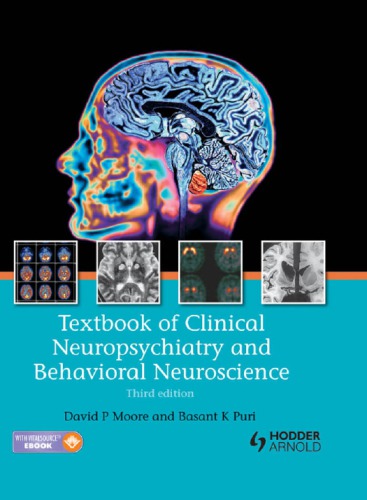
Textbook of Clinical Neuropsychiatry and Behavioral Neuroscience 3rd Edition by David P Moore, Basant K Puri ISBN 1444121340 9781444121346


Original price was: $50.00.$35.00Current price is: $35.00.
Textbook of Clinical Neuropsychiatry and Behavioral Neuroscience 3rd Edition by David P Moore, Basant K Puri – Ebook PDF Instant Download/Delivery: 1444121340, 9781444121346
Full download Textbook of Clinical Neuropsychiatry and Behavioral Neuroscience 3rd Edition after payment
Product details:
ISBN 10: 1444121340
ISBN 13: 9781444121346
Author: David P Moore, Basant K Puri
Textbook of Clinical Neuropsychiatry and Behavioral Neuroscience 3rd Table of contents:
PART I NEUROSCIENCE FUNDAMENTALS
1 Neuroscience fundamentals
1.1 FUNCTIONAL NEUROANATOMY
The Brain of Homo Sapiens
Figure 1.1 A phylogenetic tree of selected groups of vertebrates. The ancestral vertebrate groups represented at the bottom of the tree are phylogenetically older than the full set of those in the top third of the tree. Reproduced from Butler AB, Hodos W. (2005), with permission.
Figure 1.2 A regression line of the cortical surface area and brain volumes of 50 species of mammals, of which only 11 representative species, including humans, have been indicated. Adapted from Jerison, H.J. The study of primate brain evolution: where do we go from here? Reproduced from D. Falk and K.R. Gibson (eds) Evolutionary Anatomy of the Primate Cerebral Cortex. Cambridge: Cambridge University Press, 2001, with permission.
Anteroposterior Organization
Figure 1.3 Typical spinal nerve formation and connections to the sympathetic ganglia and chains. The ventral motor rootlets unite to form a ventral motor root, joining with the dorsal sensory root which comes from the sensory rootlets and dorsal root ganglion of each spinal segment. The ‘mixed’ spinal nerve then divides into a dorsal and a ventral primary ramus. The dorsal rami supply the back whereas the ventral rami supply all the limbs and trunk. The sympathetic ganglia are connected to the ventral rami via white (presynaptic) rami communicantes and gray (postsynaptic) rami communicantes. Reproduced from Abrahams, Craven & Lumley, Illustrated Clinical Anatomy 2nd edition, Hodder Arnold, 2007 with permission.
Figure 1.4 Schematic drawing of a transverse section through the dorsal part of the body of a developing craniate to show the relationships of the alar (A), basal (B), and floor (F) plates in the neural tube and the positions of the notochord (N), neural crest (NC), overlying ectoderm (E). The neural crest migrates ventrolaterally. Reproduced from Butler AB. (2000), with permission.
Laterality
Brain Lobes and Major Gyri and Sulci
Figures 1.5a-d reproduced from Ellis, Logan & Dixon, Human Sectional Anatomy, 2nd edition, Hodder Arnold, 2001, with permission.
Figure 1.6 (a) Lateral and (b) medial aspects of the cerebral hemisphere showing important Brodmann areas (numbered). Reproduced from Graham DI, Nicoll JAR and Bone I, Adams & Graham’s Introduction to Neuropathology 3rd edition, Hodder Arnold, 2006 with permission.
frontal lobe
Primary motor cortex
Figure 1.7 The motor and sensory homunculi. Reproduced from Graham DI, Nicoll JAR and Bone I, Adams & Graham’s Introduction to Neuropathology 3rd edition, Hodder Arnold, 2006 with permission.
Premotor cortex
Frontal eye field
Prefrontal cortex
Supplementary motor cortex
Orbitofrontal cortex
parietal lobe
Somatosensory cortex
Superior and inferior parietal lobules
temporal lobe
Primary auditory cortex
Wernicke’s area
Middle and inferior temporal cortices
occipital lobe
limbic system
Basal Ganglia
components
Table 1.1 Components of the basal ganglia
anatomical relationships
Figure 1.8 A three-dimensional view of the striatum of the left cerebral hemisphere.
basal ganglia–thalamocortical circuits
Figure 1.9 Basal ganglia-thalamocortical circuits. ACA, anterior cingulate area; APA, arcuate premotor area; CAUD, caudate; (b), body; (h), head; DLC, dorsolateral prefrontal cortex; EC, entorhinal cortex, FEF: frontal eye fields; Gpi, internal segment of globus pallidus; HC, hippocampal cortex; ITG, inferior temporal gyrus; LOF, lateral orbitofrontal cortex; MC, motor cortex; MDpl, medialis dorsalis pars paralamellaris; MDmc, medialis dorsalis pars magnocellularis; MDpc, medialis dorsalis pars parvocellularis; PPC, posterior parietal cortex; PUT, putamen; SC, somatosensory cortex; SMA, supplementary motor cortex; SNr, substantia nigra pars reticulata; STG, superior temporal gyrus; VAmc, ventralis anterior pars magnocellularis; VApc, ventralis anterior pars parvocellularis; VLm, ventralis lateralis pars medialis; VLo, ventralis lateralis pars oralis; VP, ventral pallidum; VS, ventral striatum; cl, caudolateral; cdm, caudal dorsomedial; dl, dorsolateral; l, lateral; ldm, lateral dorsomedial; m, medial; mdm, medial dorsomedial; pm, posteromedial; rd, rostrodorsal; rl, rostrolateral; rm, rostromedial; vm, ventromedial; vl, ventrolateral. Reproduced from Alexander GE, DeLong MR, Strick PL. (1986), with permission.
Internal Anatomy of the Temporal Lobes
components
Figure 1.10 A series of coronal sections of the temporal lobe and inferior horn of the lateral ventricle illustrating the relationships between the components of the hippocampal formation. (a) to (c) show successive stages in their development. Reproduced from S. Standring (ed), Gray’s Anatomy, 40th edition, Edinburgh, Elsevier, 2008, with permission.
surface landmarks and anatomical relationships
Figure 1.11 Coronal, thionin-stained section of the human hippocampal formation. Abbreviations: a, molecular layer of the dentate gyrus; b, granule cell layer of the dentate gyrus; c, plexiform layer of the dentate gyrus; CA1–3, fields of the hippocampus; d, stratum oriens layer of the hippocampus; DG, dentate gyrus; e, pyramidal cell layer of the hippocampus; EC, entorhinal cortex; f, stratum radiatum of the hippocampus; fim, fimbria; g, stratum lacunosum-molecular of the hippocampus; PaS, parasubiculum; PRC, perirhinal cortex; PrS, presubiculum; S, subiculum.
Figure 1.12 A gross view of the medial temporal lobe showing surface and sulcal landmarks. Note the corrugated appearance of the entorhinal cortex (EC) and the small elevations (known as verrucae) that define its location. CS, collateral sulcus; GA, gyrus ambiens; TN, tentorial notch; RS, rhinal sulcus. Reproduced from Van Hoesen GW. (1995), with permission.
connections
Figure 1.13 The hippocampal formation showing the disposition of the various cell fields. Redrawn from S. Standring (ed), Gray’s Anatomy, 40th edition, Edinburgh, Elsevier, 2008, with permission.
Figure 1.14 Cortical and subcortical connections of the hippocampal formation. Subcortical connections are indicated by dotted; cortical connections are indicated by solid and dashed lines. The thickness of the solid lines approximates to the strength of the connections. Most of the hippocampus’s neocortical inputs come from the perirhinal and parahippocampal cortices, through the entorhinal cortex, and most of its neocortical output is through the subiculum, which also projects back to the entorhinal cortex. Both the perirhinal cortex and the parahippocampal cortex lie at the end of the ventral visual processing (‘what’) stream. The perirhinal cortex is crucial for the representation of complex objects, whereas the parahippocampal cortex, with its strong connections to the posterior parietal (7a/lateral intraparietal area [LIP] and retrosplenial (RSp) cortices, has a greater role in the processing of visuospatial information (from the dorsal visual processing [‘where’] stream). Head-direction cells are found in the mammillary bodies, the anterior thalamic nuclei (ATN), the presubiculum and the entorhinal cortex. Some researchers have proposed that ‘recollection’ is dependent on the hippocampus and its links with the ATN, whereas ‘familiarity’ can be mediated by direct connections between the perirhinal cortex and the medial dorsal thalamic nuclei (MDTN). Cing gyrus, cingulate gyrus; TE and TEO, inferior temporal areas TE and TEO. Adapted from Bird CM, Burgess N. The hippocampus and memory: insights from spatial processing. Nat Rev Neurosci 2008; 9:182–94 with permission.
Figure 1.15 Nuclei of the rat amygdaloid complex. Coronal sections are drawn from rostral (a) to caudal (c). The different nuclei are divided into three groups as described in the text. Areas shaded green form part of the basolateral group, areas shaded pink are the cortical group, and areas shaded yellow form the centromedial group. ABmc, accessory basal magnocellular subdivision; ABpc, accessory basal parvicellular subdivision; Bpc, basal nucleus magnocellular subdivision; e.c., external capsule; Ladl, lateral amygdala medial subdivision; Lam, lateral amygdala medial subdivision; Lavl, lateral amygdala ventrolateral subdivision; Mcd, medial amygdala dorsal subdivision; Mcv, medial amygdala ventral subdivision; Mr, medial amygdala rostral subdivision; Pir, piriform cortex; s.t., stria terminalis.
Major White Matter Pathways
association fibers
Figure 1.16 The organization of the principal association fibers projected on a sagittal section of the left cerebral hemisphere. Redrawn from S. Standring (ed.), Gray’s Anatomy, 40th edition, Edinburgh, Elsevier, 2008, with permission.
commissural fibers
Table 1.2 Corpus callosal fiber destinations
projection fibers
Figure 1.17 Horizontal section through the internal capsule illustrating its main fiber components.
cranial nerves
Meninges
pia mater
arachnoid mater
Figure 1.18 Sagittal section illustrating the principal subarachnoid cisterns.
dura mater
Ventricular System
Figure 1.19 The ventricular system. (a) Anterior view; (b) left lateral view.
Vascular Supply And Drainage
arterial supply
Figure 1.20 The arteries on the base of the brain. The anterior part of the left temporal lobe has been removed to display the initial course of the middle cerebral artery within the lateral fissure. Reproduced from Graham DI, Nicoll JAR and Bone I, Adams & Graham’s Introduction to Neuropathology 3rd edition, Hodder Arnold, 2006, with permission.
Figure 1.21 The major arteries supplying the medial (a) and lateral (b), aspects of the brain. Reproduced from Graham DI, Nicoll JAR and Bone I, Adams & Graham’s Introduction to Neuropathology 3rd edition, Hodder Arnold, 2006, with permission.
Table 1.3 Regional arterial supply of the brain
Figure 1.22 The arteries supplying the left cerebral hemisphere. (a) Lateral surface. (b) Medial surface.
venous drainage
Figure 1.23 The cerebral venous system showing the principal superficial and deep veins of the brain and their relationship to the dural venous sinuses, viewed from the left side. Redrawn from S. Standring (ed.), Gray’s Anatomy, 40th edition, Edinburgh, Elsevier, 2008, with permission.
Types of Cells Found Within the Central Nervous System
neurons
macroglia
Astrocytes
Oligodendrocytes
ependymal cells
choroid plexus cells
microglia
stem cells
Corticoneurogenesis
main stages and zones of the cortical wall
Figure 1.24 Main stages in the formation of the layered structure of the cerebral cortex. (a) The earliest migrating postmitotic neuroblasts (1) leave the ventricular zone (vz), crossing the intermediate zone (iz) to form the preplate (pp). (b) The preplate is subsequently split by the settling of later migrating neuroblasts. Successive waves of centrifugally migrating neuroblasts (2–4) establish the ‘inside-out’ structure of the cortical plate (cp), situated between the subplate (sp), the remnant of the inner aspect of the preplate and the marginal zone (mz). (c) Mature layered structure of the cerebral cortex, demonstrating the origin of layers II–VI from the cortical plate, whereas layer I (mz) Cajal –Retzius neurons derive largely from the outer portion of the preplate white matter (wm). Reproduced from Love S., Louis D.N. and Ellison D.W., (eds.) Greenfield’s Neuropathology, 8th edition, Hodder Arnold, 2008, with permission.
neuronal migration
Figure 1.25 Schematic diagram of the composition, cellular events, and relationship in the developing cerebral wall, based on data obtained from species ranging from the mouse to human and non-primates. Initially, homogeneous population of neural stem cells (long fibers), which divide symmetrically, transform into radial glial cells (RG), which divide asymmetrically and over time produce migrating neurons (MN, short fibers) and dedicated neuronal progenitors with short processes (mitotic divisions) that populate the ventricular (VZ) and subventricular (SVZ) zones and produce all projection neurons, as well as the majority of interneurons in humans and a small fraction in rodents. In addition, a population of tangentially migrating neurons arrives to the dorsal telencephalon from the ganglionic eminence mostly via SVZ and marginal (MZ) zones to supply the majority of interneurons in rodents and about one-third in humans. Eventually, RG undergo apoptosis (AP) or directly or indirectly generate ependymal cells, fibrillary astrocytes (FA), protoplasmic astrocytes (PA), glial progenitors (GP), or astrocytic stem cells that retain a neurogenic potential (NP). Reproduced from Rakic P. (2006), with permission.
radial-unit hypothesis
Figure 1.26 The basic developmental events and types of cell–cell interactions that occur during the early stages of corticogenesis, before formation of the final pattern of cortical connections. This diagram emphasizes radial migration, a predominant mode of neuronal movement that, in primates, underlies the elaborate columnar organization of the neocortex. After their lost division, cohorts of migrating neurons (MN) first traverse the intermediate zone (IZ) and then the subplate zone (SP), where they have an opportunity to interact with ‘waiting’ afferents that arrive sequentially from the nucleus basalis (NB) and monoamine (MA) subcortical centers, from the thalamic radiation (TR), and from several ipsilateral and contralateral corticocortical bundles (CC). After newly generated neurons bypass the earlier generated ones that are situated in the deep cortical layers, they settle at the interface between the developing cortical plate (CP) and the marginal zone (MZ) and, eventually, form a radial stock of cells that share a common site of origin but are generated at different times. For example, neurons that are produced between embryonic day E40 and E100 in radial unit 3 follow the same radial glial fascicle, and form ontogenetic column 3. Although some cells, presumably neurophilic in nature of their surface affinities, might detach from the cohort and move laterally, guided by an axonal bundle (for example, horizontally oriented cell leaving radial unit 3), most postmitotic cells are gliophilic, for example have affinity for the glial surface, and obey constraints strictly that are imposed by transient radial glial scaffolding (RG). This cellular arrangement preserves relationships between the proliferative mosaic of the ventricular zone (VZ), and the corresponding protomap within the SP and CP, even though the cortical surface in primates shifts considerably during the massive cerebral growth encountered in mid-gestation. Reproduced from Rakic P. (1995), with permission.
Neurogenesis in the Adult Human Brain
Synaptogenesis and Synaptic Elimination in the Human Brain
Cerebral Plasticity
non-human mammalian adult brain
adult human brain
Major Neurochemical Pathways
dopaminergic pathways
Table 1.4 Major dopaminergic pathways of the brain
norepinephrinergic pathways
cholinergic pathways
corticofugal glutamate system
serotonergic pathways
1.2 FUNCTIONAL NEUROIMAGING
Bold Functional Magnetic Resonance Imaging
Magnetic Resonance Spectroscopy
Figure 1.27 Proton magnetic resonance spectroscopy. (a) Normal proton spectrum of the brain showing the key metabolites N-acetylaspartate (NAA), creatine (Cr), and choline (Cho). (b) A mass lesion surrounded by vasogenic edema on a T2-weighted transverse section showing the voxel sampled in (c). (c) A typical spectrum from a glioblastoma showing reduced NAA confirming a reduction in normally functioning neurons, a raised choline indicating an increased membrane turnover, and little change in creatine. The lactate peak indicates anaerobic respiration. Reproduced from Graham DI, Nicoll JAR and Bone I, Adams & Graham’s Introduction to Neuropathology 3rd edition, Hodder Arnold, 2006, with permission.
Figure 1.28 31P magnetic resonance spectroscopy. (a) Fitting seven peaks (darker line) to the 31P spectrum (lighter line). The dotted line shows the baseline from the broad component, which is also shown in (b). Reproduced from Puri BK, Counsell SJ, Hamilton G et al. (2004), with permission.
Arterial Spin Labeling
Single-Photon Emission Computed Tomography
Figure 1.29 A four-compartment model describing the kinetics of 99mTc-HMPAO in the brain: k1 to k6 denotes constants of first-order kinetics. Lipophilic HMPAO is freely diffusible from blood to brain; hydrophilic HMPAO is non-diffusible. Since the conversion from the lipophilic to the hydrophilic form is almost irreversible k4 = k6 = 0. BBB, blood–brain barrier. Reproduced from Borch K, Greisen G. (1997), with permission.
Positron Emission Tomography
Table 1.5 Properties and production routes for positron emission tomography radionuclides
Figure 1.30 Blockage of18F-FDG from glucose metabolism after intracellular uptake. Reproduced from Dowsett, D.J, Kenny, P.A. and Johnston, R.E. The Physics of Diagnostic Imaging, 2nd edn, Hodder Arnold, 2006, with permission.
Figure 1.31 (a) Magnetic resonance imaging scan showing a 5 cm mass with edema suggestive of recurrent tumor in a patient referred with a history of glioblastoma multiforme treated with surgery, chemotherapy and radiotherapy 4 years earlier. (b) Positron emission tomography scans showing increased metabolic activity associated with the mass in the inferoposterior aspect of the left frontal lobe compatible with recurrence. The diffuse decreased activity in the left frontal region is consistent with postradiation changes. Reproduced from Barrington SF, Maisey MN, Wahl RL. (2006), with permission.
Figure 1.32 Magnetic resonance imaging (MRI) and positron emission tomography (PET) scans of the brain of a child who had undergone multiple surgery, chemotherapy, and radiotherapy for an anaplastic ependymoma. Although neurologically stable with a left hemiplegia, she complained of new headaches. The MRI scan (left) showed an enhancing region in the right parietal lobe suggestive of recurrent disease.18F-FDG PET (middle) was registered to the MRI scan (right). The region of enhancing tissue on MRI did not take up18F-FDG (solid arrow) indicating that this was likely to be scar or inflammatory tissue. The small focus of18F-FDG uptake (broken arrow) in the right parietal region corresponded to an island of normal cortex on MRI. Reproduced from Barrington SF, Maisey MN, Wahl RL. (2006), with permission.
Figure 1.33 18F-fluorodeoxyglucose positron emission tomography findings from a patient with human immunodeficiency virus who was referred with a magnetic resonance imaging lesion of unknown nature in the right parietal lobe. There was a focus of intense uptake in the right parietal lobe posterior to the thalamus. Biopsy revealed lymphoma. Reproduced from Barrington SF, Maisey MN, Wahl RL. (2006), with permission.
Figure 1.34 This patient with newly diagnosed human immunodeficiency virus presented with a 6-week history of headache and increasing confusion associated with pyrexia. (a) Magnetic resonance imaging (MRI) showed a lesion centered on the right lentiform nucleus with surrounding edema and mass effect, consistent with toxoplasmosis or lymphoma. (b) There was a photopenic effect on positron emission tomography (PET) corresponding to the MRI lesion and consistent with toxoplasmosis and not lymphoma. The PET scan also shows diffuse reduction in the right frontoparietal region. The patient showed good clinical response to treatment with antitoxoplasmosis therapy. Reproduced from Barrington SF, Maisey MN, Wahl RL. (2006), with permission.
Table 1.6 Magnetic resonance imaging and18F-fluorodeoxyglucose positron emission tomography findings in dementias
1.3 NEUROPSYCHOLOGY
Assessment Prerequisites and Validity
Verbal and Linguistic Functions
aphasia
Table 1.7 Tests for aphasia
naming
Table 1.8 Object naming tests
vocabulary
verbal fluency
reading
Table 1.9 Reading tests
Table 1.10 The National Adult Reading Test (NART)
Perception
visual
Table 1.11 Visual perception tests
auditory
Table 1.12 Auditory perception tests
tactile
Table 1.13 Tactile perception tests
Cognition
orientation
attention and concentration
memory, concept formation, and other functions
Construction
Planning
Laterality
Table 1.14 Modified version of the Annett Handedness Questionnaire
Table 1.15 The Edinburgh Handedness Questionnaire
Test Batteries and Rating Scales
cantab
cognistat
halsted–reitan battery (hrb)
luria–nebraska neuropsychological battery (lnnb)
mini-mental state examination (mmse)
repeatable battery for the assessment of neuropsychological status (rbans)
wais
Weschler Memory Scale (Wms)
wisconsin card sorting test (wcst)
1.4 NEUROPHYSIOLOGY
Resting Neuronal Ionic Concentrations
Table 1.16 Ionic compositions of two kinds of electrically active animal cells.
Action Potentials
Figure 1.35 Above Changes in potassium and sodium permeability associated with the action potential. Below How these changes result in the form of the action potential itself. The arrows above and below the trace indicate roughly by their length the relative sizes of PNa and PK’ pulling the potential respectively towards ENa and EK. Reproduced from Carpenter R.H.S., (2003), with permission.
Figure 1.36 Action potential (AP) or impulse. When a stimulus depolarizes the membrane to threshold –55mV, an AP is generated. The AP arises at the trigger zone (at the junction of the axon hillock and the initial segment) and then propagates along the axon to the axon terminals. Redrawn with permission from Tortora and Derrickson (2006) Principles of Anatomy and Physiology 11th edn. Oxford: Wiley Blackwell.
Neuronal Communication
ligand-gated channels
Figure 1.37 Specific examples of receptor mechanisms. Above Two cholinergic receptors: nicotonic (direct ligand-gated channel) left, and muscarinic, causing increased PK (indirect, via G-protein) right. Middle A β-adrenergic receptor also using a G-protein, in this case resulting in cAMP. Bottom Two sensory receptor mechanisms, both using a G-protein, in one case (olfaction) to increase membrane permeability, and in the other (light) to decrease it. PDE, = phosphodiesterase. Reproduced from Carpenter R.H.S., (2003), with permission.
variables
Table 1.17 Theme and variations: some types of neuron
synaptic transmission
Table 1.18 Examples of types of neurotransmitters and modulators
Figure 1.38 Somewhat stylized representations of some synaptic types. (a) Neuromuscular junction. (b) Two types of presynaptic axonal endings synapsing with a dendrite; the synapse on the right is with a dendritic spine. (c) A three-way synapse from the retina; the junction between bipolar and amacrine cell probably permits the transfer of information in both directions. Reproduced from Carpenter R.H.S., (2003), with permission.
Table 1.19 Some varieties of receptors for neurotransmitters
Figure 1.39 Interaction of excitatory postsynaptic potentials (EPSPS) and inhibitory postsynaptic potentials (IPSPS) at the postsynaptic neuron. Presynaptic neurons (A–C) were stimulated at times indicated by the arrows, and the resulting membrane potential was recorded in the postsynaptic cell by a recording microelectrode. Reproduced from Widmaier EP., Raff M. and Strang K.T. Vander’s Human Physiology: the mechanisms of body function, 11th edition, 2008, with permission from McGraw-Hill Companies.
1.5 MOLECULAR GENETICS
Dna Structure
Figure 1.40 DNA and chromosomal structure. In chromatin, DNA is tightly wrapped around protein cores (such as histone). Structure of chromatin and chromosomes: chromatin is composed of double-stranded DNA that is wrapped around histone and nonhistone proteins forming nucleosomes. The nucleosomes are further organized into solenoid structures. Chromosomes assume their characteristic structure, with short (p) and long (q) arms at the metaphase stage of the cell cycle. From Fauci et al (eds) (2008) Harrison’s Principles of Internal Medicine, 17th edition. New York: McGraw Hill, 2008 with permission.
Genetic Information
Figure 1.41 Genetic information. Flow of genetic information: multiple extracellular signals activate intracellular signal cascades that result in altered regulation of gene expression through the interaction of transcription factors with regulatory regions of genes. RNA polymerase transcribes DNA into RNA that is processed to mRNA by excision of intronic sequences. The mRNA is translated into a polypeptide chain to form the mature protein after undergoing post-translational processing. HAT, histone acetyl transferase; CBP, CREB-binding protein; CREB, cyclic AMP response element-binding protein; CRE, cyclic AMP responsive element; CoA, Co activator; TAF, TBP-associated factors; GTF, general transcription factors; TBP, TATA-binding protein; TATA, TATA box; RE, response element; NH2, aminoterminus; COOH, carboxyterminus. From Fauci et al (eds) (2008) Harrison’s Principles of Internal Medicine, 17th edition. New York: McGraw Hill, 2008, with permission
Table 1.20 The genetic code from mRNA to amino acids
Gene Expression
alternative splicing
Figure 1.42 Alternative splicing of myomesin 1 gene aberrantly regulated in myotonic dystrophy type 1 (DM1). A study of five DM1 patients and five age-matched controls. The inclusion of MYOM1 exon 17a was increased in DM1. (a) Diagram showing the products of the alternative splicing of MYOM1. The number of nucleotides of exon 17a is shown: exon 17a has two internal 5’ splice sites, generating four splicing isoforms. The names of the isoforms are given on the left. Arrows represent the primer pairs used for RT-PCR. (b) Total RNA isolated from homogenized skeletal muscle tissue was subjected to reverse transcription polymerase chain reaction analysis and electrophoretically resolved on a polyacrylamide gel. The identity of the bands is indicated on the right. Glyceraldehyde-3-phosphate dehydrogenase was amplified as a loading control. (c) The histogram illustrates the inclusion of exon 17a (mean ± SD of the five individuals). The percentage of inclusions of exon 17a was calculated as the ratio of the isoforms containing full length or part of exon 17a (isoforms A, B and C) to the total spliced products. The statistical significance of the results is indicated by **P < 0.01. All bands of interest were gel-isolated, cloned, and confirmed by sequencing. (d) Alternative 5’ splice sites of exon 17a. Reproduced from Koebis et al. (2011) with permission.
transcription initiation
Figure 1.43 Western immunoblot analysis showing the TFIIB and (anti-rabbit) TUBULIN in the cortex surrounding the wound at various survival times after brain injury. Sample immunoblots probed for TFIIB and TUBULIN are shown above. The bar chart below demonstrates the ratio of TFIIB relative to TUBULIN for each time point. (a) TFIIB protein level was low in normal cortex, peaked at fifth day, and then gradually rose thereafter. n denotes cortical extracts from control animals which underwent the sham procedure. (b) Semiquantitative analysis (relative optical density) of the intensity of staining of TFIIB to TUBULIN for each time point. The data are means ± SEM (n = 3, *P <0.05, **P <0.01, significantly different from the normal groups). Reproduced from Liu et al. (2011) with permission.
Figure 1.44 Double immunofluorescence staining for TFIIB and different phenotype-specific markers in brain cortex. In the adult rat brain cortex within 1 mm distance from the lesion site at the fifth day after traumatic brain injury (TBI), horizontal sections labeled with TFIIB (red, a, e, i) and different cell markers (green, b, f, j): neuronal marker (NeuN), astrocyte marker (GFAP), microglia marker (CD11b). The yellow color (arrows) in the merged images represented colocalization of TFIIB with different phenotype-specific markers (c, g, k). Colocalizations of TFIIB with different phenotype-specific markers in the sham group are shown in the brain cortex (d, h, l). m Quantitative analysis of different phenotype-specific markers positive cells expressing TFIIB (%) in sham group and 5 days after injury. For m: n = 3 shams and 4 TBI 5-day post-trauma. The changes of TFIIB expression in brain cortex after TBI are significant in neurons and astrocytes (P <0.01). *,#P <0.01. Error bars represent SEM. Scale bars 20 μm (a–l). Reproduced from Liu et al. (2011) with permission.
other mechanisms
Mutations
Figure 1.45 Examples of mutations. (a) Examples of mutations. The coding strand is shown with the encoded amino acid sequence. (b) Chromatograms of sequence analyses after amplification of genomic DNA by polymerase chain reaction. From Fauci et al (eds) (2008) Harrison’s Principles of Internal Medicine, 17th edition. New York: McGraw Hill, 2008 with permission.
1.6 PSYCHONEUROENDOCRINOLOGY
Hormone Classification
Hormone and Receptor Families
Table 1.21 Membrane receptor families and signaling pathways
Membrane Receptors
Figure 1.46 Membrane receptor signaling. MAPK, mitogen-activated protein kinase; PKA, -C, protein kinase A, C; TGF, transforming growth factor. From Fauci et al (eds) (2008) Harrison’s Principles of Internal Medicine, 17th edition. New York: McGraw Hill, 2008 with permission.
Hypothalamic–Pituitary Axis
Figure 1.47 Outline of the neuroendocrine axis. ACTH, adrenocorticotropic hormone; CRH, corticotropin-releasing hormone; FSH, follicle-stimulating hormone; GH, growth hormone; GHRH, growth hormone-releasing hormone; GnRH, gonadotropin-releasing hormone; LH, luteinizing hormone; TRH, thyrotropin-releasing hormone; TSH, thyroid-stimulating hormone. From Puri BK, Treasaden IH (eds). Psychiatry: An Evidence-based Text. London: Hodder Arnold, 2010 with permission.
Table 1.22 Hypothalamic and pituitary hormones
Table 1.23 Tests of pituitary sufficiency
hypothalamic–pituitary–adrenal axis
Figure 1.48 Hypothalamic–pituitary–adrenal axis. ACTH, adrenocorticotropic hormone; AVP, arginine vasopressin; CRH, corticotropin-releasing hormone; GABA, γ-aminobutyric acid; 5-HT, 5-hydroxytryptamine; PVN, paraventricular nucleus. From Puri BK, Treasaden IH (eds). Psychiatry: An Evidence-based Text. London: Hodder Arnold, 2010 with permission.
hypothalamic–pituitary–thyroid axis
Figure 1.49 Hypothalamic–pituitary–thyroid axis. T3, triiodothyronine; T4, tetra-iodothyronine; TRH, thyrotropin-releasing hormone. From Puri BK, Treasaden IH (eds). Psychiatry: An Evidence-based Text. London: Hodder Arnold, 2010 with permission.
prolactin axis
1.7 IMMUNOLOGY
Basic Concepts
Table 1.24 Major components of the innate immune system
Figure 1.50 Schematic model of intercellular interactions of adaptive immune system cells. In this figure the arrows denote that cells develop from precursor cells or produce cytokines or antibodies; lines ending with bars indicate suppressive intercellular interactions. Stem cells differentiate into T cells, antigen-presenting dendritic cells, natural killer cells, macrophages, granulocytes, or B cells. Foreign antigen is processed by dendritic cells, and peptide fragments of foreign antigen are presented to CD4+ and/or CD8+ T cells. CD8+ T-cell activation leads to induction of cytotoxic T lymphocyte (CTL) or killer T-cell generation, as well as induction of cytokine-producing CD8+ cytotoxic T cells. For antibody production against the same antigen, active antigen is bound to surface immunoglobulin (sIg) within the B-cell receptor complex and drives B-cell maturation into plasma cells that secrete Ig. TH1 or TH2 CD4+ T cells producing interleukin (IL) 4, IL-5, or interferon (IFN)-γ regulate the Ig class switching and determine the type of antibody produced. CD4+, CD25+ T regulatory cells produce IL-10 and downregulate T- and B-cell responses once the microbe has been eliminated. GM-CSF, granulocyte–macrophage colony stimulating factor; TNF, tumor necrosis factor. From Fauci et al (eds) (2008) Harrison’s Principles of Internal Medicine, 17th edition. New York: McGraw Hill, 2008 with permission.
Figure 1.51 Neuronophagia. Macrophages surround necrotic neurons. Cresyl violet. Reproduced from Graham DI, Nicoll JAR and Bone I, Adams & Graham’s Introduction to Neuropathology 3rd edition, Hodder Arnold, 2006, with permission.
Figure 1.52 (a) Microglia. Usual morphology and number in normal brain. H&E. (b) Microglia. Activated microglia in CAI sector of hippocampus in a patient who survived 4 days after cardiac arrest. H&E. Reproduced from Graham DI, Nicoll JAR and Bone I, Adams & Graham’s Introduction to Neuropathology 3rd edition, Hodder Arnold, 2006, with permission.
Cytokines
Table 1.25 Major structural families of cytokines
Figure 1.53 A schematic showing the genes that were identified as having changed levels of expression in the cortex of subjects with long-duration schizophrenia (direction of changes shown by solid arrows) which are also changed after the addition of exogenous transforming growth-factor β1 (TGFB1) in in-vitro experimental models (direction of changes shown by dotted arows). Significantly, TGFB1 alters both the expression and secretion of matrix metallopeptidase 2 (MMP2) and secreted MMP is a potent pro-inflammatory protein. CCL5, Chemokine ligand 5; C1QB, complement component 1, q subcomponent β chain; PTGS1, Prostaglandin-endoperoxide synthase 1; PTFS2, prostaglandinendoperoxide synthase 2; PTGER3, prostaglandin E receptor 3; IL-1F5, interleukin-1F5. Adapted From Dean B. (2011), with permission.
Autoimmune Diseases
Table 1.26 Recombinant or purified autoantigens recognized by autoantibodies associated with human autoimmune disorders.
REFERENCES
PART II DIAGNOSTIC ASSESSMENT
2 Diagnostic assessment
2.1 DIAGNOSTIC INTERVIEW
Setting
Establishing Rapport
Eliciting the Chief Complaint
The Non-Directive Portion of the Interview
The Directive Portion of the Interview
Concluding the Interview
Collateral History
2.2 MENTAL STATUS EXAMINATION
Grooming and Dress
General Description
Mood and Affect
Incoherence and Allied Disturbances
Other Disturbances of Thought or Speech
Hallucinations
Delusions
Other Disturbances of Thought Content
Level of Consciousness
Presence or Absence of Confusion
Orientation
Memory
Abstracting Ability
Calculating Ability
Judgment and Insight
2.3 NEUROLOGIC EXAMINATION
General Appearance
Handedness
Pupils
Funduscopic Examination
Cranial Nerves
cranial nerve i
cranial nerve ii
cranial nerves iii, iv, and vi
cranial nerve v
cranial nerve vii
cranial nerve viii
cranial nerves ix and x
cranial nerve xi
cranial nerve xii
Sensory Testing
Cerebellar Testing
Station, Gait, and the Romberg Test
Strength
Drift
Rigidity
Abnormal Movements
Deep Tendon Reflexes
Babinski Sign
Primitive Reflexes
Aphasia and Mutism
Alexia and Agraphia
Aprosodia
Apraxia
Agnosias
Neglect
Extinction
2.4 CLINICAL NEUROIMAGING
Computed Tomography
Table 2.1 Comparison of computed tomography (CT) and magnetic resonance imaging (MRI) in acute stroke imaging
Magnetic Resonance Imaging
t1- and t2-weighted imaging
Figure 2.1 (a) Sagittal T1-weighted MRI scan of the brain. (b) Sagittal T2-weighted MRI scan of the brain. (c) A positive contrast agent (gadolinium diethylenetriamine penta-acetic acid) emphasizes the cerebral neoplasm by increasing the T1 effect. Reproduced from Dowsett, D.J, Kenny, P.A. and Johnston, R.E. The Physics of Diagnostic Imaging, 2nd edn, Hodder Arnold, 2006, with permission.
receiver coils
safety
advanced structural imaging
Figure 2.2 Image registration techniques were applied to structural MRI scans in a Huntington’s disease clinical trial. Voxel-wise local analyses of ethyl-eicosapentaenoic acid treatment versus placebo over 12 months showed significant changes at the head of the caudate nucleus and the posterior thalamus (shown in green along with the putamen; red–yellow color bar shows the P-value under the null hypothesis of no change). Reproduced from Puri BK, Counsell SJ, Hamilton G (2008) Brain cell membrane motion-restricted phospholipids: a cerebral 31-phosphorus magnetic resonance spectroscopy stuffy of patients with schizophrenia, Prostaglandins, Leukotriness and Essential Fatty Acids 79: 233–5 with permission.
fluid-attenuated inversion recovery
Figure 2.3 Middle cerebral artery infarct. Non-dominant hemisphere fluid attenuation inversion recovery magnetic resonance imaging (FLAIR MRI) scan showing a hyperintense infarct. Reproduced from Graham DI, Nicoll JAR and Bone I, Adams & Graham’s Introduction to Neuropathology 3rd edition, Hodder Arnold, 2006, with permission.
diffusion tensor imaging tractography
Figure 2.4 Tract reconstructions in the human corticofugal/corticospinal projections, from a start voxel in the middle of the right cerebral peduncle. Top 1 percent most likely of all possible connections shown, overlaid on fractional anisotropy (FA) maps for anatomical reference. (a) View from above and behind, showing convergence from medial and lateral motor areas. Coronal FA map bisecting the anterior portion of the corticofugal/corticospinal projections (white arrow) and corpus callosum (red arrow); near-axial FA map at the level of the peduncles (blue arrow) and inferior extent of the optic radiations (yellow arrow). (b) View from the right, showing anterior/posterior branching within the corona radiata. Axial FA map at the level of the peduncles; sagittal FA map at the plane of the midline. Reproduced from Parker et al. (2002) with permission.
2.5 ELECTROENCEPHALOGRAPHY
Instrumentation
Figure 2.5 Electroencephalography (EEG) electrode placement according to the international 10–20 system (see text for details).
Table 2.2 Electrode names in the 10–20 system
Normal Eeg
Eeg Abnormalities
decreased amplitude
slowing
Focal slowing
Generalized slowing
interictal and ictal activity
Interictal activity
Figure 2.6 Surface-negative epileptiform discharge, of greatest extent at electrode C3 (see text for details).
Figure 2.7 Referential recording of the epileptiform discharge shown in Figure 2.6 (see text for details).
Figure 2.8 Bipolar recording of the epileptiform discharge shown in Figure 2.6 (see text for details).
Ictal activity
periodic complexes
periodic epileptiform discharges
triphasic waves
burst–suppression
Activation Procedures
hyperventilation
photic stimulation
sleep
reflex activation
Normal Variants
Artifacts
resembling interictal epileptiform discharges
resembling slow waves
resembling decreased amplitude
sixty cycles per second artifact
2.6 LUMBAR PUNCTURE
Indications and Contraindications
Technique
Complications
Standard Measurements
appearance
cell count and differential
total protein
glucose
stains and cultures
tests for syphilis
opening pressure
other determinations
REFERENCES
PART III SIGNS, SYMPTOMS, AND SYNDROMES
3 ‘Cortical’ signs and symptoms
3.1 APHASIA
Clinical Features
motor aphasia
transcortical motor aphasia
sensory aphasia
transcortical sensory aphasia
global aphasia
transcortical mixed aphasia
conduction aphasia
pure word deafness
anomic aphasia
atypical aphasia
Etiology
Differential Diagnosis
Treatment
3.2 ALEXIA
Clinical Features
Etiology
Differential Diagnosis
Treatment
3.3 AGRAPHIA
Clinical Features
Etiology
Differential Diagnosis
Treatment
3.4 ACALCULIA
Clinical Features
Etiology
Differential Diagnosis
Treatment
3.5 GERSTMANN’S SYNDROME
Clinical Features
Etiology
Differential Diagnosis
Treatment
3.6 HYPERGRAPHIA
Clinical Features
Etiology
Differential Diagnosis
Treatment
3.7 APROSODIA
Clinical Features
motor aprosodia
transcortical motor aprosodia
sensory aprosodia
transcortical sensory aprosodia
global aprosodia
transcortical mixed aprosodia
conduction aprosodia
pure affective deafness
Etiology
Differential Diagnosis
Treatment
3.8 APRAXIA
Clinical Features
ideational and ideomotor apraxia
constructional apraxia
dressing apraxia
Etiology
ideational and ideomotor apraxia
constructional apraxia
dressing apraxia
Differential Diagnosis
Treatment
3.9 AGNOSIAS
Visual Agnosia
clinical features
etiology
differential diagnosis
treatment
Tactile Agnosia
clinical features
etiology
differential diagnosis
treatment
Auditory Agnosia
clinical features
etiology
differential diagnosis
treatment
Prosopagnosia
clinical features
etiology
differential diagnosis
treatment
Topographagnosia
clinical features
etiology
differential diagnosis
treatment
Color Agnosia
clinical features
etiology
differential diagnosis
treatment
Anosognosia
clinical features
etiology
differential diagnosis
treatment
Asomatognosia
clinical features
etiology
differential diagnosis
treatment
Simultanagnosia
clinical features
etiology
differential diagnosis
treatment
3.10 NEGLECT
Clinical Features
visual neglect
motor neglect
Etiology
Differential Diagnosis
Treatment
REFERENCES
4 Abnormal movements
4.1 TREMOR
Clinical Features
Etiology
postural tremor
rest tremor
intention tremor
other types
Differential Diagnosis
Treatment
4.2 MYOCLONUS
Clinical Description
Etiology
Table 4.1 Causes of myoclonus
associated with delirium
associated with dementia
associated with movement disorders
associated with epilepsy syndromes
medication side-effect
miscellaneous causes
Differential Diagnosis
Treatment
4.3 MOTOR TICS
Clinical Features
Etiology
Table 4.2 Causes of motor tics
tourette’s syndrome
medication side-effect
Table 4.3 Causes of chorea
choreiform disorders
miscellaneous causes
Differential Diagnosis
Treatment
4.4 CHOREA
Clinical Features
Etiology
secondary to medications or intoxicants
with gradual onset in late adolescence or adult years
with onset in childhood or early adolescence
miscellaneous causes
Differential Diagnosis
Treatment
4.5 ATHETOSIS
Clinical Features
Etiology
Table 4.4 Causes of athetosis
cerebral palsy
infarction of the lenticular nucleus
associated with proprioceptive sensory loss
miscellaneous causes
Differential Diagnosis
Treatment
4.6 BALLISM
Clinical Features
Etiology
Table 4.5 Causes of ballism
stroke
other focal lesions
miscellaneous causes
Differential Diagnosis
Treatment
4.7 DYSTONIA
Clinical Features
Etiology
Table 4.6 Causes of dystonia
primary dystonias
‘dystonia plus’ syndromes
secondary dystonias
Medication induced
Neurodegenerative disorders
Focal lesions
Miscellaneous causes
paroxysmal dystonias
Primary paroxysmal dystonias
Secondary paroxysmal dystonia
Miscellaneous causes of paroxysmal dystonia
Differential Diagnosis
Treatment
4.8 PARKINSONISM
Clinical Features
Etiology
Table 4.7 Causes of parkinsonism
neurodegenerative disorders
secondary to medications
secondary to toxins and substances of abuse
secondary to other precipitating events
miscellaneous causes
Differential Diagnosis
Treatment
4.9 PURE AKINESIA
Clinical Features
Etiology
Differential Diagnosis
Treatment
4.10 AKATHISIA
Clinical Features
Etiology
Differential Diagnosis
Treatment
4.11 CATATONIA
Clinical Features
stuporous catatonia
excited catatonia
Etiology
Table 4.8 Causes of catatonia
stuporous catatonia
excited catatonia
Differential Diagnosis
stuporous catatonia
excited catatonia
Treatment
4.12 ASTERIXIS
Clinical Features
Etiology
Table 4.9 Causes of asterixis
Differential Diagnosis
Treatment
4.13 MIRROR MOVEMENTS
Clinical Features
Etiology
Differential Diagnosis
Treatment
4.14 PATHOLOGIC STARTLE
Clinical Features
Etiology
Differential Diagnosis
Treatment
REFERENCES
5 Other signs and symptoms
5.1 MUTISM
Clinical Features
etiology
Table 5.1 Causes of mutism
Differential Diagnosis
Treatment
5.2 AKINETIC MUTISM
Clinical Features
Etiology
Differential Diagnosis
Treatment
5.3 STUTTERING
Clinical Features
Etiology
Table 5.2 Causes of stuttering
Differential Diagnosis
Treatment
5.4 PALILALIA
Clinical Features
Etiology
Differential Diagnosis
Treatment
5.5 PERSEVERATION
Clinical Features
Etiology
Differential Diagnosis
Treatment
5.6 PRIMITIVE REFLEXES
Clinical Features
Etiology
Differential Diagnosis
Treatment
5.7 PSEUDOBULBAR PALSY AND PATHOLOGICAL LAUGHTER AND CRYING
Clinical Features
Etiology
Differential Diagnosis
Treatment
5.8 EMOTIONAL FACIAL PALSY
Clinical Features
Etiology
Differential Diagnosis
Treatment
5.9 LE FOU RIRE PRODROMIQUE
Clinical Features
Etiology
Differential Diagnosis
Treatment
5.10 ABULIA
Clinical Features
Etiology
Differential Diagnosis
Treatment
5.11 ENVIRONMENTAL DEPENDENCY SYNDROME
Clinical Features
Etiology
Differential Diagnosis
Treatment
5.12 KLUVER–BUCY SYNDROME
Clinical Features
Etiology
Table 5.3 Causes of the Kluver–Bucy syndrome
Differential Diagnosis
Treatment
5.13 ALIEN HAND SIGN
Clinical Features
Etiology
Differential Diagnosis
Treatment
5.14 BALINT’S SYNDROME
Clinical Features
Etiology
Differential Diagnosis
Treatment
5.15 PHANTOM AND SUPERNUMERARY LIMBS
Clinical Features
Etiology
Differential Diagnosis
People also search for Textbook of Clinical Neuropsychiatry and Behavioral Neuroscience 3rd:
textbook of clinical neuropsychiatry and behavioral neuroscience
textbook of clinical neuropsychiatry and behavioral neuroscience pdf
what is cognitive and behavioral neuroscience
behavioral neuroscience vs neuropsychology
is neuropsychology considered behavioral health
Tags:
David P Moore,Basant K Puri,Clinical Neuropsychiatry,Behavioral Neuroscience