

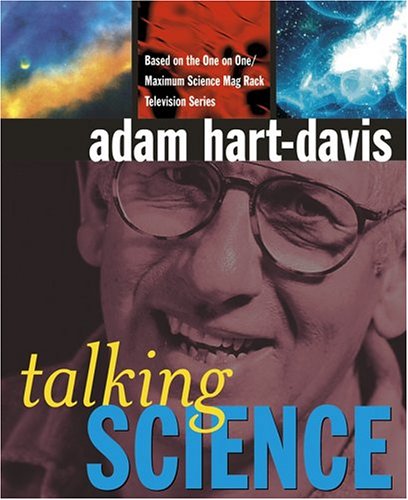
Talking Science 1st Edition by Adam Hart Davis ISBN 0470093021 9780470093023


Original price was: $50.00.$35.00Current price is: $35.00.
Talking Science 1st Edition by Adam Hart Davis – Ebook PDF Instant Download/Delivery: 0470093021, 9780470093023
Full download Talking Science 1st Edition after payment
Product details:
ISBN 10: 0470093021
ISBN 13: 9780470093023
Author: Adam Hart Davis
TV personality Adam Hart-Davis meets 14 of the world’s leading scientists to discuss their work, their passions, and those elusive ground-breaking moments in their lives.
This is a book that shows how science can explain the world that we inherited and shape the world that we would like to leave for future generations.
- Jocelyn Bell Burnell (Bath, UK) tells her personal story of the discovery of the first pulsar.
- Sir Michael Berry (Bristol, UK) ties knots in nothing.
- Richard Dawkins (Oxford, UK) explains what Darwinism means today.
- Loren Graham (MIT, US) explains why Stalin’s top-down policy meant that no Russian engineering project would ever work properly.
- Richard Gregory (Bristol, UK) explores some of the visual illusions that so easily fool us.
- Eric Lander (MIT, US) discusses the excitement of the human genome project.
- Lord May of Oxford (UK) President of the Royal Society talks about chaos, ecology and HIV.
- John Maynard Smith (Sussex, UK) discusses why we bother with sex.
- Rosalind Picard (MIT, US) believes in wearable computers that understand our emotions.
- Sir Martin Rees (Cambridge, UK), Astronomer Royal, discusses the big bang, black holes and the end of the universe.
- Eugenie Scott (Oakland, US) is a leading campaigner for the teaching in schools of evolution rather than creationism.
- Lewis Wolpert (UCL, UK) speaks on the ethics and practicality of cloning and on his own depression.
- Colleen Cavanaugh (Harvard, US) describes the excitement and discomfort of exploring the deep ocean.
- Peter Raven (St Louis, US) is a leading advocate of biodiversity – described by Time magazine as a hero for the planet.
Talking Science 1st Table of contents:
Part I: The Nature of Scientific Communication
1. The Language of Science
-
1.1 Defining the Scientific Discourse
-
1.2 The Evolution of Scientific Language
-
1.3 The Role of Precision and Clarity
-
1.4 Scientific Jargon and Its Implications
2. The Culture of Science
-
2.1 The Scientific Community and Its Norms
-
2.2 The Role of Evidence in Scientific Arguments
-
2.3 Peer Review and Professional Dialogue
-
2.4 The Social Nature of Scientific Communication
3. Science and the Public
-
3.1 The Public Understanding of Science
-
3.2 The Role of Media in Shaping Public Opinion
-
3.3 Challenges in Communicating Complex Ideas to the General Public
-
3.4 The Impact of Misinformation and Misinterpretation
Part II: Communication Channels and Their Impact
4. Writing Scientific Papers
-
4.1 Structure of a Scientific Paper: IMRaD
-
4.2 Writing for Different Audiences: Specialists vs. General Readers
-
4.3 The Importance of Abstracts and Summaries
-
4.4 The Ethics of Scientific Writing
5. Speaking at Conferences
-
5.1 Effective Oral Presentations
-
5.2 Designing Visual Aids and Slides
-
5.3 Engaging the Audience
-
5.4 Handling Criticism and Questions
6. Science in the Media
-
6.1 The Role of Journalists in Reporting Science
-
6.2 Communicating Uncertainty and Risk
-
6.3 The Influence of Sensationalism on Science Coverage
-
6.4 Effective Collaboration Between Scientists and Journalists
Part III: The Broader Context of Science Communication
7. The Ethics of Scientific Communication
-
7.1 Honesty, Transparency, and Integrity
-
7.2 The Scientist’s Responsibility to Society
-
7.3 Ethical Dilemmas in Public Engagement
8. The Politics of Science Communication
-
8.1 Science Policy and Decision-Making
-
8.2 The Role of Science in Political Discourse
-
8.3 The Impact of Lobbying and Interest Groups on Science
-
8.4 Scientific Advocacy and Public Opinion
9. The Globalization of Science
-
9.1 The Importance of Cross-Cultural Communication
-
9.2 International Collaboration in Science
-
9.3 Language Barriers and Translation in Global Science
Part IV: Improving Science Communication
10. Communicating Science in Education
-
10.1 Teaching Scientific Literacy
-
10.2 The Role of Schools and Universities in Shaping Communication Skills
-
10.3 Hands-On Science and Public Engagement
-
10.4 Fostering Critical Thinking in Science Education
11. Training Scientists to Communicate
-
11.1 Communication Skills for Researchers
-
11.2 Workshops and Programs for Improving Scientific Writing and Speaking
-
11.3 The Importance of Storytelling in Science
-
11.4 Building Public Trust Through Effective Communication
12. The Future of Scientific Communication
-
12.1 The Digital Age and New Media
-
12.2 Social Media and Science Outreach
-
12.3 Bridging the Gap Between Science and Society
People also search for Talking Science 1st:
talking science
talk science primer
talk science primer terc
talking tom science
talking about science
Tags: Adam Hart Davis, Science