

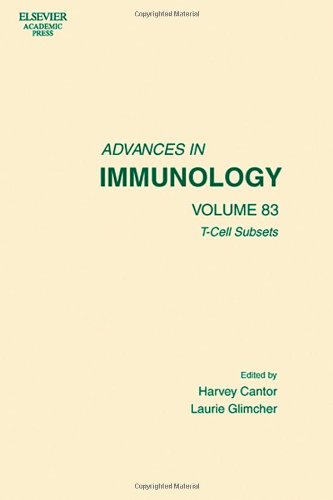
T Cell Subsets Cellular Selection Commitment and Identity 1st Edition by Harvey Cantor, Laurie Glimcher, Frederick Alt ISBN 0120224836 978-0120224838
Original price was: $50.00.$35.00Current price is: $35.00.
T Cell Subsets Cellular Selection Commitment and Identity 1st Edition by Harvey Cantor, Laurie Glimcher, Frederick Alt – Ebook PDF Instant Download/Delivery: 0120224836 , 978-0120224838
Full download T Cell Subsets Cellular Selection Commitment and Identity 1st edition after payment
Product details:
ISBN 10: 0120224836
ISBN 13: 978-0120224838
Author: Harvey Cantor, Laurie Glimcher, Frederick Alt
This first thematic issue, of the Advances in Immunology series, highlights the remarkable new insights into the mechanisms that govern development and function of T cell lineages. Recent developments in the understanding of the genetic and epigenetic mechanisms that regulate development of the two major T cell lineages will have a fundamental impact on a number of research fields -immunology, cell biology, hematology and stem cell research. All of these groups have a vested interest in comprehending issues such as stem cell self renewal, progenitor plasticity, lineage commitment and cellular identity. Immunologists have a special interest in the mechanisms that allow selection of a T cell repertoire whose members integrate genetic information for T cell receptor, co-receptor and specialized immunologic function, since this process lies at the core of adaptive immunity.T Cell Subsets is a timely and invaluable review for immunologists, cell biologists hematologists and stem cell researchers
T Cell Subsets Cellular Selection Commitment and Identity 1st Table of contents:
Chapter 1. Lineage Commitment and Developmental Plasticity in Early Lymphoid Progenitor Subsets
I. Introduction
II. Hematopoietic Stem Cells: Clonogenic Precursors of the Hematolymphoid System
III. Cell Fate Determination: How do HSCs Commit to Each of the Hematolymphoid Lineages?
IV. Overview of T and B Lymphoid Differentiation
V. Defining the Earliest Stage in Lymphoid Commitment: Isolation of Common Lymphoid Progenitors (CLP
VI. Is the CLP Stage Necessary for Adult Lymphoid Differentiation?
VII. Common Myeloid Progenitors as the Counterpart of CLPs
VIII. Lineage Priming by Promiscuous Gene Expression in Multipotent Stem and Progenitor Cells
IX. Lymphoid and Myeloid Promiscuity Demonstrated by Single-Cell Analyses
X. Fate Choices Made by Combinations of Instructive Signals at Lineage Promiscuous Stages
XI. Lineage Plasticity in Lymphoid Progenitors: Fate Choices are Reversible
XII. Comparison of Gene Expression Profiles among Early Hematopoietic Stem and Progenitor Cells
XIII. Early Lymphoid Progenitors can Differentiate into Antigen-presenting Dendritic Cells
XIV. Fetal Hematopoietic Progenitors are Not Fully Committed to the Lymphoid and Myeloid Fates
XV. Lymphoid- and Myeloid-restricted Progenitors in Human Bone Marrow
XVI. Clinical Relevance
XVII. Conclusion
References
Chapter 2. The CD4/CD8 Lineage Choice: New Insights into Epigenetic Regulation during T Cell Develop
I. Introduction
II. Role of Coreceptors in T Cell Development
III. Regulation of CD4 Gene Expression
IV. Regulation of CD8 Gene Expression
V. Conclusion
References
Chapter 3. CD4/CD8 Coreceptors in Thymocyte Development, Selection, and Lineage Commitment: Analysis
I. Introduction
II. Early Thymocyte Development
III. CD4 and CD8 Coreceptor Molecules on DP Thymocytes
IV. Selection and Commitment: Classical Models
V. Kinetic Signaling as an Alternative to Classical Models of Lineage Commitment
VI. Conclusions
References
Chapter 4. Development and Function of T Helper 1 Cells
I. Introduction
II. Factors Inducing the Development of Th1 Cells And Their Production of IFN-γ
III. Role of Th1 Signaling Components in In Vivo Immune Responses
IV. Transcriptional Regulation for Th1 Cells Producing IFN-γ
V. New Cytokines: What is Their Role in Th1 Cell Responses?
VI. Inherited Disorders of IL-12 and IFN-γ-mediated Immunity: Clinical Outcomes of Defects in Th1 D
References
Chapter 5. Th2 Cells: Orchestrating Barrier Immunity
I. Introduction: History and Definitions
II. Activation of IL-4 Expression in Naive CD4 T Cells
III. Stabilization of IL-4 Expression in T Cells
IV. Phenotype and Genotype Analysis of Th2 Cells
V. Mutations Impacting IL-4 Expression in T Cells
VI. Expression of IL-4 in Non-Th2 Cells
VII. Where Does Type 2 Immunity Operate?
VIII. Concluding Remarks
References
Chapter 6. Generation, Maintenance, and Function of Memory T Cells
I. Introduction
II. What Is a Memory Cell?
III. Where Do Memory CD8+ T Cells Come From?
IV. How Are Memory Cells Maintained?
V. Conclusions
References
Chapter 7. CD8+ Effector Cells
I. Effector Cells Defined
II. Secretion as the Mechanism of Effector Function
III. Cytotoxicity In Vivo
IV. Cytotoxicity In Vitro
V. Perforin-dependent Granule Exocytosis Pathway
VI. FasL/Fas Death Pathway
VII. Cytokine Secretory Effector Cells
VIII. CD8+ T Cell Differentiation
IX. Conclusions
References
Chapter 8. An Integrated Model of Immunoregulation Mediated by Regulatory T Cell Subsets
I. Introduction and Objectives
II. Historical Considerations: Clonal Selection Theory, Immunoregulation, and Regulatory T Cell Subs
III. The T Cell Subsets which Mediate Suppression of the Immune Response
IV. An Integrated Model of Immunoregulation by NKT, CD4+CD25+, and Qa-1 Restricted CD8+ T Cell Sub
People also search for T Cell Subsets Cellular Selection Commitment and Identity 1st :
t-cell subset
t cell subsets review
t-cell subset quantification
t-cell subsets
t-cell selection
Tags: Harvey Cantor, Laurie Glimcher, Frederick Alt, T Cell Subsets, Selection Commitment