

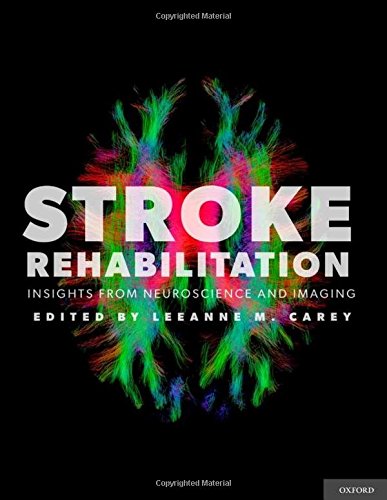
Stroke Rehabilitation Insights from Neuroscience and Imaging 1st Edition by Leeanne M Carey ISBN 0199797889 9780199797882


Original price was: $50.00.$35.00Current price is: $35.00.
Stroke Rehabilitation Insights from Neuroscience and Imaging 1st Edition by Leeanne M Carey – Ebook PDF Instant Download/Delivery: 0199797889, 9780199797882
Full download Stroke Rehabilitation Insights from Neuroscience and Imaging 1st Edition after payment
Product details:
ISBN 10: 0199797889
ISBN 13: 9780199797882
Author: Leeanne M Carey
Stroke Rehabilitation Insights from Neuroscience and Imaging 1st Table of contents:
PART A: CORE CONCEPTS
1. INTRODUCTION
1.1 Stroke Rehabilitation: An Ongoing Window of Opportunity
1.2 The Scope of the Problem: Prevalence and Impact of Stroke and Increasing Need for Stroke Rehabil
1.3 Recovery and Rehabilitation: Definitions
1.4 Neural Plasticity and Learning as a Basis for Stroke Rehabilitation
1.5 Neuroimaging and How it May Inform Stroke Rehabilitation
1.6 Paradigm Shift in Stroke Rehabilitation
2. STROKE REHABILITATION: A LEARNING PERSPECTIVE
2.1 Stroke Rehabilitation: Facilitation of Adaptive Learning
2.2 A Common Language for Rehabilitation Science
2.3 Experience and Learning-Dependent Plasticity: Implications for Rehabilitation
2.4 Role of Brain Networks in Information Processing and Recovery
2.5 Skill Acquisition—A Learning Perspective
2.6 Application in Context of Recovery after Stroke
2.7 Rehabilitation Learning Model: Rehab-Learn
2.8 Selected Learning-Based Approaches to Rehabilitation
2.9 Measuring Response to Learning-Based Rehabilitation
2.10 Summary and Conclusion
3. NEURAL PLASTICITY AS A BASIS FOR STROKE REHABILITATION
3.1 Neural Plasticity after Brain and Spinal Cord Injury
3.2 Implications for Stroke Rehabilitation
3.3 Increasing Neural Plasticity through Behavioral Manipulations and Adjuvant Therapies
3.4 Individualized Therapy
4. IMAGING TECHNIQUES PROVIDE NEW INSIGHTS
4.1 Introduction to Neuroimaging Techniques and Their Potential to Provide New Insights
4.2 What Neuroimaging Can Tell Us
4.3 Measuring Brain Function with MRI
4.4 Structural Connectivity, Including Tractography
5. MULTIMODAL NEUROPHYSIOLOGICAL INVESTIGATIONS
5.1 Introduction
5.2 Magnetoencephalography (MEG) and Electroencephalography (EEG)
5.3 Transcranial Magnetic Stimulation (TMS)
5.4 The Future? Neurorehabilitative Studies of Stroke Recovery and the Brain–Computer Interface
PART B: STROKE PATHOPHYSIOLOGY AND RECOVERY
6. STROKE: PATHOPHYSIOLOGY, RECOVERY POTENTIAL, AND TIMELINES FOR RECOVERY AND REHABILITATION
6.1 Introduction
6.2 Pathophysiology
6.3 Recovery Potential
6.4 Timelines for Recovery and Rehabilitation
6.5 Conclusions
PART C: STROKE REHABILITATION: CREATING THE RIGHT LEARNING CONDITIONS FOR REHABILITATION
7. ORGANIZATION OF CARE
7.1 Introduction
7.2 Models of Stroke Rehabilitation Services
7.3 Factors Affecting Access to Organized Stroke Rehabilitation
7.4 Ensuring the Quality of Care
7.5 Innovations in Rehabilitation and Application in Clinical Practice
7.6 Summary of Key Messages
8. MOTIVATION, MOOD AND THE RIGHT ENVIRONMENT
8.1 Introduction
8.2 Is Post-Stroke Depression a Specific Disorder?
8.3 Predictors of Post-Stroke Depression
8.4 Functional and Structural Brain Changes with Depression
8.5 Treatment of Depression in Stroke Patients
9. TRAINING PRINCIPLES TO ENHANCE LEARNING-BASED REHABILITATION AND NEUROPLASTICITY
9.1 Introduction
9.2 Task-Specific Activation of Brain Regions
9.3 Influence of Task Characteristics on Sensorimotor Performance
9.4 Task-Specific Nature of Motor Learning
9.5 Task Complexity
9.6 Behavioral Evidence for Task-Specific Training
9.7 Mental Practice of Tasks to Enhance Motor Learning
9.8 Increasing Repetitions to Enhance Motor Learning
9.9 Transfer of Training Effects
9.10 Implicit and Explicit Learning
9.11 Key Clinical Messages
10. ADJUNCTIVE THERAPIES
10.1 Introduction and Rationale
10.2 Pharmacological Studies
10.3 Transcranial Stimulation Techniques
10.4 Novel Therapeutic Approaches
10.5 Conclusions
PART D: REHABILITATION OF COMMON FUNCTIONS
11. MOVEMENT
11.1 Introduction
11.2 Repetitive Task-Specific Training
11.3 Constraint-Induced Movement Therapy
11.4 Mental Practice
11.5 Electrostimulation and EMG Biofeedback
11.6 Robot-Assisted Training
11.7 Virtual Reality and Visuomotor Tracking Training
11.8 Other Approaches
11.9 Conclusions
12. TOUCH AND BODY SENSATIONS
12.1 Somatosensory Function
12.2 Somatosensory Loss after Stroke
12.3 Central Processing of Somatosensory Information
12.4 Neural Correlates of Sensory Recovery after Stroke
12.5 Treatment Principles and Strategies Arising from Neuroscience
12.6 Current Approaches to Sensory Rehabilitation
12.7 Toward a Neuroscience-Based Model of Sensory Rehabilitation
13. VISION
13.1 Introduction
13.2 Anatomy of Visual Pathways
13.3 Ipsilateral Representation of the Visual Hemifield
13.4 Striate–Extrastriate Connections—The “What” and “Where” Pathways
13.5 Ventral Extrastriate Cortex: Visual Object Recognition and Processing
13.6 Color and Movement
13.7 Visual Syndromes Caused by Stroke
13.8 Mechanisms of Recovery Following Stroke
13.9 Visual Recovery Hypotheses
13.10 Restorative Therapies: Rehabilitating the Human Visual System
13.11 Summary
14. GOAL-DRIVEN ATTENTION AND WORKING MEMORY
14.1 Introduction
14.2 What is Attention?
14.3 Learning Needs Attention, Working Memory, and Motivation
14.4 The Effect of Brain Lesions on Attention
14.5 Rehabilitation Post-Stroke
14.6 Summary and Conclusion
15. EXECUTIVE FUNCTIONS
15.1 Stroke Rehabilitation: The Role of Executive Functions
15.2 Overview of a Multi-Level Understanding of Executive Functions
15.3 Neural Substrates of Executive Functions
15.4 Behavioral Measures and Interventions
15.5 Behavioral and Performance Interventions
15.6 Conclusions
16. LANGUAGE
16.1 Neuroscience of Language: Neuropsychological and Lesion-Symptom Mapping Evidence
16.2 Functional Neuroimaging of Language and Recovery
16.3 Current Models of Language Rehabilitation
16.4 Treatment Principles/Strategies Arising from Neuroscience and Cognitive Neuroscience
16.5 Toward a Neuroscientifically Based Model of Aphasia Rehabilitation
PART E: NEW PERSPECTIVES AND DIRECTIONS FOR STROKE REHABILITATION RESEARCH
17. TARGETING VIABLE BRAIN NETWORKS TO IMPROVE OUTCOMES AFTER STROKE
17.1 Introduction
17.2 Measuring Connectivity to Predict Motor Outcomes
17.3 Priming Approaches
17.4 Conclusions
18. DIRECTIONS FOR STROKE REHABILITATION CLINICAL PRACTICE AND RESEARCH
18.1 Introduction
18.2 Key Findings for Stroke Rehabilitation Clinical Practice
18.3 Beyond the Lesion: Impact of Focal Lesion on Brain Networks and Rehabilitation
18.4 Use of Network-Based Models of Recovery in Stroke Rehabilitation
18.5 Targeting Stroke Rehabilitation to the Individual
18.6 Guidelines to Facilitate the Translation of Evidence to Clinical Practice
18.7 Perspectives and Directions for Stroke Rehabilitation Research
People also search for Stroke Rehabilitation Insights from Neuroscience and Imaging 1st:
imaging stroke guidelines
neuroscience imaging techniques
stroke rehab research
stroke neuroimaging
stroke neuro rehab
Tags: Leeanne M Carey, Stroke Rehabilitation, Neuroscience