

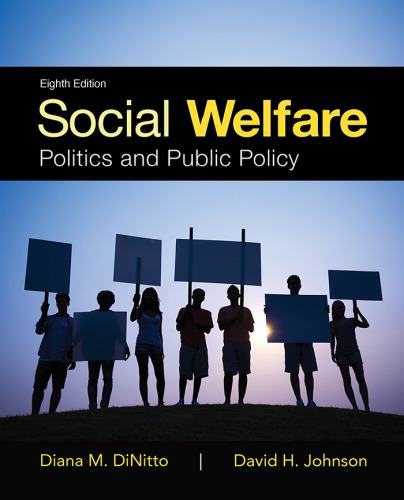
Social Welfare Politics and Public Policy 8th Edition by Diana DiNitto , David Johnson ISBN 020595913X 978-0205959136


Original price was: $50.00.$35.00Current price is: $35.00.
Social Welfare Politics and Public Policy 8th Edition by Diana DiNitto , David Johnson- Ebook PDF Instant Download/Delivery:020595913X ,978-0205959136
Full download Social Welfare Politics and Public Policy 8th Edition after payment
Product details:
ISBN 10: 020595913X
ISBN 13: 978-0205959136
Author: Diana DiNitto , David Johnson
Note: This is the bound book only and does not include access to the Enhanced Pearson eText. To order the Enhanced Pearson eText packaged with a bound book, use ISBN 0134057260.
Acknowledged as the most comprehensive, easy-to-read introduction to social welfare policy available, Social Welfare: Politics and Public Policy, 8/e, emphasizes the current political aspects of policy making and major social welfare programs, including public assistance, Social Security, disability, health insurance, child welfare, and much more. Social Welfare does more than describe the major social welfare policies and programs; it also tackles the conflict and controversies involved in the processes and outcomes of policy making. It contrasts rational and political approaches to policy making, policy analysis, policy implementation, and policy evaluation. The authors present conflicting perspectives, encouraging students to think critically, to debate, and to consider their own views on issues. The Enhanced Pearson eText features video links and embedded assessments.
Improve mastery and retention with the Enhanced Pearson eText*
The Enhanced Pearson eText provides a rich, interactive learning environment designed to improve student mastery of content. The Enhanced Pearson eText is:
- Engaging. The new interactive, multimedia learning features were developed by the authors and other subject-matter experts to deepen and enrich the learning experience.
- Convenient. Enjoy instant online access from your computer or download the Pearson eText App to read on or offline on your iPad® and Android® tablet.*
- Affordable. The Enhanced Pearson eText may be purchased stand-alone or with a loose-leaf version of the text for 40-65% less than a print bound book.
*The Enhanced eText features are only available in the Pearson eText format. They are not available in third-party eTexts or downloads.
*The Pearson eText App is available on Google Play and in the App Store. It requires Android OS 3.1-4, a 7” or 10” tablet, or iPad iOS 5.0 or later.
Table of contents:
- 1 Politics and the Policymaking Process
- Learning Objectives
- Chapter Outline
- The Policymaking Process
- Identifying Policy Problems
- Agenda Setting
- Nondecisions
- Political Ideology
- Special Interests
- The Mass Media
- Public Opinion
- Formulating Policy Proposals
- Legitimizing Public Policy
- Implementing Public Policy
- Evaluating Social Welfare Policy
- Financing the Welfare State
- Federal Taxes
- State Taxes
- Local Taxes
- Other Revenue Streams
- Who Pays? Who Benefits?
- The Budget: A Government’s Most Important Policy Statement
- Summary
- Discussion Questions and Class Activities
- Resources
- 2 Analyzing, Implementing, and Evaluating Social Welfare Policy
- Learning Objectives
- Chapter Outline
- The Politics of Policy Analysis
- The Politics of Policy Implementation
- Communications
- Resources
- Attitudes
- Bureaucracy
- The Politics of Policy Evaluation
- Does Policy Evaluation Matter?
- Policy Evaluation as a Rational Activity
- Policy Evaluation as a Political Activity
- Unclear, Ambiguous Program Goals
- Symbolic Goals
- Unhappy Findings
- Program Interference
- Usefulness of Evaluations
- Evaluation by Whom?
- Threats to Everyone
- Why Hasn’t Head Start “Cured” Poverty?
- Politics, Evaluation, and Head Start
- Years Later
- The Faces of Program Evaluation
- Public Hearings
- Site Visits
- Program Measures
- Comparison with Professional Standards
- Formal Research Designs
- Classic Experimental Design
- Theoretical Evaluation
- Quasiexperimental Design
- Pretest-Posttest Design
- Time Series Design
- An Affinity for D.A.R.E.
- Summary
- Discussion Questions and Class Activities
- Resources
- 3 Politics and the History of Social Welfare Policy
- Learning Objectives
- Chapter Outline
- The Early History of Social Welfare Policy in America
- The Elizabethan Poor Law
- Early Relief in the United States
- The Rural-to-Urban Migration
- The Progressive Era
- The Great Depression and FDR’s New Deal
- LBJ and the War on Poverty
- The Welfare Rights Movement
- Economic Opportunity Act
- The Great Society
- Politics Overtakes the War on Poverty
- More Social Welfare Expansion
- Residency Requirements Eliminated
- Cost-of-Living Adjustments Initiated
- The Graying of America
- Increase in Single-Parent Families
- Social Service Growth
- The Reagan and Bush Years
- The Supply Side
- The New Federalism
- The States as Laboratories
- Privatizing Public Services
- The Reagan–Bush Finale
- The Presidential Years of Bill Clinton
- Managing the Federal Debt
- Ending Welfare as We Knew It
- Assessing the Clinton Years
- The George W. Bush Presidency
- The United States at War
- 9/11 and the War on Terrorism
- War in Iraq
- Economic Troubles at Home
- The Stock Market Bubble Bursts
- Boosting the Sluggish Economy
- Struggles to Balance Budgets
- Compassionate Conservatism
- The Great Recession—The Housing Bubble Bursts
- Barack Obama’s Presidency
- A Nation Still at War
- Healthcare
- Improving the Economy
- Issues Ahead
- Summary
- Discussion Questions and Class Activities
- Resources
- 4 Ending Poverty: Is It an Issue Anymore?
- Learning Objectives
- Chapter Outline
- What Is Poverty?
- Poverty as Deprivation
- The U.S. Government’s Official Poverty Definition
- What’s Wrong with the Government’s Definition?
- Measuring Poverty: Let Me Count the Ways
- Supplemental Poverty Measure
- Self-Sufficiency Standard
- Who Is Poor?
- How Persistent Is Poverty?
- Poverty as Inequality (or Who Shrank the Middle Class?)
- Why Are the Poor, Poor?
- Poverty as Lack of Human Capital
- Poverty as Culture
- Poverty as Exploitation
- Poverty as Structure
- The Politics of Hunger
- From Food Stamps to SNAP
- Discovering and Rediscovering Hunger
- The Politics of Affordable Housing
- Government and Rental Housing
- Home Ownership: Chasing the American Dream
- Poor and Homeless: Not Invisible AnyMore
- Who Is Homeless?
- Governments’ Response to Homelessness
- A Fundamental Shift
- Does Welfare Cause Poverty?
- Whither Public Assistance?
- Summary
- Discussion Questions and Class Activities
- Resources
- 5 Preventing Poverty: Social Insurance and Personal Responsibility
- Learning Objectives
- Chapter Outline
- Preventing Poverty through Compulsory Savings
- Social Security: The World’s Largest Social Welfare Program
- Even the Best-Laid Plans
- The 1983 Reforms and Beyond
- State of the Trust Funds
- Is Social Security in Crisis?
- Social Security’s Goals: Adequacy, Equity, and Efficiency
- Intergenerational Adequacy and Equity
- Adequacy and Equity across Racial and Ethnic Groups
- Adequacy, Equity, Gender, and Sexual Orientation
- Social Security System Efficiency
- Saving Social Security
- Fix the Current System
- Create a New System
- Privatization
- A Prefunded System
- Avoiding Exhaustion
- Public Policy and Private Pensions
- Unemployment Insurance
- Gaps in Unemployment Insurance Programs
- Modernizing Unemployment Insurance
- Three Types of Unemployment
- Who Gets Counted as Unemployed?
- Workers’ Compensation
- Issues in Workers’ Compensation
- Modernizing Workers’ Compensation
- Summary
- Discussion Questions and Class Activities
- Resources
- 6 Disability Policy: Embracing a Civil Rights Perspective
- Learning Objectives
- Chapter Outline
- Disability and Civil Rights
- From Deinstitutionalization to Inclusion and Integration
- Disability Policy and Community Living
- The Rehabilitation Act
- The Americans with Disabilities Act
- The U.N. Convention on the Rights of Persons with Disabilities
- Increased Access for People with Disabilities
- Public Assistance and Disability
- The Federal Government Steps In
- Supplemental Security Income in Figures
- Disability Determination and Case Reviews
- Appealing SSI Decisions
- SSI Controversies
- People with Alcohol and Drug Problems
- Immigrants
- Children
- Older Adults
- People Who Are Homeless
- Improving Disability Determination
- Reducing Case Backlogs
- Veterans Administration Disability System
- Disability and Work
- Vocational Rehabilitation and Employment Services
- Eliminating Work Disincentives, Supporting Work
- Keeping More Cash Benefits and Health Benefits
- Plan to Achieve Self-Support (PASS)
- Ticket to Work
- Bolstering Employment of Youth with Disabilities
- Disability Policy for Children
- Developmental Disabilities Assistance and Bill of Rights Act
- Education Policy for Children with Disabilities
- Individuals with Disabilities Education Act
- No Child Left Behind Act
- Disability Policy for the Future
- Summary
- Discussion Questions and Class Activities
- Resources
- 7 Helping Needy Families: An End to Welfare as We Knew It
- Learning Objectives
- Chapter Outline
- From Mothers’ Aid to AFDC
- Man-in-the-House Rules
- Keeping Families Together
- Making Parents Pay: A History of Child Support Enforcement
- Benefits of Child Support
- Child Support Enforcement Agency’s Services
- Establishing Paternity
- Establishing Child Support Orders
- Collecting and Distributing Child Support Payments
- Enforcing Child Support across Jurisdictions
- Establishing and Enforcing Medical Support Orders
- Locating Parents
- Reviewing and Modifying Support Orders
- Child Support Enforcement’s Effectiveness
- Reaching CSE Program Goals
- CSE’s Cost-Effectiveness
- Satisfaction with CSE
- State Compliance and CSE Privatization
- The Reincarnations of Welfare and Work
- Rehabilitation for Work
- Job Training and WIN
- Workfare
- The JOBS Program
- Why the Fuss about “Welfare”?
- Recipients and Costs
- Rethinking AFDC
- Has Welfare as We Knew It Ended?
- TANF Goals
- TANF Block Grants
- Federal Funding for TANF
- TANF’s Federalism
- TANF Work Requirements
- Additional TANF Funding
- TANF Benefit Levels
- TANF Spending Levels
- Additional Work Supports
- Earned Income Tax Credit (EITC)
- Childcare
- Other Supports
- Spending Forecast
- How Effective Has TANF Been?
- TANF’s Future
- Summary
- Discussion Questions and Class Activities
- Resources
- 8 Providing Healthcare: Can All Americans Be Insured?
- Learning Objectives
- Chapter Outline
- Good Health or Medical Attention?
- How Americans Pay for Healthcare
- Medicare: Healthcare for Virtually All Older Americans
- Medicare Part A: Hospital Insurance
- Medicare Part B: Supplemental Medical Insurance
- Covering “Medigaps”
- Medicare Advantage (Part C)
- Adding D (Prescription Drugs) to the A, B, Cs of Medicare
- Long-Term Care and Supportive Services
- Medicaid: Healthcare for More of the Poor
- What Services Can Medicaid Beneficiaries Receive?
- How Are Medicaid Services Delivered?
- State Children’s Health Insurance Program
- Other Routes to Healthcare for Those in Need
- Employer-Sponsored and Private Health Insurance
- Types of Employer-Based Plans
- Preferred Provider Organizations (PPOs)
- Health Maintenance Organizations (HMOs)
- Point of Service (POS) Plans
- High-Deductible Health Plans with Savings Options (HDHP/SO)
- How Do People Choose a Plan?
- Individual Private Insurance Plans
- The Uninsured: Pay as You Go
- What Ails Healthcare?
- The Nation’s Healthcare Bill
- Trying to Control Healthcare Costs
- Reining in Medicare
- The Balanced Budget Act
- Why Americans Do Not Have Universal Healthcare
- Incrementalism and the 2009–2010 Effort for Universal Healthcare
- Elements of the Healthcare Reform Debate
- Healthcare Choice
- Pre-Existing Conditions
- Privilege, Right, or Rationing?
- The Politics of Healthcare Reform 2009–2010
- The Tea Pot Boils
- A Public Option Rejected
- Reconciling the Unreconcilable
- An Incremental Step Toward Insuring All
- A Rocky Start to Implementation
- The ACA Goes to Court
- Healthcare: More Ethical Dilemmas
- Portability and Privacy
- Healthcare Rationing
- Futile Care
- Euthanasia and Assisted Death
- Stem Cell Research and Cloning
- Summary
- Discussion and Class Activities
- Resources
- 9 Preventing Poverty: Education and Employment Policy
- Learning Objectives
- Chapter Outline
- Education for the Few or the Many?
- Public Education: The Progressive Era to World War II
- The Post World War II Era: Increased Federal Involvement in Education
- National Defense Education Act (1958): The Cold War Influences Education
- Elementary and Secondary Education Act (1965): Access and Diversity
- ESEA Reauthorizations: From Access to Achievement
- From Achievement to Accountability: Leave No Child Behind
- Standards and Testing
- Teacher Improvement
- Charter Schools and School Vouchers
- Early Childhood Education
- Higher Education
- Was Thirty Years of Education Reform Necessary?
- Education and the Obama Administration
- Federal Reluctance in Employment Policy
- Reluctance Overcome: The New Deal
- The War on Poverty: The Search for a Cure
- Area Poverty: Addressing Poverty in Economic Sectors and Locales
- Economic Development Administration (EDA)
- Community Development Block Grant (CDBG)
- Enterprise Zones
- Case Poverty: Addressing Poverty among Individuals
- LBJ and the Economic Opportunity Act
- Youth Training and Employment
- Job Corps: Expensive and Ineffective.
- Corporation for National and Community Service (CNCS): Boosting Education and Employment through Service.
- Federal Job Programs
- Comprehensive Employment and Training Act (CETA).
- Job Training Partnership Act (JTPA).
- Workforce Investment Act (WIA).
- Nonprofit Organizations.
- Minimum Wages and Living Wages
- Economic Crisis, the Bush Bailout, and the Obama Stimulus Plan
- Summary
- Discussion Questions and Class Activities
- Resources
- 10 Providing Social Services: Help for Children, Older Americans, and Individuals with Mental and Substance Use Disorders
- Learning Objectives
- Chapter Outline
- Social Services in the United States
- Social Service Providers
- Social Service Development
- Child Welfare Policy and Services
- Discovering Child Abuse
- Child Maltreatment
- Child Protection Legislation
- Foster Care and Adoption
- Controversial Issues in Child Welfare
- Controversy 1: Are Transracial Adoptions Appropriate?
- Controversy 2: Should Child Welfare Systems Focus More on Prevention?
- Controversy 3: Should Child Welfare Systems Operate from a Social Work or Criminal Justice Framework?
- Controversy 4: Does the Child Welfare System Cause More Harm Than Good?
- Controversy 5: Why Isn’t the Child Welfare Workforce Better Prepared?
- Controversy 6: Are Lawsuits the Best Way to Change the Child Welfare System?
- Controversy 7: Why Isn’t the Child Welfare System Better Funded?
- Controversy 8: What Must Be Done to Improve Foster Care Services?
- Controversy 9: Why Hasn’t the United States Ratified the United Nations Convention on the Rights of the Child?
- The Future of Child Welfare Policy
- Social Services for Older Americans
- The Older Americans Act
- White House Conferences on Aging
- Protective Services for Older Americans
- Guardianship
- Long-Term Services and Supports
- Social Services for Individuals with Mental and Substance Use Disorders
- A Brief History of the Response to Mental Illness
- The Public Mental Health System
- Incidence, Severity, and Burden of Mental Disorders
- Paying for and Providing Care
- Insurance Coverage and Parity for Mental and Substance Use Disorder
- Choice of Services
- Treatment and Civil Rights
- Is the War on Drugs Abating?
- History of the Drug War
- Mass Incarceration
- Diversion Programs
- Social Service Restrictions
- Harm Reduction
- Summary
- Discussion Questions and Class Activities
- Resources
- 11 The Challenges of a Diverse Society: Gender and Sexual Orientation
- Learning Objectives
- Chapter Outline
- The Feminization of Poverty
- The Wage Gap
- Comparable Worth
- Women in Political Office
- Resuscitating the Equal Rights Amendment
- Family Care
- No Middle Ground on Abortion Rights
- The Supreme Court and Roe v. Wade
- Prochoice and Antiabortion Forces
- Medicaid and Abortion
- Changing Tenor of the Supreme Court
- Protests and Violence
- Congress, the Presidents, and Abortion
- Contraceptive Drugs
- Will Abortion Rights Survive?
- Confronting Violence against Women
- Sexual Assault
- Intimate Partner Violence
- Violence against Women Act
- Sexual Harassment
- The Era of LGBT Rights
- An End to Sodomy Laws
- Sexual Orientation and the Military: Ending “Don’t Ask, Don’t Tell”
- Employment and the LGBT Rights Agenda
- Hate and Bias Crimes
- Domestic Partnerships and Same-Sex Marriage
- Child Custody and Adoption
- Protecting LGBT Youth
- Summary
- Discussion Questions and Class Activities
- Resources
- 12 The Challenges of a Diverse Society: Race, Ethnicity, and Immigration
- Learning Objectives
- Chapter Outline
- Racial Equality: How Far Have We Come?
- The Civil Rights Acts
- School Desegregation
- From Resistance to Accommodation
- Busing and Mandatory Desegregation
- Voluntary Desegregation and Educational Adequacy
- School “Resegregation”
- Educational Quality—A Matter of Equity or Adequacy?
- School Desegregation Policy for the Future
- Housing and Racial Discrimination
- Housing Segregation
- Redlining and Steering Past and Present
- Enforcing Fair Housing Practices
- Encouraging Neighborhood Integration
- Affirmative Action
- Reverse Discrimination
- The Reagan Years
- The George H. W. Bush Years
- University Admissions
- Affirmative Action in the Twenty-First Century
- Voting Rights
- Voter Discrimination Past and Present
- Redistricting and Gerrymandering
- Preclearance
- American Indians and Public Policy
- The Bureau of Indian Affairs and the Indian Health Service
- Cobell v. Salazar
- Racial and Ethnic Targeting
- Racial Profiling
- The War on Terror
- Hate Crimes
- Immigration and Social Welfare
- A Brief History of U.S. Immigration Policy
- The 1986 Immigration Reform and Control Act
- Immigration Post-September 11th
- Authorized Immigration
- Unauthorized Immigration
- Reforming Immigration Policy in the Twenty-First Century
- President Obama and Executive Action on Immigration
- Comprehensive Immigration Reform and Congressional Action
- Immigration and Its Effects
- Immigrants and the Decennial Census
- Summary
- Discussion Questions and Class Activities
- Resources
- Conclusion: Politics, Rationalism, and the Future of Social Welfare Policy
- Name Index
People also search for:
social welfare politics and public policy 8th edition pdf free
what is public policy in political science
functions of welfare state in political science
welfare public policy
Tags: Diana DiNitto, David Johnson, Social Welfare, Politics and Public