

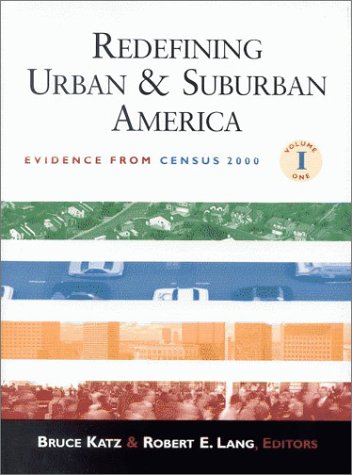
Redefining Urban and Suburban America 1st edition by Bruce Katz ISBN 0815748590 978-0815748595


Original price was: $50.00.$35.00Current price is: $35.00.
Redefining Urban and Suburban America 1st edition by Bruce Katz – Ebook PDF Instant Download/Delivery: 0815748590 , 978-0815748595
Full download Redefining Urban and Suburban America 1st edition after payment
Product details:
ISBN 10: 0815748590
ISBN 13: 978-0815748595
Author: Bruce Katz
The early returns from Census 2000 data show that the United States continued to undergo dynamic changes in the 1990s, with cities and suburbs providing the locus of most of the volatility. Metropolitan areas are growing more diverseespecially with the influx of new immigrantsthe population is aging, and the make-up of households is shifting. Singles and empty-nesters now surpass families with children in many suburbs. The contributors to this book review data on population, race and ethnicity, and household composition, provided by the Census’s “short form,” and attempt to respond to three simple queries: Are cities coming back? Are all suburbs growing? Are cities and suburbs becoming more alike? Regional trends muddy the picture. Communities in the Northeast and Midwest are generally growing slowly, while those in the South and West are experiencing explosive growth (“Warm, dry places grew. Cold, wet places declined,” note two authors). Some cities are robust, others are distressed. Some suburbs are bedroom communities, others are hot employment centers, while still others are deteriorating. And while some cities’ cores may have been intensely developed, including those in the Northeast and Midwest, and seen population increases, the areas surrounding the cores may have declined significantly. Trends in population confirm an increasingly diverse population in both metropolitan and suburban areas with the influx of Hispanic and Asian immigrants and with majority populations of central cities for the first time being made up of minority groups. Census 2000 also reveals that the overall level of black-to-nonblack segregation has reached its lowest point since 1920, although high segregation remains in many areas. Redefining Urban and Suburban America explores these demographic trends and their complexities, along with their implications for the policies and politics shaping metropolitan America. The shifts discussed here have significant influence in demand for housing and schools, childcare and healthcare, as well as private goods and services. Contributors include: Alan Berube (Brookings Institution); Benjamin Forman(Massachusetts Institute of Technology); William H. Frey (University of Michigan, Milken Institute); Edward L. Glaeser (Harvard University); John R. Logan (University at Albany, State University of New York), William H. Lucy (University of Virginia); David L. Phillips (University of Virginia); Jesse M. Shapiro (Harvard University), Patrick A. Simmons (Fannie Mae Foundationa); Audrey Singer (Brookings Institution); Rebecca R. Sohmer (Fannie Mae Foundation); Roberto Suro (Pew Hispanic Center); Jacob L. Vigdor (Duke University. Brookings Metro Series
Redefining Urban and Suburban America 1st Table of contents:
Chapter 1. City Growth
Chapter 2. Gaining but Losing Ground
Chapter 3. The Urban Turnaround
Chapter 4. Downtown Rebound
Chapter 5. Patchwork Cities
Chapter 6. “Boomburbs”
Chapter 7. Suburbs
Chapter 8. Racial and Ethnic Change in the Nation’s Largest Cities
Chapter 9. Melting Pot Suburbs
Chapter 10. Changing Patterns of Latino Growth in Metropolitan America
Chapter 11. Racial Segregation
Chaptre 12. Ethnic Diversity Grows, Neighborhood Integration Lags
Chapter 13. City Families and Suburban Singles
People also search for Redefining Urban and Suburban America 1st:
redlining and suburbs
redlining and suburbia
suburban american dream
redlining and urban renewal
suburban definition us history