

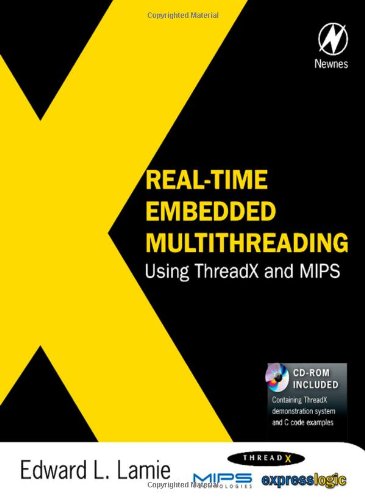
Real time embedded multithreading using ThreadX and MIPS 1st Edition by Edward L Lamie ISBN 1856176312 9781856176316


Original price was: $50.00.$35.00Current price is: $35.00.
Real time embedded multithreading using ThreadX and MIPS 1st Edition by Edward L Lamie – Ebook PDF Instant Download/Delivery: 1856176312, 9781856176316
Full download Real time embedded multithreading using ThreadX and MIPS 1st Edition after payment
Product details:
ISBN 10: 1856176312
ISBN 13: 9781856176316
Author: Edward L Lamie
Real time embedded multithreading using ThreadX and MIPS 1st Table of contents:
Chapter 1: Embedded and Real-time Systems
1.1 Introduction
1.2 What is an Embedded System?
1.3 Characteristics of Embedded Systems
1.4 Real-time Systems
1.5 Real-time Operating Systems and Real-time Kernels
1.6 Processes, Tasks, and Threads
1.7 Architecture of Real-time Systems
1.8 Embedded Systems Development
1.9 Key Terms and Phrases
Chapter 2: First Look at a System Using an RTOS
2.1 Operating Environment
2.2 Installation of the ThreadX Demonstration System
2.3 Sample System with Two Threads
2.4 Creating the ThreadX Objects
2.5 Compiling and Executing the Sample System
2.6 Analysis of the System and the Resulting Output
2.7 Listing of 02_sample_system.c
2.8 Key Terms and Phrases
2.9 Problems
Chapter 3: RTOS Concepts and Definitions
3.1 Introduction
3.2 Priorities
3.3 Ready Threads and Suspended Threads
3.4 Preemptive, Priority-Based Scheduling
3.5 Round-Robin Scheduling
3.6 Determinism
3.7 Kernel
3.8 RTOS
3.9 Context Switch
3.10 Time-Slice
3.11 Interrupt Handling
3.12 Thread Starvation
3.13 Priority Inversion
3.14 Priority Inheritance
3.15 Preemption-Threshold
3.16 Key Terms and Phrases
3.17 Problems
Chapter 4: RTOS Building Blocks for System Development
4.1 Introduction
4.2 Defining Public Resources
4.3 ThreadX Data Types
4.4 Thread
4.5 Memory Pools
4.6 Application Timer
4.7 Mutex
4.8 Counting Semaphore
4.9 Event Flags Group
4.10 Message Queue
4.11 Summary of Thread Synchronization and Communication Components
4.12 Key Terms and Phrases
4.13 Problems
Chapter 5: Introduction to the MIPS Microprocessor
5.1 Introduction
5.2 History
5.3 Technical Features
5.4 MIPS Power Saving Support
5.5 Key Terms and Phrases
Chapter 6: MIPS Exception Handling
6.1 Introduction
6.2 ThreadX Implementation of MIPS Exception Handling
6.3 Key Terms and Phrases
Chapter 7: The Thread—The Essential Component
7.1 Introduction
7.2 Thread Control Block
7.3 Summary of Thread Services
7.4 Thread Creation
7.5 Thread Deletion
7.6 Identify Thread
7.7 Get Thread Information
7.8 Preemption-Threshold Change
7.9 Priority Change
7.10 Relinquish Control
7.11 Resume Thread Execution
7.12 Thread Sleep
7.13 Suspend Thread Execution
7.14 Terminate Application Thread
7.15 Time-Slice Change
7.16 Abort Thread Suspension
7.17 Thread Notification Services
7.18 Execution Overview
7.19 Thread States
7.20 Thread Design
7.21 Thread Internals
7.22 Overview
7.23 Key Terms and Phrases
7.24 Problems
Chapter 8: Mutual Exclusion Challenges and Considerations
8.1 Introduction
8.2 Protecting a Critical Section
8.3 Providing Exclusive Access to Shared Resources
8.4 Mutex Control Block
8.5 Summary of Mutex Services
8.6 Creating a Mutex
8.7 Deleting a Mutex
8.8 Obtaining Ownership of a Mutex
8.9 Retrieving Mutex Information
8.10 Prioritizing the Mutex Suspension List
8.11 Releasing Ownership of a Mutex
8.12 Avoiding the Deadly Embrace
8.13 Sample System Using a Mutex to Protect Critical Sections
8.14 Output Produced by Sample System
8.15 Listing for 08_sample_system.c
8.16 Mutex Internals
8.17 Overview
8.18 Key Terms and Phrases
8.19 Problems
Chapter 9: Memory Management: Byte Pools and Block Pools
9.1 Introduction
9.2 Summary of Memory Byte Pools
9.3 Memory Byte Pool Control Block
9.4 Pitfalls of Memory Byte Pools
9.5 Summary of Memory Byte Pool Services
9.6 Creating a Memory Byte Pool
9.7 Allocating from a Memory Byte Pool
9.8 Deleting a Memory Byte Pool
9.9 Retrieving Memory Byte Pool Information
9.10 Prioritizing a Memory Byte Pool Suspension List
9.11 Releasing Memory to a Byte Pool
9.12 Memory Byte Pool Example—Allocating Thread Stacks
9.13 Memory Byte Pool Internals
9.14 Summary of Memory Block Pools
9.15 Memory Block Pool Control Block
9.16 Summary of Memory Block Pool Services
9.17 Creating a Memory Block Pool
9.18 Allocating a Memory Block Pool
9.19 Deleting a Memory Block Pool
9.20 Retrieving Memory Block Pool Information
9.21 Prioritizing a Memory Block Pool Suspension List
9.22 Releasing a Memory Block
9.23 Memory Block Pool Example—Allocating Thread Stacks
9.24 Memory Block Pool Internals
9.25 Overview and Comparison
9.26 Key Terms and Phrases
9.27 Problems
Chapter 10: Internal System Clock and Application Timers
10.1 Introduction
10.2 Internal System Clock Services
10.3 Application Timer Control Block
10.4 Summary of Application Timer Services
10.5 Creating an Application Timer
10.6 Activating an Application Timer
10.7 Changing an Application Timer
10.8 Deactivating an Application Timer
10.9 Deleting an Application Timer
10.10 Retrieving Application Timer Information
10.11 Sample System Using Timers to Measure Thread Performance
10.12 Listing for 10_sample_system.c
10.13 Application Timer Internals
10.14 Overview
10.15 Key Terms and Phrases
10.16 Problems
Chapter 11: Event Notification and Synchronization with Counting Semaphores
11.1 Introduction
11.2 Counting Semaphore Control Block
11.3 Avoiding Deadly Embrace
11.4 Avoiding Priority Inversion
11.5 Summary of Counting Semaphore Services
11.6 Creating a Counting Semaphore
11.7 Deleting a Counting Semaphore
11.8 Getting an Instance of a Counting Semaphore
11.9 Retrieving Information about Counting Semaphores
11.10 Prioritizing a Counting Semaphore Suspension List
11.11 Placing an Instance in a Counting Semaphore
11.12 Placing an Instance in a Semaphore Using a Ceiling
11.13 Semaphore Notification and Event-Chaining
11.14 Comparing a Counting Semaphore with a Mutex
11.15 Sample System Using a Binary Semaphore in Place of a Mutex
11.16 Listing for 11a_sample_system.c
11.17 Sample System Using a Counting Semaphore in a Producer-Consumer Application
11.18 Listing for 11b_sample_system.c
11.19 Counting Semaphore Internals
11.20 Overview
11.21 Key Terms and Phrases
11.22 Problems
Chapter 12: Synchronization of Threads Using Event Flags Groups
12.1 Introduction
12.2 Event Flags Group Control Block
12.3 Summary of Event Flags Group Control Services
12.4 Creating an Event Flags Group
12.5 Deleting an Event Flags Group
12.6 Getting Event Flags from an Event Flags Group
12.7 Retrieving Information about an Event Flags Group
12.8 Setting Event Flags in an Event Flags Group
12.9 Event Flags Group Notification and Event-Chaining
12.10 Sample System Using an Event Flags Group to Synchronize Two Threads
12.11 Listing for 12_sample_system.c
12.12 Event Flags Group Internals
12.13 Overview
12.14 Key Terms and Phrases
12.15 Problems
Chapter 13: Thread Communication with Message Queues
13.1 Introduction
13.2 Message Queue Control Block
13.3 Summary of Message Queue Services
13.4 Creating a Message Queue
13.5 Sending a Message to a Message Queue
13.6 Receiving a Message from a Message Queue
13.7 Deleting a Message Queue
13.8 Flushing the Contents of a Message Queue
13.9 Sending a Message to the Front of a Message Queue
13.10 Retrieving Message Queue Information
13.11 Prioritizing a Message Queue Suspension List
13.12 Message Queue Notification and Event-Chaining
13.13 Sample System Using a Message Queue for Interthread Communication
13.14 Listing for 13_sample_system.c
13.15 Message Queue Internals
13.16 Overview
13.17 Key Terms and Phrases
13.18 Problems
Chapter 14: Case Study: Designing a Multithreaded System
14.1 Introduction
14.2 Statement of Problem
14.3 Analysis of the Problem
14.4 Design of the System
14.5 Implementation
14.6 Listing of VAM System
14.7 Overview
People also search for Real time embedded multithreading using ThreadX and MIPS 1st:
real time thread c++
real-time embedded multithreading using threadx and mips
real-time embedded multithreading using threadx and arm
real-time embedded multithreading
real-time embedded multithreading using threadx third edition
Tags: Edward L Lamie, Real time, ThreadX