

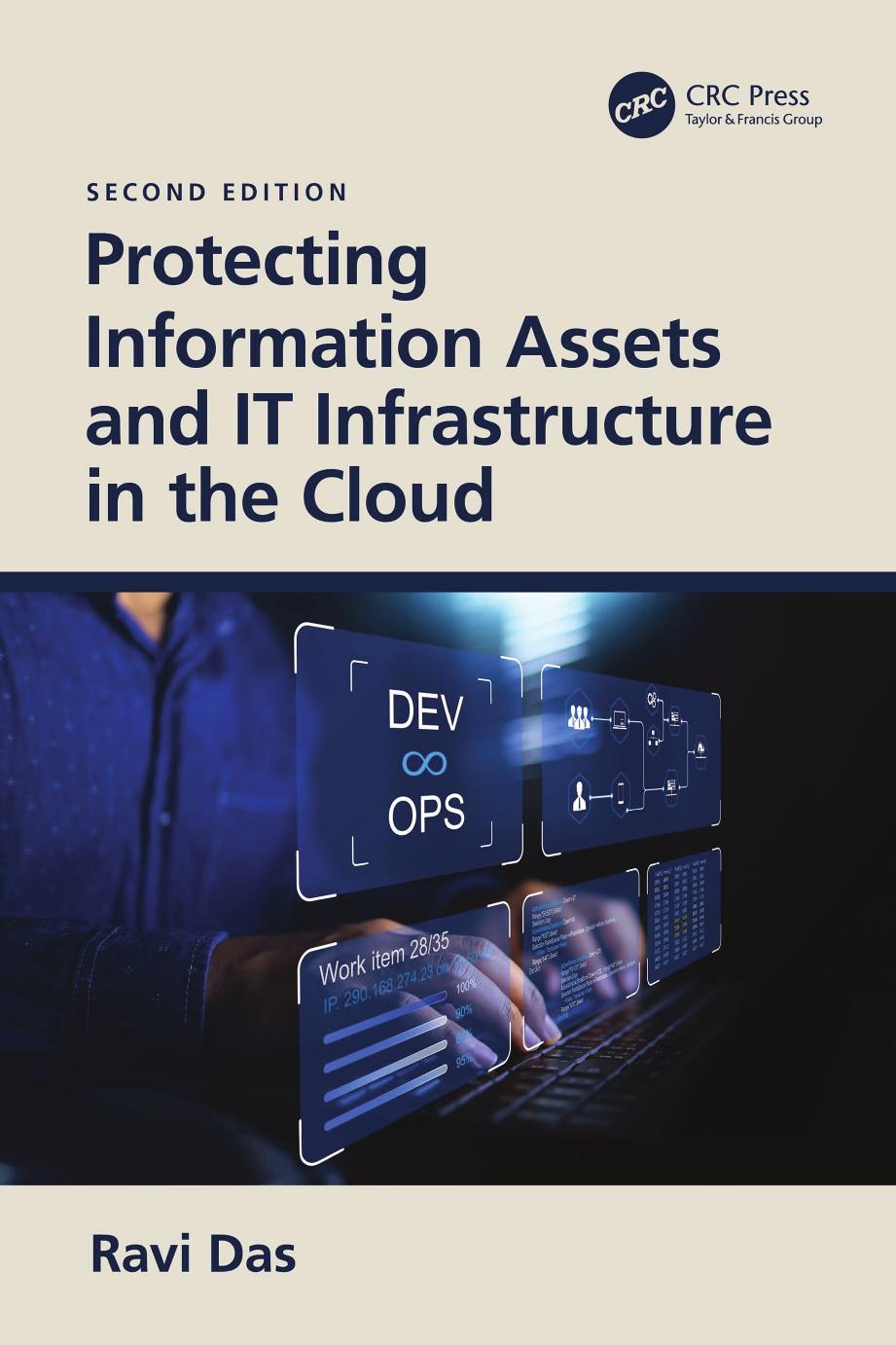
Protecting Information Assets and IT Infrastructure in the Cloud 2nd Edition by Ravi Das ISBN 1003459560 9781003459569


Original price was: $50.00.$35.00Current price is: $35.00.
Protecting Information Assets and IT Infrastructure in the Cloud 2nd Edition by Ravi Das – Ebook PDF Instant Download/Delivery: 1003459560, 9781003459569
Full download Protecting Information Assets and IT Infrastructure in the Cloud 2nd Edition after payment
Product details:
ISBN 10: 1003459560
ISBN 13: 9781003459569
Author: Ravi Das
Protecting Information Assets and IT Infrastructure in the Cloud 2nd Table of contents:
Chapter 1 Introduction to the Cloud Computing Environment
Evolution to the Cloud: The Mainframe
Evolution to the Cloud: The Personal Computer
Chronological History of Key Milestones in Personal Computer Development
Other Key Mwilestones
Evolution to the Cloud: The Wireless Network
Major Changes from the 3G Network to the 4G Network
4G Network Advances, Abilities, and Network Speeds
5G Networks and the Internet of Things (IoT)
Technical Aspects of the Wireless Network
The Last Evolution to the Cloud: The Smartphone
The 1G, 2G, 3G, and 4G Networks
Chronological History of Key Milestones in Smartphone Technology
Evolution of the Cloud
Evolution of Cloud Computing Infrastructure
The Basic Concepts and Terminology Surrounding Cloud Computing
The Cloud
Two Distinctions
The IT Resource
On-Premise Components
Scalability
IT Asset Scaling
Proportional Costs
Scalability
Availability and Reliability
Service-Level Agreements
The Challenges and Risks of Cloud Computing
Security Risks and Challenges
Reduced Operational Governance
Limited Portability
Compliance and Legal Issues
The Functions and Characteristics of Cloud Computing
On-Demand Usage
Ubiquitous Access
Resource Pooling
Elasticity
Measured Usage
Resilience
Cloud Computing Delivery Models
Infrastructure as a Service (IaaS)
Platform as a Service (PaaS)
Software as a Service (SaaS)
Summary
Cloud Computing Deployment Models
The Public Cloud
The Community Cloud
The Private Cloud
The Hybrid Cloud
Security Threats Posed to Cloud Computing
Terms and Concepts Related to Cloud Security
The Threat Agents and Entities
The Major Threats
The Important Mechanisms of Cloud Computing
Cloud Computing Cost Metrics and Service Quality Mechanisms
Network Usage
Server Usage
Cloud Storage Device Usage
Service Availability
Service Performance
Service Scalability
Service Resilience
Chapter 2 Amazon Web Services
Introduction—Chapter Overview
An Overview of the Evolution of Amazon Web Services
Major Components of Amazon Web Service
AWS Compute Services
Amazon Simple Storage Service (Amazon S3)
AWS Database
AWS Migration
AWS Networking and Content Delivery
AWS Management Tools
AWS Software Development Tools
AWS Security, Identity, and Compliance
AWS Analytics
AWS Mobile Services
AWS Application Service
AWS Internet of Things (IoT)
AWS Artificial Intelligence
AWS Messaging
AWS Business Productivity
AWS Desktop & App Streaming
AWS Game Development
A Review of the Amazon Elastic Cloud Compute (EC2)
An Overview of Amazon EC2
How to Access EC2 via AWS Console
Setting Up the Environment Variables
Setting Up the Security Environment
Setting Up the Region
Computing Resources
Software on EC2
Regions and Availability Zones
Load Balancing and Scaling
EC2 Storage Resources
S3-Backed versus EBS-Backed Instances
EC2 Networking Resources
Instance Addresses
Elastic TCP/IP Addresses
Route 53
Security Groups
Virtual Private Cloud
How to Set Up a Web Server
A Review of the Amazon Simple Storage Service (S3)
Accessing S3
Getting Started with S3
Organizing Data in S3: Buckets, Objects, and Keys
S3 Administration
A Review of AWS Security Services
The Establishment of AWS Security Credentials
Chapter 3 Threats and Risks to Cloud Infrastructure and Risk Mitigation Strategies
Introduction
Cyber Threats to the Cloud
Ransomware
How Ransomware is Deployed
Types of Ransomware Attacks
Risk Mitigation Strategies for Ransomware
Malware, Spyware, and Adware
Spear Phishing
An Incident Response Playbook for a Phishing Attack
Malware Injection Attacks
The Malicious Insider
Online Cyber Threats
Real-World Examples of Cyber Threats to a Cloud Infrastructure
Cyber Risks to the Cloud
A Formal Definition of Risk
Cloud Computing Infrastructure Risks
Threat and Risk Management Strategies for a Cloud Computing Infrastructure
Shared Security Responsibility
Legal and Regulatory
Data Sovereignty
Cost Planning
Adjusting Security Models
Standard Security Practices
Chapter 4 Cloud Data Protection
Introduction—The Legend of Daedalus and Icarus
All Care, No Responsibility
Your Business Is Not Unique
A Data Protection Primer
What is Data Protection?
Replication
Continuous Data Protection
Snapshots
Backup and Recovery
Long-Term Retention
Cyber Recovery
Fundamental Fault Tolerance
Copies, Copies, Everywhere (or, What’s All This Got to Do with Public Cloud?)
Understanding the New World
Shifting Control
What Do You Protect?
Making Use of Cloud-Native Data Protection
Cloud Snapshot Management Appliance
Cloud Snapshot Management Portal
Why Use Third-Party Controls for Cloud-Native Protection?
Summarizing Cloud-Native Data Protection
Traditional Backup and Recovery in the Public Cloud
Architecture Matters
Considerations for On-Premises Backup of In-Cloud Infrastructure
SaaS and PaaS: New Challenges
Security
Data Sovereignty
Infrastructure Requirements
Service Granularity/Functionality
Cost
User Enablement
Supportability
Legal Hold Is Not a Backup Method
Choosing a Protection Methodology in the Public Cloud
Data Protection Is a Continuum of Activities
Monitoring and Management
In Conclusion
Extending On-Premises Data Protection Into the Cloud
Hybrid Cloud Solutions
Long-Term Retention
Disaster Recovery as a Service
Using the Cloud for Data Protection
BaaS as a Replacement for Datacenter Data Protection
BaaS for Desktop/Laptop Data Protection
In Conclusion
Chapter 5 The Update from the First Version
5.1 The Update from the First Version
5.2 The Major Components of Microsoft Azure
5.2.1 The Compute Resources
5.2.2 The Storage
5.2.3 The Networking
5.2.4 The Database
5.2.5 The Analytics and Big Data
5.2.6 The Internet of Things
5.2.7 The Management and Monitoring
5.2.8 The Mobile Services
5.2.9 The Security, Identity, and Access
5.2.10 The Developer Tools
5.2.11 The Enterprise Integration
5.3 More about Microsoft Azure
5.4 The Activities that Can Be Done in Azure
5.4.1 Getting Started with Azure
5.4.2 The Azure App Service and Web Apps
5.4.3 The Virtual Machines (VMs)
5.4.4 The Azure Storage
5.4.5 The Azure Virtual Network
5.4.6 The Azure Database
5.4.7 The Azure Active Directory
5.4.8 The Management Tools
5.5 The Next Chapter
Chapter 6 Introduction to Artificial Intelligence
6.1 The Importance of Data in Artificial Intelligence
6.1.1 The Fundamentals of Data Basics
6.1.2 The Types of Data that Are Available
6.1.3 Big Data
6.1.4 Understanding Preparation of Data
6.1.5 Other Relevant Data Concepts that Are Important to Artificial Intelligence
6.2 An Introduction to Machine Learning
6.2.1 The Machine Learning Process
6.2.2 The Machine Learning Algorithm Classifications
6.3 Azure, Artificial Intelligence, and Machine Learning
6.3.1 The Major Components
6.3.2 The Azure Machine Learning
6.4 Microsoft Azure and OpenAI
6.4.1 The Business Relationship between Microsoft and OpenAI
6.5 The Microsoft CoPilot
6.6 An Overview into ChatGPT
6.6.1 The Origins of ChatGPT
6.6.2 The Technicalities behind ChatGPT
6.7 The Advantages and the Disadvantages of ChatGPT
6.7.1 The Advantages
6.7.2 The Disadvantages
6.8 The Next Chapter
Chapter 7 Conclusion
7.1 The Response
7.2 The Whitepaper
7.2.1 The Advent of Computer Vision
7.2.2 The Present State of AI
7.2.3 The Future Challenges of AI
7.2.4 The Adoption Rate of AI in the United States
7.2.5 The Adoption Rate of AI in the European Union
7.2.6 The Impacts of AI in the American Workplace
7.3 The United States Artificial Intelligence Bill of Rights
7.4 Azure and Safe Use of AI
7.5 Conclusions
People also search for Protecting Information Assets and IT Infrastructure in the Cloud 2nd:
protecting company assets
information assets protection
protecting information is accomplished by
protecting a business or organization’s data assets quizlet
what is protecting a business or organization’s data assets
Tags: Ravi Das, Assets, IT Infrastructure, Cloud