

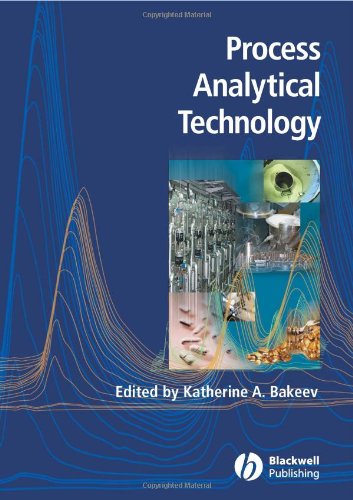
Process Analytical Technology 1st Edition by Katherine A Bakeev ISBN 1405121033 9781405121033


Original price was: $50.00.$35.00Current price is: $35.00.
Process Analytical Technology 1st Edition by Katherine A Bakeev – Ebook PDF Instant Download/Delivery: 1405121033, 9781405121033
Full download Process Analytical Technology 1st Edition after payment
Product details:
ISBN 10: 1405121033
ISBN 13: 9781405121033
Author: Katherine A Bakeev
Process Analytical Technology (PAT), as introduced in this landmark volume edited by Katherine A. Bakeev, is a framework for designing, analyzing, and controlling pharmaceutical manufacturing through timely measurements of critical quality and performance attributes.
The book is grounded in the U.S. FDA’s PAT initiative, which encourages pharmaceutical companies to enhance manufacturing and product quality using scientific, risk-based, and data-driven approaches. The core idea is to build quality into the product, not just test for it at the end.
Process Analytical Technology 1st Table of contents:
Chapter 1 – Overview of Process Analysis and PAT
-
introduction
-
execution of process analysis projects
-
process instrumentation
-
conclusions
-
glossary of acronyms and terms
Chapter 2 – Implementation of Process Analytical Technologies
-
introduction to implementation of PAT in the industrial setting
-
generalized process analytics work process
-
considerations for PAT implementation in the pharmaceutical industry
-
conclusions
Chapter 3 – Process Sampling: Theory of Sampling – the Missing Link in PAT
-
introduction
-
theory of sampling – introduction
-
mass reduction as a specific sampling procedure
-
fundamental sampling principle
-
sampling – a very practical issue
-
reactors and vessels – identical process sampling issues
-
heterogeneity characterization of 1-D lots: variography
-
data quality – new insight from the theory of sampling
-
validation in chemometrics and PAT
-
summary
Chapter 4 – UV-Visible Spectroscopy for On-Line Analysis
-
introduction
-
theory
-
instrumentation
-
sample interface
-
implementation
-
applications
-
detailed application notes
-
conclusion
Chapter 5 – Near-Infrared Spectroscopy for PAT: Theory, Technology and Implementation
-
introduction
-
theory of near‑infrared spectroscopy
-
analyser technologies in the near‑infrared
-
the sampling interface
-
practical examples of near‑infrared analytical applications
-
conclusion
Chapter 6 – Infrared Spectroscopy for Process Analytical Applications
-
introduction
-
practical aspects of IR spectroscopy
-
instrumentation design and technology
-
process IR instrumentation
-
applications of process IR analyzers
-
process IR analyzers: a review
-
trends and directions
Chapter 7 – Raman Spectroscopy
-
attractive features of Raman spectroscopy
-
potential issues with Raman spectroscopy
-
fundamentals of Raman spectroscopy
-
Raman instrumentation
-
quantitative Raman
-
applications
-
current state of process Raman spectroscopy
Chapter 8 – Near‑Infrared Chemical Imaging for Product and Process Understanding
-
the PAT initiative
-
the role of NIR-CI in the pharmaceutical industry
-
evolution of NIR imaging instrumentation
-
chemical imaging principles
-
PAT applications
-
case study: estimating ‘abundance’ of sample components
-
case study: determining blend homogeneity through statistical analysis
-
final thoughts
Chapter 9 – Acoustic Chemometric Monitoring of Industrial Production Processes
-
what is acoustic chemometrics?
-
how acoustic chemometrics works
-
industrial production process monitoring
-
available on-line acoustic chemometric equipment
-
discussion
-
conclusions
Chapter 10 – Process NMR Spectroscopy: Technology and On-Line Applications
-
introduction
-
NMR spectroscopy overview
-
process NMR instrumentation
-
postprocessing methodologies for NMR data
-
advantages and limitations of NMR as a PAT tool
-
on-line and at-line applications
-
current development and applications
-
conclusions
Chapter 11 – Fluorescent Sensing and Process Analytical Applications
-
introduction
-
luminescence fundamentals
-
LIF sensing fundamentals
-
LIF sensing instrumentation
-
luminescent detection risks
-
PAT applications
-
conclusions
Chapter 12 – Chemometrics in Process Analytical Technology (PAT)
-
introduction
-
foundations of chemometrics
-
chemometric methods in PAT
-
overfitting and model validation
-
outliers
-
calibration strategies in PAT
-
sample and variable selection in chemometrics
-
troubleshooting/improving an existing method
-
calibration transfer and instrument standardization
-
chemometric model deployment issues in PAT
-
people issues
-
the final word
Chapter 13 – On‑Line PAT Applications of Spectroscopy in the Pharmaceutical Industry
-
background
-
reaction monitoring
-
crystallization
-
API drying
-
nanomilling
-
hot‑melt extrusion
-
granulation
-
powder blending
-
compression
-
coating
-
biologics
-
cleaning validation
-
conclusions
Chapter 14 – NIR Spectroscopy in Pharmaceutical Analysis: Off‑Line and At‑Line PAT Applications
-
introduction
-
foundation of qualitative method development
-
foundation of quantitative method development
-
method validation
-
calibration transfer
-
pharmaceutical applications
-
conclusions
Chapter 15 – Near‑Infrared Spectroscopy (NIR) as a PAT Tool in the Chemical Industry: Added Value and Implementation Challenges
-
introduction
-
successful process analyzer implementation
-
example applications
Chapter 16 – Future Trends for PAT for Increased Process Understanding and Growing Applications in Biomanufacturing
-
introduction
-
regulatory guidance and its impact on PAT
-
going beyond process analyzers towards solutions
-
emerging application areas of PAT
-
new and emerging sensor and control technologies
-
advances in sampling: NeSSI™
-
challenges ahead
-
conclusion
People also search for Process Analytical Technology 1st:
pat process analytical technology
quality by design and process analytical technology slideshare
fda initiative on process analytical technology
define process analytical technology
process analytical technology jobs