

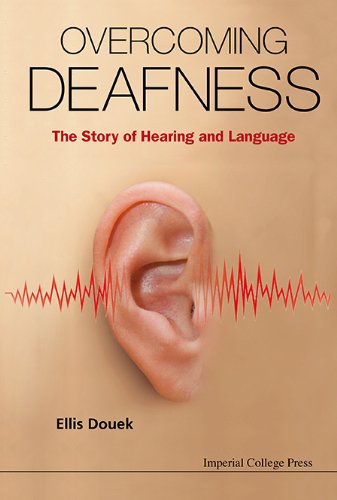
Overcoming Deafness The Story of Hearing and Language 1st Edition by Ellis Douek ISBN 1783264640 9781783264643

Original price was: $50.00.$35.00Current price is: $35.00.
Overcoming Deafness The Story of Hearing and Language 1st Edition by Ellis Douek – Ebook PDF Instant Download/Delivery: 1783264640, 9781783264643
Full download Overcoming Deafness The Story of Hearing and Language 1st Edition after payment
Product details:
ISBN 10: 1783264640
ISBN 13: 9781783264643
Author: Ellis Douek
Overcoming Deafness The Story of Hearing and Language 1st Table of contents:
Part I Sound and Hearing
Chapter 1 Sound
1.1 Measuring Loudness
1.2 Measuring Pitch
1.3 Mysteries
1.4 How Sound Behaves
1.5 Background Noise
1.6 Loudness and Sound Distribution
Chapter 2 Hearing
2.1 The Mechanism of Hearing
2.1.1 Evolution and development
2.1.2 Structure and function
2.1.2.1 The outer ear ( pinna)
2.1.2.2 The middle ear
2.1.2.3 The inner ear
2.1.2.4 Where is the pianist?
2.1.2.5 Perception
2.1.2.6 Balance
2.2 Measuring Hearing
2.2.1 Subjective tests
2.2.1.1 Voice
2.2.1.2 Tuning forks
2.2.1.3 Pure tone audiometry
2.2.1.4 The loudness discomfort level
2.2.1.5 Speech audiometry
2.2.1.6 Automatic audiometry
2.2.2 Objective tests
2.2.2.1 Electrical responses
2.2.2.2 Auditory brainstem responses (ABR)
2.2.2.3 Otoacoustic emissions
2.2.2.4 Tympanometry
2.3 Names and Nomenclature
2.4 Testing Children
2.4.1 Screening for hearing loss
2.4.2 Follow up
2.4.3 Observation and examination
2.4.4 Tests
2.4.4.1 If the child cannot cooperate
2.4.4.2 When the child is beginning to cooperate
2.4.4.3 Objective tests
Part II Deafness
Chapter 3 Conductive Deafness
3.1 Disease of the Outer Ear
3.1.1 Wax
3.1.2 Infection in the canal
3.1.3 Foreign bodies
3.1.4 Misshapen canal
3.2 Disease of the Middle Ear
3.2.1 Glue ear
3.2.1.1 Symptoms and signs of glue ear
3.2.1.2 Treatment
3.2.1.3 Glue ear in adults
3.2.2 Otosclerosis
3.2.2.1 Surgical treatment
3.2.2.2 Risks and complications of stapedectomy
3.2.2.3 Management of otosclerosis
3.2.3 Otitis media: infection of the middle ear
3.2.3.1 Acute otitis media
3.2.3.2 Chronic otitis media
3.2.3.3 Cholesteatoma
3.2.4 Barotrauma: pressure injuries to the middle ear
3.2.4.1 Flying
3.2.4.2 Scuba diving
3.2.4.3 Slaps and kisses
3.2.5 Fractures
3.2.6 Middle ear reconstruction
3.2.6.1 Tissue grafts
3.2.6.2 Other materials
3.2.6.3 Myringoplasty
3.2.6.4 Ossiculoplasty
3.2.6.5 Tympanoplasty
3.2.6.6 Combined approach tympanoplasty
3.2.6.7 Risks in ear surgery
Chapter 4 Perceptive or Neurosensory Deafness
4.1 Disease of the Inner Ear
4.1.1 Presbyacusis or the effects of ageing
4.1.2 Hazardous noise
4.1.2.1 Assessment
4.1.2.2 Dangerous levels of sound
4.1.2.3 Compensation
4.1.2.4 Other noises
4.1.2.5 Psychological trauma
4.1.3 Hazardous drugs
4.1.4 Infections of the inner ear
4.1.4.1 Bacterial infections
4.1.4.2 Viral infection
4.1.5 Vascular “accidents”
4.1.6 Immunological conditions
4.1.7 Injury of the inner ear
4.1.8 Menière’s disease
4.2 Disease of the Nerve
4.2.1 Acoustic neuroma
4.3 Brain Deafness
4.4 Born Deaf
4.4.1 Genetics of deafness
4.4.1.1 Autosomal recessive disorders
4.4.1.2 Autosomal dominant disorders
4.4.1.3 Syndromic genetic disorders affecting hearing
4.4.2 Warped eugenics
4.5 Tinnitus
Part III Communication
Chapter 5 Language
5.1 The God with No Mouth
5.2 An Inner Language
5.3 Wild Children
5.4 The Critical Period
5.5 A Language Instinct
5.6 Bilingualism and Prejudice
5.7 Broca’s Brain
5.8 The Voice
5.9 Speech
5.9.1 The sounds of speech
5.9.1.1 Consonant sounds
5.9.1.2 Vowels
5.9.2 Learning to speak
5.9.2.1 Babbling
5.9.2.2 Words
5.9.2.3 One- and two-word stage
5.9.2.4 The telegraphic stage
5.9.2.5 Later development
5.10 Gesture
5.10.1 Symbolic gestures
5.10.2 Enhancing speech
5.10.3 The beginning of language
Chapter 6 Music and the Sound of Feelings
6.1 Music and Birdsong
6.2 Music as a Human Attribute
6.3 Music and Deafness
Chapter 7 Poetry and the Sound of Words
7.1 Sound Patterns
7.2 Rhythm, Beat and Metre
7.3 Rhyme
7.4 Onomatopoeia
7.5 Alliteration
7.6 Assonance
7.7 The Sound of Poetry
Part IV Impaired Communication
Chapter 8 When Hearing is Impaired
8.1 Two Approaches
8.1.1 Sign Language
8.1.1.1 Sign languages around the world
8.1.1.2 How sign language works
8.1.2 Finger spelling
8.1.3 Hoping to speak
8.2 Deaf Children Today
8.2.1 Screening
8.2.2 Fitting hearing aids
8.2.3 Early training
8.2.4 Education
8.2.5 Mainstream schools
8.2.6 Special units
8.2.7 Special schools
8.3 Hearing Aids
8.3.1 Amplifying sound
8.3.2 Expectations
8.3.3 Two hearing aids
8.3.4 Hearing aid types
8.3.4.1 Behind the ear
8.3.4.2 In the ear (ITE) aids
8.3.4.3 In the canal (ITC) aids
8.3.4.4 Completely in the canal (CTC) aids
8.3.4.5 Analogue and digital
8.3.4.6 Letting in the air
8.3.4.7 Different programme
8.3.4.8 Bone conductor aids
8.3.4.9 Bone anchored hearing aids ( Baha®)
8.3.4.10 CROS and BiCROS
8.3.4.11 Radio aids
8.3.4.12 Loops
8.4 The Cochlear Implant
8.4.1 The apparatus
8.4.2 What is heard?
8.4.3 Who can be helped?
Chapter 9 When the Hearing is Normal
9.1 Language Deprivation
9.2 Mental Disability
9.3 Specific Language Disorders
9.3.1 Specific language impairment
9.3.2 Problems pronouncing
9.3.3 Elective mutism
9.3.4 Prevalence of speech and language problems
People also search for Overcoming Deafness The Story of Hearing and Language 1st:
deafness and language development psychology
effects of hearing loss on language development
from hearing loss to deaf gain
hard of hearing stories
hearing impairment history
Tags:
Ellis Douek,Deafness,Language,Hearing