

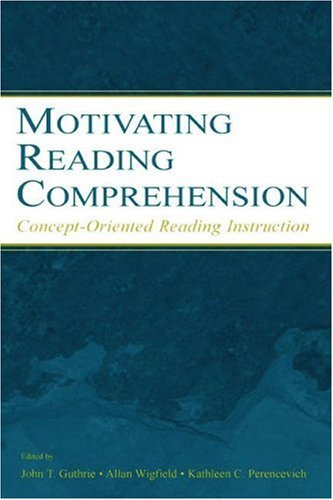
Motivating Reading Comprehension Concept Oriented Reading Instruction 1st Edition by Allan Wigfield, Kathleen C Perencevich, John T Guthrie ISBN 0805846832 9780805846829


Original price was: $50.00.$35.00Current price is: $35.00.
Motivating Reading Comprehension Concept Oriented Reading Instruction 1st Edition by Allan Wigfield, Kathleen C Perencevich, John T Guthrie – Ebook PDF Instant Download/Delivery: 0805846832, 9780805846829
Full download Motivating Reading Comprehension Concept Oriented Reading Instruction 1st Edition after payment
Product details:
ISBN 10: 0805846832
ISBN 13: 9780805846829
Author: Allan Wigfield, Kathleen C Perencevich, John T Guthrie
Motivating Reading Comprehension Concept Oriented Reading Instruction 1st Table of contents:
1 Classroom Contexts for Engaged Reading: An Overview
Rationale and Purposes of this Book
Engaged Reading
What Classroom Characteristics Foster Engaged Reading?
A Theoretical Model
Rationale for Concept-Oriented Reading Instruction
CORI Framework
Providing Explicit Strategy Instruction in a Context
Attributes of Strategic Reading
Strategies Taught in the CORI Model
Creating a Motivating Context for Strategy Development in Reading
Roles of Inquiry Science in CORI
How do we Help Struggling Readers
Oral Reading Fluency
Simpler Strategy Instruction
Bridging From Text to Response
Opportunity to Learn
How Much do Students Benefit from CORI?
Experimental Evidence
How do we Provide Professional Development for Teaching CORI?
Performances of CORI
Observing and Modeling Instruction
A CORI Teaching Guideline
Learning the Background
Continuing Development and Support
References
Children′s Book References
2 How the CORI Framework Looks in the Classroom
Observing and Personalizing in Jean Samuels Classroom
Why are Real-World Interactions Important?
Observation and Personalization: The CORI teacher′s Role
A Teacher′s Views of Observation and Personalization
Search and Retrieve
Why is Searching and Retrieving Important?
Search and Retrieve: The CORI Teacher′s Role
A Teacher′s View of Search and Retrieve
Comprehend and Integrate
Why are Comprehending and Integrating Skills Important?
A Teacher′s View of Comprehend and Integrate
Communicate to Others
Why is Communicating to Others Important?
A Teacher′s View of Communicating to Others
Conclusion
References
Children′s Book References
3 Scaffolding for Motivation and Engagement in Reading
Reading Motivation
Intrinsic Reading Motivation
Reading Efficacy
Reading Engagement
Social Interaction
Knowledge Growth
Strategy Use
Scaffolding Process
Scaffolding for Motivational Development
Conceptual Learning Goals
Real-World Interaction
Text Support
Choice and Control
Social Interaction
Using Comprehension Strategies
Expression of Text Understanding
Environmental Features and Resources
How Motivation Develops in a Scaffolded Context
Engaged Readers in the Later Elementary Grades
Shifting From Higher to Lower Scaffolding for Motivational Development
Multiple Scaffolds in the Classroom
High Scaffolding Vignette: Penni Stockman′s Lesson
Low Scaffold for Motivational Development: Jean Samuels Lesson
Research on Contextual Variables Influencing Reading Motivation
Supporting Student Autonomy
What Exactly Do Autonomy-Supportive Teachers Do?
Knowledge Goals Support Motivational Development
Real-World Interactions for Motivational Development
Interesting Texts
Social Collaboration for Literacy Motivation
Comprehension Instruction Supporting Student Reading Efficacy
Limitations of Research Literature on Classroom Motivation Supports
Closing
References
Children′s Book References
4 Fostering the Cognitive Strategies of Reading Comprehension
Links of Strategy Instruction in CORI to the research base
Synthesis of Research-Based Knowledge
Relating CORI Strategies to the Research Literature
Attributes of Comprehension Strategies
Limits of Research-Based Knowledge
Strategy Instruction in CORI
Single Strategy Instruction
Combined Strategy Instruction
Cognitive Strategies Taught Within CORI
A Vignette on Summarizing Instruction
Instruction for Combining Reading Strategies
Explicitness of Instruction
Scaffolding Novices and Experts
Adapting Scaffolding
A More Detailed Example: Instruction for Student Questioning
A Rubric for Students′ Questioning
Using Questioning Benchmarks as Instructional Goals
Principles of Questioning Instruction
A Vignette of Sally Trent′s Questioning Instruction
Closing
References
Children′s Book References
5 Science Inquiry in the CORI Framework
Introduction
The Process of Scientific Inquiry
CORI Science Goals
The Conceptual Basis of Science Inquiry
The Scientific Method: An Approach to Problem Solving and Science Inquiry
Science as a Hands-On Experience
Generating Questions: Transition into Hands-On Science Inquiry
Guidance Through Worksheets
Tests of Hypotheses Through Observed Correlations or Manipulation
The Role of the Teacher in Science Inquiry
Step 1: Teachers Can Practice Doing Experiments on Their Own
Step 2: Learn to Recognize “Testable Questions”
Step 3: Develop a Standardized Set of Student Worksheets
Step 4: Talk to Other Science Teachers
Step 5: Learn What Materials and Tools Are Available for K-12 Science
Step: 6 Participate in Science Programs Provided by the Local Government or Environmental Groups
A Vignette of the Guppy-Predator Experiment
Principles of Leadership and Student Encouragement: A Key to Implementing the Scientific Method
Principle 1: Let Discovery Happen
Principle 2: Use Biological Concepts, Rather Than Facts, to Focus Students′ Observations and Investigations
Principle 3: Use Simple Experiments to Teach Students How to Articulate and Test Their Own Theories About the World
Principle 4: Study Nature Close to Home
Principle 5: Get Beyond the “Wow!”
Relationships of Science in Cori to Current Views on Science Education
References
Children′s Book References
6 Diverse Texts and Technology for Reading
Use an Abundance of Interesting Texts for Reading Instruction
1 Identify Books That Represent Informational and Literary Aspects of the Conceptual Theme of the Unit
2 Provide Diverse Difficulty Among Books on the Conceptual Theme to Enable All Students to Participate in Reading Acquisition and Conceptual Development
3 Link Books to Science Activities by Providing a Conceptual Base for Investigations, Links to Science Observations, and Explanations of Science Findings
4 Align Books to the Requirements of Strategy Instruction, With Different Texts Serving Unique Roles Across a Range of Comprehension Strategies
5 Select Texts That Are Interesting to Students by Virtue of Their Appearance, Readability, Topic, and Connection to Classroom Activities
6 Enable Struggling Readers to Read Texts In and Out of the Classroom That Are Aligned With the Content and Adapted to Their Needs for Fluency and Simplified Strategy Instruction
7 Incorporate Multimedia Into Each of the Previous Practices
Closing
Appendix 6.A Characteristics of Trade Books Influencing their Difficulty for Reading Instruction
Appendix 6.B Birds Around the World
Appendix 6.C Survival in Freshwater Habitats
References
Children′s Book References
7 Differentiating Instruction for Struggling Readers Within the CORI Classroom
Oral Reading Fluency
Rationale for Differentiated Instruction in Cori
Supporting Initial Strategy Learning
Practices of Strategy Instruction for Struggling Readers
Expressive Reading
Crossing Bridges
Simplified Strategy Instruction
Scaffolding Motivation for Fluency Development and Simplified Strategy Learning
Selection of Texts for Differentiated Instruction in Cori
A Vignette on Differentiated Instruction from Carol Barrett′s Classroom
Commentary on the Vignette
Conclusion
Appendix 7.A Reading Strategies and Resources
Diverse Requests for Comment
Appendix 7.B Reading Charts for Struggling Readers
Week 2 – Bridge for Questioning
Week 4 – Summarizing
Appendix 7.C Characteristics of Texts for Struggling Readers in Cori
References
Children′S Book References
8 Inside Mrs. O′Hara′s CORI Classroom
Opening The Unit
Observe and Personalize: Using Hands-on Science to Initiate Reading
Search and Retrieve: Learning How to Locate Information
Activating Background Knowledge, Questioning, and Searching for Struggling Readers
Communicating to Others
Teaching Story Structure and Organization
Individual Students
Rebecca: A Confident Reader
Octavia: A Struggling Reader
Closing
Children′S Book References
9 Reading Comprehension for Information Text: Theoretical Meanings, Developmental Patterns, and Benchmarks for Instruction
Current Views of Reading Comprehension
Our Definition of Reading Comprehension
Distinguishing Reading Comprehension and Learning From Text
Roles of Cognitive Strategies in Comprehension
Sketching the Framework for Conceptual Knowledge
Growth of Reading Comprehension
Reading Comprehension: A Rubric for Conceptual Knowledge
Description of the Reading Comprehension Rubric for Ecology Texts
Facts and Associations: Simple-Level 1
Facts and Associations: Extended—Level 2
Concepts and Evidence: Simple—Level 3
Concepts and Evidence: Extended—Level 4
Patterns of Relationships: Simple—Level 5
Patterns of Relationships: Extended—Level 6
What is New in This View of Reading Comprehension?
Characterizing Growth of Reading Comprehension
Growth of Reading Comprehension: Group Trends and a Case Study
Learning From Text
Using Benchmarks in Reading Comprehension as Goals for Instruction
Closing
References
10 The Development of Motivation for Reading and How It Is Influenced by CORI
Focus of this Chapter
Aspects of Motivation Influencing Reading Engagement
Reading Self-Efficacy
Intrinsic Motivation
Extrinsic Motivation
Extrinsic Versus Intrinsic Motivation
Mastery Goals
Optimal Motivational Beliefs, Values, and Goals
Reading Motivation, Reading Frequency, and Reading Achievement
The Development of Reading Motivation
Connecting Situational Interest to Intrinsic Motivation in CORI Classrooms
Conclusion
References
11 Growth of Cognitive Strategies for Reading Comprehension
Strategic Reading: Three Aspects
Competence
Awareness
Self-Initiation
Development of Reading Comprehension Strategies
Developmental Benchmarks for Reading Comprehension
Activating Background Knowledge
Searching for Information as a Reading Strategy
Summarizing
Organizing Graphically
Organizing Graphically in Amy Broomall′s Classroom
Questioning as a Strategy for Reading Comprehension
Building a Questioning Rubric
Relationship of Questioning to Reading Comprehension
Closing
Appendix 11.A Questioning Rubric
Level 1: Factual Information
Text about animals
Text about biomes and organisms
Level 2: Simple Description
Text about animals
Text about biomes and organisms
Level 3: Complex Explanation
Text about animals
Text about biomes and organisms
Level 4: Pattern of Relationships
Text about animals
Text about biomes and organisms
References
Children′s Book References
Appendix Description of Research Project Assessing CORI′s Effects on Reading Comprehension and Reading Motivation
Project Design
Cori And SI Instructional Programs
The CORI Instructional Program
Strategy Instruction and Traditional Instruction
Participating Schools and Children
Participating Schools
Assessments of Reading Comprehension and Motivation
Reading Comprehension Long Form
Reading Comprehension Short Form
Reading Motivation
Standardized Measure of Reading Comprehension
Teacher Professional Development
Assessing Implementation of Instructional Models
People also search for Motivating Reading Comprehension Concept Oriented Reading Instruction 1st:
motivating reading comprehension concept
what are the 5 reading comprehension strategies
what are the 7 reading comprehension strategies
motivation and reading comprehension
motivating readers