

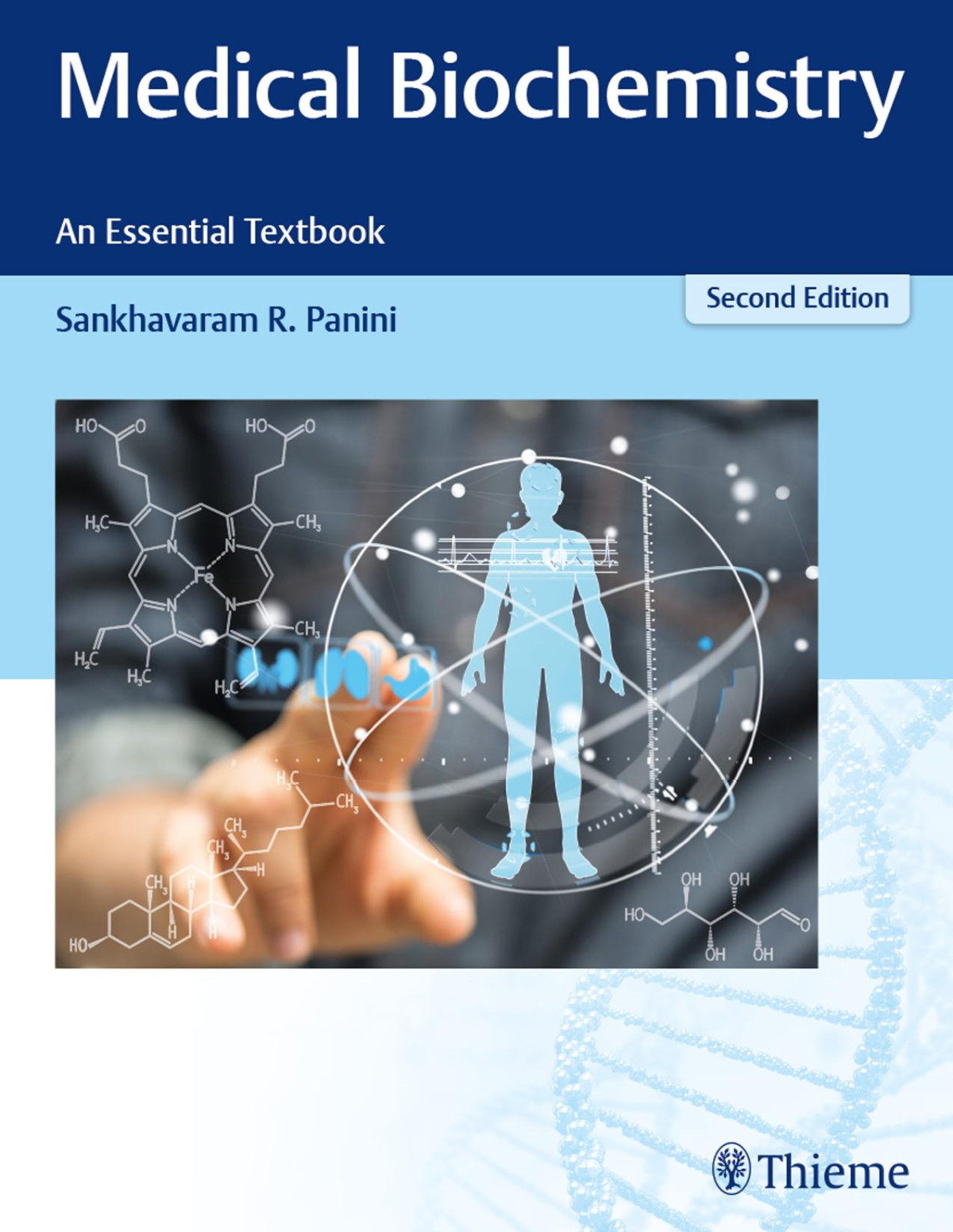
Medical Biochemistry An Essential Textbook 2nd Edition by Sankhavaram Panini ISBN 1626237441 9781626237445

Original price was: $50.00.$35.00Current price is: $35.00.
Medical Biochemistry An Essential Textbook 2nd Edition by Sankhavaram Panini – Ebook PDF Instant Download/Delivery: 1626237441, 9781626237445
Full download Medical Biochemistry An Essential Textbook 2nd Edition after payment
Product details:
ISBN 10: 1626237441
ISBN 13: 9781626237445
Author: Sankhavaram Panini
Medical Biochemistry: An Essential Textbook, Second Edition by Sankhavaram Panini covers the clinically relevant biochemistry facts and concepts necessary for success in the classroom and on board examinations. This clear and concise new edition includes an expanded number of clinical questions, revised tables, diagrams, images focused on high-yield information, and an updated design.
Key Highlights
- More than 350 full-color illustrations of biochemical pathways highlight associated disorders and drug targets
- The succinct, bullet-point format focuses on must master information
- Approximately 400 color-coded boxes connect biochemical concepts with basic science and clinical conditions
- About 365 board-style self-testing questions with answers and explanations are ideal for exam practice
This is an invaluable resource for biochemistry courses and will greatly benefit medical students seeking a robust board prep for the USMLE® Step I or COMLEX Level I exams.
Medical Biochemistry An Essential Textbook 2nd Table of contents:
Part I Nutrition and Biomolecules
1. Nutrition and Digestion
1.1. Nutrition and Energy Requirements
1.1.1. Nutrients
1.1.2. Diet
1.1.3. Total Energy Expenditure
1.1.4. Body Mass Index
1.2. Digestion and Absorption
1.3. Energy Nutrients: Carbohydrates, Lipids, and Proteins
1.3.1. Carbohydrates
1.3.2. Lipids
1.3.3. Proteins
1.4. Vitamins
1.4.1. Lipid-soluble Vitamins (A, D, E, K)
1.4.2. Water-soluble Vitamins
1.5. Water and Minerals
1.5.1. Water
1.5.2. Mineralss
2. Carbohydrate Structure and Chemistry
2.1. Overview
2.2. Monosaccharides
2.2.1. Nomenclature
2.2.2. Depiction
2.2.3. Important Monosaccharides
2.2.4. Modifed Monosaccharides
2.3. Disaccharides, Oligosaccharides, and Polysaccharides
2.3.1. Glycosidic Bonds
2.3.2. Disaccharide Composition
2.3.3. Oligosaccharide and Polysaccharide Composition
2.3.4. Important Oligosaccharide and Polysaccharide Derivatives
3. Lipid Structure and Chemistry
3.1. Overview
3.2. Fatty Acids
3.2.1. Nomenclature and Classification
3.2.2. Fatty Acid–derived Lipids
3.3. Isoprenoids
3.3.1. Steroids
3.3.2. Lipid-soluble Vitamins
3.3.3. Other
4. Amino Acids and Proteins
4.1. Amino Acids
4.1.1. Structure and Classification
4.1.2. Acid–Base Characteristics of Amino Acids
4.1.3. Derivatives of Amino Acids
4.2. Proteins
4.2.1. Structure
4.2.2. Post-translational Protein Modifications
4.2.3. Physical Dynamics of Proteins
4.3. Noteworthy Proteins
4.3.1. Collagen
4.3.2. Hemoglobin
5. Biochemical Reactions and Enzymes
5.1. Principles of Biochemical Reactions
5.1.1. Free Energy Change (ΔG)
5.1.2. Equilibrium Constant (Keq) and Standard Free Energy Change (ΔG°)
5.1.3. Reaction Drivers
5.2. Biochemical Reaction Classes
5.2.1. Additions/Eliminations
5.2.2. Substitution Reactions
5.2.3. Rearrangements (Isomerizations)
5.2.4. Oxidation-Reduction Reactions
5.2.5. Acid-Base Reactions
5.3. Enzymes
5.3.1. Overview
5.3.2. Enzyme Structure and Function
5.4. Enzyme Kinetics
5.4.1. Overview
5.4.2. Enzyme Inhibition and Inactivation
5.5. Allosteric Enzymes, Isozymes, and Proenzymes
5.5.1. Allosteric Enzymes
5.5.2. Isozymes
5.5.3. Proenzymes
Review Questions: Nutrition and Biomolecules
Answers and Explanations: Nutrition and Biomolecules
Part II Membranes, Transport, and Signaling
6. Membranes and Transport
6.1. Membrane Structure and Composition
6.1.1. Membrane Structure
6.1.2. Membrane Composition
6.2. Membrane Fluidity
6.3. Passive and Active Membrane Transport
6.3.1. Passive Transport
6.3.2. Active Transport
6.3.3. Transport Mechanisms in the Uptake of Dietary Monosaccharides
7. Cell Signaling
7.1. Overview
7.2. Types of Signaling
7.3. Types of Signaling Molecules and Their Receptors
7.3.1. Lipophilic Signaling Molecules and Their Receptors
7.3.2. Hydrophilic Signaling Molecules and Their Receptors
7.4. Signaling via G Protein–coupled Receptors
7.4.1. Trimeric G Proteins, Effectors, and Second Messengers
7.5. Signaling via Receptor Tyrosine Kinases
7.5.1. Insulin Signaling
Review Questions: Membranes, Transport, and Signaling
Answers and Explanations: Membranes, Transport, and Signaling
Part III Cellular Respiration
8. Principles of Cellular Respiration
8.1. Overview
8.2. ATP
8.2.1. Structure
8.2.2. ATP Hydrolysis
8.2.3. ATP Production: Substrate-Level versus Oxidative Phosphorylation
9. Glycolysis and the Fate of Pyruvate
9.1. Glucose Uptake
9.2. Overview of Glycolysis
9.3. Glycolytic Reaction Steps
9.4. Regulation and Integration of Glycolysis and Associated Disorders
9.4.1. Regulation
9.4.2. Integration
9.4.3. Glycolysis-associated Disorders
9.5. Pyruvate
9.5.1. Pyruvate Supply
9.5.2. Pyruvate’s Fates
10. Tricarboxylic Acid Cycle
10.1. Overview
10.2. Acetyl CoA Supply
10.3. Decarboxylation of Pyruvate
10.4. Tricarboxylic Acid (TCA) Cycle
10.4.1. Reactions and Regulation of the TCA cycle
10.5. Anaplerotic Reactions and Anabolic Functions of the TCA Cycle
10.5.1. Anaplerotic Reactions
10.5.2. Anabolic Functions
11. Oxidative Phosphorylation and Mitochondria
11.1. Overview
11.1.1. Redox Reactions
11.1.2. Standard Redox Potential
11.2. Mechanism of Oxidative Phosphorylation
11.2.1. (1.) Transfer of Electrons from NADH and FADH2 to O2
11.2.2. (2.) Establishment of a Proton Gradient across the Inner Mitochondrial Membrane
11.2.3. (3.) Synthesis of ATP
11.2.4. Regulation
11.3. Mitochondrial Transport Systems
11.3.1. Malate-Aspartate and Glycerophosphate Shuttles
11.3.2. Antiporters for Phosphate/OH– and Phosphate/Malate Exchange
11.3.3. Antiporter for ADP/ATP Exchange
Review Questions: Cellular Respiration
Answers and Explanations: Cellular Respiration
Part IV Metabolism
12. Carbohydrate Metabolism
12.1. Carbohydrates
12.1.1. Carbohydrate Digestion and Absorption
12.1.2. Carbohydrate Metabolism
12.2. Gluconeogenesis: De novo Synthesis of Glucose
12.2.1. Overview
12.2.2. Mechanism and Regulation of Gluconeogenesis
12.2.3. Cori Cycle and Precursor Molecules for Gluconeogenesis
12.3. Glycogen Metabolism
12.3.1. Glycogen
12.3.2. Glycogenesis versus Glycogenolysis
12.3.3. Regulation of Glycogen Metabolism
12.4. Fructose and Galactose Metabolism
12.4.1. Overview
12.5. Pentose Phosphate Pathway
12.5.1. Mechanism
12.6. Modified Carbohydrates in Glycosylated Biomolecules
13. Fatty Acid Metabolism
13.1. Lipids: Overview
13.1.1. Lipid Classification
13.1.2. Acetyl Coenzyme A
13.2. Synthesis of Fatty Acids
13.2.1. Mechanism
13.2.2. Elongation of Palmitate and Desaturation of Fatty Acids
13.2.3. Regulation of Fatty Acid Synthesis
13.3. Fatty Acid Storage and Release
13.3.1. Biosynthesis of Triacylglycerols
13.3.2. Hydrolysis of Triacylglycerols for Fatty Acid Release
13.4. Catabolism of Fatty Acids
13.4.1. Phase I: Transport of Long-Chain Fatty Acids into Mitochondrial Matrix via the Carnitine Shuttle
13.4.2. Phase II: β-Oxidation of Fatty Acids
13.5. Ketone Bodies
13.5.1. Ketone Body Synthesis in Hepatocytes
13.5.2. Ketone Body Breakdown and Utilization in Peripheral Tissues
13.5.3. Energy Yield
13.6. Membrane Lipids
13.6.1. Metabolism of Glycerophospholipids
13.6.2. Metabolism of Sphingolipids
13.7. Eicosanoids
13.7.1. Overview
13.7.2. Classes
13.7.3. Eicosanoid Metabolism
13.7.4. Effects of Eicosanoids
14. Cholesterol and Steroid Metabolism
14.1. Isoprenoids
14.2. Cholesterol
14.2.1. Structure
14.2.2. Cholesterol Synthesis
14.2.3. Regulation of Cholesterol Synthesis
14.3. Cholesterol Storage and Transport
14.3.1. Storage: As Cholesterol Esters
14.3.2. Transport: In Lipoproteins
14.3.3. Hypocholesterolemic Drugs
14.4. Cholesterol Elimination via Bile Acid Metabolism
14.4.1. Bile Acids and Salts
14.4.2. Bile Acid Metabolism
14.5. Cholesterol Conversion to Steroid Hormones and Vitamin D
14.5.1. Steroid Hormone Synthesis
14.5.2. Vitamin D
15. Protein and Amino Acid Metabolism
15.1. Proteins
15.2. Amino Acids
15.3. Protein Metabolism
15.3.1. Protein Synthesis (Translation)
15.3.2. Protein Degradation (Proteolysis)
15.3.3. Control of Proteolysis
15.4. Amino Acid Metabolism
15.4.1. Amino Acid Synthesis
15.4.2. Amino Acid Degradation
15.4.3. Notable Derivatives of Amino Acids
15.5. Urea Cycle
15.5.1. Overview
15.5.2. Urea Cycle Mechanism
16. Nucleotide and Heme Metabolism
16.1. Nucleosides, Nucleotides, and Deoxynucleotides
16.1.1. Purines and Pyrimidines
16.1.2. Phosphate Groups
16.1.3. Deoxynucleotides
16.2. Degradation of Nucleotides
16.2.1. Catabolism of Purines
16.2.2. Catabolism of Pyrimidines
16.3. De NovoSynthesis of Nucleotides
16.3.1. De NovoSynthesis of Purines
16.3.2. De NovoSynthesis of Pyrimidines
16.4. Salvage Pathways for Synthesis of Nucleotides
16.4.1. Purine Salvage Pathway
16.4.2. Pyrimidine Salvage Pathway
16.5. Heme
16.5.1. Heme Synthesis
16.5.2. Heme Degradation
Review Questions: Metabolism
Answers and Explanations: Metabolism
Part V Genetics and Cell Cycle
17. DNA Replication and Repair
17.1. Deoxyribonucleic Acid
17.1.1. DNA Structure
17.1.2. DNA Packaging
17.2. DNA Replication
17.2.1. Stages of DNA Replication
17.2.2. Telomeres and Telomerase
17.3. DNA Damage and Mutations
17.3.1. Types of DNA Damage
17.4. DNA Repair Mechanisms
18. Transcription
18.1. Ribonucleic Acid
18.1.1. Structure and Function
18.1.2. Types of RNA
18.2. Transcription
18.2.1. RNA Polymerases
18.2.2. Functional Organization of a Gene
18.3. Mechanism of Transcription
18.3.1. Assembly of Preinitiation Complex
18.3.2. Elongation and Termination
18.4. RNA Processing
18.4.1. rRNA Processing
18.4.2. mRNA Processing
18.4.3. tRNA Processing
18.5. Regulation of Transcription
19. Translation and Posttranslational Modifications
19.1. Genetic Code and Mutations
19.1.1. Mutations
19.2. Protein Synthesis (Translation)
19.2.1. Key Components of the Translational Machinery
19.2.2. Mechanism of Translation
19.3. Sites of Protein Synthesis
19.3.1. Protein Sorting via the Cytoplasmic Pathway
19.3.2. Protein Sorting via Secretory Pathway
19.4. Posttranslational Protein Processing
19.4.1. Protein Folding
20. Cell Cycle, Apoptosis, and Cancer
20.1. Cell Cycle
20.1.1. Cell Cycle Stages and Phases
20.1.2. Cell Cycle Restriction Point and Checkpoints
20.1.3. Cyclins and Cyclin-dependent Kinases
20.2. Apoptosis
20.3. Cancer
20.3.1. Multistep Progression of Cancer
20.3.2. Hallmarks of Cancer
20.3.3. Viral Oncogenesis
20.3.4. Cancer Chemotherapeutics
21. Molecular Biotechniques
21.1. Techniques for the Study of Biomolecules
21.1.1. Methods
21.1.2. Applications
21.2. Restriction Endonucleases and DNA Ligase
21.2.1. Restriction Endonucleases
21.2.2. DNA Ligase
21.3. Electrophoretic Separation of Macromolecules
21.4. Hybridization
21.4.1. Southern Blots
21.4.2. Northern Blots
21.5. DNA Sequencing
21.5.1. Sanger Method
21.5.2. Automated Method
21.6. Recombinant DNA Techniques
21.6.1. DNA Cloning
21.6.2. Cell-based Cloning
21.6.3. Cell-free Cloning (also known as Polymerase Chain Reaction PCR])
21.6.4. Other Types of PCR
21.6.5. DNA Libraries
21.7. Applications of Molecular Biotechniques
21.7.1. Detection of Infectious Agents
21.7.2. Detection of Variations in DNA Sequence
21.7.3. Diagnosis of Disease-causing Mutations
21.8. Production of Clinically Relevant Proteins
21.8.1. Recombinant Proteins
21.8.2. Antibodies
21.8.3. Transgenic and Knockout Animals
21.8.4. Gene Therapy
21.9. Molecular Techniques for Protein Analysis
21.9.1. Enzyme-linked Immunosorbent Assays
People also search for Medical Biochemistry An Essential Textbook 2nd:
biochemistry books for medical students
is biochemistry important for med school
what is medical biochemistry all about
medical biochemistry books
essentials of medical biochemistry with clinical cases
Tags:
Sankhavaram Panini,Medical Biochemistry