

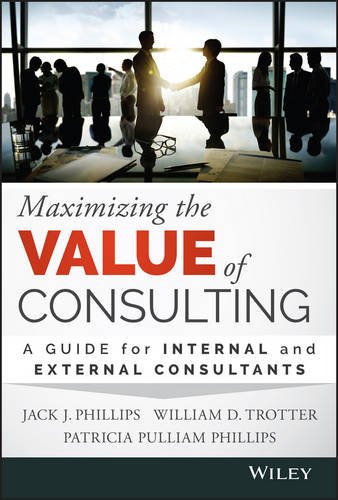
Maximizing the Value of Consulting A Guide for Internal and External Consultants 1st Edition by Jack J Phillips, William Trotter ISBN 1119123674 9781119123675

Original price was: $50.00.$35.00Current price is: $35.00.
Maximizing the Value of Consulting A Guide for Internal and External Consultants 1st Edition by Jack J Phillips, William Trotter – Ebook PDF Instant Download/Delivery: 1119123674, 9781119123675
Full download Maximizing the Value of Consulting A Guide for Internal and External Consultants 1st Edition after payment
Product details:
ISBN 10: 1119123674
ISBN 13: 9781119123675
Author: Jack J Phillips, William Trotter
Maximizing the Value of Consulting A Guide for Internal and External Consultants 1st Table of contents:
Chapter 1 The Role and Importance of Internal and External Consulting
Trends in Internal and External Consulting
Emergence of Internal Consulting
The Growth of External Consulting
Opportunities for Collaboration
Key Benefits of Building an Internal Consulting Practice
Changing Role of Internal Support Functions
Key Practice Areas and Projects
Strategic/Business Planning
Process and Operational Improvement
Change Management
Organizational Effectiveness
Compliance and Risk Management
Performance Measurement and Management
Other Areas
Shifting Expectations for the Consulting Role (Both Internally and Externally)
Key Success Factors
Adequate Planning—Early and Often
Developing Client Partnerships
Delivering Value
Address the Financial Issues
Manage the Consulting Practice Effectively
Develop a Unique Approach
Create Effective Proposals or Consulting Contracts and Reports
Operate in an Ethical Way
Measure Success and Communicate Routinely
Improve Your Skills
Build Relationships
Assessment with Success Factors
Increasing the Value of Internal Consulting to the Enterprise
Final Thoughts
Chapter 2 Organizing the Consulting Practice to Deliver Value
Creating a Business Plan
Importance of the Business Plan
Audience for the Plan
Outline of a Typical Business Plan
Purpose and Approach
Market Analysis
Defining Your Niche
Client Development
Operations
Management
Financial Plan
Goals and Milestones
Risks and Opportunities
Developing Your Methodology
Systematic Process
Protecting the Methodology
Managing the Project
Creating a Service Agreement
Project Plan
Project Communications
Deliverables
Communicating Results
Structuring Consulting Processes
Opportunity Analysis
Contracting
Strategic Portfolio Management
Planning for Skill and Resource Requirements
Target Competency Frameworks
Recruiting Strategies
Partnering
Creating a High-Performance Culture
Establishing and Integrating Areas of Practice
Orchestrating an Effective Performance
Measurement and Management System
Final Thoughts
Chapter 3 Managing the Consulting Practice to Deliver Value
Maintaining a Professional Management System
Effective Relationship Management
Consistent Consulting Processes
Enhancing Consulting Capabilities
Providing Integrated Project and Change Management
Becoming Thought Leaders and Leading Change
Positioning Business Partner Role
Executing Effective Marketing and Business Development
Client Development Assessment
Marketing versus Selling
Creating a Client Development Process
Using the Internet
Building Related Tools and Products
Managing for Results
Shifting Paradigms
Ensuring That Consulting Generates the Right Solution
Setting Objectives at Multiple Levels
Transferring Ownership
Performance Measurement
Final Thoughts
Chapter 4 Controlling Costs and Enhancing Value
The Planning and Budgeting Process
The Planning Process
Supporting Action Plans
The Budgeting Process
Collecting Information
Types of Budgets
Using the Budget
Monitoring and Controlling Costs
The Concern for Cost Control
Cost Classification Systems
Process/Functional Classifications
Expense Account Classifications
Managing Suppliers for Value
Outsourcing Strategy
Outsourcing Decision
Managing the Partnership
Monitoring Performance
Guaranteeing Results
Impact on External Consultants
Implications for Maximizing Value-Added
Monitoring External Consulting Spend
Ensuring Quality Consulting Contracts
Maximizing a Combined Internal-External Staffing Model
Effectively Aligning and Integrating Internal Consulting Capabilities across the Enterprise
Transferring Capabilities and Responsibilities to Clients
Enhancing Overall Organizational Change Capabilities
Developing a Strategic Portfolio Management Approach
Establishing an Economic Value Tracking System
Ensuring Sustained Value from the Internal Consulting Investment
Final Thoughts
Chapter 5 Utilizing the Consulting Scorecard for the Practice
Basic IPO Scorecard
The Balanced Scorecard Process
The Causal Chain Scorecard
AIMC Scorecard
Financial Measures
Customer/Client Feedback
Internal Consulting Operations Measures
Consultant Development
Innovation and Business Development
Using the Scorecard
Select the Measures
Set the Target
Monitor the Data
Conduct a Gap Analysis
Identify/Select Action/Solution
Implement Action/Solution
Forecast the Value
Monitor the Progress
Show the Value
Repeat the Process
Role of External Consultants
Final Thoughts
Chapter 6 A Logical Approach to Measure Impact and ROI for Projects
The Case for ROI
Client Demands: “Show Me the Money”
Competitive Advantage
Increased Revenues and Profits for the Practice
Satisfaction and Engagement of the Team
The ROI Challenge
The Forces Driving ROI
Consulting Failures
Economic Pressures
Budget Growth
Balanced Measures
Executive Interest
Fad Surfing in the Boardroom
The ROI Methodology
The Framework: Evaluation Levels
The ROI Process Model
Planning the Evaluation
Collecting Data
Isolating the Effects of Consulting
Converting Data to Monetary Values
Identifying Intangible Benefits
Capturing the Cost of the Consulting
Calculating the Return on Investment
Reporting Results
The Operating Standard: Guiding Principles
Implementation of the Process
Applications
Application of the ROI Process: A Case Study
Final Thoughts
Chapter 7 Developing Powerful Objectives at Multiple Levels
Overall Project Goal
Levels of Project Objectives
Reaction Objectives
Learning Objectives
Application Objectives
Impact Objectives
Return on Investment Objectives
Importance of Specific Objectives
Final Thoughts
Chapter 8 Aligning Projects to the Business
Introduction to the V Model
Payoff Needs
Business Needs
Performance Needs
Learning Needs
Preference Needs
Final Thoughts
Chapter 9 Planning the Evaluation
Initial Planning for Success
Data Collection Plan
ROI Analysis Plan
Communication Plan
Project Plan
ROI Planning Meeting
Planning Participants
Success Factors
Agenda
Approval
Final Thoughts
Chapter 10 Methods of Data Collection
Using Questionnaires and Surveys
Types of Questions and Statements
Design Issues
A Detailed Example
Improving the Response Rate for Questionnaires and Surveys
Using Interviews
Types of Interviews
Interview Guidelines
Using Focus Groups
Applications for Evaluation
Guidelines
Measuring with Tests
Measuring with Simulation
Task Simulation
Business Games
Role-Playing/Skill Practice
Using Observation
Guidelines for Effective Observation
Observation Methods
Using Action Plans
Using Action Plans Successfully
Advantages/Disadvantages of Action Plans
Using Performance Contracts
Monitoring Business Performance Data
Existing Measures
Developing New Measures
Selecting the Appropriate Method for Each Level
Type of Data
Participants’ Time for Data Input
Manager Time for Data Input
Cost of Method
Disruption of Normal Work Activities
Accuracy of Method
Utility of an Additional Method
Cultural Bias for Data Collection Method
Final Thoughts
Chapter 11 Data Collection at All Four Levels
Sources of Data
Client/Senior Managers
Consulting Participants
Consulting Team
Internal Customers
The Importance of Measuring Inputs, Level 0
Define the Project
Reflects Commitment
Facilitates Benchmarking
Issues in Measuring Input
Importance of Measuring Reaction, Level 1
Customer Satisfaction Is Essential
Making Adjustments Early
Benchmarking Data from Other Projects
The Importance of Measuring Learning, Level 2
Knowledge Management Is Important
Learning Is Critical for Complex Projects
Topics for Reaction and Learning
Using Reaction and Learning Data
Monitor Customer Satisfaction
Identify Strengths and Weaknesses of the Project
Develop Norms and Standards
Evaluate Consultants
Identify Planned Improvements for a Forecast
Marketing Future Projects
Providing Individual Feedback to Build Confidence
The Importance of Measuring Application and Implementation, Level 3
The Value of the Data
It’s the Key Focus of Many Projects
Barriers and Enablers
Rewards for Success
Types of Data
The Importance of Measuring BusinessImpact, Level 4
Higher-Level Data
The Business Driver for Projects
It’s the Payoff for Clients
Easy to Measure
Types of Data
Data Collection Key Issues
Timing of Data Collection
Sources
Final Thoughts
Chapter 12 Isolating the Effects of Consulting
The Importance of Isolating the Effects of Consulting Projects
Preliminary Issues
Early Evidence: Chain of Impact
Identifying Other Factors: A First Step
Use of Control Groups
Analytical Approaches
Trend-Line Analysis
Relationship Modeling
Calculating the Impact of Other Factors
Estimates from Credible Sources
Participant’s Estimate of Impact
Manager’s Estimate of Impact
Customer Estimates of Consulting Impact
Expert Estimation of Consulting Impact
Using the Techniques
Final Thoughts
Chapter 13 Converting Data to Money
Importance of Converting Data to Monetary Values
The Five Key Steps to Convert Data to Money
Standard Monetary Values
Converting Output Data to Money
Calculating the Standard Cost of Quality
Converting Employee Time to Money Using Compensation
Finding Standard Values
When Standard Values Are Not Available
Calculating the Value Using Historical Costs from Records
Using Expert Input
Using Values from External Databases
Linking with Other Measures
Using Estimates from Participants
Using Estimates from the Management Team
When Conversion Should Not Be Pursued: The Intangible Benefits
Where Do They Come From?
How Are Intangibles Analyzed?
Selecting the Techniques and Finalizing the Values
Selection Guidelines
Apply the Credibility Test
Review the Client’s Needs
Consider a Potential Management Adjustment
Consider an Adjustment for the Time Value of Money
Final Thoughts
Chapter 14 Tabulating Project Costs and Calculating ROI
The Importance of Costs and ROI
Developing Costs
Costs Are Credible
Fully Loaded
The Danger of Reporting Costs without the Benefits
Developing and Using Cost Guidelines
Cost Tracking Issues
Sources of Costs
Consulting Process Steps and Cost
Prorated versus Direct Costs
Employee Benefits Factor
Major Cost Categories
Initial Analysis and Assessment
Design and Development of the Project
Acquisition Costs
Capital Expenditures
Application and Implementation Costs
Maintenance and Monitoring
Administrative Support and Overhead
Evaluation and Reporting
Basic ROI Issues
Definitions
Annualized Values: A Fundamental Concept
ROI Measures
Benefits/Costs Ratio
ROI Formula
Other ROI Measures
Payback Period
Discounted Cash Flow
Internal Rate of Return
Benefits of the ROI Process
Measures the Contribution
Develops Priorities for Consulting Projects
Improves the Consulting Process
Focuses on Results
Builds Management Support for the Consulting Process
Alters Perceptions of Consulting
Simplifies a Complex Issue
Final Thoughts
Chapter 15 Reporting Results to Key Audiences
Communicating Results: Key Issues
Communication Is Necessary to Explain Contributions
Communication Is Necessary to Make Improvements
Communication Is a Sensitive Issue
A Variety of Target Audiences Need Different Information
Communication Must Be Timely and Consistent
Communication Should Be Unbiased and Modest
Analyzing the Need for Communication
Planning the Communication
Communication Policy Issues
Planning the Communication for the Entire Project
Communicating the Complete Results
Selecting the Audience for Communications
Understanding the Potential Audience
Basis for Selecting the Audience
Developing the Information: The Impact Study
Management/Executive Summary
Background Information
Objectives
Evaluation Strategy/Methodology
Data Collection, Integration, and Analysis
Reaction
Learning
Application and Implementation
Business Impact
Project Costs
Return on Investment
Intangible Measures
Barriers and Enablers
Conclusions and Recommendations
Organization of the Report
Selecting the Communication Media
Meetings
Interim and Progress Reports
Routine Communication Tools
E-mail and Electronic Media
Project Brochures and Pamphlets
Case Studies
Communicating the Information
Providing Early Feedback
Presenting Impact Study Data to Senior Management
Analyzing Reactions to Communications
Final Thoughts
Chapter 16 Call to Action
At the Organizational Level
At the Individual Project Level
People also search for Maximizing the Value of Consulting A Guide for Internal and External Consultants 1st:
maximizing the value of consulting
how to value a consulting firm
how to value a consulting business
value of consulting
a value-maximizing firm would
Tags: Jack J Phillips, William Trotter, Value, External Consultants