

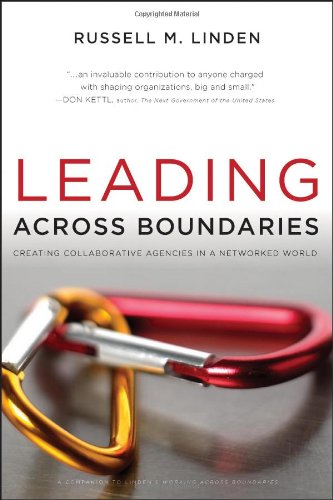
Leading Across Boundaries Creating Collaborative Agencies in a Networked World 2nd Edition by Russell M Linden ISBN 0470588616 9780470588611

Original price was: $50.00.$35.00Current price is: $35.00.
Leading Across Boundaries Creating Collaborative Agencies in a Networked World 2nd Edition by Russell M Linden – Ebook PDF Instant Download/Delivery: 0470588616, 9780470588611
Full download Leading Across Boundaries Creating Collaborative Agencies in a Networked World 2nd Edition after payment
Product details:
ISBN 10: 0470588616
ISBN 13: 9780470588611
Author: Russell M Linden
“…an invaluable contribution to anyone charged with shaping organizations, big and small.”
—DON KETTL, author, The Next Government of the United States
Praise for LEADING ACROSS BOUNDARIES
“Leading Across Boundaries is a terrific resource for nonprofit leaders. It is filled with great stories of collaboration, and also with the how-to’s to make them work!”
—ARLENE KAUKUS, former president, United Way of Buffalo and Erie County, and a nonprofit consultant
“Linden illustrates the importance of collaboration, but drives further into issues of networks to teach us valuable lessons about core interests, trust, leadership, and success. This book is a very valuable and timely resource for practitioners who seek to produce more value from effective collaboration.”
—STEPHEN GOLDSMITH, Daniel Paul Professor of Government, Kennedy School of Government, Harvard University, and author, The Power of Social Innovation
“Linden provides a fresh, practitioner-oriented perspective on the topic of collaboration—especially for those in the public and nonprofit sectors wanting to benefit from Web 2.0 and social-networking technologies. It’s a gem of a book and a terrific road map for leading change.”
—WARREN MASTER, president and editor-in-chief, The Public Manager
“Linden uses fabulous examples to illustrate the essential ideas for collaboration and for effective leadership. His discussions of political acumen and the interpersonal side of collaboration are especially enlightening. I’ve been a manager for a long time, and wish I’d read this book earlier in my career!”
—ELLEN SWITKES, assistant vice president emeritus, academic advancement, office of the president, University of California
“Trust, transparency, and relationships are keys to successful collaboration. Linden takes these concepts and more and constructs a masterful lesson plan for us to follow.”
—TIM LONGO, police chief, Charlottesville, Virginia
Leading Across Boundaries Creating Collaborative Agencies in a Networked World 2nd Table of contents:
Part 1 Creating the Foundations of Collaboration
1 The Promise, and Challenge, of Leading in a Networked World
“The Future Is Already Here . . .”
In the Arts
In Law Enforcement
In Human Services
Through the Web
Among Unusual Suspects
Among Public and Nonprofit Funders
“. . . It’s Just Not Very Evenly Distributed”
Dealing with Complex Challenges in a Networked World
Two Overriding Collaboration Challenges
Trying to Solve Twenty-First-Century Problems Using Eighteenth-Century Structures
Coping with the Expectations of a Highly Individualistic Society
We’re Also a Nation of Joiners
Me Versus We? Or Both?
2 AGEPA Collaborative Project That’s Making a Big Difference
The Tipping Point: One Dean Steps Up
Follow Up: Getting the Alliance off the Ground
The Results: Some California Accomplishments
Agep’s Impact Across the Country
Roosevelt Johnson: A Different Way of Thinking
3 A Framework for Collaboration
1. The Partners Have a Shared, Specific Interestor Purpose
2. The Partners Want to Pursue a Collaborative Solution Now
3. The Appropriate People Are at the Table
4. The Partners Have an Open, Credible Process
Joint Ownership
Agreed-Upon Norms or Ground Rules
Transparency
Knowledge of Each Other
5. The Collaborative Effort Has a Passionate Champion (or Champions)
The Project-Level Champion
The Senior Champion
4 The Power of Relationships Built on Trust
Why Are Relationships Critical to Partnerships?
9/11 at the Pentagon: The Power of Relationships
Trusting Relationships: Critical, Not Easy
Forming and Sustaining Trusting Relationships
Share Accurate Information, Both Requested and Unrequested
Set Aside Time to Work on Relationship Building
Model Openness; Use Self-Disclosure
Offer Help During a Crisis
Make Good on Commitments
Build the Partnerships in Chunks
Take a Personal Interest
Engage in Joint Training
Earn Trust by Sharing Credit, Keeping Confidences, Being Trustworthy
5 The Art of Collaborative Leadership
Five Qualities of Collaborative Leaders
1. Feel Driven to Achieve the Goal Through Collaboration, with a Measured Ego
2. Listen Carefully to Understand Others’ Perspectives
3. Look for Win-Win Solutions to Meet Shared Interests
4. Use Pull More Than Push
5. Think Strategically; Connect the Project to a Larger Purpose
Collaborative Leadership Works in Hierarchical Settings as Well
Self-Assessment
Part 2 Getting Started: Dealing with Process and People Issues
6 Getting the Collaborative Process Started
Getting Started: What to Do Before the First Meeting
Do Your Homework: Be Clear on the Need and Goal
Identify and Invite Key Stakeholders
Map the Political Terrain
Seek the Support of a Senior Champion or Executive Sponsor
Plan the First Meeting; Invite Participants
Developing a Collaborative Process During the First Few Meetings
A Model of Collaborative Team Development: Moving from Me to We
Shine a Light on the Problem or Challenge
Create an Open Tone to Build Trust: Discuss Everyone’s Interests and Concerns
Determine Team Norms and Problem-Solving and Decision-Making Methods
Develop a Project Plan Together
Find Out What the Partners Bring to the Task, and Play to Their Strengths
Invite Members to Take on Initial Tasks; Decide How They Will Be Accountable
Shine a Light on the Successes; Recognize Partners’ Contributions
7 Getting Commitment on a Common Direction
Finding Common Direction
Learn the Ground Truth Together
Bring Resources
Take the First Step
Find a Common Challenge or Enemy
Use a Skillful Facilitator
Widen the Arena of Engagement—Bring in Third Parties
Be Willing to Try a Different Approach
Describe the Criteria Any Solution Must Meet
Reframe the Goal
8 Working Effectively Across Different Cultures
The Puzzle of Culture
Adopting an Attitude of Curiosity
Some Strategies for Working Across Different Cultures
Respect Differences; Don’t Allow Them to Overshadow Commonalities
Work on Relationships; Take Time to Let Trust Grow
Become “Bilingual”; Take Time to Decode the Other Culture(s)
Do Real Work Together on a Common Goal
Co-Locate Staff from Several Agencies or Units
Identify and Use the Strengths in Each Organization
Make Needed Systemic Changes When Trying to Alter an Organization’s Culture
A Note on Doing International Work
9 Dealing with People Problems in Collaboration
An Approach for Dealing with Difficult People and Situations in Collaboration
Communicate Your Expectations and Needs
Use Measurement, Reward, and Accountability Systems That Promote Collaboration
Raise the Stakes of the Initiative
Check the Roles (and Role Conflicts) Involved
Use Pull to Deal with Difficult Personalities
An Example of Successful Collaboration with Difficult People
10 Dealing with the Most Difficult Situations: Huge Egos, Empire Builders, Information Hoarders, and
Powerful Managers Used to Getting Their Way
Analysis
Transforming the Culture of a Top-Down Agency Where Information and Resources Were Hoarded
Analysis
Some Common Themes
Use Collaborative Leadership Skills
Find Ways to Be Creative, Take Prudent Risks, and Use Political Skills
Respond to Basic Self-Interests
Begin at the Individual Level, Then Move to Systemic Change
Part 3 Developing Sustainable Collaborative Cultures
11 Co-Locating Operations Using Shared Space to Foster Information Sharing and a Culture of Collabor
E-Mail-Free Fridays and the Wonders of Talking to Each Other
Co-Location: A Structural Approach to Increase Collaboration
Is the Goal of Co-Location Several Stronger Agencies? . . .
. . . Or a Joint Venture?
Why Co-Locate? and what are the Critical Success Factors for Co-Locating?
Reality Check: Co-Location Poses Potential Risks
12 Using CompStat: A Structured Method for Generating Collaboration and Accountability
Washington State’s GMAP: Fostering Collaboration Around the Governor’s Priorities
Yes, but . . . Questions About GMAP and Other Stat Programs
So What? Some Results . . .
. . . And Some Important Recognition
Analysis: Why Do Stat Programs Work?
A Cautionary and Hopeful Note
13 Using the New Web to Help Stakeholders Collaborate in Value Creation
The Urge to Engage Through the Web
Self-Organizing Communities
The News
Science
The Environment
R & D
Politics
General Knowledge
Engaging Through Web 2.0
Using Web 2.0 to Support Collaboration: Four Approaches
Crossing Boundaries Between Employees
Crossing Boundaries Between Agencies
Crossing Boundaries Between Agencies and Their Customers or Stakeholders
Crossing Boundaries Among Customers or Stakeholders to Form Communities
Understanding the New Rules of the New Web
Identifying Web 2.0 Collaborative Opportunities
14 Developing the Leadership to Create Tomorrow’s Collaborative Cultures
Cisco Systems: From Hierarchy and Cowboys to Flat and Collaborative
The Fourth Lever: The People Best Positioned to Make Change
The Millennial Generation: Tomorrow’s Leaders Ready for Change
The Other People Positioned to Create Cultures of Collaboration: Today’s Leaders
Developing a Collaborative Mindset in Yourself and Others
Hire People Who Are Natural Collaborators
Help People Reduce Associative Barriers
Identify Important Outcomes That Can Be Met Only Through Collaborative Effort; Hold All Units Accoun
Provide Multiple Opportunities to Practice
Start with Yourself
A Final Note to the Reader
Resource A Create Your Own Game Plan
Resource B Country Rankings on Five Cultural Factors Related to Collaboration
People also search for Leading Across Boundaries Creating Collaborative Agencies in a Networked World 2nd:
collaboration across boundaries examples
leading across boundaries
collaboration across boundaries
collaboration across organizational boundaries
collaborate across boundaries
Tags: Russell M Linden, Across Boundaries, Networked World