

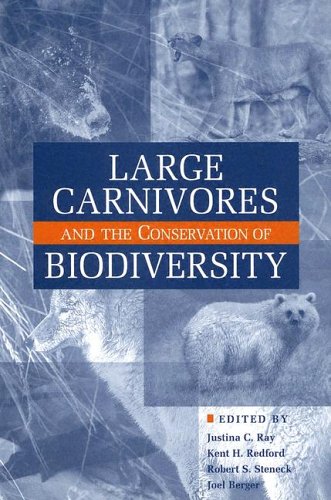
Large Carnivores and the Conservation of Biodiversity 1st Edition by Justina Ray, Kent Redford, Robert Steneck, Joel Berger ISBN 1559630809 9781559630801


Original price was: $50.00.$35.00Current price is: $35.00.
Large Carnivores and the Conservation of Biodiversity 1st Edition by Justina Ray, Kent Redford, Robert Steneck, Joel Berger – Ebook PDF Instant Download/Delivery: 1559630809, 9781559630801
Full download Large Carnivores and the Conservation of Biodiversity 1st Edition after payment
Product details:
ISBN 10: 1559630809
ISBN 13: 9781559630801
Author: Justina Ray, Kent Redford, Robert Steneck, Joel Berger
Large Carnivores and the Conservation of Biodiversity brings together more than thirty leading scientists and conservation practitioners to consider a key question in environmental conservation: Is the conservation of large carnivores in ecosystems that evolved with their presence equivalent to the conservation of biological diversity within those systems? Building their discussions from empirical, long-term data sets, contributors including James A. Estes, David S. Maehr, Tim McClanahan, Andrès J. Novaro, John Terborgh, and Rosie Woodroffe explore a variety of issues surrounding the link between predation and biodiversity: What is the evidence for or against the link? Is it stronger in marine systems? What are the implications for conservation strategies?
Large Carnivores and the Conservation of Biodiversity is the first detailed, broad-scale examination of the empirical evidence regarding the role of large carnivores in biodiversity conservation in both marine and terrestrial ecosystems. It contributes to a much more precise and global understanding of when, where, and whether protecting and restoring top predators will directly contribute to the conservation of biodiversity. Everyone concerned with ecology, biodiversity, or large carnivores will find this volume a unique and thought-provoking analysis and synthesis.
Large Carnivores and the Conservation of Biodiversity 1st Table of contents:
Chapter 1: The Role of Large Carnivores in Ecosystem Health
-
Ecological Functions of Large Carnivores
-
Trophic Cascades and the Top-Down Regulation of Ecosystems
-
The Impact of Carnivores on Prey Populations and Vegetation
-
Case Studies of Carnivores Shaping Ecosystems (e.g., Wolves, Tigers, Lions)
Chapter 2: Large Carnivores and Biodiversity Conservation
-
Large Carnivores as Keystone Species
-
Biodiversity Hotspots and Carnivore Conservation
-
How Carnivores Contribute to Maintaining Species Diversity
-
The Interdependence of Carnivores and Other Species in Ecosystems
Chapter 3: Threats to Large Carnivores
-
Habitat Loss and Fragmentation
-
Poaching and Illegal Wildlife Trade
-
Human-Wildlife Conflict: Understanding and Managing the Risks
-
Climate Change and Its Effects on Carnivore Populations
-
The Decline of Carnivores: Global and Regional Trends
Chapter 4: Conservation Strategies for Large Carnivores
-
Protected Areas and Wildlife Corridors
-
Community-Based Conservation Efforts
-
Policy and Legal Frameworks for Carnivore Protection
-
Translocation and Reintroduction Programs
-
Monitoring and Research in Carnivore Conservation
Chapter 5: The Role of Large Carnivores in Ecosystem Restoration
-
Carnivores as Agents of Ecosystem Restoration
-
Rewilding Projects and Their Impact on Ecosystems
-
Case Studies of Successful Restoration Initiatives
-
Challenges and Opportunities in Ecosystem Restoration
Chapter 6: Human-Carnivore Conflict: Causes and Solutions
-
Understanding the Roots of Conflict: Livestock Predation and Safety Concerns
-
Mitigation Strategies: Fencing, Guard Animals, and Compensation Programs
-
Engaging Local Communities in Conflict Resolution
-
The Role of Education and Awareness Campaigns
Chapter 7: The Social and Economic Dimensions of Carnivore Conservation
-
The Economic Value of Large Carnivores: Eco-Tourism and Local Economies
-
Balancing Conservation with Livelihoods
-
The Role of Indigenous Knowledge and Practices in Carnivore Conservation
-
Public Perceptions of Carnivores and Conservation Efforts
Chapter 8: Global Perspectives on Carnivore Conservation
-
Conservation Approaches in Africa: Lions, Leopards, and Hyenas
-
Carnivore Conservation in North America: Wolves, Bears, and Cougars
-
The Role of Asia in Carnivore Conservation: Tigers and Snow Leopards
-
Challenges in Carnivore Conservation in Latin America and Europe
-
International Cooperation and Global Conservation Networks
Chapter 9: Advances in Technology and Research for Carnivore Conservation
-
The Role of GPS Tracking and Remote Sensing in Monitoring Carnivores
-
Genetic Studies and the Importance of Population Connectivity
-
The Use of Drones and Other Technology in Conservation Efforts
-
Citizen Science and the Involvement of the Public in Research
Chapter 10: The Future of Large Carnivores and Biodiversity
-
Emerging Threats and New Opportunities for Conservation
-
The Impact of Policy and Global Climate Agreements on Carnivore Conservation
-
Integrating Carnivore Conservation into Broader Biodiversity Strategies
-
The Need for Holistic Approaches to Ecosystem Management
-
Moving Forward: Lessons Learned and Future Directions in Conservation
People also search for Large Carnivores and the Conservation of Biodiversity 1st:
carnivores are the large animals in an ecosystem
a large carnivorous predator would be placed in the
carnivores are the largest animals in an ecosystem
a large biological community is a(n)
biodiversity and conservation biology quizlet
Tags: Justina Ray, Kent Redford, Robert Steneck, Joel Berger, Large Carnivores, Biodiversity