

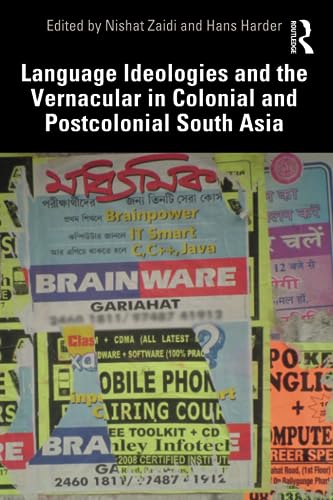
Language Ideologies and the Vernacular in Colonial and Postcolonial South Asia 1st Edition by Zaidi Nishat, Hans Harder ISBN 1032247347 9781032247342


Original price was: $50.00.$35.00Current price is: $35.00.
Language Ideologies and the Vernacular in Colonial and Postcolonial South Asia 1st Edition by Zaidi Nishat, Hans Harder – Ebook PDF Instant Download/Delivery: 1032247347, 9781032247342
Full download Language Ideologies and the Vernacular in Colonial and Postcolonial South Asia 1st Edition after payment
Product details:
ISBN 10: 1032247347
ISBN 13: 9781032247342
Author: Zaidi Nishat, Hans Harder
Language Ideologies and the Vernacular in Colonial and Postcolonial South Asia 1st Table of contents:
Part I – Ideologies of Vernaculars and English
1. Beyond Hegemonic Binaries: English and the ‘Vernaculars’ in Post-liberalization India
-
Economic Liberalization and English as an Index of Global Competitiveness
-
The ‘Neutrality’ of English and the English-Vernacular Binary
-
Vernacular ‘Authenticity’ and ‘Inauthentic’ Globality
-
English as Permanently Colonial and the Ideology of Nativism
-
The Joint Hegemonization of English and the Vernaculars
-
The Ideology of Classicism
-
Moving beyond the English-Vernacular Binary
-
References
2. Urdu Language Ideologies and Pakistani Identity
-
Islam
-
Taḥrīk-i adab-i islāmī
-
Geography
-
Urdu in the Indus Valley Civilisation
-
Indo-Muslim Culture and Urdu
-
Muhammad Hasan Askari and Urdu as Symbol for Indo-Muslim Culture
-
Jamil Jalibi
-
Conclusion
-
Notes
-
Bibliography
3. “Mother English”: Savitribai Phule on Caste Patriarchy and the Ideology of the English Vernacular
-
Conclusion
-
Acknowledgements
-
Notes
-
Bibliography
4. The Location of Theory: Bhāṣa Literatures in Indian and North American Postcolonialism
-
Postcolonialism: North American Theorising, Indian Responses
-
Theory, “Vernacular” Literary Scholarship, and Interdisciplinary Studies in India
-
Concluding Observations
-
Notes
-
Bibliography
5. A Vernacular Archive of Sex and Sexuality: Personal Annotations
-
Servants and Sexual Anxieties
-
Religious Conversions as Sites of Desire
-
Vernacular Sexology from the Margins
-
Conclusion
-
Acknowledgement
-
References
6. Political Reform, Territorialising Language: Re-casting Difference, Constitutional Categories and Developmental Goals, 1905–1950s
-
Introduction
-
Linguistic Regions, Political Reform
-
Social Difference, Political Reform, Representation
-
Legitimising Linguistic Provinces: Nehru Report, Regional Universities
-
Regional Languages and University Network after 1917
-
‘Regional’ Federalists vs. Developmentalist Federalism
-
Conclusion
-
Notes
-
Bibliography
Part II – Lost/Found in Translation between Vernaculars and English
7. Linguistic Estrangement: When Is a Language My Own?
-
Estrangement
-
Precolonial Linguistic Economy
-
How Language Opens up the World to Us
-
Thinking about Social Theory in Bengali
-
Our Language about the Natural World
-
Our Language about the Social World
-
Language of Experience and the Language of Reflection
-
Sociological Settings of Language Use
-
Is There Family Resemblance in Language?
-
On the Relation between Natural and Conceptual Languages
-
Estrangement or Cosmopolitanism?
-
Do We Actually Have an Advantage?
-
Time Inside a Language
-
Notes
-
References
8. British Translators, Bhagat Singh, and ‘Atheism’: How ‘Reverse Translation’ Alters the Meaning of Philosophical Concepts
-
Reverse Translation and Intercultural Mimesis
-
‘Atheists’?
-
Dictionaries Invent Meaning
-
Modern Usage: Bhagat Singh’s Essay
-
Bhagat Singh’s Only Indian Source
-
Why It Matters
-
Notes
-
Bibliography
9. Telling Lives in Forked Tongues: Reading Shanta Gokhale’s and Nabaneeta Dev Sen’s Autobiographical Writings
-
Gendering Bilinguality: Women’s Life-Writing and the Vernacular
-
Reading Humour in the Everyday
-
Notes
-
Bibliography
10. Vernacularizing Science in Colonial Bengal: A Translational Site of ‘Other’ Archives
-
Theorizing Science in Colonial India
-
Emergence of Popular Consciousness in Colonial Bengal
-
‘The Diary of Professor Heshoram Hunshiyar’ and Vernacularized Science
-
Conclusion
-
Notes
-
Bibliography
11. Multilingual Locals in Transnational Geographies: Vaijñānik Upanyās and the Cosmopolitanisation of Hindi in Late Colonial North India
-
Vijñān: Translating Science into the Vernacular
-
The Novel of the New Mechanical Age
-
Vaijñānik Upanyās: Svargˡpurī and Bāīsˡvīṃ Sadī
-
Vaijñānik Upanyās: Domesticating the ‘Alien’ and Cosmopolitanising the Self
-
At Home with the World: Multilingual Locals in Transnational Geographies
-
Notes
-
Bibliography
Part III – Language Ideology, Literature and the Vernacular Public Spheres
12. Vernacularizing Emotions: Mohammed Ali’s Comrade and Hamdard
-
Introduction
-
Mohammed Ali on English and Urdu
-
The Future of Islam
-
Kanpur
-
Conclusion
-
Acknowledgement
-
Notes
-
References
13. In Defence of the Premˡsāgar: Re-evaluating the Narrative of the Hindi–Urdu Split
-
Introduction
-
I Beg to Differ and Question This Narrative
-
Sanskritised versus Sanskrit-Oriented
-
Hindi and Urdu Prose Literature before 1800
-
The Language of the Premˡsāgar
-
A Conceptual Misunderstanding
-
The Underlying Agenda against the Premˡsāgar
-
Epilogue
-
Notes
-
References
14. Vernaculars across Texts: Modern Islam and Modern Literature in Bengal
-
Introduction
-
The Brahmo Samaj
-
Keshab Chunder Sen and Comparative Religion
-
Aghore Nath Gupta
-
Language Politics and the Bengali “Vernacular”
-
Conclusion
-
Notes
-
Bibliography
15. Reading Caste in Vernacular Journals
-
Advertisement and Notice Sections
-
Language and Literature
-
Construction of Histories
-
Modernity and Caste Associations
-
Education and Caste Journals
-
Conclusion
-
Acknowledgement
-
Notes
-
References
-
Official Publications
-
Periodicals
-
Other Publications
-
16. A South Asian Vernacular Public Overseas: Tamil in the Straits Settlements, c. 1870–1942
-
Introduction
-
Toward Print: The Early History of Tamil-Language Publics in the Straits Settlements
-
Tamil Publishing in the Straits Settlements: A General Overview
-
Money Matters, or Language without Community
-
The Triumph of Nationalism(s): Erasing a Multilanguage Order
People also search for Language Ideologies and the Vernacular in Colonial and Postcolonial South Asia 1st:
language ideologies
language ideologies definition
language ideology anthropology
a language ideology can best be defined as
a vernacular language is one that is
Tags: Zaidi Nishat, Hans Harder, Language Ideologies, Vernacular, Postcolonial South Asia