

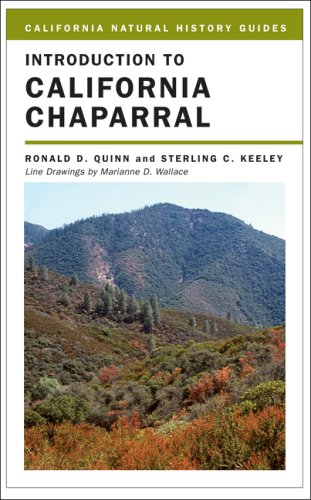
Introduction to California Chaparral California Natural History Guides 1st Edition by Ronald D Quinn, Sterling C Keeley ISBN 0520245660 9780520245662


Original price was: $50.00.$35.00Current price is: $35.00.
Introduction to California Chaparral California Natural History Guides 1st Edition by Ronald D Quinn, Sterling C Keeley – Ebook PDF Instant Download/Delivery: 0520245660, 9780520245662
Full download Introduction to California Chaparral California Natural History Guides 1st Edition after payment
Product details:
ISBN 10: 0520245660
ISBN 13: 9780520245662
Author: Ronald D Quinn, Sterling C Keeley
The characteristic look of California Chaparral―a soft bluish-green blanket of vegetation gently covering the hills―is known to millions who have seen it as the backdrop in movies and television productions. This complex ecological community of plants and animals is not just a feature of the hills around Hollywood, but is a quintessential part of the entire California landscape. It is a highly resilient community adapted to life with recurring fires and droughts. Written for a wide audience, this concise, engaging, and beautifully illustrated book describes an ancient and exquisitely balanced environment home to wondrous organisms: Fire Beetles that mate only on burning branches, lizards that shoot blood from their eyes when threatened, Kangaroo Rats that never drink water, and seeds that germinate only after a fire, even if that means waiting in the soil for a 100 years or more. Useful both as a field guide and an introductory overview of the ecology of chaparral, it also provides a better understanding of how we might live in harmony, safety, and appreciation of this unique ecological community.
Introduction to California Chaparral California Natural History Guides 1st Table of contents:
-
THE CALIFORNIA CHAPARRAL
-
Fire and Chaparral
-
Where Is Chaparral Found?
-
Chaparral Is Found with Other Vegetation Types
-
Coastal Sage Scrub Is Not Chaparral
-
How Organisms Are Named
-
-
MEDITERRANEAN CLIMATE
-
The Pacific High
-
Rainfall – Always Unpredictable
-
Winds That Carry Water or Take It Away
-
Temperature
-
Microclimates
-
Convergence
-
Rain Beetles Mate Only When There Is Rain
-
-
FIRE
-
The Fire Cycle
-
The Fire Regime
-
Sources of Ignition
-
Aboriginal Burning
-
Nineteenth-Century Fire
-
Fire Patterns in the Twentieth Century
-
Modern Fires
-
Natural Responses of Plants and Animals to Fire
-
-
PLANTS
-
An Evergreen, Shrubby Vegetation
-
Common Shrubs and Shrub Families (Rose, Buckthorn, Heath, Oak, Sumac…)
-
Other Chaparral Shrubs
-
Conifers: Cypresses, Pines, Bigcone Douglas‑Fir
-
Common Herb and Subshrub Families (Waterleaf, Poppy, Lily, Legume, Snapdragon…)
-
Other Chaparral Herbs and Subshrubs
-
Introduced Weeds
-
-
ANIMALS
-
Mammals (Rodents, Rabbits/Hares, Deer/Bighorn, Carnivores)
-
Birds (Perching Birds, Hawks, Owls)
-
Reptiles (Snakes, Lizards)
-
Amphibians
-
Insects and Arachnids (including Trap‑Door Spiders, Ticks, Scorpions)
-
-
LIVING WITH THE CHAPARRAL
-
Prescribed Fire
-
Fuel Reduction and Fuel Breaks
-
Artificial Seeding of Burns
-
Fire Creates Its Own Weather
-
Geographic Risk
-
Floods
-
Threats to Chaparral
-
Options for Wise Growth
-
The Value of Chaparral
-
People also search for Introduction to California Chaparral California Natural History Guides 1st:
introduction to california chaparral
california chaparral climate
chaparral interesting facts
5 interesting facts about chaparral biome
3 interesting facts about chaparral biome
Tags: Ronald D Quinn, Sterling C Keeley, California Chaparral