

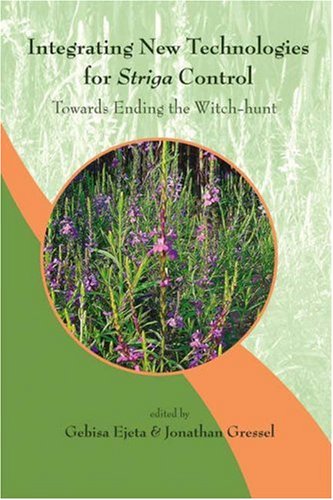
Integrating New Technologies for Striga Control Towards Ending the Witch Hunt 1st Edition by G Ejeta, J Gressel ISBN 9812771506 9789812771506

Original price was: $50.00.$35.00Current price is: $35.00.
Integrating New Technologies for Striga Control Towards Ending the Witch Hunt 1st Edition by G Ejeta, J Gressel – Ebook PDF Instant Download/Delivery: 9812771506, 9789812771506
Full download Integrating New Technologies for Striga Control Towards Ending the Witch Hunt 1st Edition after payment
Product details:
ISBN 10: 9812771506
ISBN 13: 9789812771506
Author: G Ejeta, J Gressel
Integrating New Technologies for Striga Control Towards Ending the Witch Hunt 1st Table of contents:
Section I Introduction — The Witches’ Curse
Chapter 1 The Striga Scourge in Africa: A Growing Pandemic Gebisa Ejeta
1. Introduction
1.1. The Problem
1.2. The Striga Scourge
1.3. The Striga-Poverty Parallel
2. Distribution and Impact of Striga
2.1. Geographic and Species Distribution
2.2. Dispersal and Expansion of Infestation
2.3. Economic Importance and Impact
3. Striga Management Options
4. Investments in Striga Control
5. The Current State of Knowledge
6. The Challenge
References
Section II Biology and Chemistry — The Needed Basics
Chapter 2 Biology of Host-Parasite Interactions in Striga Species Patrick J. Rich and Gebisa Ejeta
1. Overview of the Striga Life Cycle
2. Seed Dormancy and After-Ripening
3. Conditioning
4. Germination
5. Haustorial Initiation
6. Attachment
7. Establishing Vascular Connections
8. Further Haustorial Development
9. Metabolic Relationship with Host
10. Maturity and Seed Production
11. Conclusions
References
Chapter 3 Host Detection by Root Parasites: Insights from Transciptome Profiles John I Yoder, Russel
1. Introduction
2. Identification of Haustorium Gene Candidates
3. The Parasitic Plant Sequence Database
4. Identification of Haustorium Gene Candidates via cDNA Arrays
5. Conclusions
Acknowledgements
References
Chapter 4 Germination of Striga and Chemical Signaling Involved: A Target for Control Methods Zhongk
1. Introduction
2. Life Cycle and Chemical Signaling Between Striga and its Host
3. Germination Stimulants of Striga spp
3.1. Origin and Distribution
3.2. Detection of Germination Stimulants by Germination Bioassay
3.3. Perception of Germination Stimulants
3.4. Implication for host specifity
4. The Strigolactones
4.1. Ecological Significance of Strigolactones
4.2. Biosynthetic Origin of the Strigolactones
5. Control Methods Using Knowledge of Germination Stimulants
5.1. Control Through Enhanced Germination
5.1.1. Suicidal Germination Using Chemicals
5.1.2. Trap and Catch Crops
5.2. Control Through Reduced Germination
5.2.1. Using Chemicals
5.2.2. Dormancy
5.2.3. AM Fungi and Phosphate
5.3. Control Using Host Specificity
5.4. Control Using Breeding
6. Conclusions
Acknowledgements
References
Chapter 5 Chemicals Involved in Post-Germination Inhibition of Striga by Desmodium: Opportunities fo
1. Introduction
2. Immediate Prospects for Breeding
3. New Chemical Studies
3.1. Germination Stimulants
3.2. Inhibitory C-Glycosylated Flavones
4. Opportunities Through Biotechnology
4.1. Locating the Allelochemical Genes in Model and Crop Legume and Cereal Plants
4.2. Isolating the Genes from Desmodium
5. Conclusions and Outlook
Acknowledgments
References
Chapter 6 Genetic Diversity of Striga and Implications for Control and Modeling Future Distributions
1. Introduction
2. Genetic Studies
2.1. Striga Asiatica
2.2. Striga Gesnerioides
2.3. Striga Hermonthica
2.4. Synthesis of Genetic Diversity Studies
3. Ecological Niche Modeling and Invasive Potential of Striga
Acknowledgments
References
Section III Knowledge-based Breeding — Translating Information to Products
Chapter 7 Dissecting a Complex Trait to Simpler Components for Effective Breeding of Sorghum with a
1. Introduction
2. Materials and Methods
3. Results and Discussion
3.1. Characterization of Mechanisms of Resistance
3.1.1. Resistance Based on Low Germination Stimulant (lgs) Production
3.1.2. Resistance Based on Low Production of the Haustorial Initiation Factor (LHF)
3.1.3. Resistance Based on the Hypersensitive Response (HR)
3.1.4. Resistance Based on an Incompatible Response (IR)
3.2. Genetic Analyses of Resistance to Striga
3.3. Development and Deployment of Striga-Resistant Cultivars
3.4. Resistant Cultivars as Components of Integrated Striga Control
4. Conclusions
Acknowledgements
References
Chapter 8 Breeding Maize for Broad-Based Resistance to Striga Hermonthica Abebe Menkir, Baffour Badu
1. Introduction
2. Current Breeding Strategies and Progress
2.1. Accumulating Resistance Alleles in Broad-Based Populations and Composites
2.2. Evaluating Consistency of Resistance to S. hermonthica in Multiple Locations
2.3. Developing and Identifying Superior Parental Lines
2.4. Assessing Consistency of Genetic Resistance in Multiple Locations
3. Distributing S. Hermonthica-Resistant Maize Germplasm
References
Chapter 9 Molecular Markers for Analysis of Resistance to Striga Gesnerioides in Cowpea Michael P. T
1. Introduction
2. Variation in Host Preference
3. Mechanisms of Resistance
4. Genetics of Resistance to Parasitic Plants in Cowpea
5. Genetic Mapping of Striga Resistance Genes
6. Molecular Markers and Marker-Assisted Selection
7. Conclusions and Perspective
Acknowledgements
References
Chapter 10 Introgression of Genes for Striga Resistance Into African Landraces of Sorghum Issoufou K
1. Introduction
2. Materials and Methods
2.1. Development of Advanced Backcross Populations
2.2. Field Trials
2.3. Laboratory Assays for Resistance in BC2F3 Lines
2.4. Data Analysis
3. Results
3.1. Analysis of Variance
3.2. Heritability
3.3. Means Comparison
3.4. Characterization of Resistance in BC2F3 Lines
4. Discussion
5. Conclusions
Acknowledgements
References
Section IV Biotechnology: Opening New Frontiers
Chapter 11 Success with the Low Biotech of Seed-Coated Imidazolinone-Resistant Maize Fred Kanampiu,
1. Introduction
2. Materials and Methods
3. Results and Discussion
3.1. First Generation of Released Technology
3.2. Limitations of the First Generation Material
3.3. Slow Release Formulations — The Second Generation
3.4. Raising Striga Control Awareness
3.5. The Technology Does Not Always Work
4. The Long Term Sustainability of Herbicide Technologies
4.1. Evolution of Resistance
4.2. The Herbicide Seed Treatment Technology for Other Crops
4.3. Integration with Other Technologies
5. Conclusions
Acknowledgements
References
Chapter 12 Marker-Assisted Selection for Striga Resistance in Sorghum Cécile Grenier, Yahia Ibrahim
1. Introduction
2. Genetic Mapping of Striga
2.1. Data from Phenotyping Based on Field Resistance to Striga
2.2. Data From Phenotyping for Specific Mechanisms of Striga Resistance Based on Laboratory Assays
3. Marker-Assisted Introgression
3.1. Marker-Mediated Gene Pyramiding
4. Conclusion
Acknowledgments
References
Chapter 13 The Molecular Genetic Basis of Host Resistance to Striga Species: A Way Forward Julie D.
1. Introduction
2. Identification of Post Attachment Resistance in Cereals to Striga Species
3. Understanding the Molecular Genetic Basis of Host Resistance to Striga: The Use of Genomic Techno
4. Conclusions
Acknowledgements
References
Chapter 14 Effects on Striga Parasitism of Transgenic Maize Armed with RNAi Constructs Targeting Ess
1. Introduction
2. Materials and Methods
2.1. Striga Genes Chosen as RNAi Targets and Their Source
2.2. Vectors and RNAi Design
2.3. Transgenic Maize Lines
2.4. Laboratory Testing of Maize Transformation Events with Striga asiatica
3. Results and Discussion
4. Constraints and Integration
Acknowledgements
References
Section V Agronomic Options: The First and Essential Line of Control and Policy Considerations
Chapter 15 An Integrated Striga Management Option Offers Effective Control of Striga in Ethiopia Tes
1. Introduction
2. The Release of Striga Resistant Varieties in Ethiopia
3. The Approaches
3.1. Packaging of Technology Options
3.2. On-farm Testing of the Package
4. Farmer-Participatory Evaluation of the ISM Technology
4.1. Demonstration
4.2. Popularization
4.3. Seed Production
5. Adoption and Diffusion of the ISM Technology in Ethiopia
6. Factors Affecting Further Diffusion of the ISM Technology
7. Conclusion
Acknowledgements
References
Chapter 16 Integrating Crop Management Practices for Striga Control Joel K. Ransom, Abdel Gabar Babi
1. Introduction
2. Components of an Integrated Striga Control Program
2.1. Adaptable and Appropriate
2.2. Proactive Rather Than Reactive
2.2.1. Putting Response Time in Perspective
2.2.2. Understanding the Impact of Environment
2.3. Combining Complementary Tactics
2.3.1. Practices that Protect and/or Enhance Yield
2.3.2. Practices that Reduce Seed Production
2.3.3. Practices that Reduce Striga Seed Banks
3. Integrating Crop Management Control Practices — Examples from Eastern Africa
3.1. Sorghum
3.2. Maize
4. Conclusions
References
Chapter 17 Cultural and Cropping Systems Approach for Striga Management — A Low Cost Alternative O
1. Introduction
2. Striga Management Research
2.1. Improved Cropping Systems — Intercropping
2.2. Improved Cropping Systems – Relay Cropping
2.3. Crop Rotation
2.4. Integrated Control
3. Conclusions
References
Chapter 18 Field Developments on Striga Control by Desmodium Intercrops in a “Push-Pull” Strateg
1. Introduction
2. Mechanisms by Which Desmodium spp. Control Striga
2.1. Effects of Different Desmodium spp. on Striga
2.2. Control of Striga in Sorghum Using Desmodium Intercrops
2.3. Different Legumes to Control of Striga in Maize and Sorghum
3. Economics of the Desmodium Intercrop in a ‘Push-Pull’ Strategy
3.1. ‘Push-Pull’ Strategy as a Platform Technology
4. Adoption of the ‘Push-Pull’ Strategy
5. Conclusions and Future Outlook
Acknowledgements
References
Chapter 19 Integrated Striga Management to Meet Sorghum Demand in Tanzania Ambonesigwe M. Mbwaga, Ch
1. Introduction
2. Methodology
3. Sorghum Performance
4. Farmer Ranking of Sorghum Lines
5. Development and Promotion of an Integrated Approach to Striga Management
6. Linking Farmers to the Sorghum Market
Acknowledgements
References
Chapter 20 Striga Economics Hugo De Groote
1. Introduction
2. Estimating the Extent of the Striga Problem
3. Estimating the Intensity of the Problem
4. Testing Striga Control Methods in the Field
5. Economic Analysis of Control Methods in Trials
6. Farmer Evaluation
7. Modeling and Econometrics
8. Impact Assessment
9. Constraints and Integration
Acknowledgments
References
Section VI Biocontrol: Untapped Potential?
Chapter 21 Biocontrol Using Fusarium Oxysporum; A Critical Component of Integrated Striga Management
1. Introduction
2. Disease Surveys
3. Host Specificity and Safety
4. Fusarium-Based Bioherbicide for Striga Control in the Field
5. Bioherbicide Production and Delivery to Target
6. Understanding the Microbiology of the Cereal-Striga Interface
7. Conclusions and Outlook
Acknowledgments
References
Chapter 22 Genetically Enhancing the Virulence and Efficacy of Plant Pathogens for Biological Contro
1. Plant Disease Epidemics
2. Amino Acid Inhibition of Plants, an Exploitable Weakness
3. Enhancement of Bioherbicides
3.1. Criteria for Selection of Biocontrol Agents
3.2. Selection of Biocontrol Agents that Excrete Target Amino Acids
3.3. Inhibition of Weeds by Amino Acids
4. General Methodology
4.1. Determination of Amino Acids or Combinations of Amino Acids that are Most Inhibitory to Target
4.2. Selection of Variants of the Bioherbicide Resistant to Analogs of the Selected Amino Acid
4.3. Assay for Amino Acid Excretion
4.4. Testing Virulence and Host Range of the Amino Acid Overproducing Variants in Growth Chamber Stu
5. Improving Dissemination
6. Possible Applications for the Control of Striga and Orobanche
7. Conclusions
References
Chapter 23 Transgenic Biocontrol Agents to Overcome Evolutionary Barriers Jonathan Gressel, Sagit Me
1. The Need for Enhancement — Exogenous Synergists vs. Endogenous Transgenes
1.1. Synergists as Gene Models
1.2. Concept of ‘Soft’ Genes vs. ‘Hard’ Genes
1.3. Construction of a Universal Cassette
2. ‘Soft’ Genes
2.1. Auxins
2.2. Pectinase
2.3. Expansins
2.4. Ethylene
2.5. Cellulases
3. Hard Genes
3.1. Nep1
3.2. Cerato-platanin
4. Transgenically Overcoming Host Defenses
Acknowledgments
References
Section VII Epilogue
Chapter 24 Epilogue — Will There be Integrated Striga Control? Jonathan Gressel and Brhane Gebreki
1. The Concept
1.1. Striga the Witch
1.2. Basic Science and Striga Control
2. Solutions to Integrate
2.1. Breeding for Striga Resistance
2.2. Transgenic Crops
2.3. Intercropping
2.4. Herbicide Resistant Crops
2.5. Biocontrol
2.6. Integrations with Agronomy
3. Other Constraints
3.1. Striga is Not the Only Biotic Constraint
3.2. Institutional Constraints to Integration
People also search for Integrating New Technologies for Striga Control Towards Ending the Witch Hunt 1st:
technology integration examples
ways to integrate technology in the classroom
striga control methods
integrated striga management
integrating new technologies
Tags: G Ejeta, J Gressel, Technologies, Striga Control, Witch Hunt