

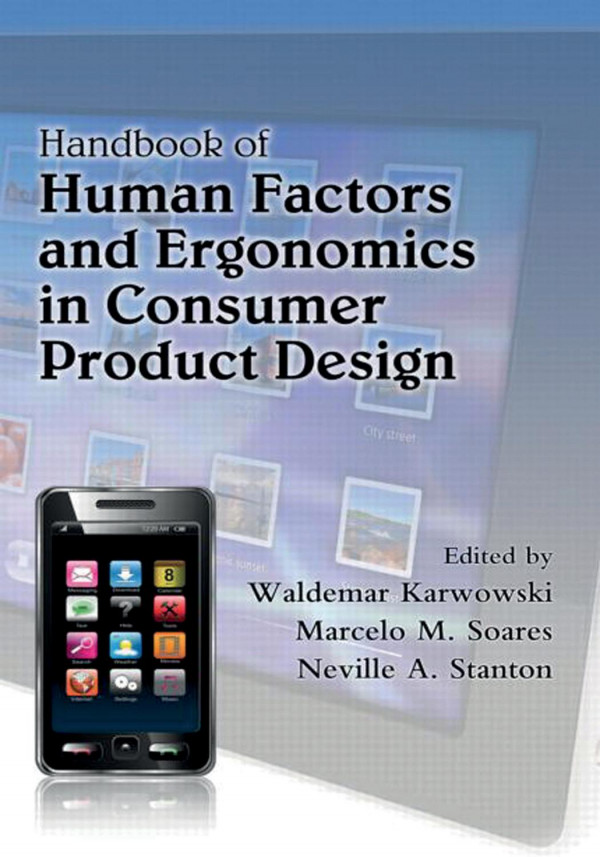
Handbook of Human Factors and Ergonomics in Consumer Product Design 2 Volume Set 1st Edition by Waldemar Karwowski ,Marcelo Soares ,Neville A Stanton ISBN 9781420046212 978-1420046212


Original price was: $50.00.$35.00Current price is: $35.00.
Handbook of Human Factors and Ergonomics in Consumer Product Design 2 Volume Set 1st Edition by Waldemar Karwowski ,Marcelo Soares ,Neville A. Stanton – Ebook PDF Instant Download/Delivery:781420046212 ,978-1420046212
Full download Handbook of Human Factors and Ergonomics in Consumer Product Design 2 Volume Set 1st Edition after payment
Product details:
ISBN 10:9781420046212
ISBN 13:978-1420046212
Author:Waldemar Karwowski ,Marcelo Soares ,Neville A.Stanton
Every day we interact with thousands of consumer products. We not only expect them to perform their functions safely, reliably, and efficiently, but also to do it so seamlessly that we don’t even think about it. However, with the many factors involved in consumer product design, from the application of human factors and ergonomics principles to reducing risks of malfunction and the total life cycle cost, well, the process just seems to get more complex. Edited by well-known and well-respected experts, the two volumes of Handbook of Human Factors and Ergonomics in Consumer Product Design simplify this process.
A two-volume set, the handbook provides a comprehensive source of information regarding new Human Factors and Ergonomics (HF/E) methods, techniques, and software applications for consumer product design. It explores an effective body of knowledge for improving quality of life and safety for millions of users of consumer products with a variety of needs and expectations. It delineates how the Human Factors and Ergonomics (HF/E) body of knowledge can be used as a tool for designing products that meet consumer expectations for ease of use, efficiency, comfort, safety, and adaptability, therefore contributing to consumer satisfaction.
While there is substantial and convincing evidence that the application of HF/E knowledge can improve critical features of consumer products, until now there has been no comprehensive, updated resource that examines this knowledge and how to apply it. In a clear discussion of methods, backed up by case studies, this book provides the full scope of knowledge required when designing consumer products with better performance and increased satisfaction.
The set includes Human Factors and Ergonomics in Consumer Product Design: Methods and Techniques and Human Factors and Ergonomics in Consumer Product Design: Uses and Applications.
Table of contents:
VOLUME 1
Section I: Methods for Consumer Products Design
Chapter 1: Techniques to Translate Design Research into Useful, Usable, and Desirable Products
Chapter 2: Manufacturing Attractive Products Logically by Using Human Design Technology: A Case of Japanese Methodology
Chapter 3: Persona: A Method to Produce Representations Focused on Consumers’ Needs
Chapter 4: Model-Based Framework for Influencing Consumer Products Conceptual Designs
Chapter 5: Smarter Products User-Centered Systems Engineering
Section II: Design Process
Chapter 6: Supply and Demand: Perspectives on Mental Workload with Consumer Products
Chapter 7: Intelligence, Creativity, and Decisions in Product Design
Chapter 8: Role of Standards in Design
Chapter 9: Addressing Human Factors and Ergonomics in Design Process, Product Life Cycle, and Innovation: Trends in Consumer Product Design
Chapter 10: Integration of Ergonomics in the Design Process: Conceptual, Methodological, and Practical Foundations
Chapter 11: Design, Usability, and Maintainability of Consumer Products
Chapter 12: Assembly Complexity and the Design of Self-Assembly Products
Chapter 13: Proposed Framework for Integrating Environmental Issues in Ergonomics to Product Development
Chapter 14: Cultural Ergonomics Issues in Consumer Product Design
Chapter 15: Affective Design and Consumer Response
Chapter 16: Universal Design: Empathy and Affinity
Chapter 17: Integration of Elderly Users into Product Development Processes: Senior Research Groups as Organizational and Methodical Approach
Chapter 18: IEA EQUID Template for Cooperation between Product Designers and Ergonomists
Section III: Digital Design
Chapter 19: Behavior Video: A Methodology and Tool to Measure Human Behavior; Examples in Product Evaluation
Chapter 20: Digital Human Modeling in the User-Centered Design Process
Chapter 21: Digital Human Modeling in Product Evaluation
Chapter 22: Three-Dimensional Foot Imaging: Axial Alignment Theory in Footwear Design, Fit, and Function
Chapter 23: Science of Footwear Design
Chapter 24: Virtual Reality in Consumer Product Design: Methods and Applications
Section IV: User-Centered Design of Consumer Products
Chapter 25: Product Design: User-Centered versus a Task-Based Approach
Chapter 26: Needs Analysis: Or, How Do You Capture, Represent, and Validate User Requirements in a Formal Manner/Notation before Design
Chapter 27: Users’ Interactions with Design Models
Chapter 28: Eco-Design: The Evolution of Dishwasher Design and the Potential for a More User-Centered Approach
Chapter 29: User-Centered Design Method to Attend Users’ Needs during Product Design Process: A Case Study in a Public Hospital in Brazi
VOLUME 2
Section I: Design for Product Safety
Chapter 1: Reducing the Risk to Consumers: Implications for Designing Safe Consumer Products
Chapter 2: Consumer Product Risk Assessment
Chapter 3: Hazard Control Hierarchy and Its Utility in Safety Decisions about Consumer Products
Chapter 4: Communication-Human Information Processing Stages in Consumer Product Warnings
Chapter 5: Safety Design under the Perspective of Ergonomics in Consumer Products: Accident Studies in Users Welfare Promotion
Chapter 6: Product Design Issues Related to Safe Patient Handling Technology
Chapter 7: Ergonomics of Packaging
Section II: Design for Usability
Chapter 8: User Research by Designers
Chapter 9: Near Field Communication: Usability of a Technology
Chapter 10: Empathy Meets Engineering: Implanting the User’s Perspective into a Systematic Design Process
Chapter 11: Building Empathy with the User
Chapter 12: Usability Testing of Three Prototype In-Vehicle Information Systems
Chapter 13: Ergonomics and Usability in an International Context
Chapter 14: Consumer eHealth
Chapter 15: Consumer Behavior of Employees Using Information and Communication Technology Products in an Organizational Setting
Section III: Case Studies
Chapter 16: Constraint-Based Approach to Design
Chapter 17: Development of a Media Player: Ambition and Constraints in the Consumer Electronics Industry
Chapter 18: Interaction Design for Mobile Phones
Chapter 19: Human Factors in Protective Headgear Design
Chapter 20: Creating a User-Centered Supermarket Checkout
Chapter 21: Design and Development of an Interactive Kiosk for Customers of Jobcentre Plus
Chapter 22: Participatory Method for Evaluating Office Chairs: A Case Study
Chapter 23: Procedural Pictorial Sequences for Health Product Design: A Study of Male and Female Condoms Conducted with Adults with a Low Level of Literacy in Brazil
Chapter 24: Special Needs in Pleasure-Based Products Design: A Case Study
Chapter 25: Applied Anthropometry in Ergonomic Design for School Furniture
Chapter 26: Anthropometric Fitting of Office Furniture for Mexican Users
Chapter 27: User-Centered Approach for Sailing Yacht Design
Chapter 28: Design for Driver’s Comfort: Discomfort Assessment and Discomfort Manifestation among Professional and Amateur Car Drivers
Chapter 29: Ergonomics as a Strategy Tool: An Approach through Design
People also search for:
handbook of human factors and ergonomics
human factors and ergonomics design handbook
handbook of standards and guidelines in human factors and ergonomics
handbook of standards and guidelines in human factors and ergonomics
what are the four human factors
Tags: Waldemar Karwowski, Marcelo Soares, Neville A Stanton, Human, Factors