

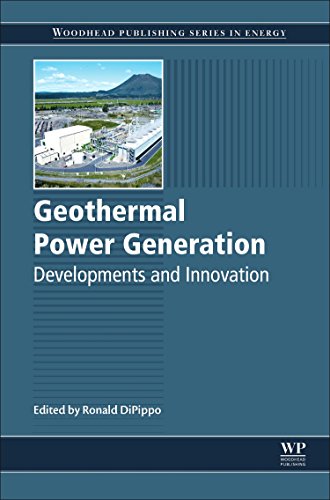
Geothermal Power Generation Developments and Innovation 1st Edition by Ron Dipippo ISBN 0081003374 9780081003374

Original price was: $50.00.$35.00Current price is: $35.00.
Geothermal Power Generation Developments and Innovation 1st Edition by Ron Dipippo – Ebook PDF Instant Download/Delivery: 0081003374, 9780081003374
Full download Geothermal Power Generation Developments and Innovation 1st Edition after payment
Product details:
ISBN 10: 0081003374
ISBN 13: 9780081003374
Author: Ron Dipippo
Geothermal Power Generation: Developments and Innovation provides an update to the advanced energy technologies that are urgently required to meet the challenges of economic development, climate change mitigation, and energy security.
As geothermal resources are considered renewable and can be used to generate baseload electricity while producing very low levels of greenhouse gas emissions, they can play a key role in future energy needs.
This book, edited by a highly respected expert, provides a comprehensive overview of the major aspects of geothermal power production. The chapters, contributed by specialists in their respective areas, cover resource discovery, resource characterization, energy conversion systems, and design and economic considerations.
The final section provides a range of fascinating case studies from across the world, ranging from Larderello to Indonesia. Users will find this to be an essential text for research and development professionals and engineers in the geothermal energy industry, as well as postgraduate researchers in academia who are working on geothermal energy.
- Provides readers with a comprehensive and systematic overview of geothermal power generation
- Presents an update to the advanced energy technologies that are urgently required to meet the challenges of economic development, climate change mitigation, and energy security
- Edited by a world authority in the field, with chapters contributed by experts in their particular areas
- Includes comprehensive case studies from across the world, ranging from Larderello to Indonesia
Geothermal Power Generation Developments and Innovation 1st Table of contents:
1. Introduction to Geothermal Power Generation
Part One: Resource Exploration, Characterization and Evaluation
2. Geology of Geothermal Resources
2.1. Introduction
2.2. Heat Flow and Plate Tectonics
2.3. Geologic Techniques
2.4. Hydrothermal Alteration
2.5. Volcanic-Hosted Systems
2.6. Sediment-Hosted Geothermal Systems
2.7. Extensional Tectonic Geothermal Systems
2.8. Unconventional Geothermal Resources
2.9. Conclusions
3. Geophysics and Resource Conceptual Models in Geothermal Exploration and Development
3.1. Introduction
3.2. Geophysics in the Context of Geothermal Decision Risk Assessment
3.3. Geothermal Resource Conceptual Models
3.4. Geothermal Resource Models with Elements that Differ from Those in Fig. 3.1
3.5. Formation Properties and Geophysical Methods
3.6. Choosing Geophysical Methods and Designing Surveys for Geothermal Applications
3.7. Resistivity Methods
3.8. MT Surveys
3.9. TEM Resistivity Sounding for Correction of MT Static Distortion
3.10. Awibengkok MT Model and Validation
3.11. Using MT to Build Conceptual Models and Define Resource Areas and Targets
3.12. Deep Low-Resistivity Zones
3.13. Gravity Methods for Exploration and Development
3.14. Magnetic Methods
3.15. Seismic Monitoring
3.16. Reflection/Refraction Seismic Methods
3.17. Borehole Wireline Logs
3.18. SP Method
3.19. Geophysics Management Issues
4. Application of Geochemistry to Resource Assessment and Geothermal Development Projects
4.1. Introduction
4.2. Early-Phase Resource Assessment
4.3. Contributions to Conceptual Models
4.4. Geochemical Contributions to Geothermal Power Project Design
4.5. Geochemical Tools for Geothermal Reservoir Operation and Maintenance
4.6. Summary
5. Geothermal Well Drilling
5.1. Introduction
5.2. Getting Started
5.3. Casing Design
5.4. Mud Program
5.5. Directional Program
5.6. Wellhead Design and Blow-Out Preventer Systems
5.7. Cementing Program
5.8. Cement Placement
5.9. Hydraulic and Bit Program
5.10. Drilling Curve
5.11. Mud Logging
5.12. Drilling Rig Selection and Special Considerations
5.13. Cost Estimate
6. Characterization, Evaluation, and Interpretation of Well Data
6.1. Upward Convective Flow in Reservoirs
6.2. Pressure and Temperature Profile Analysis
6.3. Injection Testing
6.4. Discharge Tests
6.5. Pressure Transient Tests
6.6. Wellbore Heat Loss
6.7. Summary
7. Reservoir Modeling and Simulation for Geothermal Resource Characterization and Evaluation
7.1. Review of Resource Estimation Methods
7.2. Computer Modeling Methodology
7.3. Computer Modeling Process
7.4. Recent Modeling Experiences
7.5. Current Developments and Future Directions
Part Two: Energy Conversion Systems
8. Overview of Geothermal Energy Conversion Systems: Reservoir-Wells-Piping-Plant-Reinjection
8.1. Introduction
8.2. It Begins with the Reservoir
8.3. Getting the Energy Out of the Reservoir
8.4. Connecting the Wells to the Power Station
8.5. Central Power Station
8.6. Geofluid Disposal
8.7. Conclusions and a Look Ahead
9. Elements of Thermodynamics, Fluid Mechanics, and Heat Transfer Applied to Geothermal Energy Conversion Systems
9.1. Introduction
9.2. Definitions and Terminology
9.3. First Law of Thermodynamics for Closed Systems
9.4. First Law of Thermodynamics for Open Steady Systems
9.5. First Law of Thermodynamics for Open Unsteady Systems
9.6. Second Law of Thermodynamics for Closed Systems
9.7. Second Law of Thermodynamics for Open Systems
9.8. Exergy and Exergy Destruction
9.9. Thermodynamic State Diagrams
9.10. Bernoulli Equation
9.11. Pressure Loss Calculations
9.12. Principles of Heat Transfer Applied to Geothermal Power Plants
9.13. Example Analyses for Elements of Geothermal Power Plants
9.14. Conclusions
Sources of Further Information
10. Flash Steam Geothermal Energy Conversion Systems: Single-, Double-, and Triple-Flash and Combined-Cycle Plants
10.1. Flash Steam Cycles
10.2. Mixed and Combined Cycles
10.3. Cogeneration and Coproduction from Flashed Brines
10.4. Equipment Research and Development
10.5. Summary
11. Direct Steam Geothermal Energy Conversion Systems: Dry Steam and Superheated Steam Plants
11.1. Introduction
11.2. Power Cycle
11.3. Steam Quality
11.4. Steam Systems
11.5. Turbine-Generators
11.6. Condensers
11.7. Gas Removal Systems
11.8. Cooling Systems
11.9. Plant Auxiliaries
11.10. Engineering Materials
11.11. Summary
12. Total Flow and Other Systems Involving Two-Phase Expansion
12.1. Total Flow
12.2. Alternative Systems for Power Recovery Based on Two-Phase Expansion
13. Binary Geothermal Energy Conversion Systems: Basic Rankine, Dual-Pressure, and Dual-Fluid Cycles
13.1. Introduction
13.2. Binary Power Cycle
13.3. Binary Cycle Performance
13.4. Types of Binary Cycles
13.5. Selection of Working Fluid
13.6. Cycle Performance Comparison
13.7. Design Considerations
13.8. Economic Considerations
14. Combined and Hybrid Geothermal Power Systems
14.1. Introduction and Definitions
14.2. General Thermodynamic Considerations
14.3. Combined Single- and Double-Flash Systems
14.4. Combined Flash and Binary Systems
14.5. Geothermal-Fossil Hybrid Systems
14.6. Geothermal-Solar Hybrid Systems
14.7. Conclusions
Part Three: Design and Economic Considerations
15. Waste Heat Rejection Methods in Geothermal Power Generation
15.1. Introduction: Overview and Scope
15.2. Condensers in Geothermal Power Plants
15.3. Water-Cooled Condensers
15.4. Air-Cooled Condensers
15.5. Evaporative (Water- and Air-Cooled) Condensers
15.6. Concluding Summary and Future Trends
16. Silica Scale Control in Geothermal Plants—Historical Perspective and Current Technology
16.1. Introduction
16.2. Geochemistry of Silica
16.3. Thermodynamics of Silica Solubility
16.4. Silica Precipitation Kinetics
16.5. Silica Scaling Experience in Geothermal Power Production
16.6. Historical Techniques for Silica/Silicate Scale Inhibition
16.7. Current Scale Control Techniques at High Supersaturation
16.8. Case Study for Scale Control in a Combined-Cycle Plant Design
16.9. Pilot-Plant Testing for Bottoming Cycle Optimization
16.10. Guidelines for Optimum pH-Mod System Design
16.11. Summary
17. Environmental Benefits and Challenges Associated with Geothermal Power Generation
17.1. Introduction
17.2. Environmental, Social, and Cultural Benefits and Challenges of Geothermal Power Generation
17.3. Developing an Environmentally Sound and Socially Responsible Project
17.4. Geothermal Energy in the Context of Sustainable Development
17.5. Conclusions
18. Project Permitting, Finance, and Economics for Geothermal Power Generation
18.1. Introduction
18.2. Finance Background
18.3. Recent Evidence in Geothermal Drilling and Construction
18.4. Cost and Financing Issues
18.5. Permitting Land Use and Interconnection
18.6. Long-Term Economic and Financing Security
18.7. Conclusions
Part Four: Case Studies
19. Larderello: 100 Years of Geothermal Power Plant Evolution in Italy
Prologue: Historical Outline on Geothermal Development in Italy up to 1960, with Particular Reference to the Boraciferous Region
19.1. Introduction: Background of Geothermal Power Generation
19.2. 1900–1910: First Experiments of Geo-Power Generation and Initial Applications
19.3. 1910–1916: First Geothermal Power Plant of the World, Experimental Generation, and Start of Geo-Power Production at the Commercial Scale
19.4. 1917–1930: Consolidation of Geoelectric Power Production at the Industrial Scale and Start of a New Technology: The Direct-Cycle Geo-Power Units
19.5. 1930–1943: Toward a Balanced Economic Importance of Chemical Production and Geo-Power Generation
19.6. 1944–1970: Destruction, Reconstruction, Relaunching, and Modification of the Geo-Power System
People also search for Geothermal Power Generation Developments and Innovation 1st:
geothermal power generation developments and innovation pdf
geothermal power is generated by
latest developments in geothermal energy
geothermal power development
geothermal energy developments
Tags: Ron Dipippo, Power Generation, Innovation