

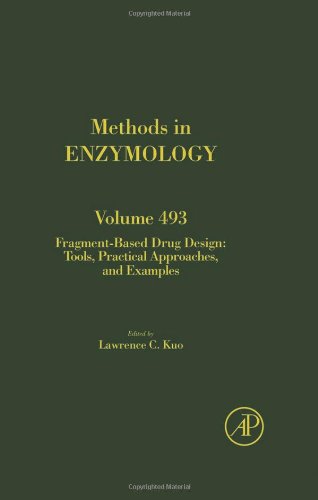
Fragment Based Drug Design Tools Practical Approaches and Examples 1st Edition by Lawrence C Kuo ISBN 0123812747 9780123812742


Original price was: $50.00.$35.00Current price is: $35.00.
Fragment Based Drug Design Tools Practical Approaches and Examples 1st Edition by Lawrence C Kuo – Ebook PDF Instant Download/Delivery: 0123812747, 9780123812742
Full download Fragment Based Drug Design Tools Practical Approaches and Examples 1st Edition after payment
Product details:
ISBN 10: 0123812747
ISBN 13: 9780123812742
Author: Lawrence C Kuo
There are numerous excellent reviews on fragment-based drug discovery (FBDD), but there are to date no hand-holding guides or protocols with which one can embark on this orthogonal approach to complement traditional high throughput screening methodologies. This Methods in Enzymology volume offers the tools, practical approaches, and hit-to-lead examples on how to conduct FBDD screens. The chapters in this volume cover methods that have proven to be successful in generating leads from fragments, including chapters on how to apply computational techniques, nuclear magnetic resonance, surface plasma resonance, thermal shift and binding assays, protein crystallography, and medicinal chemistry in FBDD. Also elaborated by experienced researchers in FBDD are sample preparations of fragments, proteins, and GPCR as well as examples of how to generate leads from hits.
Offers the tools, practical approaches, and hit-to-lead examples on how to conduct FBDD screens The chapters in this volume cover methods that have proven to be successful in generating leads from fragments, including chapters on how to apply computational techniques, nuclear magnetic resonance, surface plasma resonance, thermal shift and binding assays, protein crystallography, and medicinal chemistry in FBDD
Fragment Based Drug Design Tools Practical Approaches and Examples 1st Table of contents:
Chapter 1: Designing a Diverse High-Quality Library for Crystallography-Based FBDD Screening
1. Introduction
2. Library Requirements for Different Screening Methods
3. Library Design for X-Ray Screening
4. Implementation
5. Conclusions
References
Chapter 2: Preparation of Protein Samples for NMR Structure, Function, and Small-Molecule Screening
1. Introduction
2. Bioinformatics Infrastructure and Target Curation
3. Ligation-Independent High-Throughput Cloning and Analytical Scale-Expression Screening
4. Midi-Scale Protein Expression and Purification
5. Preparative-Scale Fermentation
6. Preparative-Scale Purification
7. Salvage Strategies
8. E. coli Single Protein Production System for Isotopic Enrichment
9. Conclusions
Acknowledgments
References
Chapter 3: Key Factors for Successful Generation of Protein-Fragment Structures: Requirement on Prot
1. Introduction
2. General Target Properties and Protein Sources in Protein-Fragment Crystallography
3. Fragment Properties and the Crystallization Setup
4. Quality of Crystallographic Data
5. Application of the Free Mounting System and the Picodropper Technology to Improve Ligand Occupanc
6. Conclusions
Acknowledgments
References
Chapter 4: Predicting the Success of Fragment Screening by X-Ray Crystallography
1. Introduction
2. Fragment Screening and Druggability
3. Fragment Screening Campaigns in This Review
4. Crystallization Conditions of Fragment Targets
5. Solvent Content and Solvent Channels
6. Pocket Predictions for Fragment Screening Targets
7. Summary
Acknowledgments
References
Chapter 5: Fragment Screening of Stabilized G-Protein-Coupled Receptors Using Biophysical Methods
1. Introduction
2. Case Study 1: Biacore Fragment Screen of Adenosine A2A StaR
3. Case Study 2: TINS NMR Fragment Screen of beta1-Adrenergic StaR
4. Discussion
Acknowledgments
References
Chapter 6: Using Computational Techniques in Fragment-Based Drug Discovery
1. Introduction
2. Fragment Library Design
3. In Silico Fragment Screening
4. Hit Triage
5. Hit Follow-Up
6. Iteration
7. Conclusion
References
Section Two: Practical Approaches
Chapter 7: How to Avoid Rediscovering the Known
1. Why FBDD?
2. Types of Screen
3. Size of a Fragment
4. Choice of Fragments
5. Fragment Progression
6. Conclusion
References
Chapter 8: From Experimental Design to Validated Hits: A Comprehensive Walk-Through of Fragment Lead
1. Introduction: Biophysical Principles of Surface Plasmon Resonance
2. Preparing the Instrument
3. Surface Preparation
4. Target Immobilization
5. Buffer and Compound Preparation
6. Assay Development
7. Aligning the SPR Assay with Crystallography
8. Pilot Screening
9. Setting Up the Fragment Screen
10. Executing the Screen
11. Primary Screen Data Reduction
12. Data Quality Control and Extraction of the Equilibrium Binding Level
13. Scaling and Normalization of Primary Screening Data
14. Primary Screen Active Selection
15. Collecting Dose-Response Hit Confirmation Data
16. Dose-Response Data Reduction and Quality Control
17. Global Analysis for KD Determination
18. Conclusion
Acknowledgments
References
Chapter 9: Practical Aspects of NMR-Based Fragment Screening
1. Introduction
2. Constructing the Fragment Library
3. Developing the Screen
4. After the Screen
5. Conclusions
Acknowledgments
References
Chapter 10: Binding Site Identification and Structure Determination of Protein-Ligand Complexes by N
1. Introduction
2. Automated and Semiautomated Chemical Shift Assignment
3. Identification of Ligand Binding Sites by Chemical Shift Mapping
4. 3D Structure Determination by NMR
5. Conclusion
References
Chapter 11: Protein Thermal Shifts to Identify Low Molecular Weight Fragments
1. Introduction
2. Thermal Shift Assays
3. Binding Affinity in Thermal Shifts
4. Typical Thermal Shift Assay Development
5. Dynamic Range of Thermal Shift Assays and Guidelines For a “Significant” Binding Event
Acknowledgment
References
Chapter 12: HTS Reporter Displacement Assay for Fragment Screening and Fragment Evolution Toward Lea
1. Introduction
2. The Reporter Displacement Assay
3. Residence Time and Kinetic Selectivity in Fragment Evolution
4. High-Throughput Thermodynamics in Fragment Evolution
5. Conclusion
Acknowledgments
References
Chapter 13: Fragment Screening Purely with Protein Crystallography
1. Introduction
2. The Primary Library Screen
3. The Secondary Library Screen
4. Why Screening Purely with X-Ray Structures Works
Acknowledgments
References
Chapter 14: Computational Approach to De Novo Discovery of Fragment Binding for Novel Protein States
1. Introduction
2. Protein Modeling
3. Fragment Binding in Protein Model: Methods for Free Energy Calculation
4. Protein Binding Site Characterization Via Fragment Simulations
5. Fragment-Based Design
6. Future Directions
Acknowledgments
References
Section Three: Examples
Chapter 15: Lead Generation and Examples: Opinion Regarding How toFollow Up Hits
1. Introduction
2. Ligand Efficiency
3. Four Different Approaches for Converting Fragment Hits to Leads
4. Following Up on Hits: Anchor-Based Drug Discovery
5. Conclusions
References
Chapter 16: Medicinal Chemistry Inspired Fragment-Based Drug Discovery
1. Introduction
2. Medicinal Chemistry Engagement in Fragment-Based Drug Design
3. Case Studies-MACS2b and Ketohexokinase
4. Conclusion
Acknowledgment
References
Chapter 17: Effective Progression of Nuclear Magnetic Resonance-Detected Fragment Hits
1. Introduction
2. How to Plan for a Successful NMR-Based FBDD Campaign?
3. How to Prioritize NMR-Detected Fragment Hits for Lead Generation?
4. How to Progress NMR-Detected Fragment Hits into Leads?
5. In-house Example of a Successful FBDD Campaign
Acknowledgments
References
Chapter 18: Advancing Fragment Binders to Lead-Like Compounds Using Ligand and Protein-Based NMR Spe
1. Introduction
2. Strategies for Defining Hits
3. The Fragment Library and Protein Production
4. NMR Follow-Up and Fragment Hit-To-Lead
5. Characterizing Binding Modes and Co-Structure Information through Docking
6. The Process in an Example
7. Summary and Conclusions
Acknowledgment
References
Chapter 19: Electron Density Guided Fragment-Based Drug Design-A Lead Generation Example
1. Introduction
2. Electron Density Guided FBDD
3. Ketohexokinase
4. Ketohexokinase FBDD
5. First View of the Solution Activity of the Arylamide Lead
Acknowledgments
References
Chapter 20: Experiences in Fragment-Based Lead Discovery
1. Introduction
2. Maintaining and Enhancing a Fragment Library
3. Issues with Different Methods for Fragment Screening
4. Hit Rates for Different Classes of Target
5. Success Stories in Fragment Evolution
6. Thoughts on How to Decide Which Fragments to Evolve
7. Final Comments
Acknowledgments
References
Chapter 21: Fragment Screening of Infectious Disease Targets in a Structural Genomics Environment
1. Introduction
2. Methods
3. Case Studies
4. Conclusions
People also search for Fragment Based Drug Design Tools Practical Approaches and Examples 1st:
fragment based drug discovery nmr
advantages of fragment based drug discovery
the ways and means of fragment-based drug design
fragment-based drug design software
fragment-based drug design pdf
Tags:
Lawrence C Kuo,Fragment,Design Tools,Examples