

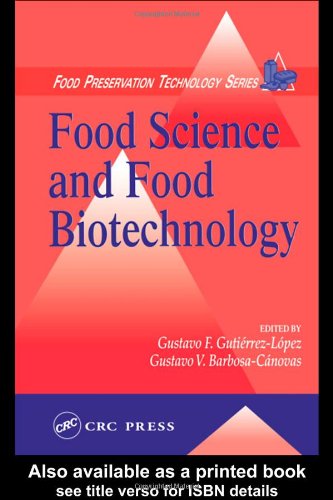
Food Science and Food Biotechnology 1st Edition by Gustavo F Gutierrez Lopez ISBN 1566768926 9780815351474


Original price was: $50.00.$35.00Current price is: $35.00.
Food Science and Food Biotechnology 1st Edition by Gustavo F Gutierrez Lopez – Ebook PDF Instant Download/Delivery: 1566768926, 9780815351474
Full download Food Science and Food Biotechnology 1st Edition after payment
Product details:
ISBN 10: 1566768926
ISBN 13: 9780815351474
Author: Gustavo F Gutierrez Lopez
Food Science and Food Biotechnology 1st Table of contents:
1: Introduction to Molecular Food Biotechnology
Introduction
Components of Molecular Biotechnology
Recombinant DNA Technology
Restriction Endonucleases
Plasmid Cloning Vectors
Polymerase Chain Reaction
Biomolecular Engineering
Metabolic Engineering
Protein Engineering
Protein Rational Design
Protein Irrational Design
Molecular Bioinformatics Functional Genomics and DNA Microarrays
Proteomics
Applications of Molecular Biotechnology
Plant Biotechnology for Food Production
Improvement of Plant Nutritional and Functional Quality
Plant Proteins
Nutritional Quality
Functional Quality
Lipids
Saturated Fatty Acids
Unsaturated Fatty Acids
Carbohydrates
Starch Quality
Plants as Bioreactors
Vaccines
Plant Vaccines
Antibodies
Plantibodies
Milk Proteins
Reconstitution of Human Milk Proteins in Food Plants
Micronutrients
Carotenoids
Vitamins
Minerals
Manipulation of Fruit Ripening
Microbial Biotechnology in Industry
Microbial Metabolites
Microbial Production of Small High-Value Molecules
Vitamins
Lactic Acid
Amino Acids
Carotenoids
Acknowledgment
References
2: Recent Developments in Food Biotechnology
Introduction
Defining Biotechnology
Traditional Biotechnology
Molecular (Modern) Biotechnology
Molecular Cloning
Polymerase Chain Reaction
Modern Biotechnological Approaches to Traditional Processes
Phage Resistance
Nisin Resistance
Recombinant Chymosin
Other Applications
Agricultural Biotechnology
Modification of Lipid Metabolism
Alteration of a Major Fatty Acid Level
Production of Unusual Fatty Acids
Protein Modification
Carbohydrate Modification
The Gene Subtraction Approach
Improving Food Quality
Other Improvements
The Benefits of Biotechnology
Transformation Techniques in Plant Biotechnology
Transgenic Animals
Conclusion
References
3: Bioprocess Design
Introduction
Food Biotechnology Products
Design Generalities
Product/Process Development Chain
Screening/Selection
Biocatalysis/Bioconversion
De Novo Synthesis
Biological System Improvement
Classical
r-DNA
Metabolic Engineering
Laboratory Fermentation
Physiology
Choice of Substrate
Fermentation Regime
Pilot-Plant Fermentation
Reactor Design
Downstream Processing
Screening Units
Unit Design
Stream-Splitting Units
Fractionating Units
Formulation
Economic Analysis
Cost Estimates
Total Capital Investment
Single Cell Production: An Example of Bioprocess Design
Laboratory Fermentation
Scale-Up
Downstream Processing
Cell Separation
Thermolysis
Final Design
Economic Analysis
Conclusions
References
4 : Gas Hold-Up Structure in Impeller Agitated Aerobic Bioreactors
Introduction
Gas Hold-Up Structure in Viscous Liquids
Effect of Tiny Bubbles on Mass Transfer
Experimental Observations on Gas Hold-Up in Impeller Agitated Systems
Conclusions
References
5: Production and Partial Purification of Glycosidases Obtained by Solid-State Fermentation of Grape Pomace Using Aspergillus niger 10
Introduction
Materials and Methods
Microorganism
Solid Substrate
Solid-State Culture Media
Effect of C/N Ratio and Water Activity on Glycosidase Production
Inoculum Production
Fermentation Columns
Enzyme Crude Extract
Physicochemical Analyses: Carbon Dioxide (CO2) Evolution
Proximal Analyses
Glycosidase Activity
Protease Activity
Protein
Partial Characterization of the Crude Extract
Optimum pH and pH Stability
Optimum Temperature and Temperature Stability
Prepurification
Glycosidase Purification
Electrophoretic Studies (Sodium Dodecyl Sulfate-Polyacrylamide Gel Electrophoresis; SDS-PAGE)
Results and Discussion
Solid Substrate Characterization
Culture Media Selection
Partial Characterization of Arabinofuranosidase and Rhamnopyranosidase
Partial a-L-Arabinofuranosidase Purification
Ammonium Sulfate Precipitation
Anion Exchange Chromatography
SDS-PAGE Electrophoresis
Conclusions
Acknowledgment
References
6: Protein Crystallography Impact on Biotechnology
Introduction
Fundamentals of Diffraction
Crystals
Diffraction
Crystallization
Data Collection
Structure Solution
Refinement and Validation
Analysis of Results
Impact on Biotechnology
Acknowledgments
References
7 : Stability of Dry Enzymes
Introduction
The Influence of the Glass-Rubbery Transition on Stability of Dry Pectinlyase
Carbohydrate-Induced Protection of Dry Enzymes
The Impact of Components of Enzymatic Fermentation Extracts on the Stability of Dry Enzymes
Conclusions
Acknowledgments
References
8 : Trends in Carotenoids Biotechnology
Introduction
Use of Biotechnology for Carotenoid Production
Biotechnological Production of Astaxanthin
Industrial Applications of Astaxanthin
Studies Focused on Carotenoid Production in Yeasts
Metabolic Engineering of Carotenoids in Escherichia coli
Novel Carotenoids by Gene Combination
Conclusions
References
9: Studies on the Reverse Micellar Extraction of Peroxidase from Cruciferae Vegetables of the Bajio Region of Mexico
Introduction
Reverse Micellar Systems
Dynamic Aspects of Reverse Micelles
Solubilization of Proteins in Reverse Micelles
Factors Affecting Protein Solubilization
Back-Extraction Process
Kinetics of Protein Partitioning
Peroxidase
Peroxidase Purification Using Reverse Micelles: Natural Sources
Vegetables of the Bajio Region of México
Materials and Methods
Materials
Methods
Results and Discussion
Raw Material Characterization
Extraction from Dialyzed Extracts
Peroxidase Purification from Radish
Two-Step Forward Transfer
Extraction Using CTAB
Peroxidase Purification from Turnip Roots
Extraction Using AOT
Extraction Using CTAB
Peroxidase Purification from Brussels Sprouts
Extraction Using AOT
Extraction Using CTAB
Two-Step Extraction with CTAB
Conclusions
References
10: Improving Biogeneration of Aroma Compounds by In Situ Product Removal
Introduction
Downstream Processes for Aroma Compounds
In Situ Product Removal of Aroma Compounds
Extraction into Another Phase
Liquid-Liquid Extraction
Solid-Phase Extraction
Gas Extraction
Membrane Separation
Hollow-Fiber Membranes
Pervaporation
Conclusion
Acknowledgments
References
11: Lupines: An Alternative for Debittering and Utilization in Foods
Introduction
Chemical Composition of Lupinus campestris
Debittering of Seeds
Total Carbohydrates and Oligosaccharides
Quinolizidine Alkaloids
Tannins
Lupine Milk Elaboration
Fermentation Profiles
Amino Acid Composition
References
12: Recent Development in the Application of Emulsifiers: An Overview
Introduction
The Mesophases of Emulsifier-Water Binary System
Liquid Crystalline Phases
Structure
Lamellar Phase
Gel Phase
Hexagonal Phase
Cubic Phase
Fluid Isotropic Phase
Effect of Molecular Structure of Emulsifiers
Effect of Temperature, Concentration, and Other Solutes
Application
Liposomes
Structure
Application
The Mesophases of an Emulsifier-Water-Oil Ternary System
O/W Microemulsion (L1)
Structure
Application
Structure
Application
Conclusions
References
13 : Drying of Biotechnological Products: Current Status and New Developments
Introduction
Effect of Drying on Bioproduct Quality
Commonly Used Dryers
Some Emerging Drying Technologies
Closing Remarks
References
14: An Update on Some Key Alternative Food Processing Technologies: Microwave, Pulsed Electric Field, High Hydrostatic Pressure, Irradiation, and Ultrasound
Introduction
Microwave Processing
Description of the Technology
Equipment and Engineering Principles
Effects of Microwaves on Microbial Inactivation
Current Limitations and Status
Pulsed Electric Fields Technology
Description of the Technology
Equipment and Engineering Principles
Effects of Pulsed Electric Fields on Microbial Inactivation
Current Limitations and Status
High Hydrostatic Pressure Processing
Description of the Technology
Equipment and Engineering Principles
Effects of High Hydrostatic Pressure on Microbial Inactivation
Current Status and Limitations
Food Irradiation
Description of the Technology
Equipment and Engineering Principles
Effects of Irradiation on Microbial Inactivation
Current Status and Limitations
Ultrasound Processing
Description of the Technology
Equipment and Engineering Principles
Effects of Ultrasound on Microbial Inactivation
Current Status and Limitations
Final Remarks
References
15: Emerging Processing and Preservation Technologies for Milk and Dairy Products
Introduction
Processing Technologies
Heat Treatment
High-Pressure Processing
Pulsed Electric Field
Irradiation
Modified Atmosphere Packaging
Membrane Filtration
Natural Components in Milk
Lactoferrin
Lactoperoxidase
Xanthine Oxidase
People also search for Food Science and Food Biotechnology 1st:
Food Microbiology
Food Chemistry and Biochemistry
Functional Foods
Food Safety and Toxicology
Food Quality and Sensory Evaluation
Tags: Gustavo F Gutierrez Lopez, Food Science, Food Biotechnology