


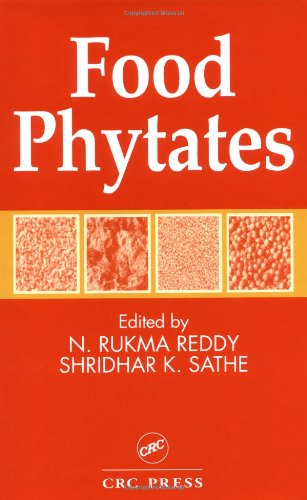
Food Phytates 1st Edition by N Rukma Reddy – Ebook PDF Instant Download/Delivery: 1566768675, 9781566768672
Full download Food Phytates 1st Edition after payment
Product details:
ISBN 10: 1566768675
ISBN 13: 9781566768672
Author: N Rukma Reddy
Food Phytates 1st Table of contents:
1. Introduction
1.1 Historical Background
1.2 Importance
1.3 Purpose and Scope
1.4 References
2. A Global Estimate of Phytic Acid and Phosphorus in Crop Grains, Seeds, and Fruits
2.1 Introduction
2.2 Making a Global Estimate
2.3 Results of a Global Estimate
2.4 Discussion and Summary
2.5 Suggestions for Future Work
2.6 References
3. Occurrence, Distribution, Content, and Dietary Intake of Phytate
3.1 Introduction
3.2 Occurrence
3.3 Phytate Distribution and Content
3.3.1 Phytate Distribution
3.3.2 Phytate Content
3.3.2.1 Cereals and Cereal Products
3.3.2.2 Beans and Bean Products
3.3.2.3 Tubers, Fruits, Leafy Vegetables, Nuts, and Other Foods
3.4 Effects of Environmental and Other Factors on the Phytate Content
3.5 Dietary Intake of Phytate
3.6 References
4. Biosynthesis of Phytate in Food Grains and Seeds
4.1 Introduction
4.2 Myo-Inositol (1,2,3,5/4,6-Hexahydroxycyclohexane)
4.2.1 Stereochemistry and Nomenclature
4.2.2 Biosynthesis of Myo-Inositol
4.2.3 Free Myo-Inositol
4.3 Phytic Acid Biosynthesis
4.3.1 Ins(3)P1 as the First Step in Phytic Acid Biosynthesis
4.3.2 Stepwise Phosphorylation of Ins(3)P1 to Phytic Acid
4.4 Aspects of InsP6 Metabolism Unique to Plants
4.5 References
5. Genetics of Phytic Acid Synthesis and Accumulation
5.1 Introduction
5.2 Considerations Prior to Screening for “Phytic Acid Mutants”
5.3 The Isolation of Cereal Low Phytic Acid Mutants
5.4 Breeding “Low Phytic Acid” Crops Using Lpa Mutants
5.5 Discussion
5.6 References
6. Phytase Expression in Transgenic Plants
6.1 Introduction
6.2 Seed Phytate and Phytase in Animal Diets
6.3 Fungal Phytase Expression in Tobacco
6.4 Recombinant Fungal Phytase Expression in Soybean
6.4.1 Expression of Phya Constructs in Soybean Suspension Cultures
6.4.2 Growth of Transformed Soybean Suspension Cultures in Phytate-Modified Medium
6.4.3 Comparison of Fungal and Recombinant Phytase
6.4.4 Poultry Feeding Trial
6.5 Canola Seeds as a Source of Fungal Phytase
6.6 Fungal Phytase Derived from Transgenic Alfalfa
6.7 Gene Cloning of Plant Phytases
6.8 Discussion and Future Outlook
6.9 Acknowledgements
6.10 References
7. Stability of Plant and Microbial Phytases
7.1 Introduction
7.2 Thermostability of Phytases
7.2.1 Plant Phytases
7.2.2 Fungal Phytases
7.2.3 Yeast Phytases
7.2.4 Bacterial Phytases
7.3 Stabilizers for Processing and Storage
7.4 Stability in the Gut
7.4.1 pH Stability
7.4.2 Proteolytic Resistance
7.4.3 Effectiveness in Vivo
7.5 Stability of Recombinant Phytases
7.5.1 Molecular Modeling
7.5.2 Transgenic Production of Phytases
7.6 Future Research
7.7 References
8. Methods for Analysis of Phytate
8.1 Introduction
8.2 Sample Pretreatment
8.3 Methods for Phytate Determination
8.3.1 Precipitation Methods
8.3.2 Ion Exchange Methods
8.3.3 HPLC Methods
8.4 Methods for Determination of Phytate and its Degradation Products
8.4.1 HPLC Ion-Pair Methods
8.4.2 HPIC Methods
8.4.3 CE Methods
8.4.4 NMR Methods
8.5 Detection Methods
8.6 Conclusions
8.7 References
9. In Vitro and In Vivo Degradation of Phytate
9.1 Introduction
9.2 Degradation of Inositol Phosphates
9.3 Enzymatic Hydrolysis of Phytate
9.4 Enzymatic Degradation of Phytate During Food Processing
9.4.1 Soaking, Malting, and Hydrothermal Processing
9.4.2 Fermentation
9.4.3 Addition of Enzymes
9.5 Hydrolysis of Phytate in the Gut
9.5.1 Degradation of Phytate in the Stomach and Small Intestine
9.5.2 Degradation of Phytate in the Colon
9.6 Conclusions
9.7 References
10. Influence of Processing Technologies on Phytate and its Removal
10.1 Introduction
10.2 Soaking
10.3 Cooking
10.4 Germination
10.5 Extrusion
10.6 Dehulling
10.7 Fermentation and Bread Making
10.8 Storage
10.9 Radiation
10.10 References
11. The Antioxidant Effects of Inositol Phosphates
11.1 Introduction
11.2 Antioxidant Properties of Inositol Phosphates In Vitro
11.3 Antioxidant Properties of Inositol Phosphates In Vivo
11.4 Protection from Vitamin E and Selenium Deficiency by Phytate
11.5 Conclusions and Questions to Address in Future Studies
11.6 References
12. Potential Use of Phytate as An Antioxidant in Cooked Meats
12.1 Introduction
12.2 Meat Counteracts the Effects of Phytate on Mineral Absorption
12.3 Phytate as An Antioxidant in Chicken and Beef
12.4 Effect of Phytate on Color, Bind Strength, and TBA Values
12.5 Mechanism of Phytate Antioxidant Effects
12.6 Cost and Regulatory Status of Phytate in Meat Products
12.7 Antioxidant Properties of Wild Rice in Cooked Meat Products
12.8 Conclusions
12.9 References
13. Phytate and Mineral Bioavailability
13.1 Introduction
13.2 Phytate-Mineral Interactions
13.3 Phytate Hydrolysis
13.4 Processing
13.5 Adaptation to High Phytate Diet
13.6 Conclusions
13.7 References
14. Role of Phytic Acid in Cancer and Other Diseases
14.1 Introduction
14.2 Cancer
14.3 Colon Cancer
14.3.1 In Vitro Studies – Pure PA
14.3.2 In Vivo Studies – Pure PA in Drinking Water
14.3.3 In Vivo Studies – Pure PA in Diet
14.3.4 Clinical Studies
14.3.5 PA Supplementation – Endogenous Versus Exogenous
14.4 Mammary Cancer
14.5 Other Cancers
14.6 Possible Mechanisms of Phytic Acid Action
14.7 Heart Disease
14.8 Diabetes
14.9 Other Diseases
14.10 Conclusions
14.11 References
People also search for Food Phytates 1st:
an overview of the analytical methods for food phytates
how to reduce phytates in food
food high in phytates
food low in phytates
phytates food list
Tags: N Rukma Reddy, Food Phytates