

Sale!
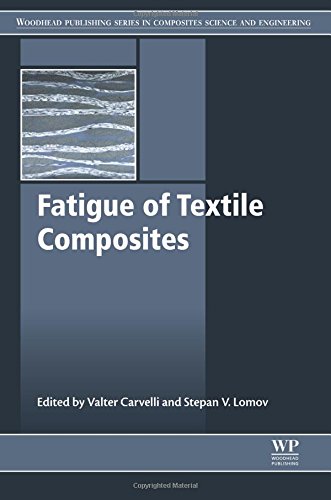
Fatigue of Textile Composites 1st Edition by Valter Carvelli ,Stepan V Lomov ISBN 9781782422815 978-1782422815


Original price was: $50.00.$35.00Current price is: $35.00.
Fatigue of Textile Composites 1st Edition Valter Carvelli Digital Instant Download
ISBN(s): 9781782422815, 1782422811
Edition: 1
File Details: PDF, 49.86 MB
Year: 2015
Language: english
Fatigue of Textile Composites 1st Edition by Valter Carvelli ,Stepan V Lomov – Ebook PDF Instant Download/Delivery:9781782422815 978-1782422815
Full download Fatigue of Textile Composites 1st Edition after payment
Product details:
ISBN 10:9781782422815
ISBN 13: 978-1782422815
Author:Valter Carvelli ,Stepan V Lomov
Table of contents:
-
- . A conceptual framework for studies of durability in composite materials
- 1.1. Introduction and background
- 1.2. Fundamentals of material durability
- 1.3. A conceptual framework for fatigue durability
- 1.4. Extension of the baseline fatigue life diagram to laminates and other fiber architectures
- 1.5. Models for fatigue life prediction
- 1.6. Concluding remarks
- 2. The cycle jump concept for modelling high-cycle fatigue in composite materials
- 2.1. Introduction
- 2.2. What are phenomenological residual stiffness models?
- 2.3. The cycle jump concept
- 2.4. Finite element implementation of the cycle jump concept
- 2.5. Conclusions
- 2.6. Future trends and challenges
- 3. Experimental methods and standards for fatigue of fiber-reinforced composites
- 3.1. Introduction
- 3.2. AFNOR: the French National Organization for Standardization (Association Française de Normalisation)
- 3.3. ISO: International Organization for Standardization
- 3.4. JIS: Japan Industrial Standards
- 3.5. ASTM: American Society for Testing and Materials
- 3.6. Discussion
- 4. Databases for fatigue analysis in composite materials
- 4.1. Introduction
- 4.2. FACT database
- 4.3. OptiDat database
- 4.4. SNL/MSU/DOE database
- 4.5. Concluding remarks
- . A conceptual framework for studies of durability in composite materials
- Part Two. Fatigue at micro-level
- 5. Fatigue analysis of carbon, glass and other fibres
- 5.1. Introduction to fatigue of fibres
- 5.2. Experimental methods for characterization of fatigue behaviour of fibres
- 5.3. Fatigue analysis of glass fibres
- 5.4. Fatigue analysis of carbon fibres
- 5.5. Fatigue analysis of other types of fibres
- 5.6. Modelling of fatigue strength of fibres and bundles
- 5.7. Effect of environmental factors on the fatigue behaviour of fibres
- 5.8. Conclusions and future challenges
- 6. Multiaxial fatigue of a unidirectional ply: an experimental top-down approach
- 6.1. Introduction
- 6.2. Bottom-up strategy versus top-down approach
- 6.3. Failure mode-related fatigue model
- 6.4. Application
- 6.5. Conclusion and outlook
- 7. Modelling the crack initiation in unidirectional laminates under multiaxial fatigue loading
- 7.1. Introduction
- 7.2. Peculiarities of fatigue failure
- 7.3. Calculation of local stresses
- 7.4. Validation
- 7.5. Constant-life diagrams
- 7.6. Conclusions
- 5. Fatigue analysis of carbon, glass and other fibres
- Part Three. Phenomenology and modelling of fatigue in different textile composites
- 8. 2D woven fabric composites under fatigue loading of different types and in different environmental conditions
- 8.1. Introduction
- 8.2. Effect of stress ratio
- 8.3. Effect of temperature
- 8.4. Comparison between the S–N curves for unidirectional/cross-ply laminates and woven carbon composites
- 8.5. Effect of fiber orientation
- 8.6. Modeling of temperature effect
- 8.7. Effect of variation in R-ratio
- 8.8. Conclusions
- 9. Fatigue response and damage evolution in 2D textile composites
- 9.1. Introduction
- 9.2. Experimental program
- 9.3. Notch sensitivity under static loadings
- 9.4. Material response to cyclic loadings
- 9.5. Damage evolution under cyclic loadings
- 9.6. Crack density curves
- 9.7. Conclusions
- 10. Fatigue damage evolution in 3D textile composites
- 10.1. Introduction
- 10.2. Fatigue experimental details
- 10.3. Single-ply non-crimp 3D orthogonal weave E-glass/epoxy composite
- 10.4. 3D rotary braided carbon/epoxy composite
- 10.5. Non-crimp stitched carbon/epoxy composite
- 10.6. Conclusions
- 10.7. Future challenges
- 11. Fatigue of 3D textile-reinforced composites
- 11.1. Introduction
- 11.2. Fatigue properties of 3D woven textile composites
- 11.3. Fatigue properties of stitched textile composites
- 11.4. Fatigue properties of z-anchor textile composites
- 11.5. Fatigue properties of z-pinned composites
- 11.6. Summary
- 12. Fatigue of non-crimp fabric composites
- 12.1. Introduction
- 12.2. Non-crimp fabric (NCF) composites
- 12.3. Fatigue of NCF composites
- 12.4. Summary
- 13. Fatigue models for woven textile composite laminates
- 13.1. Introduction
- 13.2. Classification of fatigue models
- 13.3. Review of fatigue models and lifetime prediction methodologies for textile composites
- 13.4. Challenges for industrial application of existing fatigue models
- 13.5. Feasibility of multiscale modelling of fatigue damage
- 13.6. Conclusions
- 13.7. Future trends and challenges
- 13.8. Sources of further information and advice
- 14. Modelling high-cycle fatigue of textile composites on the unit cell level
- 14.1. Introduction: the general approach to high-cycle fatigue of textile composites on the unit cell level
- 14.2. The fatigue model for textile composites
- 14.3. Example of fatigue modelling for textile composites
- 14.4. Conclusion
- 8. 2D woven fabric composites under fatigue loading of different types and in different environmental conditions
- Part Four. Applications
- 15. Fatigue testing and online inspection of carbon textile composites for aeronautical applications
- 15.1. Introduction
- 15.2. Materials and methods
- 15.3. Static characterization
- 15.4. Fatigue characterization
- 15.5. Conclusions
- 15.6. Future trends and challenges
- 16. Textile composites in the automotive industry
- 16.1. Introduction
- 16.2. Automotive composite lightweight design
- 16.3. Production of automotive textile composite components
- 16.4. Fatigue aspects of automotive series production
- 16.5. Fatigue aspects of multi-material and hybrid designs
- 16.6. Conclusions
- 17. Fatigue life in textile composites used for wind energy engineering
- 17.1. Introduction
- 17.2. Baseline materials
- 17.3. Fabric structure
- 17.4. Fatigue methodologies
- 17.5. Fatigue characteristics of textiles
- 17.6. Blade design concepts
- 17.7. Future challenges for composites in wind energy engineering
- 18. Construction engineering: fatigue life prediction of adhesively bonded textile composites
- 18.1. Introduction
- 18.2. Types of fiber-reinforced polymer (FRP) textile composite structural components used in civil engineering applications
- 18.3. Experimental investigations and modeling of adhesively bonded connections
- 18.4. Fatigue life modeling and prediction
- 18.5. Conclusions
- 15. Fatigue testing and online inspection of carbon textile composites for aeronautical applications
People also search for:
composite fabrics
fatigue of textile and short fiber reinforced composites
fabric fatigue
kevlar fatigue
composite fatigue analysis
Tags:
Valter Carvelli,Stepan V Lomov,Fatigue,Textile,Composites