

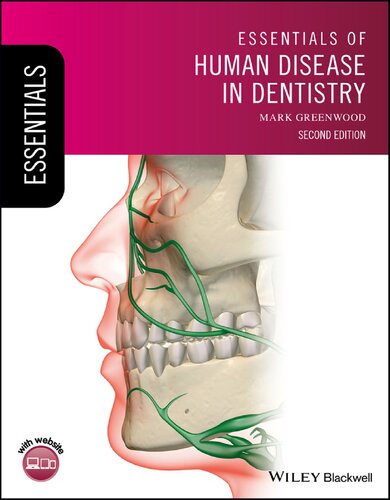
Essentials of human disease in dentistry 2nd Edition by Mark Greenwood ISBN 1119251842 9781119251842


Original price was: $50.00.$35.00Current price is: $35.00.
Essentials of human disease in dentistry 2nd Edition by Mark Greenwood – Ebook PDF Instant Download/Delivery: 1119251842, 9781119251842
Full download Essentials of human disease in dentistry 2nd Edition after payment
Product details:
ISBN 10: 1119251842
ISBN 13: 9781119251842
Author: Mark Greenwood
Essentials of Human Disease in Dentistry, Second Edition takes an integrated approach to dentistry and how it relates to general medicine, surgery, pharmacology, therapeutics, pathology and microbiology. Building on the success of the Textbook of Human Disease in Dentistry, this new edition has been updated with a new layout, featuring key topics, learning objectives and practical clinical advice in each chapter.
This accessible guide is structured around the systems of the body and covers all major diseases and conditions with their aetiology, symptoms, and treatments. The focus is on the relevance of particular diseases and their drug treatment in relation to dentistry and patient dental management.
This vital resource:
- Promotes a better understanding of how to provide effective dental treatment to patients affected by diseases
- Presents illustrative examples and helpful clinical photographs throughout
- Includes a new chapter on the importance of understanding shock
- Features self-assessment questions at the end of each chapter, and a companion website hosting downloadable images from the book
Essentials of Human Disease in Dentistry, Second Edition is an invaluable resource for undergraduate dentistry students as well as newly qualified dentists preparing for the MFDS exam.
Essentials of human disease in dentistry 2nd Table of contents:
CHAPTER 1: Clinical examination and history taking
Components of a medical history
Complementary therapies
CHAPTER 2: Inflammation and anti’inflammatory drugs
Cell and tissue injury – Introduction
Necrosis
Apoptosis
Wound healing
Inflammation – Introduction
Pathogenesis of acute inflammation
Pathogenesis of chronic inflammation
Primary chronic inflammation
Systemic effects of inflammation
Anti-inflammatory drugs
Antihistamines
Corticosteroids
CHAPTER 3: Principles of infection and infection control
3A STERILISATION, DISINFECTION AND ANTISEPTICS
Sterilisation and disinfection
General principles
What should be sterilised?
Decontamination and pre-cleaning
Sterilisation and disinfection methods
Monitoring efficacy
Heat
Irradiation
Filtration
Chemicals
Antiseptics
3B PRINCIPLES OF INFECTION AND INFECTION CONTROL, DIAGNOSIS AND TREATMENT OF BACTERIAL INFECTIONS
Introduction
Use of the laboratory in the diagnosis of bacterial infections
Microscopy
Staining techniques
Culture and identification
Bacterial typing
Non-cultural diagnostic techniques
Molecular methods
General principles of specimen collection
Antibacterial drugs
Antibacterials that interfere with the bacterial cell wall
Antibacterials that interfere with bacterial protein synthesis
Antibacterials that interfere with bacterial nucleic acid
Antibacterial use in dentistry
Therapeutics
Prophylaxis
Unwanted effects of antibacterial drugs
3C VIRUSES AND ANTIVIRAL AGENTS RELEVANT TO DENTISTRY
Viruses relevant to dentistry
Virus classification
The major groups of animal viruses
Diagnosis of virus infections
Hepatitis
Blood-borne virus infections: prevention
Herpes simplex virus (HSV)
Varicella zoster virus (VZV)
Cytomegalovirus (CMV)
Epstein–Barr virus (EBV)
Enteroviruses
Mumps
Adenovirus
Treatment
Antiviral agents
Mechanism of action of antiviral medications
Unwanted effects of antiviral agents
Drug interactions with antiviral agents
3D INFECTION WITH IMMUNODEFICIENCY VIRUS AND IMPLICATIONS FOR THE ORAL CAVITY: INFECTION WITH HIV
Introduction
Epidemiology
Clinical presentations
Oral manifestations of HIV disease
Fungal infections
Histoplasmosis
Human papillomavirus lesions
Hairy leukoplakia and EBV
Bacterial lesions
Neoplastic lesions
Lymphoma
Other oral lesions associated with HIV disease
Diagnosis of HIV infection
Principles of treatment
3E FUNGI AND ANTIFUNGAL AGENTS
Fungi
Antifungal agents
Unwanted effects of antifungal medication
CHAPTER 4: Immunological disease
Introduction
Overview of a normal immune response
What is immunodeficiency?
What are the consequences of immunodeficiency?
What are the symptoms and signs of immunodeficiency?
Examples of specific primary immunodeficiencies seen in dental practice
Chronic mucocutaneous candidiasis (CMC)
Chronic granulomatous disease (CGD)
Deficiency of C1 esterase inhibitor (hereditary angioedema)
Implications of immunodeficiency in dental practice
Common conditions can be features of immunodeficiency
Allergy in dental practice
Type I hypersensitivity (allergy)
Diagnosis of type I hypersensitivity reactions
Causes of type I hypersensitivity reactions in dental practice
Other agents associated with type I hypersensitivity reactions in dental practice
Treatment of type I hypersensitivity reactions
Other reactions
Stomatitis
Oral erythema
Cheilitis
Autoimmune disease
Examples of autoimmune disease seen in dental practice
IgG4-related disease
Immunosuppressants
Dental problems of immunosuppressed patients
CHAPTER 5: Cardiovascular disorders
5A INTRODUCTION TO CARDIOVASCULAR DISEASE (CVD)
The heart and circulation
Electrical control
Cardiac circulation
Cardiovascular pathology
Atherosclerosis
Aneurysms
Thrombosis, embolism, ischaemia and infarction
Thrombosis
Embolism
Ischaemia and infarction
Clinical features of CVD
Signs detectable in the clothed patient
Cardiac investigations
Clinical aspects of MI
Angina
5B HEART FAILURE
Introduction
Pathophysiology
Cardiac causes of heart failure
Neurohormonal adaptive responses
Exacerbating conditions
Clinical aspects of heart failure
Treatment of heart failure
Drugs used to manage heart failure
5C CARDIAC ARRHYTHMIAS
Pathophysiology
Tachycardias
Bradycardias
Clinical aspects of arrhythmias
Drugs used to manage cardiac arrhythmias
Class I: membrane-stabilising drugs
Class II: β-adrenoreceptor antagonists
Class III: agents influencing potassium channels
Class IV: calcium channel blockers
Cardiac glycosides
5D VALVULAR HEART DISEASE
Introduction
Pathology of valvular heart disease
Rheumatic fever
Infective endocarditis
5E HYPERTENSION
Measurement of blood pressure
Drugs used to treat hypertension
Diuretics and aldosterone antagonists
ACE inhibitors
Angiotensin II receptor antagonists
Calcium channel blockers
β-Adrenoreceptor antagonists
α-Adrenoreceptor blockers
Vasodilators
Centrally acting drugs
Treatment of hypertension
5F ANTICOAGULANTS, DRUGS AFFECTING BLOOD CLOTTING
Heparin
Pharmacodynamics
Pharmacological properties
Unwanted effects
Oral anticoagulants
Pharmacological properties
Monitoring patients on oral anticoagulants
Unwanted effects
Uses of anticoagulants
Antiplatelet drugs
Aspirin
Clopidogrel
Prasugrel
Dipyridamole
Fibrinolytic and antifibrinolytic drugs
5G DENTAL IMPLICATIONS OF CVD
Hypertensive patients
Patients post-MI
Other aspects of management
Smoking and the cardiovascular system
5H PERIPHERAL VASCULAR AND CARDIAC SURGICAL DISORDERS
Peripheral vascular disorders
The chronically ischaemic leg
The acutely ischaemic leg
Peripheral arterial aneurysms
AAAs
Carotid disease
Venous disease and leg ulcers
Swollen legs/lymphoedema
Causes of secondary lymphoedema
Cardiac surgical disorders
Coronary artery bypass surgery
Percutaneous coronary intervention (PCI)
Coronary artery bypass grafting (CABG)
Valvular heart disease
Cardiac transplantation
Congenital heart disease
CHAPTER 6: Respiratory disorders
Introduction
Clinical assessment
Symptoms
Examination
General medical history
Investigating respiratory disease
Asthma
Drugs used to treat asthma
COPD
Lung cancer
Obstructive sleep apnoea syndrome (OSAS)
Respiratory tract infections
Cystic fibrosis and bronchiectasis
Pulmonary embolism
Fibrotic lung disease
Management of inhaled foreign body
Respiratory disorders and dentistry
Examination of the clothed patient
Specific disorders
CHAPTER 7: Gastrointestinal disorders
Introduction
Relevant points in the history
Examination
Liver disease
Nutritional disorders
Vitamin B deficiencies
Iron deficiency anaemia
Vitamin A deficiency
Vitamin D deficiency
Vitamin E deficiency
Vitamin K deficiency
Vitamin C deficiency
Dental aspects of GI system disorders
Ulcer-healing drugs and antacids
CHAPTER 8: Renal disorders
Introduction
Structure of the kidneys
The glomerulus
The tubule
The loop of Henle
Measurement of renal function
Clinical presentation of abnormal renal function
CKD
Management of renal anaemia
Management of mineral and bone disorders
Approach to managing patients with impaired renal function
The kidneys and systemic disease
Dental aspects relating to renal patients
Prescribing in renal disease
CHAPTER 9: Neurology and special senses
9A NEUROLOGY
Head injury
Signs of skull fracture
Types of brain injury
Assessment
General signs and symptoms of brain injury
Spinal injury
Complications
Brain abscess
Space-occupying lesions
Meningitis
9B ENT
Deafness
Conductive deafness
Sensorineural deafness
Clinical testing
Tinnitus
Vertigo
Dizziness
Infections and inflammatory disorders of the ear, nose, sinuses and tonsils
9C NEUROLOGICAL DISORDERS AND DENTAL PRACTICE
Relevant points in the history
Facial pain
Other disorders
General examination
Cranial nerves
Neurological disorders: management considerations in dental practice
9D STROKE, SPEECH AND SWALLOWING
Stroke
Pathology of stroke
Risk factors and prevention
Clinical features of stroke or TIA
Management of acute stroke
Stroke rehabilitation
Dental aspects of stroke
Speech
Swallowing
Elements of swallowing
Swallowing disorders
Assessment and treatment of swallowing problems
9E OPHTHALMOLOGY
Measurement of vision
Common causes of visual loss
Conditions of common interest
9F ANTICONVULSANT AND ANTI-PARKINSONIAN DRUGS
Anticonvulsant drugs
Anti-Parkinsonian drugs
CHAPTER 10: Shock
Introduction
Pathophysiology
Aetiology of shock
Hypovolemic shock
Cardiogenic shock
Obstructive shock
Apparent hypovolemia
Clinical features
Monitoring
Refractory shock
CHAPTER 11: Musculoskeletal disorders
Introduction
Classifying musculoskeletal problems
Osteoarthritis
Rheumatoid arthritis
Reactive arthritis
Other joint disorders
Disorders mainly involving soft tissues
Management of fractures and joint replacements
Joint replacements
Metabolic bone disease and calcium
Parathyroid disorders
Important bone conditions
Other bone disorders
Dental treatment in patients with musculoskeletal disorders
Patients with syndromes
Patients with joint disorders
Other disorders
CHAPTER 12: Dermatology and mucosal lesions
Introduction
Assessment of a patient presenting with skin lesions
Nail changes
Finger clubbing
Diseases of the skin
Disorders of keratinization
Infections and skin manifestations
Fungal infections (mycoses)
Viral infections of the skin
Dermatological manifestations of systemic disease
Dermatological manifestations of GI disease
Dermatological manifestations of endocrine disease
Actinic disorders of the skin
Squamous cell carcinoma of the skin (SCC)
Basal cell carcinoma (BCC)
Referral of patients with suspected skin malignancy
Disorders of skin and oral pigmentation
External causes of pigmentation of skin
Internal causes of pigmentation of skin and oral mucosa
Pigmentation of the oral mucosa
Clinical management of intra-oral pigmentation
Autoimmune dermatological disease
Pemphigoid
Erythema multiforme (EM), Stevens–Johnson syndrome and toxic epidermal necrolysis
Stevens–Johnson syndrome and toxic epidermal necrolysis
Pemphigus
Dermatitis herpetiformis
Lupus erythematosus (LE)
Behçet’s syndrome (BS)
Graft versus host disease (GVHD)
Drug-induced causes of oral/dermatological lesions
Lichenoid lesions
Fixed drug eruption
Drug-induced bullous disease
CHAPTER 13: Endocrinology and diabetes
Introduction
Regulation and feedback
Mechanisms of endocrine disease
Important endocrine syndromes
Diabetes mellitus
Pregnancy
Other endocrine conditions of relevance
Dental aspects in endocrine patients
CHAPTER 14: Pain and anxiety control
Introduction
Local anaesthetics
Analgesia in dentistry
Drugs used in conscious sedation
Intravenous sedation
Inhalational sedation
Oral sedation
Transmucosal sedation
CHAPTER 15: Adverse drug reactions and interactions
Adverse drug reactions
Salivary glands
Oral mucosa and tongue
Local irritants
Dental structures
Sugar-based medicines
Periodontal tissues
Alveolar bone
Cleft lip and palate
Miscellaneous oral adverse drug reactions
Drug interactions
Drugs that interfere with analgesics prescribed by dentists
CHAPTER 16: General oncology
Introduction
Disorders of growth and differentiation
Neoplasia
Biological characteristics of cancer
Clinical oncology
Tumour identification and diagnosis
Management of malignant disease
Prognosis
Introduction to head and neck oncology
Oral complications of malignancy
Management of head and neck radiotherapy patients
Management of patients on chemotherapy
Palliative care
The future
CHAPTER 17: Child health
Development
Specific areas of development
Range of normality and individual variation
Key milestones
Child health surveillance
Language and speech
Hearing
Vision
Respiratory infections in childhood
Bacterial pneumonia
Measles
Croup
Bronchiolitis
Pertussis
Cystic fibrosis (CF)
Asthma
Oral infections
Viral
Bacterial
Fungal
Protozoal
Clefts of the lip and palate
Aetiology of clefts
Child physical abuse
Conclusions
CHAPTER 18: Medicine for the elderly
Introduction
Ageing
Features of illness in old age
Non-specific presentations
Multiple pathology, and consequent polypharmacy
Impaired homeostasis, resistance to disease and recovery
Loss of functional independence
Care settings for older people
Assessment and rehabilitation
Long-term care
History taking
Examination
General principles of management
Mental capacity
Prescribing for older dental patients
Practical tips on prescribing
CHAPTER 19: Psychiatric disorders
19A GENERAL PSYCHIATRY
Introduction – what is psychiatry?
Relevance to dental practitioners
The nature and diagnosis of psychiatric disorders
Psychiatric presentations encountered by dentists
Anxiety disorders
Anxiety and avoidance
Obsessive compulsive disorder (OCD)
Hypochondriasis
Psychogenic pain
Atypical facial pain
TMJ dysfunction syndrome
Atypical odontalgia
Oral dysaesthesia
Eating disorders
Substance misuse
Alcohol abuse
Schizophrenia
Schizophrenia and the dentist
Mood disorders
Depression
Bipolar affective disorder (mania)
Specific groups for special consideration: children
Autistic spectrum disorders
Hyperkinetic disorder (or ‘attention-deficit hyperactivity disorder’, ADHD)
Anxiety disorders and phobias
Specific groups for special consideration: the elderly
Dementia
Delirium
Specific groups for special consideration: people with learning disabilities
Dental aspects
Capacity and consent
Assessment of capacity
Referral to psychiatric services
Indications and routes of referral
Basic psychiatric assessment
19B DRUG ABUSE
Alcohol
Smoking
Cannabis
Heroin and methadone
Cocaine
Amphetamines and ecstasy
Hallucinogens
Solvent abuse
Anabolic steroids and performance enhancers
19C ANXIOLYTIC AND HYPNOTIC DRUGS
Anxiolytic drugs
Hypnotic drugs
CHAPTER 20: Haematology
20A GENERAL HAEMATOLOGY, HAEMATO-ONCOLOGY
Normal haemopoiesis
The bone marrow stroma
Erythropoiesis
Haemoglobin
Red cell metabolism
Anaemia
General features of anaemia
Iron deficiency anaemia
Megaloblastic anaemias
Anaemia of chronic disease
Haemolytic anaemias
Haemoglobinopathies
Sickle cell disease (SCD)
α-Thalassaemia
β-Thalassaemia
Red cell fragmentation syndromes
Multiple myeloma
Osteonecrosis of the jaw
Bone marrow failure syndromes
Chronic myeloproliferative disorders (MPDs)
Lymphomas
Hodgkin lymphoma
NHL
20B HAEMOSTASIS
Overview of normal haemostasis
Inherited bleeding disorders
von Willebrand disease
Rare inherited coagulation disorders
Acquired disorders of haemostasis
Acquired platelet disorders
Warfarin and dental surgery
Mechanism of action of warfarin
Warfarin and bleeding risk
The risk of bleeding following dental surgery
The risk of discontinuing anticoagulation prior to surgery
Direct Oral Anticoagulants (DOACs)
DOACs and dental surgery
20C TRANSFUSION MEDICINE
Introduction
Blood group systems
The ABO blood group system
The Rhesus (Rh) blood group system
Red cell antibodies
Alloantibody production
Alloantibodies in pregnancy
Blood components
High-titre testing
Hospital pre-transfusion testing
Selecting ABO-compatible blood
Haemovigilance in the UK
Minimising errors in blood transfusion
‘Right blood, right patient’
Platelets
Fresh frozen plasma
Indications for FFP
Cryoprecipitate
Risks of transfusion
Preventing transfusion reactions
Alternatives to blood transfusion
CHAPTER 21: Medical emergencies
Introduction
The ABCDE approach to the sick patient
The collapsed patient
Fainting (vasovagal syncope)
Chest pain
The diabetic patient
Diabetic emergencies
Hypersensitivity reactions – anaphylaxis
‘Second-line’ drugs – not required to be administered by dental practitioners
Angioedema
Fits
Cardiac arrest
Use of defibrillation
Pacemakers
Asthma
Hyperventilation
Choking
Adrenal crisis
Local anaesthetics emergencies
Cardiovascular problems in association with local anaesthetics
Temporary facial palsy or diplopia
Stroke
Needle breakage
Sedation emergencies
Emergencies arising from impaired haemostasis
Appendix: normal reference ranges
Index
End User License Agreement
People also search for Essentials of human disease in dentistry 2nd:
essentials of human nutrition
essentials of human diseases and conditions
essentials of human disease
essential human disease for dentists
essentials of human diseases and conditions 7th edition
Tags: Mark Greenwood, human disease