

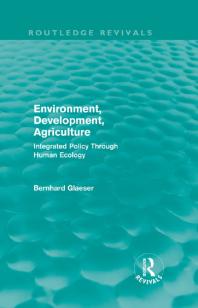
Environment Development Agriculture Integrated Policy Through Human Ecology 1st Edition by Bernhard Glaeser ISBN 0203838939 9780203838938

Original price was: $50.00.$35.00Current price is: $35.00.
Environment Development Agriculture Integrated Policy Through Human Ecology 1st Edition by Bernhard Glaeser – Ebook PDF Instant Download/Delivery: 0203838939, 9780203838938
Full download Environment Development Agriculture Integrated Policy Through Human Ecology 1st Edition after payment
Product details:
ISBN 10: 0203838939
ISBN 13: 9780203838938
Author: Bernhard Glaeser
Environment Development Agriculture Integrated Policy Through Human Ecology 1st Table of contents:
Part I: Foundations
1. An Outline of Human Ecology
1.1 The Concept and Its Delimitation
-
Environmental Science – The Starting Point
-
From Ecology to Human Ecology
-
The Human Ecology Approach in the Academic Disciplines
-
Biology
-
Geography
-
Psychology
-
Sociology
-
-
From the Medical Paradigm to Human Ecology
1.2 Goals and Methods
-
Object of Cognition
-
The Holistic Concept of Human Ecology
-
Methodology
1.3 Conceptual Models in Human Ecology
-
Biologically Oriented Models
-
Socially Oriented Models
1.4 Conclusion
2. Applications for Human Ecology
2.1 Areas of Investigation
2.2 Applications to Development
2.3 Sustainable Development
-
Ecodevelopment as Applied Human Ecology
-
Agriculture as an Agro-Ecosystem
-
Consequences for Food Quality, Environmental Pollution and Energy Use
-
Food Quality
-
Environmental Quality
-
Energy Use
-
-
Sustainable Agricultural Policy
-
Sustainable Housing
2.4 Conclusion
Part II: Ethical-Political Dimensions
3. Environmental Ethics: Possibilities and Limits
3.1 Ethics Between Knowledge and Action
3.2 Ethics Between Human Ecology and Philosophical Tradition
-
Normative Actions and Ethics
-
Value Theory and Human Ecology
-
Eudaemonistic Value Theory
-
Formal Ethics
-
-
Environmental Ethics: Meaning and Alternatives
3.3 Green Ethics – A Political Instrument?
-
“Ecologizing” Cognition, Behaviour and Action
-
The Naturalistic Fallacy Trap in Environmental Ethics
-
Problems and Paradoxes of Environmental Ethics
3.4 Conclusion
4. Environmental Policy in Germany
4.1 Has Environmental Policy Been Successful Thus Far?
-
Origins in West Germany
-
Environmental Policy After Unification
-
Comparative Evaluation
4.2 Political Implementation
4.3 Unanswered Questions Concerning the Society–Environment System
4.4 Conclusion
Part III: Implementation – Two Examples
5. Environment and Development in China: Problems and Policies
5.1 Environmental Problems and Policies 1949–78
-
Types of Environmental Problems
-
Air Pollution
-
Water Pollution
-
Soil Degradation
-
-
Public Health and Environmental Conditions
-
Research and Laws Established in the First Five-Year Plan
-
From the “Great Leap Forward” to the “Cultural Revolution”
-
Campaigns on Industrial Waste and Multi-Purpose Use
-
Growth of International Participation and Institutional Consequences in China
5.2 Environmental Problems and Policies After 1978
-
Economic Reforms, Readjustment Policies and Environmental Impacts
-
Industry and Energy
-
The Rural Sector
-
Reform of the Agricultural System
-
Water Management
-
Forest Management
-
Pest Management
-
Biogas Production and Energy Supply
-
-
Environmental Policy in the 1990s
5.3 Population and Culture
-
Population Development and Policy
-
Cultural Tradition
5.4 Conclusion
6. A Human Ecology Approach to Sustainable Agricultural Development: The Andaman and Nicobar Islands
6.1 A Case Study for Sustainable Development Policy
-
Database
-
Some Political Proposals and Their Supposed Social and Ecological Impacts
-
Missile Testing Site
-
Tourist Centre
-
Free-Trade Zone and Port
-
-
Preliminary Conclusion
6.2 Three Models for Future Development
-
Ecological Preservation and Social Stagnation
-
Macropolis
-
Ecodevelopment
-
Needs Orientation and Participation
-
Self-Reliance
-
Environmental Compatibility
-
Sociocultural Viability
-
-
Recommendations
6.3 The Andaman and Nicobar Islands Today
6.4 Conclusion
Part IV: Consequences for Future Thinking and Action
7. Agrarian Culture Between Conceptual Reconstruction and Empirics
7.1 Culture and Agrarian Culture: Interrelation or Changing Relations?
7.2 Agrarian Culture with Political Intentions: Some Case Examples
7.3 Strategies for Change
7.4 Conclusion
8. Nature in Crisis? A Cultural Misunderstanding
8.1 Technological Development, Social Emancipation and Their Limitations
-
Modern Utopias
-
The End of the History of Nature? Three Theses
-
Thesis 1: The Effects of Technological Development Are Contradictory
-
Thesis 2: The Liberation of Labour from External Dominance Has Not Succeeded
-
Thesis 3: The More Effectively We Learn to Control Nature, the More Nature—In Its Impotency—Strikes Back at Us
-
8.2 The Dual Nature of Homo sapiens
-
The Natural Paradox of Man
-
Nature as a Cultural Concept
-
The Cultural Filter and the Renewal of the Natural Paradox
8.3 Attempts to Resolve the Contradiction
-
The Unity of Nature and Culture Within Nature: The Universal History Approach
-
The Unity of Nature and Culture Within Culture: The Cultural Ecology Approach
-
Culture, Nature and Theory of Action
8.4 The Crisis of Nature as a Cultural Crisis – Prerequisites for Controlling Instability
8.5 Conclusion
People also search for Environment Development Agriculture Integrated Policy Through Human Ecology 1st:
(integrated development environment)
environment agriculture
integrated development environments(ide)
agriculture environment definition
an integrated development environment is a blank
Tags: Bernhard Glaeser, Environment Development, Human Ecology