

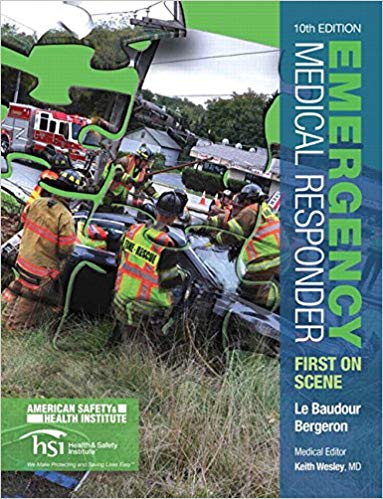
Emergency Medical Responder First on Scene 10th Edition by Chris Le Baudour, David Bergeron, Keith Wesley ISBN 0133943305 9780133943306


Original price was: $50.00.$35.00Current price is: $35.00.
Emergency Medical Responder First on Scene 10th Edition by Chris Le Baudour, David Bergeron, Keith Wesley – Ebook PDF Instant Download/Delivery: 0133943305, 9780133943306
Full download Emergency Medical Responder First on Scene 10th Edition after payment
Product details:
ISBN 10: 0133943305
ISBN 13: 9780133943306
Author: Chris Le Baudour, David Bergeron, Keith Wesley
Emergency Medical Responder First on Scene 10th Table of contents:
1 Introduction to EMS Systems
Objectives
Cognitive
Psychomotor
Affective
The EMS System
Objectives
Objectives
EMS Models
Objectives
Scope of Practice
Activating the EMS System
In-Hospital Care System
Objective
Medical Direction
The Emergency Medical Responder
Emergency Medical Responders
Roles and Responsibilities
Personal Safety
Patient-Related Duties
Patient-Related Duties
Traits
Objective
Skills
Objectives
Equipment, Tools, and Supplies
Continuous Quality Improvement
The Role of the Public Health System
Objectives
Disaster Assistance
Objectives
The Role of Research in EMS
Advances in Technology
1 REVIEW
Summary
2 Legal and Ethical Principles of Emergency Care
Objectives
Cognitive
Psychomotor
Affective
Legal Duties
Objective
Standard of Care
Scope of Practice
Objective
Ethical Responsibilities
Consent
Objective
Capacity
Competence
Expressed and Informed Consent
Implied Consent
Emancipated Minor
Refusal of Care
Objectives
Documenting a Refusal of Care
Advance Directives
Objectives
Do Not Resuscitate (DNR) Order
Objective
Negligence
Objective
Abandonment
Confidentiality
Objective
Reportable Events
Objective
Special Situations
Organ Donors
Medical Identification Devices
Crime Scenes
Objective
2 REVIEW
Summary
3 Wellness and Safety of the Emergency Medical Responder
Objectives
Cognitive
Psychomotor
Affective
Personal Well-Being
Objectives
Immunizations
Objectives
Standard Precautions
Body Substance Isolation (BSI) Precautions
Routes of Exposure
Objective
Managing Risk
Objective
Proper Removal of Gloves
Objective
Bloodborne and Airborne Pathogens
Objectives
Employee Responsibilities
Following an Exposure
Scene Safety
Hazardous Materials Incidents
Rescue Operations
Crime Scenes and Acts of Violence
Emotional Aspects of Emergency Medical Care
Emergency Medical Responders and Stress
Another Side of Personal Safety
Causes of Stress
Objectives
Burnout
Signs and Symptoms of Stress
Objective
Death and Dying
Objective
Dealing with Stress
Objectives
Lifestyle Changes
Critical Incident Stress Management
3 REVIEW
Summary
4 Introduction to Medical Terminology, Human Anatomy, and Lifespan Development
Objectives
Cognitive
Psychomotor
Affective
Medical Terminology
Objective
Positional and Directional Terms
Objective
Overview of the Human Body
Regions of the Body
Objectives
Body Cavities
Abdominal Quadrants
Body Systems
Objective
The Respiratory System
The Respiratory System
Cardiovascular System
Objective
Musculoskeletal System
Objective
The Skeletal System
Nervous System
Objective
The Muscular System
The Nervous System
Digestive System
Objectives
Reproductive System
The Digestive System
The Male Reproductive System
THE FEMALE REPRODUCTIVE SYSTEM
The Urinary System
Objectives
Integumentary System
Endocrine System
Objective
The Urinary System
The Integumentary System
Lifespan Development
Objective
The Endocrine System
Developmental Characteristics
Neonates and Infants (Birth up to 1 Year)
Toddlers (1–3 Years)
Preschoolers (4–5 Years)
School-Age Children (6–12 Years)
Adolescents (13–17 Years)
Early Adulthood (18–40 Years Old)
Middle Adulthood (40–60 Years)
Late Adulthood (60 to the End of Life)
4 Review
Summary
Take Action “WHERE DO I HURT?”
Virtual Anatomy Tour
First on Scene Run Review
Quick Quiz
5 Introduction to Pathophysiology
Objectives
Cognitive
Affective
Understanding Pathophysiology
Objectives
Cardiopulmonary System and Perfusion
Hypoperfusion and Shock
Aerobic and Anaerobic Metabolism
Objective
The Respiratory System
Objective
Respiratory System Dysfunction
Disruption of Respiratory Control
Disruption of Pressure
Disruption of Lung Tissue
Respiratory System Compensation
The Cardiovascular System
The Blood
Blood Vessels
The Heart
Objective
Objective
Cardiovascular System Compensation
Objective
Pediatric Compensation
5 REVIEW
Summary
Take Action Ask About Diabetes
First on Scene Run Review
Quick Quiz
6 Principles of Lifting, Moving, and Positioning of Patients
Objectives
Cognitive
Psychomotor
Affective
Principles of Moving Patients Safely
Body Mechanics
Objectives
Power Lift
When to Move a Patient
Emergent Moves
Drags
Emergent Moves—One-Rescuer Drags
Standard Moves
Objective
Direct Ground Lift
Direct Ground Lift
Extremity Lift
Extremity Lift
Direct Carry Method
Direct Carry
Draw Sheet Method
Equipment For Transporting Patients
Objective
Wheeled Stretchers
Stretchers
Backboards
Patient Positioning
Objective
Recovery Position
Placing the Patient in the Recovery Position
Objective
Fowler’s and Semi-Fowler’s Positions
Shock Position
Log Roll
Log Roll of a Patient
Lift-and-Slide Technique
Lift-and-Slide Onto Long Board
Restraining Patients
Types of Restraints
Objective
Patient Restraint
Positional Asphyxia
Objective
Restraint Injuries
6 REVIEW
Summary
7 Principles of Effective Communication
Objectives
Cognitive
Psychomotor
Affective
What is Communication?
Types of Communication
Objective
The Communication Process
Objective
Transmitting the Message
Objective
Barriers to Communication
Strategies for Effective Communication
Objective
Interpersonal Communication
Therapeutic Communication
Objective
Strategies for Successful Interviewing
Objective
Objective
Cultural Considerations
Translation Services
Patients with Disabilities
Transfer of Care
Objective
Radio Communications
Objectives
7 REVIEW
Summary
8 Principles of Effective Documentation
Objectives
Cognitive
Psychomotor
Affective
Patient Care Reports
Objective
Elements of the PCR
Objective
Minimum Data Set
Objectives
The Narrative
Objective Information
Subjective Information
Sample Narrative
Correcting Errors
Objective
Methods of Documentation
8 REVIEW
Summary
9 Principles of Airway Management and Ventilation
Objectives
Cognitive
Psychomotor
Affective
Breathing and Ventilation
How Breathing Works
Objective
Objectives
How We Breathe
Respiratory System Anatomy
Ventilation Cycle
An Open and Clear Airway
Signs of Normal Breathing
Signs of Abnormal Breathing
Objective
Rescue Breathing
Opening the Airway
Repositioning the Head
Head-Tilt/Chin-Lift Maneuver
Objective
Jaw-Thrust Maneuver
Barrier Devices
Mouth-to-Mask Ventilation
Objective
Mouth-to-Shield Ventilation
Objective
Special Patients
Objective
Infants and Children
Terminally Ill Patients
Stomas
Trauma Patients
Air in the Stomach and Vomiting
Airway Obstruction
Causes of Airway Obstruction
Objectives
Signs of Partial Airway Obstruction
Objective
Signs of Complete Airway Obstruction
Clearing a Foreign Body Airway Obstruction
Responsive Adult or Child Patient
Abdominal Thrusts
Unresponsive Adult or Child
Objective
Responsive Infant
Unresponsive Infant
Care for the Unresponsive Choking Infant
Obese and Pregnant Patients
Finger Sweeps
Aids to Airway Management
Oropharyngeal Airways
Objective
Measuring the Oropharyngeal Airway
Inserting the Oropharyngeal Airway
Inserting an Oropharyngeal Airway
Alternative Insertion Methods
Infants and Children
Nasopharyngeal Airways
Objective
Measuring the Nasopharyngeal Airway
Inserting the Nasopharyngeal Airway
Inserting a Nasopharyngeal Airway
Bag-Mask Ventilation
Two-Rescuer Bag-Mask Ventilation
Two-Rescuer Bag-Mask Ventilation
One-Rescuer Bag-Mask Ventilation
One-Rescuer Bag-Mask Ventilation
Alternative Method
Objectives
Suction Devices
Types of Suction Devices
General Guidelines for Suctioning
Measuring a Suction Catheter
Oral Suctioning
Nasal Suctioning
Suctioning Techniques
Suctioning
9 REVIEW
Summary
10 Principles of Oxygen Therapy
Objectives
Cognitive
Psychomotor
Affective
Importance of Oxygen
Objectives
Oxygen Saturation
Hazards of Oxygen Cylinders
Oxygen Therapy Equipment
Oxygen Cylinders
Objective
Oxygen System Safety
Objectives
Oxygen Regulators
Objective
Connecting the Regulator
Humidifiers
Oxygen Delivery Devices
Nasal Cannula
Objectives
Nonrebreather Mask
Venturi Mask
Blow-by Delivery
Administering Oxygen
Administration of Oxygen to a Nonbreathing Patient
Pocket Mask with Oxygen Inlet
Bag-Mask Device
Demand Valve Device
General Guidelines for Oxygen Therapy
10 REVIEW
Summary
11 Principles of Resuscitation
Objectives
Cognitive
Psychomotor
Affective
The Chain of Survival
Objective
Circulation and CPR
Cardiopulmonary Resuscitation
CPR—How It Works
Objectives
When to Begin CPR
Objective
Locating the CPR Compression Site
External Chest Compressions
Providing Rescue Breaths During CPR
Rates and Ratios of Compressions and Ventilations
Effective CPR
Objective
Adult and Child CPR
One-Rescuer CPR
Objective
Two-Rescuer CPR
Changing from One- to Two-Rescuer CPR
Compressions and Ventilations
CPR Procedure
Changing Positions
Activating the EMS System
Infant and Neonatal CPR
Positioning the Infant
Opening the Airway
Assessing Breathing
Checking for a Pulse
Infant CPR Techniques
Ventilations
External Chest Compressions
Infant CPR Rates and Ratios
Possible Complications
Special CPR Situations
Moving the Patient
Trauma
Hypothermia
Stopping CPR
Automated External Defibrillation
Objective
External Defibrillation
Using AEDs
Objective
Basic Warnings
When to Place an AED
Attaching the Defibrillator
Operating the Semi-Automated Defibrillator
Potential Problems
Quality Assurance
11 REVIEW
Summary
12 Obtaining a Medical History and Vital Signs
Objectives
Cognitive
Psychomotor
Affective
Obtaining a Medical History
Objectives
Interviewing Your Patient
Objective
Objective
Additional Sources of Information
Vital Signs
Objectives
An Overview
Perfusion
Baseline Vital Signs
Trending
Objective
Mental Status
Respirations
Pulse
Adults
Objective
Infants
Blood Pressure
Determining Blood Pressure by Auscultation
Determining Blood Pressure by Palpation
Skin Signs
Capillary Refill
Pupils
Size and Shape
Equality
Reactivity to Light
12 REVIEW
Summary
13 Principles of Patient Assessment
Objectives
Cognitive
Psychomotor
Affective
Patient Assessment
Scene Safety
Immediate Life Threats
The Stable versus Unstable Patient
Medical Patients
Trauma Patients
Scene Size-Up
Objectives
Scene Size-Up
Trauma Patient
Medical Patient
Objectives
BSI Precautions
Scene Safety
Mechanism of Injury or Nature of Illness
Objective
Number of Patients and Need for Additional Resources
Arrival at the Patient’s Side
Primary Assessment
Objectives
The General Impression
Mental Status
Airway and Breathing
Circulation
Check for a Pulse
Check for Serious Bleeding
Patient Priority
Special Considerations for Infants and Children
Objectives
Alerting Dispatch
Objectives
Secondary Assessment
The Trauma Patient
Objective
The Medical Patient
Patient History
Interview the Patient
Objective
Interview Bystanders
Locate Medical Identification Jewelry
Vital Signs
The Physical Exam
Objective
Rapid Secondary Assessment—Trauma Patient with Significant MOI
Secondary Assessment—Trauma Patient with No Significant MOI
Rapid Secondary Assessment—Unresponsive Medical Patient
Secondary Assessment—Stable Medical Patient
Completing the Exam
Reassessment
Objective
13 REVIEW
Summary
14 Caring for Cardiac Emergencies
Objectives
Cognitive
Psychomotor
Affective
Normal Heart Function
Objective
Cardiac Compromise
Objectives
Angina Pectoris
Myocardial Infarction
Heart Failure
Emergency Care for Cardiac Compromise
Objectives
Assessment
Oxygen Saturation
Emergency Care
Medications
Nitroglycerin
Medication Name
Indications
Contraindications
Medication Form
Dosage
Steps for Assisting the Patient
Actions
Side Effects
Reassessment Strategies
Aspirin
Medication Name
Indications
Contraindications
Medication Form
Dosage
Steps for Assisting the Patient
Actions
Side Effects
Reassessment Strategies
14 REVIEW
Summary
15 Caring for Respiratory Emergencies
Objectives
Cognitive
Psychomotor
Affective
Overview of Respiratory Anatomy
Respiratory Compromise
Objective
Respiratory Compromise
Signs and Symptoms of Respiratory Compromise
Emergency Care
Chronic Obstructive Pulmonary Disease (COPD)
Signs and Symptoms
Emergency Care
Respiratory Distress
Adequate Breathing
Inadequate (Abnormal) Breathing
Chest Trauma
Pulmonary Edema
Pneumonia
Signs and Symptoms of Respiratory Compromise
Objectives
Chronic Obstructive Pulmonary Disease
Bronchitis
Emphysema
Asthma
Metered-Dose Inhaler
Medication Name
Indications
Contraindications
Medication Form
Dosage
Steps for Administration
Actions
Side Effects
Reassessment Strategies
Hyperventilation Syndrome
Pulse Oximetry
Objective
Emergency Care for Respiratory Compromise
Positive Pressure Ventilations
Metered-Dose Inhalers
15 REVIEW
Summary
16 Caring for Common Medical Emergencies
Objectives
Cognitive
Psychomotor
Affective
Medical Emergencies
Signs and Symptoms of a General Medical Complaint
Assessment
Altered Mental Status
Evaluating Mental Status
Objective
Glasgow Coma Scale
Signs and Symptoms of Altered Mental Status
Objective
Assessing the Patient with an Altered Mental Status
Objective
Objectives
Seizures
Prolonged Seizures
Objective
Stroke
Altered Mental Status—Stroke: Cerebrovascular Accident
Cerebral Thrombosis (Clot)
Cerebral Hemorrhage (Rupture)
Signs and Symptoms of Stroke
Emergency Care of Stroke Patients
Objective
Diabetic Emergencies
Objectives
Diabetic Emergencies
Hyperglycemia
Causes
Signs and Symptoms
Emergency Care
Hypoglycemia (Insulin Shock)
Causes of Hypoglycemia
Signs and Symptoms
Emergency Care
Hyperglycemia
Hypoglycemia
Objective
Poisoning and Overdose
Routes of Exposure
Objective
Poison Control Centers
Ingested Poisons
Objectives
Inhaled Poisons
Objective
Absorbed Poisons
Injected Poisons
Snakebites
Alcohol Intoxication/Abuse
Drug Abuse/Overdose
Generalized Infections (Sepsis)
Objectives
Allergic Reactions
Objective
Objective
Kidney (Renal) Failure
Objectives
Objectives
Behavioral Emergencies
Assessment and Emergency Care
Assessing the Potential for Violence
Restraining Patients
16 REVIEW
Summary
17 Caring for Environmental Emergencies
Objectives
Cognitive
Psychomotor
Affective
Temperature and the Body
Objective
Heat Emergencies
Objective
Objective
Heat-Related Emergencies
Heat Cramps/Exhaustion
Signs and Symptoms
Emergency Care
Heat Stroke
Signs and Symptoms
Emergency Care
Heat Cramps
Heat Exhaustion
Objective
Heat Stroke
Cold Emergencies
Hypothermia
Objectives
Localized Cold Injury
Cold-Related Emergencies
Early, Superficial
Late, Deep
Rewarming
Bites and Stings
Assessment of and Emergency Care for Bites and Stings
Objectives
Anaphylactic Shock
Snakebites
Jellyfish Stings
Water-Related Incidents
Objectives
Reaching the Victim
Care for the Patient
Patient with No Neck or Spine Injuries
Patient with Neck or Spine Injuries
Water Rescue
Submersion Injuries
Objectives
Ice-Related Incidents
Objective
17 REVIEW
Summary
18 Caring for Soft Tissue Injuries and Bleeding
Objectives
Cognitive
Psychomotor
Affective
Heart, Blood, and Blood Vessels
The Heart
Blood
Blood Vessels
Bleeding
Objective
Objective
External Bleeding
Evaluating External Bleeding
Objective
Controlling External Bleeding
Direct Pressure
Elevation
Tourniquet
Hemostatic Dressings and Agents
Dressing and Bandaging
Objectives
Internal Bleeding
Objective
Detecting Internal Bleeding
Management of Internal Bleeding
Objective
Multisystem Trauma
Objective
Soft Tissue Injuries
Types of Injuries
Closed Wounds
Open Wounds
Objective
Emergency Care of Open Wounds
Objective
Emergency Care of Specific Injuries
Puncture Wounds
Avulsions and Amputations
Objective
Protruding Organs
Scalp Injuries
Facial Wounds
Impaled Objects
Objective
Eye Injuries
Objective
Ear Injuries
Nose Injuries
Objective
Injury to the Mouth
Neck Wounds
Injury to the Genitalia
Burns
Objective
Classification of Burns
Severity of Burns
Objective
Emergency Care of Burns
Objective
Thermal Burns
Assessment and Care of Thermal Burns
Chemical Burns
Objective
Electrical Burns
Infants and Children
18 REVIEW
Summary
19 Recognition and Care of Shock
Objectives
Cognitive
Psychomotor
Affective
Perfusion and Shock
Objective
Categories of Shock
Types of Shock
Objective
The Body’s Response During Shock
Signs and Symptoms of Shock
Objective
Mechanism of Injury and Shock
Objective
Caring for Shock
Fainting (Syncope)
19 REVIEW
Summary
20 Caring for Muscle and Bone Injuries
Objectives
Cognitive
Psychomotor
Affective
The Musculoskeletal System
Objectives
Objective
Appendicular Skeleton
Causes of Extremity Injuries
Objective
Types of Injuries
Objectives
Select Mechanisms of Extremity Injury
Objective
Signs and Symptoms of Extremity Injuries
Objective
Patient Assessment
Managing Skeletal Injuries
Objectives
Splinting
Why Splint?
General Rules for Splinting
Splinting an Upper Extremity
Manual Stabilization
Objective
Managing Angulated Injuries
Objective
Types of Splints
Soft Splints
Sling and Swathe
Rigid Splints
Commercial Splints
Inflatable Splints
Improvised Splints
Examples of sam® Splint Applications
Management of Specific Extremity Injuries
Upper Extremity Injuries
Injuries to the Shoulder
Examples of Upper Extremity Splints
Injuries to the Upper Arm
Injuries to the Elbow
Immobilizing a Bent Elbow
Injuries to the Forearm, Wrist, and Hand
Immobilizing a Forearm
Injuries to the Fingers
Lower Extremity Injuries
Objective
Injuries to the Pelvic Girdle
Application of the Sam Sling® Pelvic Splint
Injuries to the Upper Leg
Injuries to the Knee
Immobilizing a Bent Knee
Injuries to the Lower Leg
Injuries to the Ankle or Foot
Immobilizing the Lower Leg
20 REVIEW
Summary
21 Caring for Head and Spinal Injuries
Objectives
Cognitive
Psychomotor
Affective
Anatomy of the Head and Spine
Objectives
Mechanisms of Injury
Objective
Mechanisms of Spine Injury
Injuries to the Head and Face
Injuries to the Head
Objective
Injuries to the Face
Signs and Symptoms of Head (Brain) Injury
Objective
Caring for Head Injuries
Objective
Caring for Injuries to the Face
Injuries to the Spine
Signs and Symptoms of Spinal Injury
Objective
Assessing the Patient with a Suspected Spinal Injury
Caring for a Suspected Spinal Injury
Objectives
Manual Stabilization of Head and Neck
Manual Stabilization
Rules for Care of Spinal Injury
Cervical Collars
Verifying the Fit of a Cervical Collar
Applying a Cervical Collar to a Seated Patient
Applying a Cervical Collar to a Supine Patient
Alternative Method
Helmet Removal
Helmet Removal
21 REVIEW
Summary
First on Scene Run Review
Quick Quiz
22 Caring for Chest and Abdominal Emergencies
Objectives
Cognitive
Psychomotor
Affective
Anatomy of the Chest
Objective
Chest Injuries
Objectives
Closed Chest Injuries
Pneumothorax
Flail Chest
Assessment of the Patient with a Chest Injury
Objectives
Open Chest Injuries
Objectives
Open Pneumothorax
Caring for an Open Chest Injury
Impaled Chest Wounds
Abdominal Emergencies
Objective
Anatomy of the Abdomen and Pelvis
Generalized Abdominal Pain
Signs and Symptoms of Acute Abdominal Pain
Assessing the Patient with Acute Abdominal Pain
Objectives
Abdominal Injuries
Caring for a Closed Abdominal Injury
Open Abdominal Injuries
Objective
Abdominal Evisceration
Dressing an Abdominal Evisceration
22 REVIEW
Summary
23 Care During Pregnancy and Childbirth
Objectives
Cognitive
Psychomotor
Affective
Understanding Childbirth
Objectives
Anatomy of Pregnancy
Stages of Labor
Objective
Objective
Supplies and Materials
Delivery
Preparing for Delivery
Objective
Normal Delivery
Objective
Caring for the Baby
Objective
Caring for the Nonbreathing Newborn
Umbilical Cord
Caring for the Mother
Objective
Delivering the Placenta
Controlling Vaginal Bleeding After Delivery
Providing Comfort to the Mother
Complications and Emergencies
Predelivery Emergencies
Objectives
Prebirth Bleeding
Miscarriage
Ectopic Pregnancy
Complications During Delivery
Objective
Meconium Staining
Breech Birth
Limb Presentation
Prolapsed Cord
Multiple Births
Preterm Births
Stillborn Deliveries
Objectives
Other Emergencies
Supine Hypotensive Syndrome
Preeclampsia and Eclampsia
Trauma
Objective
Vaginal Bleeding
Objective
Sexual Assault
23 REVIEW
Summary
24 Caring for Infants and Children
Objectives
Cognitive
Psychomotor
Affective
Caring for the Pediatric Patient
Your Approach to Infants and Children
Age, Size, and Response
Special Considerations
Head and Neck
The Airway and Respiratory System
Chest and Abdomen
Body Surface Area
Blood Volume
Vital Signs
Assessment of Infants and Children
Scene Size-up
Primary Assessment
General Impression
Pediatric Assessment Triangle
Objectives
Managing the Airway
Opening the Airway
Clearing and Maintaining the Airway
Providing Oxygen
Secondary Assessment
Physical Exam
Reassessment
Objectives
Managing Specific Medical Emergencies
Respiratory Emergencies
Airway Obstruction
Difficulty Breathing
Apparent Life Threatening Event (ALTE)
Respiratory Infections
Seizures
Altered Mental Status
Shock
Diarrhea and Vomiting
Fever
Hypothermia
Poisoning
Drowning
Objectives
Sudden Unexplained Infant Death (SUID) and Sudden Infant Death Syndrome (SIDS)
Managing Trauma Emergencies
General Care of the Child Trauma Patient
Burns
Objectives
Suspected Abuse and Neglect
Objectives
Psychological Abuse
Neglect
Sexual Abuse
Physical Abuse
Shaken-Baby Syndrome
Safety Seats
Rapid Extrication from a Car Safety Seat
24 REVIEW
Summary
25 Special Considerations for the Geriatric Patient
Objectives
Cognitive
Psychomotor
Affective
Understanding Geriatric Patients
Characteristics of Geriatric Patients
Multiple Illnesses
Objective
Multiple Medications
Mobility
Difficulties with Communication
Incontinence
Confusion or Altered Mental Status
Age-Related Physical Changes
Objective
Respiratory System
Cardiovascular System
Nervous System
Musculoskeletal System
Integumentary System (Skin)
Assessment of Geriatric Patients
Objective
Scene Size-up
Primary Assessment
Obtaining a History
The Physical Exam
Objectives
Common Medical Problems of Geriatric Patients
Illnesses
Injuries
Elder Abuse and Neglect
Objectives
Suicide in Older Adults
Objective
Advocate for the Older Adult Population
25 REVIEW
Summary
26 Introduction to EMS Operations and Hazardous Response
Objectives
Cognitive
Psychomotor
Affective
Safety First
The Call
Objectives
Phase 1: Preparation
Phase 2: The Dispatch
Phase 3: En Route to the Scene
Objectives
Phase 4: At the Scene
Phase 5: Transfer of Care
Phase 6: Postcall Preparation
Motor Vehicle Collisions
Objectives
Upright Vehicle
Objectives
Overturned Vehicle
Vehicle on Its Side
Vehicle Access
Unlocking Vehicle Doors
Unlocking Vehicle Doors
Gaining Access Through Vehicle Windows
Gaining Access Through a Vehicle Window
Patients Pinned Beneath Vehicles
Patients Trapped in Wreckage
Electric/Hybrid Vehicles
Building Access
Objective
Hazards
Fire
Objective
Natural Gas
Objective
Objective
Electrical Wires and Aboveground Transformers
Objectives
Hazardous Materials
Emergency Medical Responder Responsibilities
Recognition and Identification
Notification and Information Sharing
Objective
Isolation and Protection
Decontamination of Hazardous Materials
Managing Patients
Radiation Incidents
26 REVIEW
Summary
27 Introduction to Multiple-Casualty Incidents, the Incident Command System, and Triage
Objectives
Cognitive
Psychomotor
Affective
Multiple-Casualty Incidents
Objectives
Incident Command System
Objective
National Incident Management System
The Medical Branch
Objective
Triage Group
Treatment Group
Transport Group
Medical Staging
Triage
Triage Priorities
Objectives
Triage Process
START Triage System
Objective
JumpSTART Pediatric Triage System
Objective
Alternative Triage Systems
Objective
27 REVIEW
Summary
Appendix 1 Patient Monitoring Devices
Objectives
Cognitive
Psychomotor
Affective
Cardiac Monitor
Pulse Oximeter
Glucometer
End-Tidal Carbon Dioxide Detector
Limitations of Monitoring Devices
Appendix 2 Principles of Pharmacology
Objectives
Cognitive
Psychomotor
Affective
Medications
Indications, Contraindications, Actions, and Side Effects
Rules for Administering Medications
Routes for Administering Medications
Medications Carried on the Emergency Medical Responder Unit
Activated Charcoal
Activated Charcoal
Medication Name
Indications
Contraindications
Medication Form
Dosage
Steps for Administration
Actions
Side Effects
Reassessment Strategies
Oral Glucose
Oral Glucose
Medication Name
Indications
Contraindications
Medication Form
Dosage
Steps for Administration
Actions
Side Effects
Reassessment Strategies
Oxygen
Prescription Medications
Metered-Dose Inhalers
Metered-Dose Inhaler
Medication Name
Indications
Contraindications
Medication Form
Dosage
Steps for Administration
Actions
Side Effects
Reassessment Strategies
Naloxone (Narcan)
Naloxone (Narcan)
Medication Name
Indications
Contraindications
Medication Form
Dosage
Steps for Administration
Actions
Side Effects
Reassessment Strategies
Nitroglycerin
Nitroglycerin
Medication Name
Indications
Contraindications
Medication Form
Dosage
Steps for Assisting Patient
Actions
Side Effects
Reassessment Strategies
Epinephrine Autoinjectors
Epinephrine Autoinjector
Medication Name
Indications
Contraindications
Medication Form
Dosage
Steps for Assisting Patient
Actions
Side Effects
Reassessment Strategies
Nerve Agent Autoinjectors
Appendix 3 Air Medical Transport Operations
Objectives
Cognitive
Psychomotor
Affective
Crew Configurations
Air Medical Resources
Rotor-Wing Resources
Fixed-Wing Resources
Requesting Air Medical Resources
Visual Flight Rules
Instrument Flight Rules
What Happens After a Request Is Made?
The Landing Zone
Selecting an Appropriate Landing Zone
Safety Around the Aircraft
Appendix 4 Introduction to Terrorism Response and Weapons of Mass Destruction
Objectives
Cognitive
Psychomotor
Affective
Incidents Involving Nuclear/Radiological Agents
Incidents Involving Biological Agents
Incidents Involving Chemical Agents
Nerve agents
Vesicant Agents
Cyanogens
Pulmonary Agents
Riot-Control Agents
Role of the Emergency Medical Responder
Decontamination
Answer Key
Chapter 1
Quick Quiz
Rationale for First on Scene Run Review
Chapter 2
Quick Quiz
Rationale for First on Scene Run Review
Chapter 3
Quick Quiz
Rationale for First on Scene Run Review
Chapter 4
Quick Quiz
Rationale for First on Scene Run Review
Chapter 5
Quick Quiz
Rationale for First on Scene Run Review
Chapter 6
Quick Quiz
Rationale for First on Scene Run Review
Chapter 7
Quick Quiz
Rationale for First on Scene Run Review
Chapter 8
Quick Quiz
Rationale for First on Scene Run Review
Chapter 9
Quick Quiz
Rationale for First on Scene Run Review
Chapter 10
Quick Quiz
First on Scene Run Review Rationale
Chapter 11
Quick Quiz
Rationale for First on Scene Run Review
Chapter 12
Quick Quiz
Rationale for First on Scene Run Review
Chapter 13
Quick Quiz
Rationale for First on Scene Run Review
Chapter 14
Quick Quiz
Rationale for First on Scene Run Review
Chapter 15
Quick Quiz
Rationale for First on Scene Run Review
Chapter 16
Quick Quiz
Rationale for First on Scene Run Review
Chapter 17
Quick Quiz
Rationale for First on Scene Run Review
Chapter 18
Quick Quiz
Rationale for First on Scene Run Review
Chapter 19
Quick Quiz
Rationale for First on Scene Run Review
Chapter 20
Quick Quiz
Rationale for First on Scene Run Review
Chapter 21
Quick Quiz
Rationale for First on Scene Run Review
Chapter 22
Quick Quiz
Rationale for First on Scene Run Review
Chapter 23
Quick Quiz
Rationale for First on Scene Run Review
Chapter 24
Quick Quiz
Rationale for First on Scene Run Review
Chapter 25
Quick Quiz
Rationale for First on Scene Run Review
Chapter 26
Quick Quiz
Rationale for First on Scene Run Review
Chapter 27
Quick Quiz
Rationale for First on Scene Run Review
People also search for Emergency Medical Responder First on Scene 10th:
emergency medical responder first on scene
emergency medical responder first on scene 11th edition
emergency medical responder first on scene 12th edition
emergency medical responder first on scene 11th edition pdf
borrow emergency medical responder first on scene
Tags: Chris Le Baudour, David Bergeron, Keith Wesley, Emergency Medical