

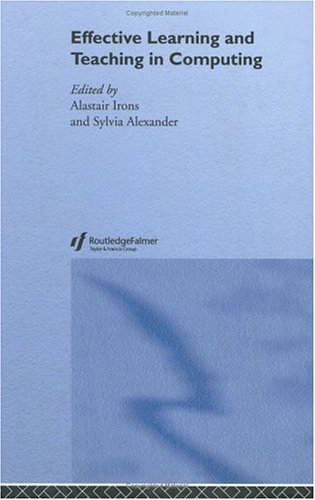
Effective Learning and Teaching in Computing 1st Edition by Alastair Irons, Sylvia Alexander ISBN 0415335000 9780415335003
Original price was: $50.00.$35.00Current price is: $35.00.
Effective Learning and Teaching in Computing 1st Edition by Alastair Irons, Sylvia Alexander – Ebook PDF Instant Download/Delivery: 0415335000, 9780415335003
Full download Effective Learning and Teaching in Computing 1st Edition after payment
Product details:
ISBN 10: 0415335000
ISBN 13: 9780415335003
Author: Alastair Irons, Sylvia Alexander
Effective Learning and Teaching in Computing 1st Table of contents:
1: Current Issues
-
Introduction
-
Pre-entry
-
Workload – reading for a degree
-
Curriculum issues
-
Transferable skills
-
Pedagogy
-
Learning resources
-
Increasing participation
-
Widening participation
-
HE in FE
-
Accessibility/disability
-
Female entrants
-
Developing strategies
-
Summary
-
References
Part 1: Teaching and the Support of Learning
2: Motivating Computing Students
-
Introduction
-
Understanding motivation
-
Practical ideas for motivating computing students
-
Links with industry
-
The top ten tips
-
References
3: The Role of Practical Skills in Computing Education
-
Introduction
-
A taxonomy of programming courses
-
The philosophy of skills learning
-
Conclusion
-
References
4: Learning and Teaching with Computers
-
Introduction
-
Online lectures
-
Structure of lectures
-
Static display of content
-
Creating the aural fragments
-
Constructing the lecture
-
Disability considerations
-
Navigation
-
Summary
-
References
5: Accessibility, Disability and Computing
-
Introduction
-
Teaching students to think about accessibility
-
Accessibility defined
-
Support for accessibility
-
Disabled users as end users
-
Accessibility and the teaching and learning environment
-
Case study: Division of Applied Computing, University of Dundee
-
Introduction
-
Accessible design in the curriculum
-
Accessibility of the teaching and learning environment
-
Conclusion
-
-
References
6: Variations on a Theme: Divisions and Union in a Maturing Discipline
-
Introduction
-
Computing curricula developments
-
Continuous curriculum and programme development
-
Looking ahead
-
References
Part 2: Learning Activities for Computing Students
7: Groupwork for Computing Students
-
Achievement of educational goals
-
Fostering quality teamwork
-
Fair assessment for all
-
Final conclusions
-
References
8: Automating the Process of Skills-Based Assessment
-
Introduction
-
Computer-assisted assessment (CAA)
-
Assessment of programming skills
-
Issues
-
Generic products
-
Case study 1: CourseMarker
-
Case study 2: BOSS
-
Conclusion
-
Further information
-
Acknowledgements
-
References
9: Motivation and Electronic Assessment
-
Introduction
-
Assessment, motivation and learning
-
Innovative assessment
-
Computer-assisted assessment (CAA)
-
Group assessment
-
Peer assessment
-
Self-assessment
-
Students setting assessments
-
Conclusion
-
References
10: Reducing Plagiarism in Computing
-
Introduction
-
What is plagiarism?
-
Why is plagiarism an issue?
-
Why do students plagiarize?
-
How big an issue is it?
-
How to tackle plagiarism
-
Summary
-
References
Part 3: Developing Effective Learning Environments
11: Evaluating What Works in Distance Learning
-
Introduction
-
Distance learning
-
Evaluation approaches
-
The computing course
-
Evaluation
-
Lessons learnt
-
Examples of evaluation data
-
Use of online questionnaires
-
Conclusions
-
Acknowledgements
-
References
12: Industrial Input to the Computing Curriculum
-
Some industry beliefs about software engineering graduates
-
Software engineering graduates will not need further training to perform like experienced software engineers
-
Software engineering programmes will correspond to specific corporate requirements
-
Studies of industry/university collaboration
-
The working group on software engineering education and training
-
Investigation into re-education collaborations
-
The approach
-
Successful collaboration construction and execution
-
Common characteristics
-
Dissimilar characteristics
-
Benefits
-
Industry viewpoint
-
Other sources of industrial input
-
Acknowledgements
-
References
13: Computing Education and Entrepreneurial Spirit
-
Background
-
The changing business environment
-
What is entrepreneurship?
-
Entrepreneurship and HE
-
Teaching entrepreneurship
-
Team approach
-
Deliverables and assessment
-
Incubation
-
Lifelong learning
-
References
14: Higher Education, IT and Industry
-
Introduction
-
Historical view
-
Masters conversion courses
-
Employment
-
Gender
-
Answering our critics
-
Graduates’ views
-
Inside our universities
-
Support to lobby for
-
Possible action
-
Summary
-
References
Part 4: Reflective Practice and Personal Development
15: Continuing Professional Development for the Computing Academic: Wheeling in the Trojan Horse
-
Introduction
-
Motivations
-
Institutional perspectives
-
Personal perspectives
-
Student experience
-
Barriers
-
Objectives
-
Awareness
-
Understanding
-
Use
-
Conclusion
-
Thanks and acknowledgements
-
Further reading
16: Improving the Quality of Teaching in Computing
-
Introduction
-
What is quality?
-
Published quality documents
-
UK computing benchmark
-
UK qualification frameworks
-
Computing Curricula 2001
-
Nature of learning and teaching
-
Towards the independent learner
-
Assessment issues
-
Some important observations
-
Nature of improvement
-
Concluding comments
-
References
17: Technology and the Reflective Practitioner
-
Introduction
-
Schön and the reflective practitioner: teaching, action research and rigorous knowledge
-
The crisis in the teaching and learning of programming
-
Technology and reflective practice in computing
-
Developing rigorous action research: barriers and opportunities
People also search for Effective Learning and Teaching in Computing 1st:
effective teaching and learning practices
effectiveness of computer-based learning
effective use of technology in classroom
effective technology in the classroom
an effective learning environment
Tags: Alastair Irons, Sylvia Alexander, Effective Learning, Computing