

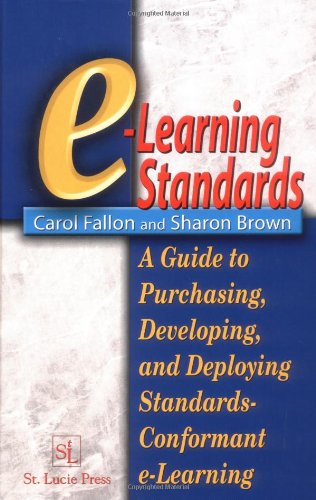
E Learning Standards A Guide to Purchasing Developing and Deploying Standards Conformant E Learning 1st Edition by Carol Fallon, Sharon Brown ISBN 1574443453 9781574443455

Original price was: $50.00.$35.00Current price is: $35.00.
E Learning Standards A Guide to Purchasing Developing and Deploying Standards Conformant E Learning 1st Edition by Carol Fallon, Sharon Brown – Ebook PDF Instant Download/Delivery: 1574443453, 9781574443455
Full download E Learning Standards A Guide to Purchasing Developing and Deploying Standards Conformant E Learning 1st Edition after payment
Product details:
ISBN 10: 1574443453
ISBN 13: 9781574443455
Author: Carol Fallon, Sharon Brown
E Learning Standards A Guide to Purchasing Developing and Deploying Standards Conformant E Learning 1st Table of contents:
Part 1: A Guide for Decision Makers
1. The Vital Role of Standards in E-Learning Environments
-
Introduction
-
What Is This Thing Called E-Learning?
-
Types of E-Learning
-
The Components of E-Learning
-
Conceptual E-Learning Components
-
Learning Objects — The Conceptual Building Blocks of E-Learning
-
Reusability Is the Key
-
How Is Reusability Enabled?
-
Content Structures
-
Curricular Taxonomies
-
The SCORM Content Hierarchy
-
The AICC Content Hierarchy
-
Physical E-Learning Components
-
Courseware
-
Learning Management Systems
-
What Is an LMS?
-
Do I Need an LMS?
-
Learning Content Management Systems
-
Do I Need an LCMS?
-
Assessment Systems
-
Development and Authoring Tools
-
Collaboration Tools
-
Why Do E-Learning Standards Matter?
-
Standard vs. Proprietary
-
Case Studies
-
So Does My Organization Really Need Standards?
-
So What Is a Standard?
-
Understanding the Term Standards
-
The Life Cycle of a Standard
-
Specifications
-
Implementations
-
Accredited Standards
-
The Downside of Standards
-
So Are Standards Really Worth the Trouble?
-
Conclusion
-
Reference
2. The Evolution of Standards for E-Learning
-
Introduction
-
The Rise of Standards for E-Learning
-
An Overview of the Standards Bodies
-
The ADL Initiative
-
Aviation Industry CBT Committee
-
IMS Global Consortium
-
IEEE Learning Technology Standards Committee
-
Alliance of Remote Instructional Authoring & Distribution Networks for Europe
-
International Organization for Standardization / International Electrotechnical Commission, Joint Technical Committee 1, Sub-Committee 36
-
Other Standards Bodies
-
Relationships between the Standards Bodies
-
Future Directions for E-Learning Standards
-
Moving toward Accredited Standards
-
Keeping Up-To-Date
-
Conclusion
-
References
3. Which Standards? Matching Standards to E-Learning Components
-
Introduction
-
Standards for Courseware
-
Standards for Courseware Interoperability
-
Standards for Content Packaging
-
Do I Need AICC or SCORM Content Packages?
-
What About Meta-Data?
-
Certifications and Self-Tests for Courseware
-
Standards for Courseware Development Tools
-
Standards for Assessment Tools
-
Standards for Administrative Systems
-
AICC-Conformant LMSs
-
SCORM-Conformant LMSs
-
New Specification Versions and the Real World
-
What about LCMSs?
-
Assessment Systems
-
Shopping for Standards-Conformant E-Learning Components before You Start
-
Managing Vendors
-
Conclusion
4. Standards for Interoperable Data Tracking
-
Introduction
-
The Mechanics of Data Tracking
-
The Learning Object
-
The Components of Data Tracking
-
The API Specification
-
Launching an LO
-
Communication between the LO and the LMS
-
The Data Model
-
The HACP Data Exchange Specification
-
Optional Data Model Elements
-
API vs. HACP: Pros, Cons, and “Gotchas”
-
Certification and Self-Testing
-
Conclusion
-
References
5. Standards for Self-Describing Learning Objects
-
Introduction
-
Self-Description and Sharability
-
Constructing Courses from Sharable Components
-
Meta-Data — How LOs Become Self-Describing
-
XML — The Language of Meta-Data
-
Why XML?
-
An XML Primer
-
SCORM Meta-Data
-
Why Bother with Meta-Data?
-
A Simplified Example of Meta-Data
-
Required Meta-Data Elements
-
Certification and Self-Testing
-
The Downside of the Specification — Trying to Allow for Everything
-
Conclusion
-
Reference
6. Standards for Importing and Exporting Entire Courses
-
Introduction
-
Portable Courses
-
Common Course Structure Information
-
Two Specifications, Two Philosophies
-
The SCORM Content Packaging Model
-
The Structure of a Manifest
-
A Complete Content Package
-
The AICC Course Interchange Files
-
The Launching and Sequencing of LOs
-
Today’s Capabilities
-
Prerequisites
-
Completion Requirements
-
The SCORM isvisible Attribute
-
Auto-Launch Availability
-
Looking Ahead
-
Certification and Self-Testing
-
Conclusion
-
References
7. Standards for Tests and Test Questions
-
Introduction
-
Why a Separate Specification?
-
Question and Test Interoperability
-
How Is QTI Being Used Today?
-
The IMS Question and Test Interoperability Models
-
The ASI Information Model
-
The ASI Hierarchy
-
A Simple Example of an Item
-
Available Test Item Types
-
Item-Level Response Processing
-
Results Reporting
-
A Simple Example of Results Reporting
-
The Data Model
-
The Downside — Trying To Be Too Comprehensive
-
Looking Ahead
-
Establishing Conformance
-
Conclusion
-
References
Part 2: A Guide for Designers and Developers
8. Working with Standards: How to Author Standards-Based Content
-
Introduction
-
Planning Your Standards-Based Content
-
What Data Do You Want to Track?
-
Understanding What Data Your LMS Supports
-
Using Optional Data Elements
-
Testing for Optional Elements
-
When the API Is Used to Communicate with the LMS
-
When HACP Is Used to Communicate with the LMS
-
Unsupported Data Elements
-
Example of Using Unsupported Data
-
When Should Data Be Sent to the LMS?
-
Intracourse Navigation and Content Chunking
-
How Current LMSs Control Navigation
-
Content Chunking and Navigation
-
Advanced Sequencing and Navigation Features
-
Objectives Tracking
-
Prerequisites
-
Completion Requirements
-
Planning for Remediation
-
Keeping an Eye on the Future
-
Using the Specification Documents
-
SCORM Specifications
-
AICC Specification
-
IMS Specifications
-
Meta-Data Specification
-
QTI Specification
9. Creating Interoperable Learning Objects
-
Introduction
-
The API Data Exchange Method
-
Launching an LO
-
Communication between the LO and the LMS
-
The API Data Model
-
The Cross-Domain Problem
-
The HACP Data Exchange Method
-
Launching an LO
-
Communication between the LO and the LMS
-
Request Messages
-
HACP Commands
-
Response Messages
-
The Data Model
-
The HTML Communication Problem
-
Common Development Problems and Solutions
-
Standards-Friendly Authoring Tools for Interoperability
-
Conclusion
-
References
10. A Guide to Creating Meta-Data Files
-
Introduction
-
XML Concepts and Terminology
-
Elements and Attributes
-
The Well-Formed Document
-
Data Types and Vocabularies
-
Namespaces
-
Document Type Definitions and Schema — Reference Models for XML Documents
-
The SCORM Meta-Data Information Model
-
An Annotated Example — Meta-Data for a SCO
-
The Meta-Data Information Model
-
Special Data Types
-
LangString Type
-
Date Type
-
Vocabulary Type
-
Meta-Data Application Profiles
-
Oddities of the Specification
-
The XML Binding — Turning the Data Elements into XML
-
Common Development Problems and Solutions
-
Tools for Creating Meta-Data
-
Conclusion
-
References
11. A Guide to Creating Course Structure Manifests and Interchange Files
-
Introduction
-
Example Course Structure
-
SCORM Content Aggregation Packaging
-
An Annotated Example — A Manifest for Pies 101
-
The Content-Packaging Information Model
-
The AICC CIFs
-
Example: An Annotated Set of CIFs for Pies 101
-
The Course (.crs) File
-
The Descriptor (.des) File
-
The AU (.au) File
-
The Course Structure Table (.cst) File
-
The Prerequisites (.pre) File
-
The Completion Requirements (.cmp) File
-
More about Optional CIF Files
-
The Objectives Relationships (.ort) File
-
Complex Prerequisite and Completion Logic
-
Statuses and Status Categories
-
Logic Statements
-
Common Development Problem and Solution
-
Tools for Content Packaging
-
Conclusion
-
References
12. A Guide to Creating Standards-Based Test Items and Assessments
-
Introduction
-
The Assessment-Section-Item Information Model
-
The Assessment Engine
-
Response Types and Rendering Formats
-
Response Processing
-
Building an Assessment
-
Selection and Ordering
-
Outcomes Processing
-
Scoring Algorithms
-
How Outcomes Are Specified
-
The Results Reporting Information Model
-
Authoring and Presentation Tools for Items and Assessments
People also search for E Learning Standards A Guide to Purchasing Developing and Deploying Standards Conformant E Learning 1st:
e-learning standards
purchasing standards
purchasing standards procedure
a teacher’s guide to standards-based learning
a teacher’s guide to standards-based learning
Tags: Carol Fallon, Sharon Brown, E Learning, Purchasing Developing, Deploying Standards