

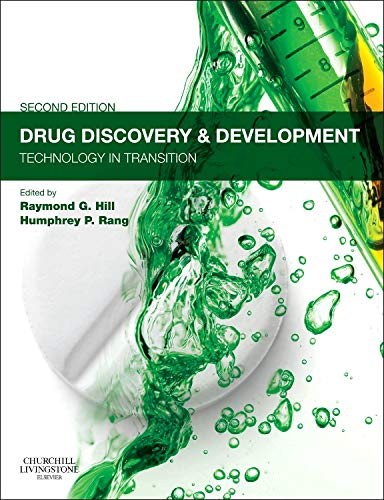
Drug Discovery and Development Technology in Transition 2nd Edition by Raymond G Hill, HP Rang ISBN 0702042994 9780702042997
Original price was: $50.00.$35.00Current price is: $35.00.
Drug Discovery and Development Technology in Transition 2nd Edition by Raymond G Hill, HP Rang – Ebook PDF Instant Download/Delivery: 0702042994, 9780702042997
Full download Drug Discovery and Development Technology in Transition 2nd Edition after payment
Product details:
ISBN 10: 0702042994
ISBN 13: 9780702042997
Author: Raymond G Hill, HP Rang
The modern pharmacopeia has enormous power to alleviate disease, and owes its existence almost entirely to the work of the pharmaceutical industry. This book provides an introduction to the way the industry goes about the discovery and development of new drugs. The first part gives a brief historical account from its origins in the mediaeval apothecaries’ trade, and discusses the changing understanding of what we mean by disease, and what therapy aims to achieve, as well as summarising case histories of the discovery and development of some important drugs. The second part focuses on the science and technology involved in the discovery process: the stages by which a promising new chemical entity is identified, from the starting point of a medical need and an idea for addressing it. A chapter on biopharmaceuticals, whose discovery and development tend to follow routes somewhat different from synthetic compounds, is included here, as well as accounts of patent issues that arise in the discovery phase, and a chapter on research management in this environment. The third section of the book deals with drug development: the work that has to be undertaken to turn the drug candidate that emerges from the discovery process into a product on the market.
-
The definitive introduction to how a pharmaceutical company goes about its business of discovering and developing drugs.
The second edition has a new editor: Professor Raymond Hill ? non-executive director of Addex Pharmaceuticals, Covagen and of Orexo AB ? Visiting Industrial Professor of Pharmacology in the University of Bristol ? Visiting Professor in the School of Medical and Health Sciences at the University of Surrey ? Visiting Professor in Physiology and Pharmacology at the University of Strathclyde ? President and Chair of the Council of the British Pharmacological Society ? member of the Nuffield Council on Bioethics and the Advisory Council on Misuse of Drugs.
Drug Discovery and Development Technology in Transition 2nd Table of contents:
Chapter 1: The development of the pharmaceutical industry
Antecedents and origins
Therapeutics in the 19th century
An industry begins to emerge
Concluding remarks
Chapter 2: The nature of disease and the purpose of therapy
Introduction
Concepts of disease
The aims of therapeutics
Function and dysfunction: the biological perspective
Therapeutic interventions
Measuring therapeutic outcome
Pharmacoepidemiology and pharmacoeconomics
Summary
Chapter 3: Therapeutic modalities
Introduction
Conventional therapeutic drugs
Biopharmaceuticals
Gene therapy
Cell-based therapies
Tissue and organ transplantation
Summary
Chapter 4: The drug discovery process: General principles and some case histories
Introduction
The stages of drug discovery
Trends in drug discovery
Research in the pharmaceutical industry
Chapter 5: Choosing the project
Introduction
Making the decision
A final word
Chapter 6: Choosing the target
Introduction: the scope for new drug targets
Conventional strategies for finding new drug targets
Target validation
Summary and conclusions
Chapter 7: The role of information, bioinformatics and genomics
The pharmaceutical industry as an information industry
Innovation depends on information from multiple sources
Bioinformatics
Genomics
Conclusion
Chapter 8: High-throughput screening
Introduction: a historical and future perspective
Lead discovery and high-throughput screening
Screening libraries and compound logistics
Profiling
Chapter 9: The role of medicinal chemistry in the drug discovery process
Introduction
Target selection and validation
Lead identification/generation
Lead optimization
Addressing attrition
Summary
Chapter 10: Metabolism and pharmacokinetic optimization strategies in drug discovery
Introduction
Optimization of DMPK properties
Human PK and dose prediction
Summary
Acknowledgments
Chapter 11: Pharmacology: Its role in drug discovery
Introduction
Screening for selectivity
Pharmacological profiling
Animal models of disease
Chapter 12: Biopharmaceuticals
Introduction
Recombinant DNA technology: the engine driving biotechnology
The early days of protein therapeutics
Currently available classes of biopharmaceuticals
Gene therapy
Comparing the discovery processes for biopharmaceuticals and small molecule therapeutics
Pharmacokinetic, toxicological and drug-delivery issues with proteins and peptides
Summary
Chapter 13: Scaffolds: Small globular proteins as antibody substitutes
Introduction
Scaffolds
Concluding remarks
Chapter 14: Drug development: Introduction
Introduction
The nature of drug development
Components of drug development
The interface between discovery and development
Decision points
The need for improvement
Chapter 15: Assessing drug safety
Introduction
Types of adverse drug effect
Safety pharmacology
Exploratory (dose range-finding) toxicology studies
Genotoxicity
Chronic toxicology studies
Special tests
Toxicokinetics
Toxicity measures
Variability in responses
Conclusions and future trends
Chapter 16: Pharmaceutical development
Introduction
Preformulation studies
Routes of administration and dosage forms
Formulation
Principles of drug delivery systems
Summary
Chapter 17: Clinical development: present and future
Introduction
Clinical development phases
Clinical trials in children
Regulatory and ethical environment
Seamless drug development with adaptive clinical trial design: the future of clinical development?
Conclusions
Chapter 18: Clinical imaging in drug development
Introduction
Imaging methods
Human target validation
Biodistribution
Target interaction
Pharmacodynamics
Patient stratification and personalized medicine
Imaging as a surrogate marker
Imaging in the real world – challenges to implementation
Summary
Acknowledgments
Chapter 19: Intellectual property in drug discovery and development
What is a patent?
The patent specification
What can be patented?
Requirements for patentability
Patent issues in drug discovery
The state of the art
Patent documents as state of the art
Evaluation by the scientist
Evaluation by the patent professional
Sources of information
Results of the evaluation – NCEs
Patenting of research tools
Obtaining patent protection for a development compound
Chapter 20: Regulatory affairs
Introduction
Brief history of pharmaceutical regulation
International harmonization
Roles and responsibilities of regulatory authority and company
The drug development process
Regulatory procedures
Administrative rules
List of abbreviations
Chapter 21: The role of pharmaceutical marketing
Introduction
History of pharmaceutical marketing
Product life cycle
Pharmaceutical product life cycle (Figure 21.3)
Traditional Pharmaceutical marketing
Pricing
Health technology assessment (HTA)
New product launch
Changing environment – changing marketing
The future of marketing
Chapter 22: Drug discovery and development: facts and figures
Spending
Sales revenues
Timelines
Pipelines and attrition rates
Biotechnology-derived medicines
Recent introductions
Predicting the future?
People also search for Drug Discovery and Development Technology in Transition 2nd:
drug discovery and development technology in transition pdf
drug discovery and development technology in transition 3rd edition
drug discovery and development technology in transition pdf free
drug discovery and development technology in transition pdf download
drug discovery and development technology in transition 2nd edition
Tags: Raymond G Hill, HP Rang, Drug Discovery, Development Technology