

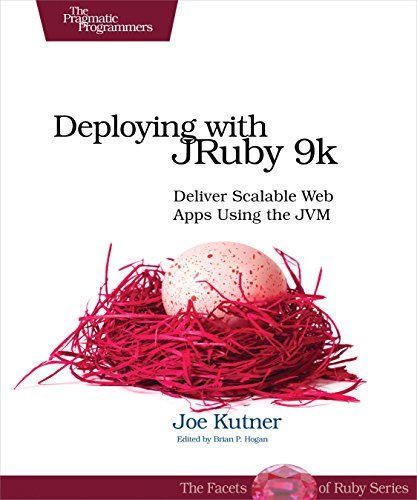
Deploying with JRuby 9k Deliver Scalable Web Apps Using the JVM 1st Edition by Joe Kutner ISBN 1680501690 9781680501698


Original price was: $50.00.$35.00Current price is: $35.00.
Deploying with JRuby 9k Deliver Scalable Web Apps Using the JVM 1st Edition by Joe Kutner – Ebook PDF Instant Download/Delivery: 1680501690, 9781680501698
Full download Deploying with JRuby 9k Deliver Scalable Web Apps Using the JVM 1st Edition after payment
Product details:
ISBN 10: 1680501690
ISBN 13: 9781680501698
Author: Joe Kutner
Deploy using the JVM’s high performance while building your apps in the language you love. This book introduces you to three JRuby deployment strategies that give you the performance and scalability you need, while you use a language designed for rapid development. Explore common deployment scenarios, including consolidating an MRI-based Ruby deployment onto a single JVM process and porting a Rails application to JRuby, getting it into production, and keeping it running. This new edition has new chapters on Puma, performance tuning, and Java integration, and is updated to the latest versions of JRuby 9k, Rails 4, and JDK 8.
JRuby is a fast, scalable, and powerful JVM language with all the benefits of a traditional Ruby environment. JRuby deployments have fewer moving parts and consume less memory than traditional Ruby. With this book, you can now use JRuby in the real world to build high-performance, scalable applications.
Deploying your apps on the JVM requires some new approaches. Start by creating a JRuby microservice that takes advantage of the JVM’s native concurrency. Then use Docker to build a virtual production environment that’s a stable, reproducible place to explore JRuby deployment. Next, port an existing Rails application to JRuby, preparing the app to take advantage of the JVM platform–all while keeping everything that’s friendly and familiar to Ruby developers. Deploy the Rails app to Docker with a multi-threaded Puma server to Heroku or your own private cloud.
Take advantage of powerful Java libraries. See how JRuby fits into the enterprise by switching your app to use TorqueBox, an all-in-one JRuby environment that includes built-in support for messaging, scheduling, and daemons–perfect for handling the big jobs. Finally, take a deep dive into JVM performance tuning and set up a continuous deployment environment with Travis CI.
Deploying with JRuby 9k Deliver Scalable Web Apps Using the JVM 1st Table of contents:
Chapter 1: Getting Started with JRuby 9k
- Installing JRuby 9k
- Basic Syntax and Differences Between Ruby and JRuby
- Your First JRuby Application
- Understanding the JRuby Runtime
- Integrating with JVM Libraries
Chapter 2: Architecture of Scalable Web Applications
- Key Concepts of Scalability in Web Apps
- The Role of the JVM in Scalability
- Designing for High-Performance Applications
- Multithreading and Concurrency in JRuby
- Memory Management and Garbage Collection in JRuby
Chapter 3: Web Frameworks for JRuby
- Choosing the Right Web Framework
- Sinatra vs. Rails on JRuby
- Building a Simple Web App with Sinatra
- Using Rails on JRuby for Full-Stack Applications
- Integrating with Java-based Web Frameworks
Chapter 4: Working with Databases in JRuby
- Connecting to Databases from JRuby
- Using ActiveRecord on JRuby
- Database Connection Pooling for Scalability
- Optimizing Database Queries
- Leveraging Java Database Libraries with JRuby
Chapter 5: Deploying JRuby Applications
- Packaging JRuby Apps for Deployment
- Configuring JRuby with Application Servers (e.g., Jetty, Tomcat)
- Cloud Deployment: JRuby on AWS, Heroku, and Other Platforms
- Using Docker for Containerization
- Continuous Integration and Delivery with JRuby
Chapter 6: Performance Tuning and Optimization
- Profiling and Benchmarking JRuby Applications
- JVM Tuning for JRuby Apps
- Optimizing Memory and CPU Usage
- Asynchronous Programming in JRuby
- Caching Strategies for Scalable Apps
Chapter 7: Testing and Debugging JRuby Applications
- Testing JRuby Applications: Tools and Techniques
- Writing Unit and Integration Tests in JRuby
- Debugging and Error Handling in JRuby
- Monitoring Production Applications
- Best Practices for Maintaining Stability and Performance
Chapter 8: Advanced JRuby Features and Techniques
- Using JRuby with Java Libraries and Frameworks
- Interfacing Ruby and Java Code Seamlessly
- Building Native Extensions in JRuby
- Creating Custom JVM Extensions for JRuby
- Leveraging JRuby for Microservices
Chapter 9: Security in JRuby Web Apps
- Secure Coding Practices in JRuby
- Protecting Against Common Web Vulnerabilities (SQL Injection, XSS, CSRF)
- Authentication and Authorization in JRuby Applications
- SSL and Encryption in Web Communication
- Best Practices for Securing Your JRuby Deployment
Chapter 10: The Future of JRuby and the JVM
- JRuby 9k and Beyond: What’s Next?
- The Evolution of the JVM and Its Impact on JRuby
- Integrating JRuby with Emerging Technologies
- Staying Current with JRuby and JVM Developments
- Contributing to the JRuby Community
People also search for Deploying with JRuby 9k Deliver Scalable Web Apps Using the JVM 1st:
deploying with jenkins
how to deploy a ruby on rails web application
jruby docker
jruby heroku
jruby devkit
Tags:
Joe Kutner,JRuby 9k,Web Apps,JVM