

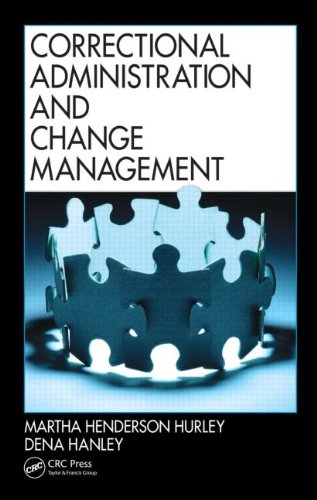
Correctional Administration and Change Management 1st Edition by Martha Henderson Hurley, Dena Hanley ISBN 1439803935 9781439803936


Original price was: $50.00.$35.00Current price is: $35.00.
Correctional Administration and Change Management 1st Edition by Martha Henderson Hurley, Dena Hanley – Ebook PDF Instant Download/Delivery: 1439803935, 9781439803936
Full download Correctional Administration and Change Management 1st Edition after payment
Product details:
ISBN 10: 1439803935
ISBN 13: 9781439803936
Author: Martha Henderson Hurley, Dena Hanley
Correctional Administration and Change Management 1st Table of contents:
1 Introduction to Change Management in Correctional Organizations
Change Management
Why Is Change Difficult in Corrections?
Failure in Strategic Planning
Failure to Assess Organizational Capacity for Change
Failure to Consider Organizational Culture
Failure to Monitor Performance and Assess Outcomes
Organizational Theory and Change
Defining Organization
The Traditional or Classical Organizational Model for Corrections
Human Relations
The Management of Change
Planned Change Management
Organizational Development
Managing for Results in Corrections
Suggested Reading
References
2 Administration and Guidance
Distinguishing Leaders, Managers, and Administrators
The Need for Leaders to Emphasize Flexibility and Growth in Procedural Operations
Roles of the Leader / Administrator
Leaders as Change Agents
Characteristics of Effective Leaders
What Is It That Effective Leaders Do When Trying to Initiate Change?
Strategic Planning
Assessment
Developing Vision, Mission, Values, and Goals
Staff
Communication
Implementation
Conclusion
References
3 Communication
Defining Communication
Audience
Messages
Interpretation
Methods of Communicating
Team Building
Communication and Change Management Success
Change Management and Communication with Internal and External Stakeholders
Management Views of Communication
Obstacles to Effective Communication
Organizational Culture
Conclusion
References
4 Information Capital
Definitions
Components of Information Capital
Logistics, Support, and Maintenance
Human Resource–Staff Management
Profiling and Describing Correctional Clients
Facility / Program Management
Types of Automated Management Information Systems
Advantages of Strategic Information Systems
Disadvantages of Information Technology
Differing Levels of Management and Information
Administration
Midlevel Management
Operational Management
What Constitutes “Good” Information?
Designing a Quality System
What Does Quality Information Provide to Leaders?
The Assessment of Performance Advantage
The Financial Advantage
The Advantage of Improved Motivation among Staff
The Advantage of Improved Strategic Thinking and Planning Processes
The Defensive Advantage When Practices Are Challenged
The Enhanced Leadership Advantage
Examples from the Field
Treatment
Custody and Supervision
Prison Example
Conclusion
References
5 Human Resource Capital
Assessment
Organizational Culture
Methods for Investing in Staff
Conclusion
References
6 Evidence-Based Practice
Defining Evidence-Based Practice
Advantages of Evidence-Based Practice (EBP) in Corrections
Disadvantages of EBP in Corrections
Key Steps to Implementing EBP
What Works to Reduce Crime
“What Works” and Does Not Work to Reduce Recidivism
What Works to Prevent Crime
Eight Evidence-Based Principles of Effective Interventions100
Principle 1: Assess Actuarial Risk/Needs
Principle 2: Enhance Intrinsic Motivation
Principle 3: Target Interventions
3a: Risk Principle
3b: Criminogenic Need Principle
3c: Responsivity Principle
3d: Dosage
3e: Treatment Principle
Principle 4: Provide Skills Training Using Cognitive–Behavioral Treatment Methods
Principle 5: Increase Positive Reinforcement
Principle 6: Engage Ongoing Support in Natural Communities
Principle 7: Measure Relevant Processes/Practices
Principle 8: Provide Measurement Feedback
Turning Research into Practice
Conclusion
Suggested Reading
Web Sites
References
7 Evaluations and Outcomes
Disadvantages and Advantages to Outcome-Based Evidence
Difference between Evaluation and Outcome Monitoring
Evaluations
Needs Assessments
Process Evaluations
Outcome Evaluations
Outcome Monitoring
Utilizing Results
Evaluability: A Major Concern
Conclusion
References
8 Conclusion
Step 1: Assessment
Step 2: Identify Mission, Goals, and Objectives
Step 3: Effectively Communicate
Step 4: Enhance Technology
Step 5: Invest in Human Resources
References
Appendix A: Implementing Effective Correctional Management of Offenders in the Community Implementation Checklist
Appendix B: Citations to the Studies Used in the Meta-Analyses
Adolescent Diversion Project
Adult Boot Camps
Adult Drug Courts
Adult Intensive Supervision Probation or Parole Surveillance
Adult Intensive Supervision Probation or Parole Treatment
Aggression Replacement Training (ART) (Including Washington Studies)
Behavioral Therapy for Sex Offenders
Case Management in the Community for Drug-Involved Offenders
Circles of Support and Accountability (Faith-Based Supervision of Sex Offenders)
Cognitive–Behavioral Therapy for the General Population, in Prison
Cognitive–Behavioral Therapy in Prison for Drug-Involved Offenders167
Cognitive–Behavioral Treatment in Prison, Sex Offenders
Cognitive–Behavioral Treatment in the Community, Sex Offenders
Education in Prison (Basic Education or Postsecondary)
Correctional Industries
Counseling / Psychotherapy for Juvenile Offenders
Court Supervision (Compared to Simple Release without Services)
Day Fines (Compared to Standard Probation)
Diversion with Services (Compared to Regular Juvenile Court Processing)
Diversion with Services (Compared to Simple Release)
Dangerous Mentally Ill Offenders
Domestic Violence Courts
Drug Treatment in Jail
Drug Treatment in the Community
Early Childhood Education for Low-Income Three- and Four- Year-Olds
Education/Cognitive–Behavioral Treatment, Domestic Violence
Electronic Monitoring
Employment Training and Job Assistance Programs in the Community .
Faith-Based Programs for General Offenders
Functional Family Therapy (Including Washington)
Family Integrated Transitions (FIT)
Guided Group Interaction
Guiding Good Choices (Formerly PDFY)
High School Graduation
Home Visiting during Pregnancy and Early Childhood
Increased Drug Testing on Parole (Compared with Minimal Drug Testing)
In-Prison Therapeutic Communities with Community Aftercare for Drug-Involved Offenders
In-Prison Therapeutic Communities without Community Aftercare for Drug-Involved Offenders
Intensive Supervision of Sex Offenders in the Community
Jail Diversion (Pre- and Postbooking Programs), MICA Offenders
Juvenile Justice Other Family-Based Therapy Approaches
Juvenile Behavior Modification
Juvenile Boot Camp
Juvenile Cognitive–Behavioral
Juvenile Curfews
Juvenile Day Reporting
Juvenile Drug Courts
Juvenile Education Programs
Juvenile Intensive Parole Supervision
Juvenile Intensive Probation (As an Alternative to Incarceration)
Juvenile Intensive Probation Supervision
Juvenile Jobs Programs
Juvenile Offender Interagency Coordination
Juvenile Sex Offender Treatment
Juvenile Therapeutic Community
Juvenile Wilderness Challenge
Life Skills Education Programs
Life Skills Education Programs for Juvenile Offenders
Medical Treatment of Sex Offenders
Mentoring (Juvenile Justice)
Mixed Treatment—Sex Offenders
Multisystemic Therapy
Multidimensional Treatment Foster Care
Nurse Family Partnership for Low-Income Mothers—Child Outcomes
Nurse Family Partnership for Low-Income Mothers—Mother Outcomes
Parole/No Parole
Parent Child Interaction Therapy (PCIT)
Psychotherapy for Sex Offenders
Regular Supervision Compared to No Supervision
Restorative Justice Programs for Lower Risk Adult Offenders
Restorative Justice—Juveniles
Scared Straight
Seattle Social Development Project (SSDP)
Team Child
Teen Courts
Therapeutic Community Programs, MICA Offenders
Vocational Education in Prison
Washington’s Dialectical Behavior Therapy (DBT)
Work-Release Programs from Prison
People also search for Correctional Administration and Change Management 1st:
what is corrections management
correctional management careers
correctional administration jobs
corrections management jobs
what does corrections management do
Tags:
Martha Henderson Hurley,Dena Hanley,Correctional Administration,Change Management