

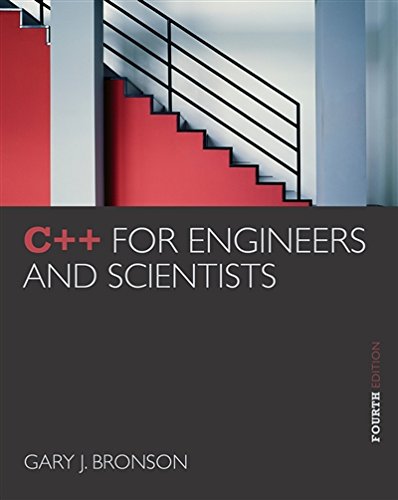
C for Engineers and Scientists 4th Edition by Gary J Bronson ISBN 1133187846 9781133187844

Original price was: $50.00.$35.00Current price is: $35.00.
C for Engineers and Scientists 4th Edition by Gary J Bronson – Ebook PDF Instant Download/Delivery: 1133187846, 9781133187844
Full download C for Engineers and Scientists 4th Edition after payment
Product details:
ISBN 10: 1133187846
ISBN 13: 9781133187844
Author: Gary J Bronson
Introduce the power and practicality of C programming to your entry-level engineering students with Bronson’s C FOR ENGINEERS AND SCIENTISTS, 4E. This proven, pragmatic text is designed specifically for today’s first- and second-year engineering and science students with a wealth of new applications and examples taken from real situations involving electrical and structural engineering, fluid mechanics, mathematics, power generation, and heat transfer challenges. The book starts with a solid foundation in procedural programming before moving into a reorganized, clear presentation of object-oriented concepts. Dynamic case studies, career spotlights and engineering-driven applications showcase the relevance of concepts students are learning to their careers. Helpful tips demonstrate how to avoid common C programming errors, while updates ensure that students are learning the most recent C code standards.
C for Engineers and Scientists 4th Table of contents:
PART I: FUNDAMENTALS OF C++ PROGRAMMING
-
ch 1: preliminaries
-
1.1 preliminary one: unit analysis
-
exercises 1.1
-
1.2 preliminary two: exponential and scientific notations
-
exercises 1.2
-
1.3 preliminary three: software development
-
exercises 1.3
-
1.4 preliminary four: algorithms
-
exercises 1.4
-
1.5 a closer look: software, hardware, and computer storage
-
1.6 common programming errors
-
1.7 chapter summary
-
-
ch 2: problem solving using c++
-
2.1 introduction to c++
-
exercises 2.1
-
2.2 programming style
-
exercises 2.2
-
2.3 data types
-
exercises 2.3
-
2.4 arithmetic operations
-
exercises 2.4
-
2.5 variables and declaration statements
-
exercises 2.5
-
2.6 a case study: radar speed traps
-
exercises 2.6
-
2.7 common programming errors
-
2.8 chapter summary
-
-
ch 3: assignment, formatting, and interactive input
-
3.1 assignment operations
-
exercises 3.1
-
3.2 formatting numbers for program output
-
exercises 3.2
-
3.3 using mathematical library functions
-
exercises 3.3
-
3.4 program input using cin
-
exercises 3.4
-
3.5 symbolic constants
-
exercises 3.5
-
3.6 a case study: acid rain
-
exercises 3.6
-
3.7 a closer look: programming errors
-
3.8 common programming errors
-
3.9 chapter summary
-
-
ch 4: selection structures
-
4.1 selection criteria
-
exercises 4.1
-
4.2 the if-else statement
-
exercises 4.2
-
4.3 nested if statements
-
exercises 4.3
-
4.4 the switch statement
-
exercises 4.4
-
4.5 a case study: solving quadratic equations
-
exercises 4.5
-
4.6 a closer look: program testing
-
4.7 common programming errors
-
4.8 chapter summary
-
-
ch 5: repetition statements
-
5.1 basic loop structures
-
exercises 5.1
-
5.2 while loops
-
exercises 5.2
-
5.3 interactive while loops
-
exercises 5.3
-
5.4 for loops
-
exercises 5.4
-
5.5 a closer look: loop programming techniques
-
exercises 5.5
-
5.6 nested loops
-
exercises 5.6
-
5.7 do while loops
-
exercises 5.7
-
5.8 common programming errors
-
5.9 chapter summary
-
-
ch 6: modularity using functions
-
6.1 function and parameter declarations
-
exercises 6.1
-
6.2 returning a single value
-
exercises 6.2
-
6.3 returning multiple values
-
exercises 6.3
-
6.4 a case study: rectangular to polar coordinate conversion
-
exercises 6.4
-
6.5 variable scope
-
exercises 6.5
-
6.6 variable storage categories
-
exercises 6.6
-
6.7 common programming errors
-
6.8 chapter summary
-
-
ch 7: arrays
-
7.1 one-dimensional arrays
-
exercises 7.1
-
7.2 array initialization
-
exercises 7.2
-
7.3 declaring and processing two-dimensional arrays
-
exercises 7.3
-
7.4 arrays as arguments
-
exercises 7.4
-
7.5 case studies
-
exercises 7.5
-
7.6 the standard template library (stl)
-
exercises 7.6
-
7.7 a closer look: searching and sorting
-
7.8 common programming errors
-
7.9 chapter summary
-
-
ch 8: i/o streams and data files
-
8.1 i/o file stream objects and functions
-
exercises 8.1
-
8.2 reading and writing character-based files
-
exercises 8.2
-
8.3 random file access
-
exercises 8.3
-
8.4 file streams as function arguments
-
exercises 8.4
-
8.5 a case study: pollen count file update
-
exercises 8.5
-
8.6 a closer look: the iostream class library
-
8.7 common programming errors
-
8.8 chapter summary
-
-
ch 9: completing the basics
-
9.1 exception handling
-
exercises 9.1
-
9.2 exceptions and file checking
-
exercises 9.2
-
9.3 the string class
-
exercises 9.3
-
9.4 character manipulation functions
-
exercises 9.4
-
9.5 input data validation
-
exercises 9.5
-
9.6 a closer look: namespaces and creating a personal library
-
exercises 9.6
-
9.7 common programming errors
-
9.8 chapter summary
-
-
ch 10: pointers
-
10.1 addresses and pointers
-
exercises 10.1
-
10.2 array names as pointers
-
exercises 10.2
-
10.3 pointer arithmetic
-
exercises 10.3
-
10.4 passing addresses
-
exercises 10.4
-
10.5 common programming errors
-
10.6 chapter summary
-
PART II: OBJECT-ORIENTED PROGRAMMING
-
ch 11: introduction to classes
-
11.1 classes
-
exercises 11.1
-
11.2 basic class functions
-
exercises 11.2
-
11.3 adding class functions
-
exercises 11.3
-
11.4 a case study: constructing a date class
-
exercises 11.4
-
11.5 a closer look: uml class and object diagrams
-
exercises 11.5
-
11.6 common programming errors
-
11.7 chapter summary
-
-
ch 12: adding functionality to your classes
-
12.1 providing class i/o capabilities
-
exercises 12.1
-
12.2 providing class conversion capabilities
-
exercises 12.2
-
12.3 class scope and duration categories
-
exercises 12.3
-
12.4 class inheritance and polymorphism
-
exercises 12.4
-
12.5 virtual functions
-
exercises 12.5
-
12.6 common programming errors
-
12.7 chapter summary
-
PART III: ADDITIONAL TOPICS
-
ch 13: structures
-
13.1 single structures
-
exercises 13.1
-
13.2 arrays of structures
-
exercises 13.2
-
13.3 structures as function arguments
-
exercises 13.3
-
13.4 linked lists
-
exercises 13.4
-
13.5 dynamic data structure allocation
-
exercises 13.5
-
13.6 unions
-
exercises 13.6
-
13.7 common programming errors
-
13.8 chapter summary
-
-
ch 14: numerical methods
-
14.1 introduction to root finding
-
exercises 14.1
-
14.2 the bisection method
-
exercises 14.2
-
14.3 refinements to the bisection method
-
exercises 14.3
-
14.4 the secant method
-
exercises 14.4
-
People also search for C for Engineers and Scientists 4th:
physics for scientists and engineers douglas c giancoli
c programming for scientists and engineers with applications pdf
physics for engineers and scientists hans c ohanian
c programming the essentials for engineers and scientists pdf
engineers and scientists are examples of
Tags: Gary J Bronson, Engineers, Scientists