

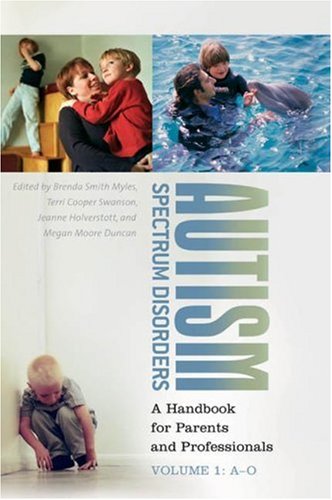
Autism spectrum disorders a handbook for parents and professionals 1st Edition by Megan Moore Duncan, Jeanne Holverstott, Brenda Smith Myles, Terri Cooper Swanson ISBN 0313336326 9780313336324


Original price was: $50.00.$35.00Current price is: $35.00.
Autism spectrum disorders a handbook for parents and professionals 1st Edition by Megan Moore Duncan, Jeanne Holverstott, Brenda Smith Myles, Terri Cooper Swanson – Ebook PDF Instant Download/Delivery: 0313336326, 9780313336324
Full download Autism spectrum disorders a handbook for parents and professionals 1st Edition after payment
Product details:
ISBN 10: 0313336326
ISBN 13: 9780313336324
Author: Megan Moore Duncan, Jeanne Holverstott, Brenda Smith Myles, Terri Cooper Swanson
Autism spectrum disorders a handbook for parents and professionals 1st Table of contents:
Chapter 1: Understanding Autism Spectrum Disorders
1.1 What Is Autism Spectrum Disorder?
1.2 The Spectrum of Autism: From Mild to Severe
1.3 The Causes of Autism: Genetic and Environmental Factors
1.4 Early Signs and Diagnosis
– 1.4.1 Common Early Symptoms
– 1.4.2 The Diagnostic Process: DSM-5 and ICD-10 Criteria
1.5 Prevalence of Autism and Global Trends
Chapter 2: The Developmental and Cognitive Profile of Autism
2.1 Cognitive Development in Children with Autism
2.2 Language and Communication Difficulties
– 2.2.1 Delayed Speech and Language Skills
– 2.2.2 Augmentative and Alternative Communication (AAC)
2.3 Social Development and Theory of Mind
– 2.3.1 Social Interaction Challenges
– 2.3.2 Empathy and Perspective-Taking
2.4 Sensory Processing and Sensory Sensitivities
– 2.4.1 Over-Sensitivity and Under-Sensitivity
– 2.4.2 Common Sensory Issues in ASD
Chapter 3: The Diagnosis of Autism
3.1 Clinical Evaluation and Tools for Diagnosis
– 3.1.1 The Role of the Pediatrician
– 3.1.2 Standardized Assessments (e.g., ADOS, CARS)
3.2 The Importance of Early Diagnosis
3.3 Autism Spectrum Disorder and Co-occurring Conditions
– 3.3.1 Intellectual Disabilities
– 3.3.2 Anxiety, Depression, and Other Mental Health Issues
3.4 Understanding the Diagnostic Process for Different Age Groups
– 3.4.1 Diagnosis in Infancy and Early Childhood
– 3.4.2 Diagnosis in Adolescence and Adulthood
Chapter 4: Treatment and Interventions
4.1 The Importance of Early Intervention
4.2 Behavioral Interventions
– 4.2.1 Applied Behavior Analysis (ABA)
– 4.2.2 Other Behavioral Therapies (e.g., Pivotal Response Training)
4.3 Speech and Language Therapy
– 4.3.1 Speech Development Techniques
– 4.3.2 Social Communication Training
4.4 Occupational Therapy and Sensory Integration
4.5 Social Skills Training and Peer Interaction
– 4.5.1 Group Therapy Approaches
– 4.5.2 Role-playing and Social Scenarios
4.6 Pharmacological Treatments
– 4.6.1 Medications for Managing Symptoms
– 4.6.2 The Role of Medication in Autism Treatment
4.7 Alternative and Complementary Therapies
– 4.7.1 Diet, Supplements, and Other Non-Traditional Approaches
– 4.7.2 Evaluating the Evidence for Alternative Therapies
Chapter 5: Educational Approaches for Children with Autism
5.1 Individualized Education Plans (IEPs)
5.2 Inclusion vs. Specialized Education Settings
5.3 The Role of Special Education Teachers and Paraprofessionals
5.4 Autism-Friendly Classroom Strategies
– 5.4.1 Structured Teaching Methods (e.g., TEACCH)
– 5.4.2 Visual Supports and Schedules
5.5 Transitioning from Early Childhood Education to School
– 5.5.1 Strategies for Successful School Integration
– 5.5.2 Addressing Behavioral Challenges in School Settings
Chapter 6: Supporting Social and Emotional Development
6.1 Building Relationships: Family and Peer Interactions
6.2 Social Skills Development: Strategies and Approaches
6.3 Understanding Emotional Regulation
– 6.3.1 Coping Mechanisms for Emotional Overload
– 6.3.2 Promoting Emotional Awareness
6.4 Self-Advocacy and Independence in Adolescence
6.5 Autism and Mental Health: Addressing Anxiety and Depression
Chapter 7: Transitioning to Adulthood
7.1 Preparing for Adulthood: Transition Planning
7.2 Vocational Training and Employment Opportunities
7.3 Living Independently: Supported Living Options
7.4 Legal and Financial Considerations for Adults with Autism
– 7.4.1 Disability Benefits and Support
– 7.4.2 Guardianship and Legal Rights
7.5 Relationships and Sexuality in Adulthood
7.6 Ongoing Support and Services for Adults with Autism
Chapter 8: Family Support and Self-Care
8.1 The Emotional Impact on Families
8.2 Sibling Relationships and Understanding Autism
8.3 Coping Strategies for Parents and Caregivers
– 8.3.1 Building Resilience in Families
– 8.3.2 Seeking Support from Other Families
8.4 The Role of Support Networks and Community Resources
– 8.4.1 National and Local Autism Organizations
– 8.4.2 Therapy and Counseling for Parents
Chapter 9: Autism in the Context of Society
9.1 The Social Model of Disability and Autism
9.2 Public Perception of Autism
9.3 Advocacy and Policy Issues
– 9.3.1 Autism Awareness Campaigns
– 9.3.2 The Push for Better Services and Funding
9.4 Autism and the Media: Accurate Representation
9.5 Supporting Autism in the Workplace and Community
Chapter 10: Future Directions in Autism Research and Treatment
10.1 Advances in Genetic and Neurological Research
10.2 The Promise of Personalized Medicine and Early Detection
10.3 Innovations in Therapy and Intervention Models
10.4 Promising Approaches to Improving Long-Term Outcomes
People also search for Autism spectrum disorders a handbook for parents and professionals 1st:
autism spectrum disorders a handbook for parents and professionals
autism spectrum disorder code
what are autism spectrum disorders
does autism spectrum disorder qualify for ssi
autism spectrum disorder handout
Tags: Megan Moore Duncan, Jeanne Holverstott, Autism spectrum, professionals