

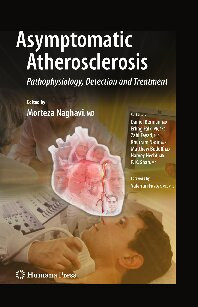
Asymptomatic Atherosclerosis Pathophysiology Detection and Treatment 1st Edition by Morteza Naghavi ISBN 1603271783 9781603271783

Original price was: $50.00.$35.00Current price is: $35.00.
Asymptomatic Atherosclerosis Pathophysiology Detection and Treatment 1st Edition by Morteza Naghavi – Ebook PDF Instant Download/Delivery: 1603271783, 9781603271783
Full download Asymptomatic Atherosclerosis Pathophysiology Detection and Treatment 1st Edition after payment
Product details:
ISBN 10: 1603271783
ISBN 13: 9781603271783
Author: Morteza Naghavi
Asymptomatic Atherosclerosis Pathophysiology Detection and Treatment 1st Table of contents:
1. Preventive Cardiology: The SHAPE of the Future
2. From Vulnerable Plaque to Vulnerable Patient
3. Pathology of Vulnerability Caused by High-Risk (Vulnerable) Arteries and Plaques
4. Pathophysiology of Vulnerability Caused by Thrombogenic (Vulnerable) Blood
5. Vulnerability Caused by Arrhythmogenic Vulnerable Myocardium
6. Approach to Atherosclerosis as a Disease: Primary Prevention Based on the Detection and Treatment of Asymptomatic Atherosclerosis
2. Methods for the Detection of Subclinical Atherosclerotic Cardiovascular Disease
7. History of the Evolution of Cardiovascular Risk Factors and the Predictive Value of Traditional Risk-Factor-Based Risk Assessment
8. Comprehensive Lipid Profiling Beyond LDL
9. New Blood Biomarkers of Inflammation and Atherosclerosis
10. Genomics and Proteomics: The Role of Contemporary Biomolecular Analysis in Advancing the Knowledge of Atherosclerotic Coronary Artery Disease
11. Circulating Endothelial Progenitor Cells: Mechanisms and Measurements
12. Family History: An Index of Genetic and Environmental Predisposition to Coronary Artery Disease
13. Endothelial Activation Markers in Sub-clinical Atherosclerosis: Insights from Mechanism-Based Paradigms
3. Non Invasive, Non Imaging, Assessment of Atherosclerotic Cardiovascular Disease
14. Exercise Stress Testing in Asymptomatic Individuals and Its Relation to Subclinical Atherosclerotic Cardiovascular Disease
15. The Ankle Brachial Index
16. Arterial Elasticity/Stiffness
17. Assessment of Endothelial Function in Clinical Practice
18. Digital (Fingertip) Thermal Monitoring of Vascular Function: A Novel, Noninvasive, Nonimaging Test to Improve Traditional Cardiovascular Risk Assessment and Monitoring of Response to Treatments
19. Assessment of Macro- and Microvascular Function and Reactivity
4. Non Invasive Structural Imaging of Subclinical Atherosclerosis
20. Coronary Artery Calcium Imaging
21. Noninvasive Ultrasound Imaging of Carotid Intima Thickness
22. Carotid Intima-Media Thickness: Clinical Implementation in Individual Cardiovascular Risk Assessment
23. Computed Tomographic Angiography
24. Role of Noninvasive Imaging using CT for Detection and Quantitation of Coronary Atherosclerosis
25. Noninvasive Coronary Plaque Characterization: CT Versus MRI
26. Magnetic Resonance Imaging
27. The Role of MRI in Examining Subclinical Carotid Plaque
28. Comprehensive Non-contrast CT Imaging of the Vulnerable Patient
5. Non Invasive Functional Imaging of Subclinical Atherosclerosis
29. Ultrasound Assessment of Brachial Artery Reactivity
30. Cardiac Imaging for Ischemia in Asymptomatic Patients: Use of Coronary Artery Calcium Scanning to Improve Patient Selection: Lessons from the EISNER Study
31. Targeted MRI of Molecular Components in Atherosclerotic Plaque
32. Noninvasive Imaging of the Vulnerable Myocardium: Cardiac MRI and CT Based
6. Invasive Assessment of ACVD
33. Angiography for Detection of Complex and Vulnerable Atherosclerotic Plaque
34. Intravascular Characterization of Vulnerable Coronary Plaque
35. Detecting Vulnerable Plaque Using Invasive Methods
36. Assessment of Plaque Burden and Plaque Composition Using Intravascular Ultrasound
37. Vulnerable Anatomy; The Role of Coronary Anatomy and Endothelial Shear Stress in the Progression and Vulnerability of Coronary Artery Lesions: Is Anatomy Destiny?
38. Vasa Vasorum Imaging
7. Screening for Risk Assessment of Asymptomatic At-Risk Population and Identification of the Vulnerable Patient – The SHAPE Paradigm
39. From Vulnerable Plaque to Vulnerable Patient – Part III
40. Cost Effectiveness of Screening Atherosclerosis
41. Monitoring of Subclinical Atherosclerotic Disease
42. Implications of SHAPE Guideline for Improving Patient Compliance
43. The SHAPE Guideline: Why Primary Care Physicians Should Embrace It
44. Should We Treat According to the SHAPE Guidelines?
45. Duty-Bound: Rational Foundations of Clinical Strategies for Prevention of Cardiovascular Events
46. A Time to Live: Dynamic Changes in Risk as the Basis for Therapeutic Triage
8. Treatment of Asymptomatic Atherosclerotic Cardiovascular Disease and the Vulnerable Patients: Systemic Therapies
47. LDL Targeted Therapies
48. Antioxidants as Targeted Therapy: A Special Protective Role for Pomegranate and Paraoxonases (PONs)
49. The Multiconstituent Cardiovascular Pill (MCCP): Challenges and Promises of Population Based Prophylactic Drug Therapy for Heart Attack Prevention and Eradication
50. Vaccine for Atherosclerosis: An Emerging New Paradigm
9. Local and Focal Therapies for Stabilization of Vulnerable Arteries and Plaques
51. Drug-Eluting Stents: A Potential Preemptive Treatment Choice for Vulnerable Coronary Plaques
52. Intrapericardial Approach for Pancoronary Stabilization of the Vulnerable Arteries and Myocardium
10. Educations, Life Style Modifications and Non-pharmacologic Therapies for the Atherosclerosis Susceptible and ACVD Vulnerable Population
53. Dietary Management for Coronary Atherosclerosis Prevention and Treatment
54. Management of Preconditioning Physical Activity in a Vulnerable Patient: Getting in SHAPE
55. Last Chance for Prevention (Acute Prevention): Identification of Prodromal Symptoms and Early Heart Attack
People also search for Asymptomatic Atherosclerosis Pathophysiology Detection and Treatment 1st:
asymptomatic arteriosclerosis of coronary artery
atherosclerosis pathophysiology scholarly articles
atherosclerosis pathophysiology
pathophysiology of atherosclerosis heart disease
pathophysiology of atherosclerosis development