

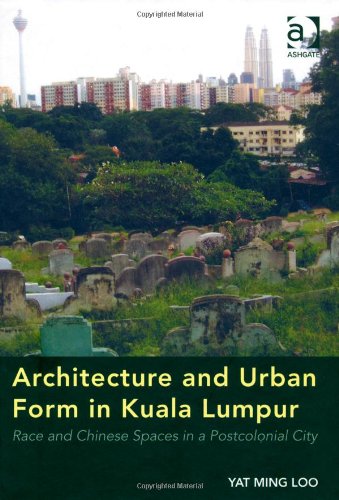
Architecture and Urban Form in Kuala Lumpur Race and Chinese Spaces in a Postcolonial City 1st Edition by Yat Ming Loo ISBN 1409445976 9781409445975

Original price was: $50.00.$35.00Current price is: $35.00.
Architecture and Urban Form in Kuala Lumpur Race and Chinese Spaces in a Postcolonial City 1st Edition by Yat Ming Loo – Ebook PDF Instant Download/Delivery: 1409445976, 9781409445975
Full download Architecture and Urban Form in Kuala Lumpur Race and Chinese Spaces in a Postcolonial City 1st Edition after payment
Product details:
ISBN 10: 1409445976
ISBN 13: 9781409445975
Author: Yat Ming Loo
Architecture and Urban Form in Kuala Lumpur Race and Chinese Spaces in a Postcolonial City 1st Table of contents:
1 Introduction
Writing Postcolonial Spaces: Aims and Strategies
Engaging Ethnic Minority and Race
Engaging Local Politics and Contestation of Power
Engaging Alternative Research Materials
Postcolonialism and Race in Malaysia’s Architecture
Content and Structure
Notes
2 The Racialised Landscapes of Nation – Race Relations and Spatial Segregation
Race, Otherness and British Colonial Legacy
British Associative Colonialism
‘Divide ampentity Rule’ and Race Relations
Postcolonial Construction of Ethnic Divide
Two Postcolonial Interpretations and Desires
Political Dimension
Cultural Dimension
Economic Dimension
Spatial Segregation and Ethnic Exclusion
Colonial Spatial Segregation
Malay Spaces
Malay Reservations
Land Schemes for the Malays
Chinese New Villages
Post-1970s Spatial Changes in Urban Centres
Conclusion
Notes
3 Colonial Identificaton and Kuala Lumpur
Race, Urban Form and Colonial Kuala Lumpur (1880-1930)
Spatial ‘Othering’ and Urban Layout
Associative Colonialism and Urban Layout
The Representation of the ‘Other’
Residential Segregation
Chinatown: Containing the Chinese Spaces
‘Other’ Place
A Colony within the Colony
Racial Representation of Colonial Architecture
Associative Colonialism and Colonial Monumental Buildings
The Racial Representation of Colonial Buildings
Islamic Architecture and the Government Office Building
Indigensing the Colonial Urban Centre: Architecture and Decolonisation
Decolonisation Strategies and Architectural Identity
Phase 1: Nationalism and Architecture of Independence (1945-1969)
The British Council Building
The National Museum
The Parliament Building
The Discourse of Malayan Architecture
Phase 2: Nativism and Architecture of Malay Regionalism (1970-1990)
Regionalism and Malays(ian) Architecture
Malay Architectural Identity
Malays(ian) Islamic Symbolism
Conclusion
Notes
4 Duplicating Colonial Identification – KLCC and Putrajaya
Race, Civilisationism and Architectural Identity
Re-Writing Kuala Lumpur with KLCC Project
Symbolising New Malays(ian) with a New City Centre
Away from Chinatown
Re-imaging New Malay With Islamic Design
Duplicating the Colonial Identification
Re-Writing Kuala Lumpur with Putrajaya
Putrajaya as a Postcolonial Nation-Making Project
The Making of Malay Place
A Dual Geography of Malay and Non-Malay
A Spectacle of Islamic Malays(ian) City
Duplicating the Colonial Representation
The Spectacle of Islam
Postcolonial National Identity and the Chinese
Criticising KLCC: A Chinese Article
Postcolonial Desires and Malaysian Identity
Conclusion
Notes
5 The Making of ‘Chinatown’
Remembering Yap Ah Loy
The Yap Ah Loy Controversy
Remembering Yap Ah Loy
Re-Presenting Yap Ah Loy as the Nation’s Pioneer
Remembering Chinese Street-Names
The Renaming of Chinese Street-Names
The Colonial Representation of Street-Names and the Chinese Names
The Renaming of Chinese Street-Names in the 1980s
The Marginal Yap Ah Loy Street
Everyday Resistance and Ci Chang Street
The Making of ‘Chinatown’
The Controversy of ‘Chinatown’ in Kuala Lumpur
Containing the Chinese in an Other Space
Re-Enactment of a Colony
The Exoticisation of Chinese Space
The Chinese Resistance
Association with China
The Destruction of Chinese Memory
Lack of Preservation
‘Chinatown’ and the Minoritisation of the Chinese
The Questions of Colonial Legacy
Conclusion
Notes
6 Landscape of the Non-Descript: Kuala Lumpur Chinese Cemeteries
The Kuala Lumpur Chinese Cemetery and Development Controversy
History of the KL Chinese Cemeteries
Development Controversy over Historic KL Chinese Cemetery
Cemetery as Site of Contestation: The Case of Bukit Cina Cemetery
Re-Presenting KL Chinese Cemeteries
Appropriating Cemeteries as a Cultural Archive
Planning and Street-Names/Place-Names
Architecture and Street-Furniture
Chinese Inscriptions and Signage
Tomb Stones and Monuments
Memorials and the Invention of Tradition
Memorials of Chinese Contribution: Remembering Chinese Immigrants as Pioneers
Memorials for Chinese Loyalty: War Memorial and National Heroes
Memorials for Chinese Cultural Identity: Fighter for Chinese Education and Chinese Culture
Community Participation and Public Commemoration
Public Commemoration
Other Forms of Community Activities
Multicultural Inscription of Cemeteries
Multi-Cultural Interpretation of Cemeteries and City
Alternative Interpretation of Malaysian Nationalism
The Localisation of the Chinese Culture
Landscape of the Non-Descript
Questions of Cultural Roots
The Spatiality of ‘Rootlessness’
Non-Descript
Re-Rooting and Re-Routing
Conclusion
Notes
7 Conclusion
De-Colonisation and Postcolonial Spaces
Chinese Space as Alternative Landscape of Malaysian Nationality
Writing History: Reconciliation and a Shared City
Epilogue: City of the Non-Descript
Notes
Bibliography
Primary Materials
Chinese Archives
Kuala Lumpur Kwong Tong Cemetery Resource Centre
Centre for Malaysian Chinese Studies Archives
Xuehuatang (The Kuala Lumpur and Selangor Chinese Assembly Hall) Resource Centre
Other Sources
Malaysian Government Documents
Western Records
Articles in Newspapers
Nanyang Siang Pau
Sin Chew Jit Poh
Oriental Daily
Xin Tong Bao
Kwong Wah Daily
Shin Min Daily
China Press
Malay Newspapers
English Newspapers
Books and Articles
Chinese Books and Articles
Malay Books and Articles
English Books and Articles
People also search for Architecture and Urban Form in Kuala Lumpur Race and Chinese Spaces in a Postcolonial City 1st:
kuala lumpur urban design
kuala lumpur architecture
kuala lumpur urban planning
kuala lumpur house archdaily
kuala lumpur urban museum
Tags: Yat Ming Loo, Architecture, Kuala Lumpur, Chinese Spaces, Postcolonial City