

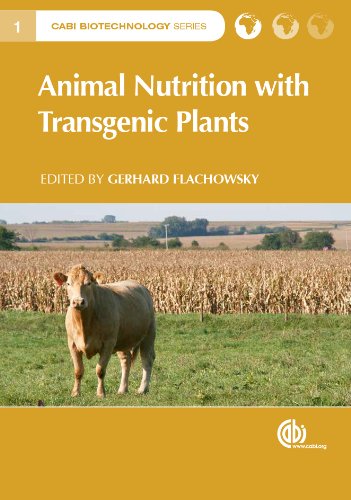
Animal Nutrition with Transgenic Plants 1st Edition by Gerhard Flachowsky ISBN 1780641761 9781780641768


Original price was: $50.00.$35.00Current price is: $35.00.
Animal Nutrition with Transgenic Plants 1st Edition by Gerhard Flachowsky – Ebook PDF Instant Download/Delivery: 1780641761, 9781780641768
Full download Animal Nutrition with Transgenic Plants 1st Edition after payment
Product details:
ISBN 10: 1780641761
ISBN 13: 9781780641768
Author: Gerhard Flachowsky
Animal Nutrition with Transgenic Plants 1st Table of contents:
1 Introduction and Background – Challenges and Limitations of GM Plants for Animal Nutrition
1.1 Global Food Situation
1.2 Plant Breeding as the Starting Point of the Food Chain
1.3 Food-producing Animals as Part of the Food Chain
1.4 Challenges and Developments
References
2 Fundamentals of Plant Biotechnology
2.1 The Importance of Biotechnology in Plant Breeding
2.1.1 Breeding and mutagenesis
2.1.2 Polyploidization
2.1.3 Somatic hybridization
2.1.4 Transgenesis or genetic modification
2.1.5 Molecular marker technology
2.2 GMO Technology: What, How and Its Importance to Plant Breeding
2.2.1 The first step: isolation and functional analysis of genes
2.2.2 The cloning step: from gene isolation towards the assembly of a functional transgene construct
2.2.3 Selectable markers
2.2.4 Cloning vectors for plant transgenes
2.2.5 Transfer of the transgene construct into the genome of a plant cell
2.2.6 Integration of the transgene construct into the genome of a plant cell
2.2.7 Identification/selection of transformants
2.2.8 Identification and characterization of an elite event
2.2.9 Risk evaluation of a transgenic event
2.2.10 The elite event is the starting point for the development of GM plant varieties
2.3 Future Prospects
References
3 Guidance Documents for Nutritional and Safety Assessment of Feeds from GM Plants
3.1 Introduction
3.2 EU Legislative Framework
3.3 The European Food Safety Authority
3.4 EFSA Guidance for Risk Assessment of Food and Feed from GM Plants
3.4.1 Molecular characterization
3.4.2 Food and feed safety evaluation
3.4.3 Toxicological assessment
3.4.4 Allergenicity assessment
3.4.5 Nutritional assessment
3.4.6 Environmental risk assessment
3.4.7 Exposure assessment
3.4.8 Risk characterization and post-market monitoring
3.5 Applications of GM Plants for Food and Feed Uses
3.6 Nutritional and Safety Assessment of GM Food and Feed Outside of Europe
3.6.1 Australia and New Zealand
3.6.2 Asia: China, India and Japan
3.6.3 North America: USA and Canada
3.6.4 South America: Argentina and Brazil
3.6.5 Africa: South Africa
3.7 Conclusions
References
4 Compositional Analysis for Nutritional and Safety Assessment of Feeds from GM Plants
4.1 Introduction
4.2 Principles of Safety Assessment
4.3 Methodology
4.3.1 Field trial design
4.3.2 Compositional analysis
4.3.3 Interpretation of outcomes
4.4 Composition in Relation to Nutrition
4.5 Outlook
4.6 Conclusions and Summary
References
5 Types of Feeding Studies for Nutritional and Safety Assessment of Feeds from GM Plants
5.1 Introduction
5.2 Types of Feeding Studies
5.3 Experimental Design and Animal Feeding
5.4 Laboratory Animals
5.5 Target Animals
5.5.1 Measuring digestibility/bioavailability (nutrient availability)
5.5.2 Efficiency studies including transfer of nutrients with GM plants with input traits (first generation)
5.5.3 Efficiency studies including transfer of nutrients with GM plants with output traits (second generation)
5.5.4 Long-term and multi-generation feeding studies
5.6 Conclusions
References
6 Feeding Studies with First-generation GM Plants (Input Traits) with Food-producing Animals
6.1 Introduction
6.2 Composition
6.3 Digestion Trials
6.4 Animal Feeding Studies
6.5 Conclusions
References
7 Feeding Studies with Second-generation GM Plants (Output Traits) with Food-producing Animals
7.1 Introduction
7.2 Protein and Amino Acids
7.3 Fat and Fatty Acids
7.4 Carbohydrates
7.5 Minerals
7.6 Vitamin Precursors and Vitamins
7.7 Enzymes
7.8 Phytate and Phytase
7.9 Conclusions
References
8 Long-term and Multi-generational Animal Feeding Studies
8.1 Introduction
8.2 Results
8.2.1 Long-term studies
8.2.2 Multi-generational studies
8.3 Discussion
8.3.1 Funding of long-term feeding studies
8.3.2 Short-term versus long-term feeding studies
8.3.3 Exploratory studies in the context of a step-by-step approach
8.3.4 Standard protocols, quality of the studies and harmonization of protocols
8.4 Conclusions
Acknowledgements
References
9 The Fate of Transgenic DNA and Newly Expressed Proteins
9.1 Introduction
9.2 General Aspects of GM Feed, Transgenic DNA and Newly Expressed Proteins
9.2.1 The fate of ingested feed DNA
9.2.2 The fate of ingested feed proteins
9.2.3 Resumé
9.3 Special Issues Concerning Distribution of Transgenic Polymers
9.4 Summary and Outlook
References
10 Influence of Feeds from GM Plants on Composition/Quality of Food of Animal Origin
10.1 Introduction
10.2 Studies with First-generation GM crops
10.2.1 Recombinant DNA and newly expressed proteins
10.2.2 Product composition and quality
10.3 Studies with Second-generation GM crops
10.3.1 Increased content of amino acids
10.3.2 Expression and use of stearidonic acid in soybeans (C18:4 n-3; stearidonic acid, SDA)
10.3.3 Conjugated linoleic acids
10.3.4 Higher concentration in micronutrients (e.g. the nutrient precursor, β-carotene)
10.4 Conclusions
References
11 Feed Additives Produced by GM Microorganisms (GMMs)
11.1 Introduction
11.2 What is a GMM?
11.3 The Traditional Use of Microorganisms and Derived Products in Feeds
11.3.1 Microorganisms added directly into feed
11.3.2 Microbial enzymes
11.3.3 Microbially produced amino acids
11.3.4 Microbial biomasses
11.4 The Safety Assessment of GMM-derived Feed Additives and Feed Ingredients
11.4.1 The safety requirements for GMMs and derived products as defined by the EFSA
11.4.2 The general safety requirements for microbial feed additives
11.5 Examples of GMM Feed Additives Assessed and Authorized in the EU
11.6 Conclusions
Note
References
12 The Pipeline of GM Crops for Improved Animal Feed: Challenges for Commercial Use
12.1 Introduction
12.2 Research Methodology for the Pipeline Survey
12.3 New Events in the Pipeline of GM Crops for Animal Nutrition
12.3.1 Low-phytate crops to improve phosphorus nutrition
12.3.2 Crops enriched in essential amino acids
12.3.3 Crops with a low lignin content and improved digestibility
12.3.4 Crops with a modified fatty acid profile or content
12.4. Discussion and Conclusions
Acknowledgements
Notes
References
13 Cultivation and Developments in the Field of GM Plants in Asia
13.1 The Current Status of GM Plants in Asia
13.1.1 China
13.1.2 India
13.1.3 Japan
13.1.4 Philippines
13.1.5 Korea
13.2 The Current R&D Status of GM Plants in Asia
13.2.1 The current R&D status of GM plants in China
13.2.2 The current R&D status of GM plants in Japan
13.3 Safety Assessment of Food/Feed from GM Plants in Asia
13.3.1 Substantial equivalence (SE) of nutrition
13.3.2 Nutritional assessment in animals
13.3.3 Toxicology studies
13.3.4 Allergenicity assessment
13.3.5 Horizontal transformation of introduced genes
13.4 Regulations on Administration of GM Plant Safety in Asia
13.5 The Future of GM Plants in Asia
References
14 Socio-economic Aspects of Growing GM Crops
14.1 Introduction
14.2 Impacts of Herbicide-tolerant Crops
14.2.1 Agronomic and economic effects
14.2.2 Environmental effects
14.3 Impacts of Insect-resistant Crops
14.3.1 Agronomic and economic effects
14.3.2 Social effects
14.3.3 Environmental and health effects
14.4 Macro-level Effects of GM Crops
14.5 Potential Impacts of Future GM Crops
14.5.1 Crops with improved agronomic traits
14.5.2 Crops with improved nutritional traits
14.6 Conclusions
People also search for Animal Nutrition with Transgenic Plants 1st:
animal nutrition with transgenic plants
what are transgenic plants and animals
transgenic plants and animals examples
what are transgenic plants give two examples
how does transgenic animals and plants work
Tags: Gerhard Flachowsky, Animal Nutrition, Transgenic Plants