

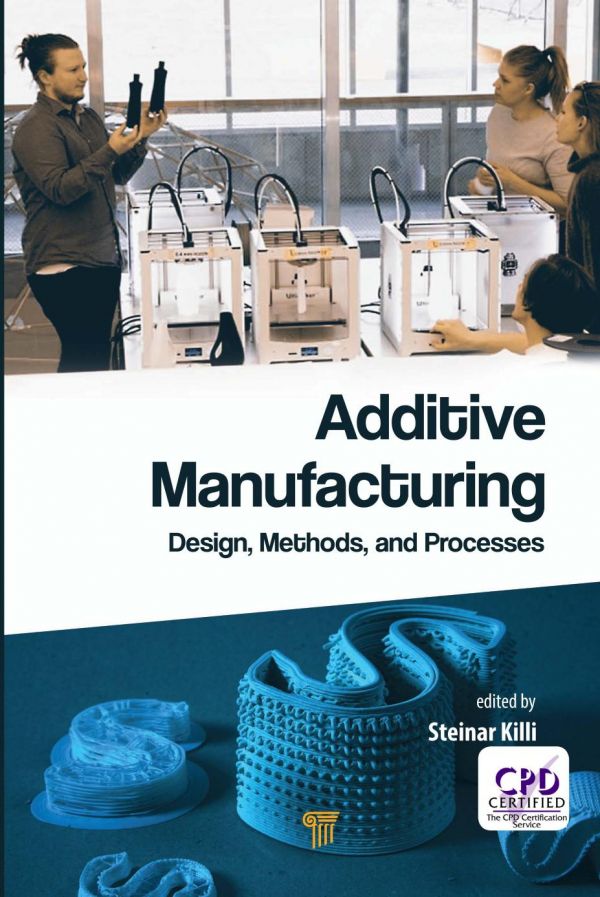
Additive Manufacturing Design Methods and Processes 1st Edition by Steinar Westhrin Killi ISBN 9814774162 9789814774161


Original price was: $50.00.$35.00Current price is: $35.00.
Additive Manufacturing Design Methods and Processes 1st Edition by Steinar Westhrin Killi – Ebook PDF Instant Download/Delivery: 9814774162, 9789814774161
Full download Additive Manufacturing Design Methods and Processes 1st Edition after payment
Product details:
ISBN 10: 9814774162
ISBN 13: 9789814774161
Author: Steinar Westhrin Killi
Additive Manufacturing Design Methods and Processes 1st Table of contents:
1. Scope of the Book
1.1 The Magic of 3D Printing
1.2 Legal Issues
1.3 The Power of Rhetoric
1.4 Maturing of Technology
1.5 “We Are All Designers”
1.6 From Rapid Prototyping to 3D Printing
1.7 The Chapters of the Book
2. A Design Sociotechnical Making of 3D Printing
2.1 Introduction
2.1.1 Disciplinary Boundaries and Claims to 3D Printing
2.1.2 Introducing a Sociotechnical Perspective to 3D Printing
2.1.2.1 Sociotechnical development from a design perspective
2.1.3 Outline
2.2 Socially Constructed Technologies and 3D Printing
2.2.1 The Relevance of Social Groups
2.2.2 From Video Production to Material Production
2.2.3 Technologies for Additive Making
2.2.4 Critical Theories and Studies of Technology
2.2.5 Unpacking the Views of 3D Printing
2.2.6 Socially Constructed Perspectives of Additive Making
2.2.7 Relevant Social Groups as Part of a Technological Frame
2.3 The 3D Printer Inventors
2.3.1 The First Wave of 3D Printer Inventors
2.3.2 The Second Wave of 3D Printer Inventors
2.4 Business Perspective of 3D Printing
2.4.1 Yet Another Industrial Revolution
2.4.2 Toward Economies-of-One
2.5 Designers’ Perspectives of 3D Printing Futures
2.5.1 Design and Additive Manufacturing
2.5.2 Designing with Technology
2.5.3 An Undetermined View of Design
2.6 A Layperson’s Perspective of 3D Printing Futures
2.6.1 A Layperson as a Maker
2.6.2 Making in a Learning Environment
2.7 Discussions and Conclusions
2.7.1 Summarizing the Perspectives
2.7.2 3D Printing Futures
2.7.3 Constructing a View of Sociotechnical Development
Appendix: Technologies for 3D Printing
3. AICE: An Approach to Designing for Additive Manufacturing
3.1 AICE: An Operational Model
3.1.1 Adapt
3.1.1.1 Design Thinking
3.1.1.2 Multitypes
3.1.1.3 Models Describing a Typical Design Process
3.1.1.4 Methods Used During a Design Process
3.1.2 Integrate
3.1.3 Compensate
3.1.3.1 Spare Parts
3.1.3.2 Production Aids
3.1.3.3 Enhancing the Design
3.1.4 Elongate
3.2 Using the AICE Model and How the Drinking Container Came Out
4. The Impact of Making: Investigating the Role of the 3D Printer in Design Prototyping
4.1 Introduction
4.1.1 Prototyping as Design Development
4.1.2 Making as a Critical Practice
4.1.3 Outline
4.1.4 Methods
4.2 Background
4.2.1 From Rapid Prototyping to Additive Manufacturing
4.2.2 Ubiquity and Stratification of 3D Printing
4.2.3 Contexts for Additive Making
4.2.4 Hybrid Artifacts
4.2.5 Making Representations as a Way of Designing
4.3 Prototypes and Design Representations
4.4 The Changing Character of Design
4.4.1 New Product Development
4.5 Situating AM Prototypes within Design Practice
4.5.1 Developmental Prototypes
4.5.2 Initial Concept and Maturation of the SunBell Lamp
4.6 Design Representations and Multitypes in Product Design
4.6.1 Multitypes in Rapid Prototyping
4.7 Multityping in Additive Manufacturing
4.7.1 Popular yet Professional?
4.7.2 Integrating AM in Product Design
4.7.3 Toward the Releasetype
4.8 Conclusions
5. Visual 3D Form in the Context of Additive Manufacturing
5.1 Introduction
5.2 Aesthetics
5.3 Design, Action, and Profession
5.4 Ideals and Origin
5.5 Relevance of the Historic Model for Tomorrow’s Form Givers
5.6 The Evolution of Form Model
5.6.1 Why Clay?
5.6.2 A Close-Up on Form
5.6.3 Distorted Forms
5.6.4 Intersectional Forms
5.7 Familiarity
6. Potential of Additive-Manufactured Products in Building Brands
6.1 Product Role in Brand Building
6.1.1 Role of Design Elements in Building a Brand
6.1.2 Brand Story and Product Story
6.2 Additive Manufacturing as One of Many Other Drivers That Affect a Product’s Role in Building Brands
6.2.1 Actual and Intended User Experience
6.2.2 Internal Drivers
6.2.3 External Drivers
6.3 How Additive Manufacturing Is Used in Building a Brand
6.3.1 Mykita
6.3.1.1 How AM is used in the Products
6.3.1.2 Design Elements
6.3.1.3 User Experience
6.3.1.4 Drivers
6.3.1.5 The Mykita Brand Story
6.3.2 pq Eyewear by Ron Arad
6.3.2.1 How AM is used in the Products and in Branding
6.3.2.2 Design Elements
6.3.2.3 User Experience
6.3.2.4 Drivers
6.3.2.5 The pq Eyewear Brand Story
6.4 Potential of Additive-Manufactured Products in Building a Brand
6.4.1 How They Used AM in Building a Brand
6.4.2 Opportunities in New Production Techniques
6.4.3 Form Freedom and Brand Development
6.4.4 Potential of Disruptive Stories
7. A Tale of an Axe, a Spade, and a Walnut: Investigating Additive Manufacturing and Design Futures
7.1 Prelude
7.2 Queries
7.2.1 On Discursive Design
7.3 “Problems”
7.3.1 Design, Narrative, Futures
7.4 Essayistic
7.4.1 Narrative
7.5 Promotion
7.5.1 Intersections
7.6 Foresight
7.6.1 Scenarios and Futures
7.6.2 The Fictive and Nondeterminist Futures
7.7 Reflections
7.7.1 Toward the Additive in Discursive Design
7.7.2 Design Baroque Futures
7.8 Generative Visions
People also search for Additive Manufacturing Design Methods and Processes 1st:
how to design for additive manufacturing
what is additive manufacturing process
types of additive manufacturing
additive manufacturing methods
additive design definition
Tags: Steinar Westhrin Killi, Additive Manufacturing, Design Methods