

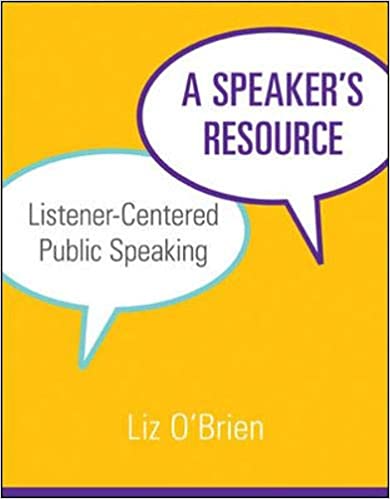
A Speaker s Resource Listener Centered Public Speaking 1st Edition by Liz O Brien ISBN 0073534196 9780073534190


Original price was: $50.00.$35.00Current price is: $35.00.
A Speaker s Resource Listener Centered Public Speaking 1st Edition by Liz O Brien – Ebook PDF Instant Download/Delivery: 0073534196, 9780073534190
Full download A Speaker s Resource Listener Centered Public Speaking 1st Edition after payment
Product details:
ISBN 10: 0073534196
ISBN 13: 9780073534190
Author: Liz O Brien
A Speaker s Resource Listener Centered Public Speaking 1st Table of contents:
PART 1: Benefits and Responsibilities of Public Speaking
-
Chapter 1: Speaking in Public
-
Recognize the benefits of knowing how to speak in public
-
Manage your learning process
-
View public speaking as communication
-
Appreciate the nature and history of the public speaking course
-
-
Chapter 2: Giving Your First Speech – The Public Speaking Process
-
Understand the general process of preparing, organizing, and presenting a speech
-
Use the Keys to Listenability to help manage the speechmaking process
-
-
Chapter 3: Creating Confident Presentations
-
Understand why you feel “nervous”
-
Make adrenaline work for you
-
Use strategies for reducing and managing excess speaker energy
-
-
Chapter 4: Applying Ethics
-
Know what ethics is
-
Recognize ethical challenges and consequences
-
Be ethical and avoid plagiarism
-
Use civility in speaking
-
-
Chapter 5: Listening to the Speeches of Others
-
Know what good listening is
-
Understand the listening process
-
Differentiate listening levels
-
Be an excellent public listener
-
-
Chapter 6: Knowing and Evaluating Yourself as a Public Speaker
-
Take an honest self-inventory
-
Set goals for each presentation
-
Begin self-evaluation and how to evaluate others
-
PART 2: Getting Started
-
Chapter 7: Approaching Public Speaking as a Listener‑Centered Practice
-
Understand public listeners
-
Appeal to listener needs via listenability
-
Listenability goals: conversational patterns and considerateness
-
-
Chapter 8: Analyzing Your Audience
-
Understand the role of audience analysis
-
Adapt your presentation accordingly
-
Know when and how to analyze your audience
-
-
Chapter 9: Determining Your Speech Purpose, Topic, and Thesis
-
Consider the general reason for speaking
-
Choose meaningful topics
-
Move from topic to thesis statement
-
-
Chapter 10: Incorporating Your Research
-
Use tips before researching
-
Make use of breadth of sources
-
Evaluate and cite sources for listener comprehension
-
-
Chapter 11: Supporting Your Ideas
-
Select appropriate support
-
Use objective, illustrative, subjective support and testimony
-
PART 3: Organizing and Developing Your Speech
-
Chapter 12: Organizing Your Ideas
-
Finalize thesis and main points (informative vs persuasive)
-
-
Chapter 13: Outlining Your Ideas
-
Understand and create the preparation outline
-
-
Chapter 14: Creating the Introduction
-
Role, development, and delivery of introductions
-
-
Chapter 15: Creating the Conclusion
-
Role, development, delivery of conclusions, and handling Q&A
-
-
Chapter 16: Using Transitions
-
Role, development, and use of transitions during presentations
-
PART 4: Presenting Your Speech
-
Chapter 17: Choosing a Method of Delivery
-
Extemporaneous, impromptu, manuscript, and memorized speaking
-
-
Chapter 18: Creating Speaking Notes
-
Differences between notes and outline; tips for effective notes
-
-
Chapter 19: Practicing Your Presentation
-
Importance of practice and finding the right amount
-
-
Chapter 20: Communicating with Language
-
Inclusive, accurate, and personality-reflective language
-
-
Chapter 21: Communicating with Your Voice
-
Role and interpretation of vocal qualities
-
-
Chapter 22: Communicating with Your Body
-
Nonverbal communication and adaptation for varied speakers
-
-
Chapter 23: Using Narrative
-
Role and application of narrative in speeches
-
-
Chapter 24: Selecting and Incorporating Visual Support
-
Role of visuals; dimensions of visual support; use of technology
-
-
Chapter 25: Maintaining Listener Engagement
-
How to connect and engage an audience through language and ideas
-
-
Chapter 26: Establishing Your Credibility as a Speaker
-
Role of credibility and how to establish and manage it
-
PART 5: Types of Public Speaking
-
Chapter 27: Speaking to Inform
-
Chapter 28: Speaking to Persuade
-
Chapter 29: Developing Your Arguments
-
Chapter 30: Speaking on Special Occasions
People also search for A Speaker s Resource Listener Centered Public Speaking 1st:
a speaker’s level of credibility is determined by
a speaker’s frame of reference and a listener’s frame
a speaker’s movement serves to relieve tension
a speaker supports a point by saying
resource speakers definition