

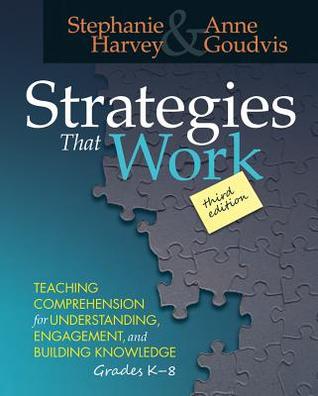
Strategies That Work Teaching Comprehension for Engagement Understanding and Building Knowledge Grades K 8 3rd Edition by Stephanie Harvey, Anne Goudvis ISBN 1625310633 9781625310637

Original price was: $50.00.$35.00Current price is: $35.00.
Strategies That Work Teaching Comprehension for Engagement Understanding and Building Knowledge Grades K 8 3rd Edition by Stephanie Harvey, Anne Goudvis – Ebook PDF Instant Download/Delivery: 1625310633, 9781625310637
Full download Strategies That Work Teaching Comprehension for Engagement Understanding and Building Knowledge Grades K 8 3rd Edition after payment
Product details:
ISBN 10: 1625310633
ISBN 13: 9781625310637
Author: Stephanie Harvey, Anne Goudvis
Strategies That Work Teaching Comprehension for Engagement Understanding and Building Knowledge Grades K 8 3rd Table of contents:
Part I: The Foundation of Meaning
Chapter 1: Reading Is Thinking
-
The Reader Writes the Story
-
Thinking-Intensive Reading
-
Develop Awareness
-
Become Strategic
-
Recognize the Power of Thinking
-
Comprehension as a Means to Building Knowledge and Understanding
-
Reading with a Purpose
-
Efferent Reading and Aesthetic Reading
Chapter 2: Reading is Strategic
-
Strategic Reading as a Thinking Disposition
-
Developing Metacognitive Knowledge: Monitoring Comprehension
-
Leaving Tracks of Thinking
-
Strategies That Work
-
Monitor Comprehension
-
Activate and Connect to Background Knowledge
-
Ask Questions
-
Infer and Visualize Meaning
-
Determine Importance
-
Summarize and Synthesize
-
-
From Theory to Practice: Research That Supports Comprehension Instruction
-
Long-Standing Studies
-
Recent Research
-
-
A Common Language for Teaching and Learning
Chapter 3: Comprehension at the Core: Building Knowledge Through Thinking-Intensive Reading
-
Thinking-Intensive Learning
-
The Comprehension Continuum
-
Current Trends
-
Career and College Readiness and 21st Century Skills
-
Close Reading, Listening, and Viewing
-
Text Complexity
-
Critical Thinking
Chapter 4: Twenty-First Century Reading: Books and Beyond
-
Text and Media Matter
-
The Possibilities of Short Text
-
Choosing Short Text for Instruction
-
Choosing Short Text to Launch Comprehension Instruction
-
Harnessing Technology to Enhance Comprehension Instruction
-
Digital Reading
-
Principles for Integrating Comprehension and Technology
-
Access for All: Differentiate with Technology
-
The Jury Is Still Out
-
The Possibilities of Picture Books
-
Building Background Knowledge and Teaching Content
-
Challenging Kids to Think
-
Differentiating Instruction
-
Choosing Picture Books Just Because We Love Them
-
Beyond Picture Books: Choosing Longer Text
-
Choosing Books: Interest, Readability, and Purpose
-
Interest
-
Readability
-
Purpose
-
-
Helping Kids Select Books to Read
-
A Word About Reading Aloud
Chapter 5: Effective Comprehension Instruction: Teaching, Tone, and Assessment
-
Effective Comprehension Instruction
-
Explicit Instruction: The Gradual Release of Responsibility
-
Teaching Comprehension in the Reading Workshop
-
Strategy Instruction: A Means to an End
-
Launching Strategy Instruction
-
One at a Time? For How Long?
-
Is There a Sequence?
-
Setting the Tone: Building a Literate Community
-
Foster Passion and Curiosity
-
An Environment That Values Collaborative Learning and Thinking
-
Large Blocks of Time for Extended Reading and Writing
-
-
Language Matters
-
Authentic Response
-
Responsive Teaching and Differentiation
-
Text Matters
-
Room Arrangement Matters
-
Accessible Resources
-
Assessing Comprehension: Teaching with the End in Mind
-
Finding Out What Students Are Thinking
-
What About Grades? Moving from Assessment to Evaluation
-
-
Out of the Pens of Kids
Part II: Strategy Lessons
Chapter 6: Instructional Practices for Teaching Comprehension
-
Instructional Practices
-
Thinking Aloud
-
Rereading
-
Interactive Reading Aloud
-
Annotating Text
-
Co-constructing Anchor Charts
-
Guiding Discussion and Student Conversation
-
Sharing Our Own Literate Lives
-
Plan Ahead to Highlight Specific Teaching Points
-
Share Aspects of the Inner Conversation
-
Beyond Dioramas: Responding to Reading
Chapter 7: Monitoring Comprehension: The Inner Conversation
-
Strategy Lessons: Monitoring Comprehension
-
Following the Inner Conversation
-
Follow Your Inner Conversation When Reading Digital Text
-
Noticing When We Stray from the Inner Conversation
-
Noticing and Exploring Thinking
-
Read, Write, and Talk
-
Leave Tracks of Thinking: Annotating in the Primary Grades
-
Read, Talk, and Jot: Annotating Nonfiction Text and Images
-
Monitoring Comprehension While Reading on the Web
-
Teaching with the End in Mind: Assessing What We’ve Taught
-
Suggestions for Differentiation
Chapter 8: Activating, Connecting, and Building: Why Background Knowledge Matters
-
Connecting the New to the Known and Building Knowledge
-
Strategy Lessons: Activating, Connecting to, and Building Background Knowledge
-
Surfacing Big Ideas with Personal Connections
-
Connecting Text to Our Own Experiences: Relating the Characters to Ourselves
-
Distracting Connections
-
Reading to Build Content Knowledge About Important Concepts
-
Making Connections Between Small Poems and Our Lives
-
Using Background Knowledge About Reading to Enhance Your Viewing Experience
-
Noticing and Thinking About New Learning
-
Revising Misconceptions When Learning Something New
-
“Research Lab” in Kindergarten
-
Tangential Connections: Pitfalls to Understanding
-
Connections in Common
-
Will Any Connection Do?
-
How Does That Connection Help You Understand?
-
Teaching with the End in Mind: Assessing What We’ve Taught
-
Suggestions for Differentiation
Chapter 9: Questioning: The Strategy That Propels Readers Forward
-
Strategy Lessons: Questioning
-
Share Your Questions About Your Own Reading
-
Some Questions Are Answered, Others Are Not
-
Collaborating on Questions
-
Building in Time, Routines, and Structures for Asking Questions, Wondering, and Searching for Answers
-
Asking and Answering Questions in Seesaw
-
The More We Learn, the More We Wonder
-
Reading with a Question in Mind
-
Reading with a Question in Mind When Reading Digitally
-
Thick and Thin Questions
-
Reading to Answer a Question: Asking Questions to Gain Information
-
Thinking Beyond the Book: Creating a Line of Research Questions
-
Questioning That Leads to Inferential Thinking
-
Lingering Questions
-
Authentic Questions or Assessment Questions
-
Teaching with the End in Mind: Assessing What We’ve Taught
-
Suggestions for Differentiation
-
Questioning Assessment Commentary
-
Independent work examples
Chapter 10: Visualizing and Inferring: Making What’s Implicit Explicit
-
Visualizing: Movies in the Mind
-
Strategy Lessons: Visualizing
-
Drawing to Respond to Reading
-
Visualizing from a Vivid Piece of Text
-
Visualizing and Sketchnoting Using Digital Tools
-
Visualizing with Wordless Picture Books
-
Visualizing in Reading, Showing Not Telling in Writing
-
Beyond Words and Pictures: Musical Response to Literature
-
Inferential Thinking: Reading Between the Lines
-
Strategy Lessons: Inferring
-
Inferring Feelings with Kindergartners
-
Kindergartners Get the Message
-
Making Inferences in Media
-
Inferring and Visualizing with Poetry
-
Inferring from Images and Text in Nonfiction
-
Analyzing Infographics: Understanding and Interpreting Visual and Text Features
-
Inferring the Meaning of Unfamiliar Words
-
Recognizing Plot and Inferring Themes
-
Distinguishing Between Major Themes and Minor Themes
-
Understanding Graphic Novels: Inferring and Visualizing for Deeper Comprehension
-
Inferring and Visualizing to Understand Historical Concepts
-
Rereading to Clear Up Misconceptions
-
Teaching with the End in Mind: Assessing What We’ve Taught
-
Suggestions for Differentiation
-
Examples of student work
Chapter 11: Determining Importance in Text: The Nonfiction Connection
-
The Link Between the Strategy of Determining Importance and the Genre of Nonfiction
-
Distilling the Essence of Nonfiction Text
-
Overviewing
-
Annotating, Coding, Underlining and Even Highlighting
-
Nonfiction Features That Signal Importance
-
Strategy Lessons: Determining Importance
-
Determining Importance in Digital Media
-
Recording Important Information Through Real-Time Observations
-
Building Background Knowledge of Nonfiction Features
-
Becoming Familiar with the Characteristics of Nonfiction Trade Books
-
Determining What’s Important When Writing Information
-
Using a Digital Tool to Record and Sort Important Versus Interesting Information
-
Distinguishing Your Thinking from the Author’s
-
Distinguishing Between an Opinion and an Informed Opinion
-
Creating Listicles by Analyzing Nonfiction Text
-
Using FQR Think Sheets to Understand Information
-
Digital Note Taking with Primary Kids
-
Reading for Details
-
Teaching with the End in Mind: Assessing What We’ve Taught
-
Suggestions for Differentiation
Chapter 12: Summarizing and Synthesizing Information: The Evolution of Thought
-
How Background Knowledge Impacts Synthesizing
-
Strategy Lessons: Summarizing and Synthesizing Information
-
Making Synthesizing Concrete
-
Retelling to Summarize Information
-
Creating Field Guides in Science
-
Synthesizing: How Reading Changes Thinking
-
Synthesizing Media with Text
-
Reading for the Gist
-
Writing a Short Summary
-
Synthesizing Big Ideas and Common Themes Across Several Texts
-
Video Summaries
-
Trying to Understand: Seeking Answers to Questions That Have None
-
Teaching with the End in Mind: Assessing What We’ve Taught
-
Suggestions for Differentiation
Part III: Comprehension Across the Curriculum
Chapter 13: Content Literacy: Reading, Writing, and Researching in Science and Social Studies
-
Content Literacy Principles
-
Current Trends in Science and Social Studies Instruction
-
Active Learning in the Researcher’s Workshop
-
Thinking About Content
-
Hallmarks for Creating an Environment for Thoughtful Content Literacy Instruction
-
Practices for Reading to Learn in Social Studies and Science
-
Literacy Practices for Social Studies and History
-
Literacy Practices for Science
Chapter 14: Researcher’s Workshop: Inquiry Across the Curriculum
-
Inquiry Framework
-
Essential Questions and Enduring Understandings
-
Classroom Inquiries
-
Investigating Community Workers: An Inquiry with Young Children
-
Learning from Scientists: Exploring Paleontology, Dinosaurs, and Fossils
People also search for Strategies That Work Teaching Comprehension for Engagement Understanding and Building Knowledge Grades K 8 3rd:
strategies that work 3rd edition pdf
strategies that work teaching comprehension for understanding and engagement
strategies that work 3rd edition free pdf
strategies that work teaching comprehension to enhance understanding
strategies that work 3rd edition
Tags: Stephanie Harvey, Anne Goudvis, Strategies, Teaching Comprehension