

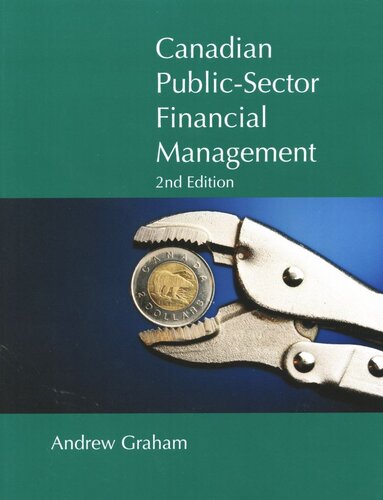
Canadian Public Sector Financial Management 2nd Edition by Andrew Graham ISBN 1553394267 978-1553394266


Original price was: $50.00.$35.00Current price is: $35.00.
Canadian Public Sector Financial Management 2nd Edition by Andrew Graham – Ebook PDF Instant Download/Delivery:1553394267 ,978-1553394266
Full download Canadian Public Sector Financial Management 2nd Edition after payment
Product details:
ISBN 10:1553394267
ISBN 13:978-1553394266
Author:Andrew Graham
“It’s not your money – it belongs to the people.” Taking this simple axiom seriously creates unique challenges for the management of public funds. Andrew Graham outlines all aspects of public sector financial management, addressing how funds are obtained, what rules of accountability and accounting are applied, who controls public funds, what constitutes effective budget management at the operational level, and how accountability and oversight are dealt with. The skills demanded of public sector managers in financial management are becoming increasingly onerous and complex. Canadian Public Sector Financial Management will be of great help to practitioners in the public sector who wish to better understand their financial responsibilities as well as to students of public administration and the general reader concerned with public financial management issues. The secondedition of Canadian Public-Sector Financial Management updates the widely used text, reflecting on the developments in public financial management over the past six years. Developments in financial reporting and the widespread need for governments to constrain growth and manage their finances more closely are looked at. It remains focused on the practitioner and manager in the public sector.
Table of contents:
Chapter 1 Financial Management in the Public Sector
Scope and Nature of the Public Sector
Size of Canada’s Public Sector
Employment: The Government Side of the Public Sector
The Real Extent of Public-Sector Employment
Implications of Contracting in the Public Sector
Expenditures and Revenues: Government Sector
A Closer Look at Government Expenditures
What Makes Financial Management Different and Important in the Public Sector?
Governments Serve Multiple Objectives and Not Only the Profit Motive
Governments Bear a Wide Range of Risk
With Great Power Comes Higher Levels of Accountability
Government Financial Management Operations Are Governed by Legislation
The Importance of the Budget
Lack of Equity Ownership/Reality of Collective Ownership
Most Governments’ Tangible Capital Assets Are Different in Nature than Those Held by a Business
Government Capital Spending Will Focus on a Range of Policy Benefits Rather than Only the Efficiency of the Operation or Lowest Cost
The Principal Source of Revenue for Governments Is Taxation, but This Is a Non-Exchange Transaction
Governments Hold Assets Acquired in the Right of the Crown
Governments Operate in a Non-Competitive Environment
Governments Have Debt Capacities Unparalleled by Most Other Organizations
Other Factors that Affect Public-Sector Financial Management
Summing Up
Chapter 2 Public-Sector Accounting Principles
You are Not an Accountant
Defining Accounting
Users of Accounting Information: Who Cares? Who Needs to Care?
Internal Users
External Users
Access
Frequency
Detail
Expertise and Understanding
Response
What Management and Financial Accounting Do
GAAP: The Accounting Framework
Who Sets These Standards?
Generally Accepted Accounting Principles
1. The Entity Principle
2. The Cost Principle: Money as a Measure
3. The Going Concern Principle
4. The Conservatism and Cost Principle
5. The Matching Principle
6. The Consistency Principle
7. The Materiality Principle
8. The Accrual Principle
The Quality of Accounting Information
Summing Up
Chapter 3 Financial Statements
The Accounting Cycle
Accounting Technologies
Double-Entry Bookkeeping and the Fundamental Accounting Equation
Debits and Credits: The Tools to Balance the Equation
Relating the Concept of Debits and Credits to the Fundamental Equation
Journal and Ledger Functions: Building Towards Financial Statements
Building Blocks of Financial Statements
Assets
Current Assets
Fixed and Long-Term Assets
Depreciation
Liabilities
Current Liabilities
Long-Term Liabilities
Contingent Liabilities
Net Worth
Financial Statements – A General Overview
Balance Sheet
Management Discussion and Analysis
The Statement of Operations
Statement of Changes in Net Assets or Net Debt
Cash Flows Statement
Financial Condition Analysis and the Application of Financial Ratios in Determining the Solvency and Sustainability of an Organization
Why FCA is of Importance to Government Financial Managers
Key Tools of FCA
The Use and Abuse of Financial Ratios
Summing Up
Chapter 4 Accrual Accounting and Budgeting
Accrual Accounting and Public-Sector Reform: It’s an Accrual World in Government Now
So What Does Accrual Mean for the Line Manager?
Moving from Cash to Accrual in the Public Sector
Recognition
Just What is Cash-Basis Accounting: An Overview
Example of Cash Accounting
Accrual Basis Accounting: An Overview
Expense or Expenditure in Accounting
Key Differences Between Cash and Accrual Accounting
Treatment of Non-Cash Transactions
Implications of the Accrual Basis for Public-Sector Financial Reporting
Risks of Accrual
Accrual Budgeting
Summing Up
Chapter 5 Budgets: What They Are and What They Do
What is a Budget?
Cultural Dynamics of Budget Formulation
A Budget is a Budget&Well, That Depends: Many Uses of the Term Budget
Distinguishing Public- and Private-Sector Budgets
Cyclical Nature of the Managerial Budgets Past, Present, and Future
Types of Budgets
Relationship of Revenue Budgets to Expenditure or Operating Budgets
Budget Architecture
Operating Budgets
Cash Budgets
Capital Budgets
What You Can’t Budget For
Structure of Operating Budgets
Line-Item Budgets
Program or Responsibility Centre Budgets
Functional Budgets
Flexible or Rolling Budgets
Fixed and Variable Costs in Determining Budget Fluctuations
Funds in Budget Structure
Types of Funds
Off-Budget Funds and Expenditures
More Complex Forms of Budgets: Linking Money to Results
Zero-Based Budgeting
Performance or Results-Based Budgets
Some Concluding Thoughts and What This Means to Managers
Chapter 6 Planning and Budgeting
Introduction
Budgets and Planning Cycles
The Budget Cycle: The Basics
Strategic Planning Phase
The Architecture of a Strategic Plan
Moving to Action and Into the Budget
Budget Preparation Phase
Role of Revenue and Workload Forecasts in Budget Calculation
Revenue Assumptions
Cost Analysis and Forecasting
Controllable and Uncontrollable Costs
Basic Costing Tools and Definitions
Direct and Indirect Costs
Activity-Based Costing and the Distribution of Indirect Costs
Fixed and Variable Costs
Break-Even Analysis
Appropriation Process: Getting Approval to Spend
Inherent Tensions in the Budgetary Process
Balancing Revenues and Expenditures: Financial Discipline
The Wants Versus the Won’ ts: Central Agency Versus Program Advocates
The New Versus the Old
Robbing Peter to Pay Paul: Moving the Money Around
Complexity Versus Clarity
Summing Up: Trends to Watch
Chapter 7 Capital Planning and Budgeting
Characteristics of Capital Assets
What does it Cost? What is it Worth?
Capital Planning and Budgeting
Capital Improvement Plans
Alternative Financing of Capital Projects
Risk Assessment: ‘What Can Go Wrong?”
The Financial Outcome: The Capital Budget
Challenges in Capital Budgeting and Accounting in the Public Sector
Social and Public Policy Value Versus Monetized Market Value
Depreciation
Distinguishing Capital and Operating Costs
Asset Measurement
Third Party Investment Strategies
Tools for Analyzing Capital Costs
Business Cases
Time Value of Money
Present and Future Value Calculations
Using Present Value Calculations to Compare Options
Using Net Present Value to Evaluate Investment Decisions
Cost Benefit Analysis
Summing Up
Chapter 8 Taking It Back: Reallocation and Budget Cutting
Context: Budget Level and Program Level
Decremental Budgeting
Continuous Reallocation: In-Year Cash Management
General Approaches to Reduce Spending
Accross-the-Board Cuts
Strategic Reviews
Efficiency Gains
Outsourcing and Privatization
General Approaches to Reallocation
Strategies and Tools for Reduction and Reallocation
Service Level Changes
Change the Employment Arrangements to Reduce Salaries
Reduce Staffing Permanent and Temporary
Defer or Cancel Investments
Reduce or Eliminate Discretionary Spending
Amalgamate and Reorganize
Increase Fees and User Costs
Internal Transfers Temporary and Permanent
Sell Off Assets
Cutback Management
Framing the Cutback: Risks and Consequences
Knowing Where to Look: Control Brings Insight
Implementing Cutbacks
In Summation
Chapter 9 Managerial Control
Introduction: Control is About Delivering
Who Has an Interest in Control?
The Control Process: It Never Ends
Risk and Risk Management: Heart of the Control Process
What is Risk and Risk Management?
Not All Risks are Created Equal
General Approaches to Managing Risks
Control: Who, What and How
Whom to Control, When to Control and Who has Control
Who is the Controller?
The Array of Control Tools
The Control Environment: Trust and Ethics and Setting the Tone
Trust
An Ethical Culture
Facilitative or Strategic Control
Protective Controls
Testing the Controls
Finding the Balance Between Control, Discretion and Cost
The Concept of Controllership in Government
Chapter 10 Cash Management: In-Year Budget Control and Monitoring
Defining Cash Management
In-Year Cash Management Versus Budget Planning
A Budget in Hand: Good First Step
Establishing a Cash-Management System
Preparing a Cash-Management Plan
Spending Plan: Estimating Budget Performance for the Reporting Period
Arriving at an Adjusted Budget
Tools of Forecasting
Use of Historical Data
Use of Formulae, Average Costs, and Revenues at Shady Gulch
Monitoring Financial Performance and Variance Analysis
Governance
Setting Up a Monitoring Timetable
Performance Reports
Variance Reports
Forecasted Versus Actual Report
Analysis of Key Variances Report
Historical Information
Reallocation and Readjustment
Authority to Reallocate
Freeing Up the Funds
The Danger of Rewarding Bad Management
Building Incentives and Protecting Budget Integrity
The Crucial Relationship Between Line Manager and Financial Advisor
Summing Up
Establishing and Using Effective Governance
Giving Assurance to Good Management
Rigorous Review of Commitments
Chapter 11 Confirming Control: Budget Accountability and Reporting
Accountability: Big Idea with a Broad Reach
The Public Sector Accountability Landscape: Accountable for What?
Qualitative and Quantitative
What Accountability Means
A Continuum of Accountabilities
The Relationship of Accountability and Financial Reporting
The Users of Financial and Performance Reports
The Objectives of Financial and Performance Reporting
Integrating Financial and Non-Financial Information
Reports and More Reports: A Sampler
Annual Reporting
Audit and Financial Management
Categories of Audits
Internal Audit Functions
Risk and Materiality in Determining What to Audit
Need for Independence
Audit Committees
External Audit: The Legislative Auditor
Independence
Legislated Mandate
Accountability and Oversight of Arm’s-Length Agencies and Contracted Services
Summing Up
Appendix 1 The Budget Games People Play
Appendix 2 A Brief History of Budgeting and Financial Management Reform in North America
Appendix 3 Federal Government’s Comptrollership Capacity Checklist
Appendix 4 Internal Control Checklist
Appendix 5 The Financial Management Capability Model: Auditor General of Canada
Appendix 6 The Cash Management Games People Play
People also search for:
public sector financial statements
canadian public company filings
financial management group government of canada
what is public sector financial management
canadian financial market infrastructure
Tags: Andrew Graham, Financial, Management