

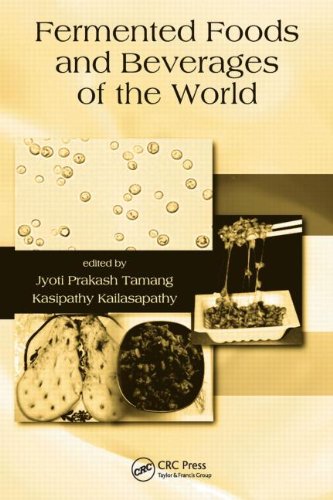
Fermented Foods and Beverages of the World 1st Edition by Jyoti Prakash Tamang, Kasipathy Kailasapathy ISBN 1420094955 9781420094954

Original price was: $50.00.$35.00Current price is: $35.00.
Fermented Foods and Beverages of the World 1st Edition by Jyoti Prakash Tamang, Kasipathy Kailasapathy – Ebook PDF Instant Download/Delivery: 1420094955, 9781420094954
Full download Fermented Foods and Beverages of the World 1st Edition after payment
Product details:
ISBN 10: 1420094955
ISBN 13: 9781420094954
Author: Jyoti Prakash Tamang, Kasipathy Kailasapathy
Fermented Foods and Beverages of the World 1st Table of contents:
1 Dietary Cultures and Antiquity of Fermented Foods and Beverages
1.1 Cultural Foods
1.1.1 Hindu Foods
1.1.2 Buddhist Foods
1.1.3 Christian Foods
1.1.4 Muslim Foods
1.2 World Dietary Culture
1.2.1 Use of Hands
1.2.2 Use of Chopsticks
1.2.3 Use of Cutlery
1.2.4 Evolution of Dietary Culture
1.3 Antiquity and Cultural Aspects
1.3.1 Fermented Vegetables
1.3.2 Fermented Soybeans and Non-Soybean Legumes
1.3.3 Fermented Cereals
1.3.4 Fermented Milks
1.3.5 Fermented Fish
1.3.6 Fermented Meats
1.3.7 Fermented Beverages and Alcoholic Drinks
1.4 Conclusion
References
2 Diversity of Fermented Foods
2.1 Introduction
2.1.1 Definitions of Fermented Foods
2.1.2 A3 for Fermented Foods
2.2 Microbial Diversity of Fermented Foods
2.2.1 Bacteria
2.2.1.1 Lactic Acid Bacteria
2.2.1.2 Bacillus
2.2.1.3 Micrococcaceae
2.2.1.4 Other Bacteria
2.2.2 Yeasts
2.2.3 Mycelial Fungi
2.3 Types of Fermented Foods
2.3.1 Fermented Vegetables
2.3.2 Fermented Soybeans and Non-Soybean Legumes
2.3.3 Fermented Cereals
2.3.4 Fermented Milks
2.3.5 Fermented, Dried, and Smoked Fish Products
2.3.6 Fermented, Dried, and Smoked Meat Products
2.3.7 Fermented Root/Tuber Products
2.3.8 Miscellaneous Fermented Products
2.4 Biological Importance of Fermented Foods
2.4.1 Biotransformation into Tasty Food
2.4.2 Biological Preservation
2.4.3 Biological Enhancement of Nutritional Value
2.4.4 Biodegradation of Undesirable Compounds
2.4.5 Bioimprovement in Lactose Metabolism
2.4.6 Probiotic Properties of Fermented Foods
2.4.7 Bioproduction of Enzymes
2.4.8 Antimicrobial Properties
2.4.9 Medicinal Values
2.5 Conclusion
References
3 Diversity of Fermented Beverages and Alcoholic Drinks
3.1 Introduction
3.2 Ethnic Amylolytic Mixed Starters
3.2.1 Koji
3.2.2 Marcha
3.2.3 Ragi
3.2.4 Bubod
3.2.5 Nuruk
3.2.6 Loogpang
3.2.7 Men or Banh
3.2.8 Chiu-Yueh
3.2.9 Hamei
3.2.10 Mana
3.2.11 Manapu
3.3 Nondistilled Mild Alcoholic Beverage Consumed as a Food Produced by Amylolytic Starters
3.3.1 Kodo Ko Jaanr
3.3.2 Bhaati Jaanr
3.3.3 Lao-Chao
3.3.4 Tapé
3.3.5 Tapai
3.3.6 Tapuy
3.3.7 Poko
3.4 Nondistilled and Filtered Alcoholic Beverages Produced by Amylolytic Starters
3.4.1 Saké
3.4.2 Basi
3.4.3 Yakju and Takju
3.4.4 Brem
3.4.5 Krachae
3.5 Distilled Alcoholic Beverages Produced by Amylolytic Starters
3.5.1 Raksi
3.6 Alcoholic Beverages Produced Using Human Saliva as an Amylolytic Starter
3.6.1 Chicha
3.7 Alcoholic Beverages Produced by Monofermentation
3.7.1 Beer
3.8 Alcoholic Beverages Produced from Honey
3.8.1 Tej
3.9 Alcoholic Beverages Produced from Plants
3.9.1 Pulque
3.9.2 Palm Wine (Toddy)
3.9.3 Kanji
3.10 Alcoholic Beverages Produced by Malting or Germination
3.10.1 Bantu Beer/Kaffir Beer/Sorghum Beer
3.10.2 Pito
3.10.3 Tchoukoutou
3.11 Alcoholic Beverages Produced from Fruits without Distillation
3.11.1 Wine
3.11.2 Cider
3.12 Distilled Alcoholic Beverages without Amylolytic Starters
3.12.1 Whisky
3.12.2 Rum
3.12.3 Brandy
3.13 Conclusion
References
4 Functional Yeasts and Molds in Fermented Foods and Beverages
4.1 Introduction
4.2 Functional Roles of Yeasts and Molds in Fermented Foods of the World
4.2.1 Fermented Foods of Asian Origin
4.2.1.1 Furu
4.2.1.2 Idli
4.2.1.3 Ragi and Men
4.2.2 Fermented Foods of Australasian Origin
4.2.2.1 Bubod
4.2.2.2 Puto
4.2.2.3 Tapuy
4.2.3 Fermented Foods of African Origin
4.2.3.1 Mawè
4.2.3.2 Tchoukoutou
4.2.3.3 Kachasu
4.2.4 Fermented Foods of European Origin
4.2.4.1 Sourdough
4.2.4.2 Cheese
4.2.4.3 Fermented Meats
4.2.5 Fermented Foods of Middle East Origin
4.2.5.1 Tarhana
4.2.5.2 Kefyr
4.2.5.3 Koumiss
4.2.6 Fermented Foods of Latin American Origin
4.2.6.1 Pozol
4.2.6.2 Pulque
4.2.6.3 Huitlacoche
4.3 Benefits of, and Some Problems Associated with, Fungal-Fermented Foods
4.4 Conclusion
References
5 Fermented Vegetable Products
5.1 Introduction
5.2 Traditional Fermented Vegetables
5.2.1 Sauerkraut
5.2.1.1 History
5.2.1.2 Preparation and Culinary
5.2.1.3 Microbiology
5.2.1.4 Starter Cultures
5.2.1.5 Biochemistry
5.2.1.6 Food Safety
5.2.1.7 Socioeconomy
5.2.2 Kimchi
5.2.2.1 History
5.2.2.2 Preparation and Culinary
5.2.2.3 Microbiology
5.2.2.4 Starter Cultures
5.2.2.5 Food Safety
5.2.2.6 Functional Properties
5.2.2.7 Biochemistry and Nutrition
5.2.2.8 Socioeconomy
5.2.3 Gundruk
5.2.3.1 History
5.2.3.2 Preparation and Culinary
5.2.3.3 Microbiology
5.2.3.4 Food Safety
5.2.3.5 Functional Properties
5.2.3.6 Starter Cultures
5.2.3.7 Nutrition
5.2.4 Sinki
5.2.4.1 Preparation and Culinary
5.2.4.2 Microbiology
5.2.5 Khalpi
5.2.5.1 Preparation and Culinary
5.2.5.2 Microbiology
5.2.5.3 Starter Cultures
5.2.6 Fermented Olives
5.2.6.1 History
5.2.6.2 Preparation and Culinary
5.2.6.3 Microbiology
5.2.6.4 Starter Cultures
5.2.6.5 Food Safety
5.2.6.6 Functional Properties
5.2.6.7 Biochemistry and Nutrition
5.2.6.8 Socioeconomy
5.2.7 Goyang
5.2.7.1 Preparation and Culinary
5.2.7.2 Microbiology
5.2.8 Inziangsang
5.2.8.1 Preparation and Culinary
5.2.8.2 Microbiology
5.2.9 Jeruk
5.2.9.1 Microbiology
5.2.10 Pak-Gard-Dong
5.2.10.1 Microbiology
5.2.11 Pak-Sian-Dong
5.2.11.1 Microbiology
5.2.12 Sayur asin
5.2.12.1 Microbiology
5.2.13 Suan cai
5.2.14 Sunki
5.2.14.1 Microbiology
5.2.15 Fu-tsai and Suan-tsai
5.2.15.1 Microbiology
5.3 Pickled Vegetables
5.3.1 Pickled Cucumbers
5.3.1.1 History
5.3.1.2 Preparation and Culinary
5.3.1.3 Microbiology
5.3.1.4 Biochemistry
5.3.1.5 Socioeconomy
5.4 Fermented Bamboo Shoots
5.4.1 Mesu
5.4.1.1 Preparation and Culinary
5.4.1.2 Microbiology
5.4.2 Soibum
5.4.2.1 Preparation and Culinary
5.4.2.2 Microbiology
5.4.2.3 Nutrition
5.4.3 Soidon
5.4.3.1 Preparation and Culinary
5.4.3.2 Microbiology
5.4.4 Soijim
5.4.4.1 Preparation and Culinary
5.4.4.2 Microbiology
5.4.5 Ekung
5.4.5.1 Preparation and Culinary
5.4.5.2 Microbiology
5.4.6 Eup
5.4.6.1 Preparation and Culinary
5.4.6.2 Microbiology
5.4.7 Hirring
5.4.7.1 Preparation and Culinary
5.4.7.2 Microbiology
5.4.8 Naw-Mai-Dong
5.4.8.1 Microbiology
5.5 Conclusion
References
6 Fermented Legumes: Soybean and Non-Soybean Products
6.1 Introduction
6.2 Fermented Soybean Foods
6.2.1 Bacilli-Fermented, Sticky and Nonsalty Soybean Foods
6.2.1.1 Natto
6.2.1.1.1 History
6.2.1.1.2 Preparation and Culinary
6.2.1.1.3 Socioeconomy
6.2.1.1.4 Microbiology and Food Safety
6.2.1.1.5 Biochemistry, Nutritional Composition, and Functional Properties
6.2.1.2 Kinema
6.2.1.2.1 Preparation and Culinary
6.2.1.2.2 Socioeconomy
6.2.1.2.3 Microbiology and Food Safety
6.2.1.2.4 Monoculture Fermentation of Kinema
6.2.1.2.5 Pulverized Starter for Kinema Production
6.2.1.2.6 Biochemistry and Nutritional Composition
6.2.1.3 Thua nao
6.2.1.3.1 Preparation and Culinary
6.2.1.3.2 Microbiology
6.2.1.4 Chungkokjang
6.2.1.4.1 History
6.2.1.4.2 Preparation and Culinary
6.2.1.4.3 Microbiology
6.2.1.5 Hawaijar
6.2.1.5.1 Preparation and Culinary
6.2.1.5.2 Microbiology
6.2.1.6 Tungrymba
6.2.1.6.1 Preparation and Culinary
6.2.1.6.2 Microbiology
6.2.1.7 Aakhone
6.2.1.7.1 Preparation and Culinary
6.2.1.7.2 Microbiology
6.2.1.8 Bekang
6.2.1.8.1 Preparation and Culinary
6.2.1.8.2 Microbiology
6.2.1.9 Peruyaan
6.2.1.9.1 Preparation and Culinary
6.2.1.9.2 Microbiology
6.2.1.10 Pepok
6.2.1.10.1 Preparation and Culinary
6.2.1.11 Sieng
6.2.1.11.1 Preparation and Culinary
6.2.2 Mold-Fermented Soybean Foods
6.2.2.1 Tempe
6.2.2.1.1 History
6.2.2.1.2 Preparation and Culinary
6.2.2.1.3 Microbiology and Food Safety
6.2.2.1.4 Biochemistry, Nutritional Composition, and Functional Properties
6.2.2.1.5 Socioeconomy
6.2.2.2 Douchi
6.2.2.2.1 History
6.2.2.2.2 Preparation and Culinary
6.2.2.2.3 Microbiology
6.2.2.3 Sufu
6.2.2.3.1 History
6.2.2.3.2 Preparation and Culinary
6.2.2.3.3 Microbiology
6.2.2.4 Doenjang
6.2.2.4.1 Preparation and Culinary
6.2.2.4.2 Microbiology
6.2.2.5 Miso
6.2.2.6 Shoyu/Soy Sauce
6.2.2.7 Tauco
6.2.2.7.1 Preparation and Culinary
6.2.2.7.2 Microbiology
6.3 Fermented Non-Soybean Legume Foods
6.3.1 Dawadawa
6.3.1.1 Preparation and Culinary
6.3.1.2 Microbiology
6.3.2 Ugba
6.3.2.1 Preparation and Culinary
6.3.2.2 Microbiology
6.3.3 Maseura
6.3.3.1 Preparation and Culinary
6.3.3.2 Microbiology
6.3.4 Wari
6.3.4.1 Preparation and Culinary
6.3.4.2 Microbiology
6.3.4.3 Biochemistry
6.3.5 Oncom
6.3.5.1 Preparation and Culinary
6.3.5.2 Microbiology
6.3.6 Dhokla and Khaman
6.3.6.1 Preparation and Culinary
6.3.6.2 Microbiology
6.4 Conclusion
References
7 Fermented Soybean Pastes Miso and Shoyu with Reference to Aroma
7.1 Introduction
7.2 Aroma Compounds of Miso and Shoyu
7.3 Brewing of Miso
7.4 Brewing of Shoyu
7.5 Identification of Important Aroma Components That Exist Together in Miso and Shoyu
7.6 Changes in the Concentration of HEMF during Fermentation
7.7 Formation Mechanism of HEMF by Yeast Cultivation in Model Media
7.8 Effects of the Type of Yeast and Growth Conditions on the Formation of HEMF
7.9 HEMF Formation Pathway by Yeast in Miso and Shoyu
7.9.1 Contribution of Ribose and Glycine to HEMF Structure
7.9.2 Contribution of Glucose to the Ethyl Group of HEMF
7.10 Conclusion
Acknowledgments
References
8 Fermented Cereal Products
8.1 Introduction
8.2 Diversity of Raw Materials and Traditional Processing Methods
8.3 Microbiota of Tropical Cereal Fermented Foods
8.4 Processes, Substrate Availability, and Microbial Diversity
8.5 Conclusion
References
9 Fermented Milk Products
9.1 Introduction
9.2 Fermented Milks
9.3 Dairy Starter Cultures
9.3.1 Primary and Secondary Starters
9.3.2 Technological Roles
9.3.3 Types of Starter Cultures
9.3.4 Specific Starter Cultures
9.3.5 Probiotic Cultures
9.4 Representative Fermented Milk Types
9.4.1 Natural Fermented Milks
9.4.2 Filmjölk and Långfil
9.4.3 Buttermilk and Cultured Buttermilk
9.4.4 Sour Cream
9.4.5 Yogurt
9.4.5.1 History and Technology
9.4.5.2 Nutritive Value and Therapeutic Benefits
9.4.5.3 Yogurt-Related Traditional Products
9.4.6 Acidophilus Milk
9.4.7 Yakult
9.4.8 Milk Products Fermented with LAB and Yeasts
9.4.8.1 Kefir
9.4.8.2 Koumiss
9.4.8.3 Acidophilus Yeast Milk
9.4.8.4 Viili
9.5 Conclusions
Acknowledgments
References
10 Fermented Fish Products
10.1 Introduction
10.2 Fermentation of Fish Products
10.3 Fish Sauces
10.3.1 Production of Fish and Seafood Sauces
10.3.2 Microflora of Fish Sauce
10.3.3 Chemical Changes during Fish Sauce Fermentation
10.4 Fermented Fish Pastes
10.4.1 Production of Fish Pastes
10.4.2 Microflora of Fermented Fish Paste
10.4.3 Chemical Changes during Fish Paste Fermentation
10.5 Fermented Fish Foods
10.5.1 Production of Fermented Fish Foods
10.5.2 Microflora of Fermented Fish Foods
10.5.3 Chemical Changes during Fish Food Fermentation
10.6 Nutritional and Physiological Properties of Fermented Fish Products
10.7 Safety Issues Concerning Fermented Fish Products
10.8 Improving the Quality of Fermented Fish Products
10.9 Conclusion
References
11 Fermented Meat Products
11.1 Introduction
11.2 History
11.3 Classification
11.4 Preparation
11.5 Microbiology—Functional Microorganisms and Safety
11.6 Nutritional Aspects
11.7 Conclusion
References
12 Ethnic African Fermented Foods
12.1 Introduction
12.2 History
12.3 Classification
12.4 Methods of Production
12.4.1 Fermented Nonalcoholic Cereal Products
12.4.2 Fermented Starchy Root Products
12.4.3 Fermented Animal Proteins
12.4.4 Fermented Vegetable Proteins
12.4.5 Alcoholic Beverages
12.5 Microbiology
12.5.1 Functional Microorganisms
12.5.1.1 Fermented Nonalcoholic Cereal Substrates
12.5.1.2 Starchy Root Crop Products
12.5.1.3 Microorganisms in Fermented Animal Proteins
12.5.1.4 Microorganisms Associated with Fermented African Vegetable Proteins
12.5.1.5 Alcoholic Beverages
12.5.2 Safety and Improvement of Shelf Life
12.5.3 Natural Toxins and Anti-Nutritive Factors
12.5.4 Nutritional Properties
12.6 Market Potential
12.7 Conclusion
References
13 Tea, Coffee, and Cacao
13.1 Introduction
13.2 Tea
13.2.1 Green, White, Oolong, and Black Teas
13.2.1.1 Antibacterial and Antifungal Activities of Tea
13.2.1.2 Functional Properties of Tea
13.2.1 Microbial Fermented Teas and Tea Products:Puer Tea, Fuzhuan Brick Tea, Kombucha, Miang
13.2.2.1 Puer Tea
13.2.2.2 Fuzhuan Brick Tea
13.2.2.3 Miang
13.2.2.4 Kombucha
13.3 Coffee
13.3.1 Coffee Processing
13.3.2 Microbiology of Coffee Fermentation
13.3.3 Mycotoxin Production
13.4 Cacao
13.4.1 Fermentation of Cacao Beans
13.4.2 Microbiology of Cacao Fermentation
13.4.3 Biochemical Changes during Processing
13.5 Conclusion
References
14 Probiotic and Prebiotic Fermented Foods
14.1 Introduction
14.2 Probiotic Functional Foods
14.2.1 Probiotic Bacteria
14.2.2 Properties of Probiotic Bacteria
14.2.3 Beneficial Effects of Probiotics
14.2.4 Viability Issues of Probiotic Bacteria
14.2.5 Applications of Probiotic Cultures in Functional Foods
14.2.6 Factors Affecting the Survival of Probiotic Bacteria
14.3 Prebiotic Functional Foods
14.3.1 Types of Prebiotics
14.3.2 Health-Related Aspects and Claims
14.3.2.1 Protection against Cancer
14.3.2.2 Effect on Pathogens
14.3.2.3 Improved Mineral Uptake (Calcium)
14.3.2.4 Lowering of Serum Lipids (and Cholesterol)
14.3.2.5 Immunological Effects
14.3.2.6 Prevention of Infectious Diseases
14.3.3 Functional Food Applications of Prebiotics
14.4 Future Trends
14.5 Conclusion
References
15 Health Aspects of Fermented Foods
15.1 Introduction
15.2 Protection from Hypertension
15.3 Cancer Prevention
15.4 Lowering Blood Cholesterol
15.5 Protection from Osteoporosis
15.6 Protection from Spoilage and Toxic Pathogens
15.7 Protection from Altered Vascular Reactivity
15.8 Prevention of Cardiovascular Disease
15.9 Source of Antioxidants
15.10 Nutrient Synthesis and Bioavailability
15.11 Protection from Allergic Reactions
15.12 Protection from Diabetes
15.13 Protection from Obesity
15.14 Increased Immunity
15.15 Alleviation of Lactose Intolerance
15.16 Hepatic Disease Prevention
15.17 Treatment of Gastrointestinal Disorders
15.18 Prevention against Diarrhea and Inflammatory Bowel Disease
15.19 Degradation of Undesirable Compounds
15.20 Therapeutic Values
15.21 Conclusion
References
16 Packaging Concepts for Enhancing Preservation of Fermented Foods
16.1 Introduction
16.2 Effect of Oxygen on the Viability of Microorganisms in Fermented Foods
16.3 Active Food Packaging
16.3.1 Oxygen Scavengers
16.3.2 ZERO2TM Oxygen-Scavenging Materials and Applications
16.3.3 Reduction of Dissolved Oxygen in Fermented Foods (Yoghurt)
16.3.4 Other Examples of Oxygen Scavengers
16.3.5 Other Examples of Gaseous Forms of Scavengers, Emitters, Releasers, and Absorbers
16.4 Antimicrobial Food Packaging
16.5 Modified Atmospheric Packaging
People also search for Fermented Foods and Beverages of the World 1st:
fermented foods and beverages of the world pdf
do all fermented foods contain alcohol
which countries eat the most fermented foods
what was the first fermented food
fermented foods and beverages
Tags:
Jyoti Prakash Tamang,Kasipathy Kailasapathy,Fermented Foods,Beverages